Celtic Christianity, often described in scholarly discourse as Insular Christianity, refers to a distinctive branch of early Christian life that flourished in Britain and the Irish Sea world during late antiquity and the early medieval period. Although it shared the core doctrines of the universal Church, its practices, organization, and spirituality reflected local customs, landscapes, and languages. This article surveys the origins, beliefs, and legacy of this movement, tracing how it developed in territories that would become modern-day Ireland, Scotland, Wales, Cornwall, and parts of England, and how it interacted with, and sometimes diverged from, continental and Roman Christian practices. What follows is a broad synthesis intended for readers who want a careful yet accessible account of this formative episode in British religious history.
The story of Celtic Christian practice cannot be separated from the broader Celtic world that inhabited the British Isles before and after the Roman era. In the centuries surrounding the shift from classical to post-classical eras, the island communities of Ireland, western Britain, and the western fringes of Great Britain were already rich in local religious memory, ritual practice, and monastic ideals that would later shape the Christian message. When missionaries arrived from Roman and later European contexts, they did so not by erasing this local history but by translating it into a Christian framework that could be lived in distinctive landscapes—coastal cliffs, insular monasteries perched on remote promontories, and cities that were once centers of trade and culture.
Key points about the origins include:
– Adaptation and continuity: Missionaries often adapted Christian forms to fit local speech, music, and social organization.
– Monastic ecologies: The rise of small, highly interconnected monasteries created networks that could sustain education, copy manuscripts, and support evangelization.
– Regional centers: Places such as Iona, Lindisfarne, Glastonbury, and other monastic hubs became laboratories for theological reflection, liturgical innovation, and missionary outreach.
In this sense, early Celtic Christianity emerged not as a single sealed system but as a family of related practices that shared a spiritual imagination while preserving regional flavor.
Key figures and moments in the early centuries
Across the insular world, certain figures and moments stand out as foundational for the Celtic church. They illustrate a pattern of Christian faith that was confident, mission-minded, and deeply rooted in local communities. Notable highlights include:
The work of missionaries and scholars who established churches and schools in urban and rural sites alike.
Local saints who became archetypes of holiness and pedagogy, often valued for their care for the poor, their hospitality, and their commitment to learning.
A print culture of manuscripts, including gospel books and theological treatises produced in monasteries and scriptoria that served as spiritual and educational engines.
Beliefs and practices of the Celtic Christian tradition
Theological convictions and scriptural life
The Celtic Christian tradition held to the central mystery of the Christian faith—God as Father, Son, and Holy Spirit—while placing strong emphasis on the living presence of God in daily life. Its theologians and saints stressed a profoundly incarnational spirituality: God enters the world through creation, and human beings respond through prayer, service, and friendship with neighbors. Core features include:
Incarnational piety: A focus on how God is present in ordinary life, in creation, in the church’s work, and in acts of compassion.
Continual prayer and a rhythm of life built around the monastic day, with periods of psalmody, lectio divina, and work.
Theology of pilgrimage and presence: Sacred space was not confined to formal buildings; the landscapes themselves—shorelines, rivers, hilltop monasteries—were seen as places of encounter with the divine.
Liturgical practice in insular Christianity developed distinctive marks that set it apart from some continental Western practices. These included a particular way of calculating feasts, a cadence of lighting and chant, and a hospitality-centered ritual life. Important aspects were:
Paschal dating: In some regions, the date of Easter was calculated differently from Rome, leading to debates about when to celebrate the resurrection feast. This is often discussed under the umbrella of the Paschal controversy.
Integration of music and chant: Psalmody and hymnody were central, with melodies shaped by local languages and oral traditions, later transcribed in monastic scripts.
Hospitality as a spiritual practice: Monastic communities welcomed travelers, the sick, and the poor, turning inns into places of spiritual formation and learning.
Monasticism and ecclesial organization
One of the most distinctive features of insular Christianity was its monastic culture. Monasteries were not merely places for cloistered contemplation; they were centers of learning, agriculture, manuscript production, and social care. The structure often balanced abbots and bishops within a network that prioritized community life, evangelistic mission, and education. Some characteristics to note:
Cell-to-cell networks: Monasteries formed far-flung networks connected by travel routes, letters, and shared religious culture, enabling rapid dissemination of ideas and practices.
Rare but influential bishops: Bishops in insular Christianity often emerged from within monastic circles and exercised spiritual and doctrinal authority across regions without centralized metropolitan control.
Educational mission: Monasteries served as scriptoria where texts were copied, glossed, and studied, helping to preserve literature and theological reflection through turbulent periods.
Rituals, sacred spaces, and daily life
Architectural imagination and sacred geography
In the insular world, sacred spaces were often intertwined with the natural environment. Churches and monasteries were built to harmonize with their surroundings, whether tucked into cliff faces, perched on island crags, or located along seaways where ships could anchor. The architectural imagination emphasized:
Small, navigable churches that served local communities and travelers alike.
Monastic churches and chapels as centers of liturgy, study, and healing.
Pilgrimage routes along coastal paths and river crossings that connected remote communities to major spiritual centers.
Ritual life and daily rhythm
The daily rhythm of Celtic Christian communities revolved around prayer, work, study, and hospitality. This rhythm was often described in terms of the ordo of the day—canonical hours observed in a monastery or parish—balanced with lay participation in religious life. Notable elements include:
Terce, Sext, None, Vespers, and Compline as common segments of the liturgical day.
Scripture soaking and lectio divina: Reading the Scriptures slowly, reflecting on their meaning, and letting the text shape daily decisions.
Charity and care for the vulnerable: Hospitals, infirmaries, and hospices operated under the guidance of church leaders and lay volunteers.
Saintly exemplars and spiritual pedagogy
Within the insular church, saints functioned not only as holy figures but as teachers of virtue, wisdom, and practical piety. Their hagiographies served as both inspirational literature and ethical manuals, and they often emerged from local communities rather than royal or metropolitan centers. Highlights include:
Columba of Iona and his network of monasteries that helped spread Christian culture to Scotland and northern Britain.
Brigid of Kildare and her communities at the crossroads of women’s religious life, healing, and artistry.
Ninian and the establishment of the church in southern Scotland, bridging Latin and Gaelic Christian worlds.
Legacy and influence in Early Christian Britain
Education, culture, and literacy
The insular Christian world left a durable imprint on education and culture in medieval Britain and Ireland. Its emphasis on literacy, manuscript production, and the dissemination of theological works played a central role in shaping medieval learning. Consider these enduring legacies:
Manuscript culture: Monasteries produced illuminated gospel books, psalteries, and hagiographic collections that preserved classical and Christian learning for future generations.
Educational networks: Schools attached to monasteries and convents helped train clergy, scribes, and lay professionals in reading, writing, and religious instruction.
Oral to written transition: The fusion of oral tradition with written texts created a robust culture of memorization, chant, and scholarship that influenced later scholastic and liturgical practice.
The insular church was not isolated; it participated in a broader Mediterranean and European Christian world. Its missionary zeal extended to nearby regions and even crossed the sea to Brittany and beyond. Notable patterns include:
Missionary outreach: Monastic figures traveled as evangelists and reformers, establishing new centers of Christian life and education in remote sites.
Cultural exchange: The insular method of preaching, catechesis, and liturgical practice intersected with local customs, producing a hybrid and durable Christian culture.
Networks of exchange: Letters, sermons, and annals circulated within monkish networks, shaping shared memory and identity.
Political and social impact
Religious life in Britain and Ireland during this period cannot be separated from the broader social and political context. The church played a role in governance, landholding, and charitable care, often mediating between local dynasts and regional communities. Impacts include:
Charitable institutions: Hospitals and hospices offered care to the sick and traveling poor, reflecting a practical ethic of mercy.
Land and power: Monastic estates managed land, crops, and labor, influencing regional economies and social structures.
Educational reform: The monastic schools contributed to a more literate population that could participate in civic life and religious discourse.
Decline, transformation, and the turning points of the Celtic church
Contact with the broader Roman church
As the medieval Church consolidated, a tension emerged between insular practices and those favored by the broader Western Church centered in Rome. The relationship was complex, with mutual admiration, debate, and sometimes conflict. Key developments include:
Synodal councils that debated issues of date, discipline, and governance, reflecting a desire for unity.
Harmonization pressures: The adoption of Latin liturgy, Roman ceremonial, and calendar reforms gradually realigned insular practices with continental norms.
Educational and doctrinal convergence: Shared doctrinal statements and the adoption of scholastic methods over time gradually integrated insular theology into the mainstream medieval Catholic framework.
Whitby and the end of a distinct era
The youthful but decisive turning point for insular Christianity came in the mid-7th century with the Synod of Whitby (664 CE). The decisions made there—most famously regarding the calculation of Easter and the style of tonsure—marked a move toward greater alignment with Roman ecclesial practice. The consequences included:
Liturgical harmonization: A shift toward a standardized calendar and ceremonial life.
Clerical alignment: A more uniform hierarchy and liturgical training that connected insular churches with the broader Western Church.
Preservation and transformation: While some practices were retained, many others were integrated or adapted to fit the Roman framework, ensuring continuity within a larger ecclesial system.
Modern scholarship and reinterpretations
Debates about definition and scope
Scholars continue to refine how they describe Celtic Christianity and whether it is best understood as a distinct tradition or as a regional manifestation of Insular Christianity within the broader Church. Some important threads in contemporary discussion include:
Terminology and scope: The label is debated; some prefer “Insular Christianity” to emphasize geographic and cultural breadth rather than a formal, isolated denomination.
Archaeology and manuscript studies: Recent discoveries help illuminate daily life, monastic practice, and liturgical variation across regions.
Gender and religious life: The roles of women in insular religious communities, including women who led monasteries or served as abbesses, are increasingly studied and appreciated in their own right.
Archaeology, art, and material culture
Advances in archaeology and the study of insular art illuminate the material culture of these communities. Important themes include:
Monastic architecture: The layout of early churches, cloisters, and scriptoria reveals practical and spiritual priorities.
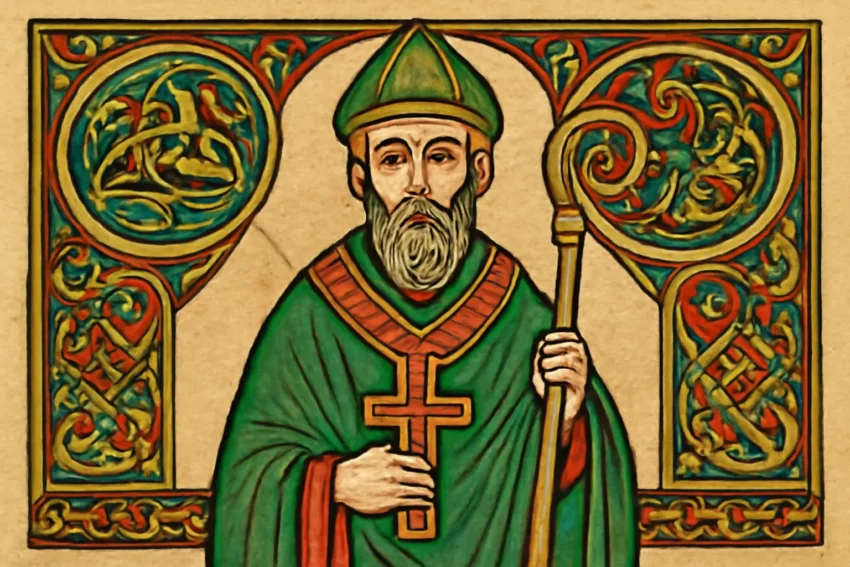
Insular art: Interlaced motifs, high crosses, metalwork, and illuminated manuscripts express theological ideas and narrative tradition in symbolic form.
Landscape as sacred space: The environment surrounding monasteries often carried liturgical and symbolic significance, reinforcing the integration of faith with daily life.
Key figures and saints associated with Celtic Christianity
Foundational saints and reformers
Many individuals have been celebrated in the narrative of insular Christianity for their spiritual leadership, missionary zeal, and cultural impact. Among them, a few stand out as touchstones for understanding this era:
Columba (Columcille): An apostle to the Picts and a builder of monastic culture on Iona, whose lasting influence helped knit together a network of monasteries and learning centers.
Patrick: Traditionally associated with the Christianization of Ireland and the formation of early Irish Christian identity, with a lasting legacy in hagiography, poetry, and pedagogy.
Brigid of Kildare: A prototypical female monastic founder whose communities emphasized education, healing, and the arts, shaping a distinctive feminine spirituality within insular Christian life.
Ninian: A foundational figure in southern Scotland who built a church network and contributed to the diffusion of Christian liturgy and doctrine in the region.
Dubricius and Saints of Wales: Early bishops and monks who helped establish Christian presence in Wales and the marchlands, contributing to the region’s religious and cultural vitality.
Saint Samson of Dol and other Brittany-linked saints: Illustrate the cross-Channel movement of ideas and people under insular Christian influence, especially in the western fringes of the Celtic world.
Hagiography, legends, and commemorations of these figures circulated widely, shaping popular piety and the moral imagination of future generations. Even when historical details are debated, these saints function as vessels for values such as hospitality, scholarship, charity, and fearless missionary zeal. Their legacies continue to be explored in modern biographies, scholarly monographs, and teaching materials that aim to interpret early Christian Britain with nuance and respect for regional variation.
Contemporary relevance and educational value
Why study Celtic Christianity today?
Engaging with the Celtic Christian tradition offers learners and readers several benefits. It helps illuminate how Christianity adapts to local cultures while preserving core doctrinal truths. It also demonstrates how religious life can sustain learning, community, and social care over long periods of turbulence. In contemporary education and public discourse, studying insular Christianity provides:
Historical breadth: A broader understanding of how Christianity traveled, evolved, and sometimes encountered tensions with centralized authorities.
Lessons in hospitality and education: The monastic model of learning, care for the vulnerable, and community governance remains relevant in modern religious and secular settings.
Appreciation for plurality within unity: A reminder that diverse liturgical practices, languages, and local pieties can be harmonized within a shared Christian identity.
Guided reading and study suggestions
For readers who wish to explore this topic further, here are some pathways that blend scholarly rigor with accessible narrative:
Classic sources: Early medieval annals, saints’ lives, and genealogies that illuminate local religious cultures.
Archaeological and material culture studies: Reports on monastery layouts, crosses, and manuscript illuminations that reveal the aesthetic world of insular Christianity.
Comparative theology: Works that compare insular practices with continental Western Christianity to highlight points of convergence and divergence.
Regional studies: Books and articles focusing on Ireland, Scotland, Wales, Cornwall, and Brittany to appreciate regional variation within a shared spiritual frame.
Conclusion: A living memory in a global Christian narrative
The story of Celtic Christianity, or Insular Christianity, is not merely a distant episode of the past. It represents a profound example of how Christian communities can cultivate deep spirituality, robust learning cultures, and broad networks of hospitality and mission in relation to their unique environments. The origins lie in a fusion of local tradition and Christian doctrine; the beliefs reflect a lived faith marked by prayer, learning, and charity; and the legacy continues to inform modern scholarship, ecumenical dialogue, and cultural memory. By studying the insular church in Britain and beyond, students and readers gain insight into how tradition, place, and people can shape a faith that remains vibrant across centuries.»
In sum, the Celtic Christian story demonstrates a remarkable capacity to hold together diversity and unity: diverse regional expressions of worship and monastic life, united by a shared proclamation of the Gospel and a common conviction about the transforming power of Christian faith in everyday life. This enduring heritage continues to inspire scholars, clergy, teachers, and laypeople who seek to understand how Christianity can take root in different landscapes while remaining faithful to its core message.