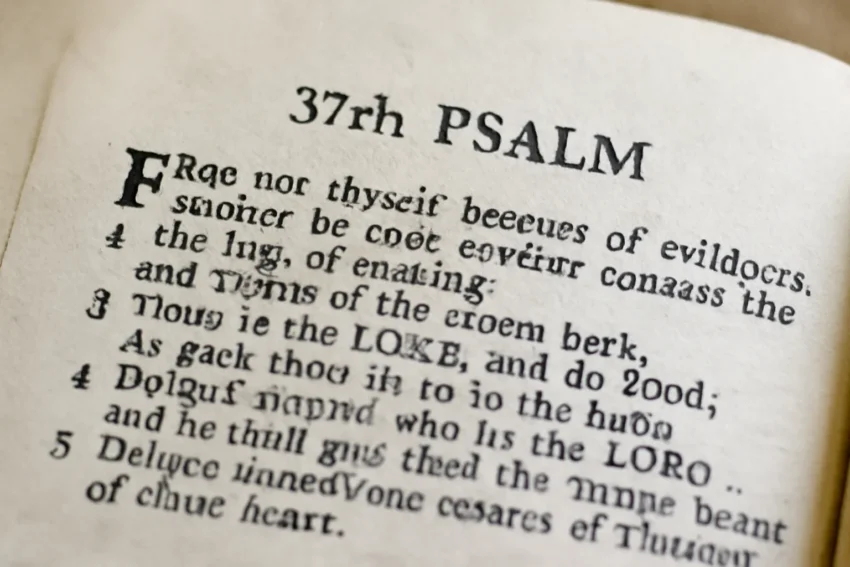
Introduction: Understanding the 37th Psalm in the King James Version
The 37th Psalm in the King James Version (KJV) is one of the most beloved and frequently cited passages in the wisdom literature of the Bible. Often simply called Psalm 37 or the 37th Psalm in the KJV, this composition presents a sustained meditation on trust, patience, and the proper posture of the righteous in a world that seems to favor the wicked. Rather than promising effortless success or shallow optimism, Psalm 37 offers a robust framework for navigating fear, envy, and social pressure by anchoring one’s life in God’s character and purposes.
In this comprehensive guide to Psalm 37 in the King James Version, we will explore the psalm’s authorship (traditionally attributed to David), its literary structure, its key themes, and practical implications for contemporary faith. We will also consider how this psalm reads when read in the context of the broader biblical witness and how readers can apply its lessons to daily decisions, work, relationships, and spiritual formation.
Authorship, Context, and Canonical Placement
Although the exact historical setting of the 37th psalm in the KJV is not stated within the psalm itself, the traditional view in many English translations is that it is a psalm of David. This attribution places Psalm 37 in the company of other Davidic psalms that address personal trust, moral discernment, and courage under pressure. The wisdom-poem format of Psalm 37 aligns it with other psalms that function as teachable songs—texts designed to shape character as much as to express emotion.
From a literary standpoint, Psalm 37 in the King James Version sits within the Prayer/Wisdom tradition, bridging personal piety with social ethics. It acknowledges the visible success of evildoers while guiding the reader toward a steadier, more durable confidence in God. This stance resonates with other biblical passages that challenge fretfulness and envy, urging a longer view of justice, reward, and God’s timing.
Literary Structure and Form: How Psalm 37 is Built
The structure of Psalm 37 in the KJV is often described as a progression of exhortations, contrasts, and promises. While the exact line breaks can vary slightly across editions, the following broad divisions capture the psalm’s architecture:
Stanza 1 (verses 1–8): A sustained command not to fret or envy the wicked, paired with invitations to trust in the Lord and do good.
Stanza 2 (verses 9–15): A promise that evildoers will be cut off, and a contrast with the meek who shall inherit the earth.
Stanza 3 (verses 16–29): A series of refrains about the relative “smallness” of worldly wealth and the enduring nature of righteousness.
Stanza 4 (verses 30–40): The righteousness’s speech, the security of the upright, and final exhortations about patience and trust, culminating in a vision of divine deliverance.
Scholars and devotional readers often note the triadic pattern in Psalm 37: instruction (trust and do good), demeanor (rest and wait on the Lord), and outcome (inheritance of the land and deliverance). In the King James Version, the language is vivid, memorable, and rhythmic, which has helped the psalm become a cornerstone for both personal reflection and public teaching.
Key Themes in Psalm 37 (the King James Version)
Throughout the psalm, several recurrent themes emerge as pillars of its spiritual message:
Trust in God over envy and a caution against fretting over the apparent success of the wicked.
Righteous living as the framework for daily conduct, anchored in the Lord’s instruction.
Divine timing—God’s timing for justice and reward—urging patience instead of rash judgment.
Inheritance and peace—the meek and the righteous inherit the land and enjoy the abundance of peace.
God’s knowledge and care—the Lord’s awareness of the days of the upright and His steadfast support in trouble.
Prayerful resolve—a practical exhortation to commit one’s way to the Lord and await His intervention.
In variations of the phraseology, readers often encounter “the 37th psalm in the King James Version” described as a manual for living under pressure, a guide to sustaining hope, and a call to practicing trust in a God who sees what is hidden and judges with wisdom.
Verse-by-Verse Highlights: A Guided Reading of Psalm 37 in the KJV
Verses 1–8: Do Not Fret, Trust in the Lord
The opening verses set the moral atmosphere of the 37th psalm in the King James Version by addressing fretful concern about evildoers and the envy that can arise from outward appearances of success.
Fret not thyself because of evildoers, neither be thou envious against the workers of iniquity.
For they shall soon be cut down like the grass, and wither as the green herb.
Key takeaway: refuse fretting as a daily practice, and counter envy with a focus on God’s justice and personal fidelity. Verses 3–5 expand the invitation to active trust: “Trust in the Lord, and do good; so shalt thou dwell in the land, and verily thou shalt be fed.” The subsequent exhortations emphasize delight in God and the discipline of committing one’s way to the Lord.
Delight thyself also in the Lord; and he shall give thee the desires of thine heart.
Commit thy way unto the Lord; trust also in him; and he shall bring it to pass.
In the King James rendering, these lines foreground the relationship between inner happiness, outward behavior, and God’s responsive favor. The section continues with a promise that God will bring forth righteousness and judgment in due season, a reassurance to the patient heart.
Verses 9–15: The Wicked and the Meek; God’s Just Timing
As the psalm moves into its middle segment, the conflict between the wicked and the righteous becomes more explicit. The language in this portion emphasizes that evildoers will be cut off, while those who wait on the Lord will inherit the earth.
For evildoers shall be cut off: but those that wait upon the Lord, they shall inherit the earth.
For yet a little while, and the wicked shall be no more; yea, thou shalt consider their place, and they shall not be.
Here the faithful are invited to a long view—patience and posture before the Lord—rather than a rush to judgment or personal vindication. The meek—not the boastful—are described as inheritors of Earth-ward blessings, which in biblical language points to a future, enduring peace rather than mere prosperity.
Verses 16–29: Small Things, Enduring Truths
This middle portion of the psalm shifts from a macro-passage about the fate of the wicked to granular truths about how the righteous experience life. It repeatedly contrasts material wealth with moral integrity, noting that the better portion is often the fruit of a life oriented to God.
A little that a righteous man hath is better than the riches of many wicked.
For the arms of the wicked shall be broken: but the Lord upholdeth the righteous.
In the King James Version, this section underscores the idea that God’s care for the righteous is not dependent on abundance but on fidelity. The verses reassure that the Lord knoweth the days of the upright and that the inheritance is forever, a phrase that anchors hope in God’s permanent, not temporal, provision.
The Lord knoweth the days of the upright: and their inheritance shall be for ever.
They shall not be ashamed in the evil time: and in the days of famine they shall be satisfied.
Verses 30–40: The Righteous Speak, The Wicked Fade, and Deliverance Is Sure
The closing stanzas bring the psalmist’s meditation to a resolute conclusion: the mouth of the righteous speaks wisdom, the law of God is in the heart, and God remains a fortress of deliverance for those who trust Him.
The mouth of the righteous speaketh wisdom, and his tongue talketh of judgment.
The law of his God is in his heart; none of his steps shall slide.
The refrain about wait on the Lord reappears as a practical discipline: “Wait on the Lord, and keep his way, and he shall exalt thee to inherit the land.” Even when the wicked seem powerful, the psalm ends with a confident affirmation that God will judge rightly, preserve the faithful, and deliver them because they trust in him.
Wait on the Lord, and keep his way, and he shall exalt thee to inherit the land; when the wicked are cut off, thou shalt see it.
The final lines offer a sobering contrast: the transgressors fade away, but the salvation of the righteous is of the Lord, who remains their strength in time of trouble. The concluding assurance is that God will help and deliver His people because they trust in him.
Practical Applications: How to Apply Psalm 37 in the King James Version Today
The 37th Psalm in the King James Version is not just a literary artifact; it’s a practical handbook for modern faith. Here are some concrete ways to translate its wisdom into daily life.
Develop a habit of trust rather than constant fretting. When anxiety about injustice or success in the world arises, pause, breathe, and recite a verse like, “Trust in the Lord, and do good.”
Practice patient waiting—not passive resignation, but active trust in God’s timing. That means continuing to live righteously, even when outcomes seem delayed.
Delight in the Lord as a spiritual posture that reorients desires. When our own wants dominate, returning to a posture of worship helps align our desires with God’s purposes.
Commit your way to the Lord—integrate your decisions, plans, and relationships into a trusting partnership with God.
Live a life of integrity in small things and large alike. The psalm’s insistence on righteousness as something that God notices in the heart and in daily conduct remains relevant for work, family, and community life.
Endurance in trouble is not denial of pain but trust in God’s sustaining grace. The psalm repeatedly affirms that God is a stronghold in time of trouble.
In the daily life of faith, these practices help a reader move beyond a simplistic equation of virtue with wealth and into a richer understanding of lasting peace and divine provision.
Psalm 37 in the Life of Faith: Theological Reflections
From a theological perspective, the 37th psalm in the King James Version furnishes a robust counter-narrative to cynicism. It critiques fretting and envy but dignifies patient trust, sustained prayer, and ethical living. The emphasis on inheritance of the land and the meek’s future security has resonated in both Jewish and Christian interpretive traditions as a call to align one’s life with God’s promised purposes rather than with the shifting standards of the surrounding culture.
Within Christian ethics, Psalm 37 has been read as pointing toward the kingdom shape of God’s reign—an invitation to live now with the future in view. The exhortations to wait on the Lord and to maintain a posture of mercy, truth, and mercy reflect a holistic vision: personal spirituality planted in social righteousness, with trust in God’s final justice as the ultimate vindication.
Historical and Cross-Biblical Context: How Psalm 37 Relates to Other Texts
Readers often compare Psalm 37 with other wisdom literature that addresses the problem of evil and the question of reward. For example, the contrasts in Psalm 37 echo themes in Job (the patience of the righteous under suffering), Proverbs (the value of prudent conduct and righteous living), and in the Psalter’s broader arc about God’s justice. The promise that the meek inherit the earth resonates with similar biblical motifs about humility, divine sovereignty, and the ultimate order God intends for creation.
If you read the 37th psalm in the King James Version alongside other scriptures, you may notice a consistent pattern: human experience includes pain and injustice, but God’s horizon reveals a more enduring, meaningful order. The psalm gives believers a vocabulary for hope—an anchor in the storms of life.
Common Questions About Psalm 37 (the King James Version)
Is Psalm 37 about politics or personal piety? It intertwines both—the personal posture of trust and the ethical implications of social justice. It speaks to how individuals live when confronted with unjust structures as well as how communities ought to respond in truth and mercy.
What does it mean to “inherit the earth” in Psalm 37? In the KJV, this phrase signals a future blessing and a present reality for the righteous, often interpreted as a symbolic expression of enduring peace and God’s blessing on the land and life of the faithful.
How should we interpret the warnings to the wicked? The warnings are not mere threats but invitations to reconsider one’s life in light of God’s moral government and the certainty of divine justice in God’s timing.
Can Psalm 37 be read as a practical guide for daily decision-making? Yes. The psalm’s invitations to trust, commit, and wait translate well into decisions about work, relationships, money, and moral choices in modern life.
Further Study Tips: Deepening Engagement with Psalm 37 in the King James Version
: Verses such as “Trust in the Lord, and do good” (Psalm 37:3) and “Delight thyself also in the Lord; and he shall give thee the desires of thine heart” (Psalm 37:4) are concise, memorable; committing them to memory can support daily practice.
with related psalms (e.g., Psalm 1, Psalm 73) and with prophetic books that address divine justice to gain a fuller sense of how the Bible presents trust, justice, and peace.
around the sections: write a brief reflection on each stanza (verses 1–8, 9–15, 16–29, 30–40), noting what in your life corresponds to each theme.
: discuss the ideas of “fret not” and “wait on the Lord” in small groups, exploring how fear and envy are expressed in contemporary life and how the psalm offers a different path.
: read the psalm aloud in a reflective cadence, paying attention to phrasing that evokes trust, patience, and divine justice. The KJV’s cadence often lends itself to meditative reading when spoken aloud.
Variations on the Theme: Alternative Phrasings of Psalm 37 in the King James Tradition
In paraphrase and study resources, you may encounter slightly different renderings that preserve the essence of Psalm 37 in the King James style. These variations—whether in modern devotional paraphrases or scholarly paraphrases—keep the core motifs intact:
The 37th Psalm in the KJV family is frequently cited as a model for ethical endurance under pressure.
Psalm 37 in King James language emphasizes “fret not,” “trust,” “delight,” and “wait,” all of which recur as refrains across translations.
In devotional literature, you may see paraphrases that maintain the meek’s inheritance and the Lord’s knowledge of the upright as primary assurances for believers facing injustice.
A Final Reflection: The Promise and Practice of Psalm 37 in the King James Version
The 37th Psalm in the King James Version remains one of the Bible’s most practical and spiritually formative pieces. It speaks to the tension between outward appearances and inner fidelity, between the world’s apparent success and God’s enduring plan. By encouraging readers to trust in the Lord, to delight in Him, to commit their way, and to wait on the Lord, Psalm 37 provides a framework for living with integrity in a complex world.
Whether you come to Psalm 37 for quiet comfort, for ethical instruction, or for a robust call to spiritual perseverance, the King James Version rendering offers a language that many readers find both precise and poetic. Its verses invite a patient, hopeful, and active faith—one that refuses to be overwhelmed by the world’s trials while confidently trusting in God’s steadfast care.
Conclusion: Embracing the Wisdom of Psalm 37 in the King James Version
In sum, the 37th Psalm—as it appears in the King James Version—is more than a passage to quote in times of trouble. It is a discipline of living that educates the heart toward trust, the hands toward righteous action, and the mind toward patient expectation of God’s justice. As readers carry these lessons into daily life, the ancient words take on renewed relevance, coloring decisions, shaping attitudes, and guiding prayers.