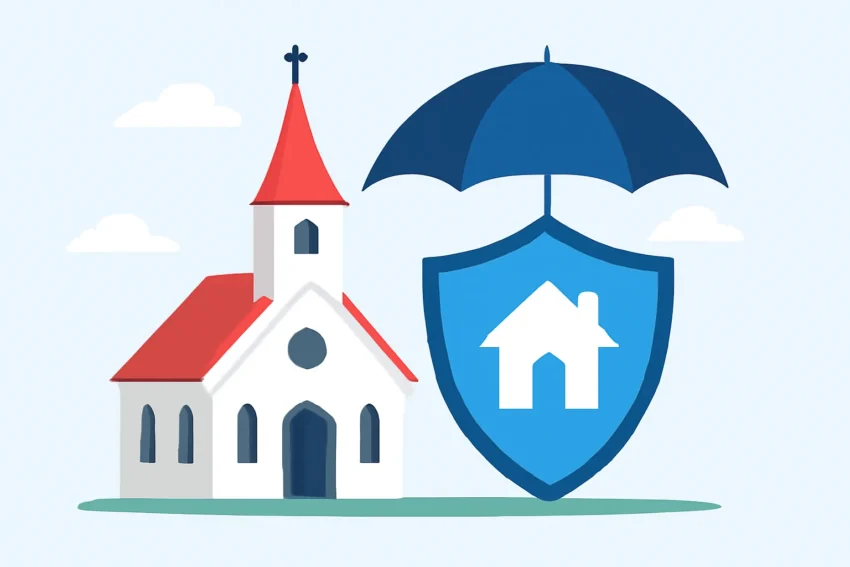
Church insurance is a crucial and often complex part of safeguarding a faith community. For many congregations, the right coverage protects people, property, mission, and ministry from the financial impact of accidents, disputes, and disasters. Yet with a wide range of policy options and endorsements, choosing the right protection can feel overwhelming. This article provides a comprehensive guide to selecting the appropriate insurance for your church, parish, or ministry. It covers common coverage types, risk assessment practices, decision-making frameworks, and practical steps for aligning policy choices with your congregation’s specific needs and resources.
What does “church insurance” cover and why is it important?
When people hear the term church insurance, they often think of one or two broad categories: property coverage for church buildings and general liability insurance for accident or injury claims. In practice, a robust house of worship insurance program includes a broader set of protections designed to address the unique risks faced by religious organizations. Key reasons to have appropriate coverage include:
Protecting assets and facilities such as sanctuaries, fellowship halls, offices, and parsonages from damage or loss.
liability claims arising from injuries, property damage, or allegations of misconduct by staff, volunteers, or clergy.
ministry programs and community services after an incident or disaster.
fiscal fiduciaries and church leadership in court or claim scenarios.
As with any specialized field, the terminology can vary. You may encounter expressions such as parish insurance, ministry liability coverage, or congregation protection plans. All of these refer to the broader objective: to mitigate risk and to support the church’s mission through responsible risk management and appropriate coverage.
Key types of coverage every congregation should understand
While policy specifics will vary by insurer and region, certain core coverages appear in most church insurance programs. Understanding these foundations helps you evaluate what you need and how different options fit together.
Property insurance
Property coverage protects the physical church facilities, content, and equipment against perils such as fire, wind, vandalism, and theft. It can cover:
The church building, parsonage or staff housing, and other real property
Educational spaces, kitchens, and fellowship halls
furniture, musical instruments, audio/visual equipment, and church supplies
Remodeling in progress and temporary structures used for church activities
Consider whether you need replacement cost vs. actual cash value, and whether you want to protect against business interruption (see below) and equipment breakdown.
General liability and slip-and-fall protection
General liability insurance covers claims from third parties for bodily injury or property damage arising from church operations, events, or premises. This can include:
Injury to visitors during worship services, events, or volunteer activities
Property damage to others’ property caused by church activities
Advertising injury and personal injury claims (defamation, libel, etc.)
Many churches also pursue excess or umbrella liability policies to increase the limits beyond the underlying GL coverage, offering an extra layer of protection for larger claims.
Volunteer, staff, and clergy protection
A well-rounded program often includes:
Volunteer accident coverage and worker safety protections for people helping with church programs
Clergy malpractice liability to address professional liability issues tied to pastoral duties
Sexual misconduct or abuse liability coverage to address allegations involving staff or volunteers
Because many allegations have long-tail exposure, understanding the specifics of coverage, defense costs, and exclusions is critical.
Fidelity and fiduciary protections
Church finances involve donated funds, payroll, and management of assets. Coverage in this category can include:
Fidelity bonds (often called crime coverage) that protect against employee or volunteer theft
Fiduciary liability to cover alleged breaches of fiduciary duties by church board members or trustees, including mismanagement of retirement plans or other employee benefits
Property management liability in relation to opening, closing, and use of facilities
Auto and transportation coverage
Many churches own vehicles for outreach, transportation to events, or church-related activities. Commercial auto insurance can cover:
Owned vehicles used in church programs
Volunteer or staff driving church vans or buses
Non-owned vehicles used for church purposes under certain circumstances
As churches increasingly operate digital giving, donor databases, and online communications, cyber liability coverage is becoming essential. It can address:
Data breaches involving donor or member information
Notification costs and legal defense in privacy claims
Business interruption due to cyber incidents and ransomware payments
Business interruption coverage helps replace lost income and cover ongoing expenses if a covered peril disrupts operations. This can be critical after a fire, flood, or other disaster that suspends worship services or program offerings.
Disaster and environmental coverage
Some perils require specialized endorsements, including flood, earthquake, or mold coverage, depending on your locale and facility type. Review these proactively, especially if your family of churches operates in disaster-prone areas.
Risk assessment: understanding what your congregation needs
Effective insurance starts with a careful risk assessment. Here are steps congregations can take to build a solid understanding of exposure and protection needs.
Inventory assets thoroughly: buildings, equipment, vehicles, artwork, and digital assets. Include the estimated replacement value and location of each item.
Map programs and events: identify all activities, including youth programs, mission trips, summer camps, weddings, funerals, concerts, and community services. Each event can create unique exposures.
Assess premises risk: conduct regular safety checks of facilities, parking lots, playgrounds, and kitchens. Note hazards such as wet floors, faulty lighting, or trip hazards.
Evaluate voluntary roles: volunteer groups, leadership teams, and clergy—consider the level of risk associated with their activities.
Review historical claims: look at past incidents or lawsuits to identify patterns and gaps in coverage or risk management.
Assess donor and member data handling: if you collect donations online or maintain databases, consider cyber risk and privacy considerations.
With this information, you can translate risk into protection. A thoughtful risk assessment informs coverage questions, limits, endorsements, and whether you need specialty policies beyond standard church insurance packages.
Assessing your congregation’s size, budget, and risk tolerance
Not all churches are the same. A small rural chapel and a large urban multi-site church with schools, day care, and broadcasting ministries have different risk profiles and financial capacities. Consider the following factors when balancing coverage and cost:
Property value and rebuilding costs in your community; construction costs may rise after a disaster.
Annual program volume and the number of events; more activities often means more exposure points.
Volunteer reliance and whether background checks, training, and supervision are in place.
Clergy and staff composition and the likelihood of professional liability or personal injury claims.
Existing debt or mortgage obligations that require insured losses to be minimized for financial stability.
Donor expectations and community impact—how a claim might affect ministry outreach and philanthropic programs.
Budgeting for church insurance involves balancing the cost of coverage with the potential cost of a loss. In many cases, spending a bit more on umbrella or crime coverage can significantly reduce risk exposure in high-value scenarios.
Choosing the right coverage: a step-by-step guide
To help you navigate the process, here is a practical framework that many churches use to select coverage. Adapt it to your context and regional requirements.
Define your objectives for protection: what do you want to preserve (people, property, ministry timeline, reputation, finances) and what would constitute a successful risk response.
Catalog assets and exposures: create a comprehensive list of properties, programs, vehicles, and data assets; identify likely claim scenarios.
Set coverage priorities: determine which risks you are willing to self-insure (through reserves or deductibles) and which require external protection.
Determine policy structure: decide on a core package (property, GL, auto, workers’ comp or employers liability) plus relevant endorsements (equip. breakdown, flood, cyber, umbrella).
Consult a church-friendly broker: partner with an adviser experienced in faith-based organizations who understands common endorsements and exclusions.
Request proposals and compare: gather quotes with clear riders, limits, deductibles, and service expectations; compare apples to apples.
Analyze exclusions and endorsements: pay particular attention to situations like volunteer driving, child care operations, or remote mission trips which may require rider coverage.
Evaluate risk management alignment: ensure policy terms reflect your church’s safety protocols, recordkeeping, and incident reporting processes.
Make a decision and implement: select policies that balance protection and cost; ensure staff training and communications accompany the new coverage.
Review regularly: insurance needs evolve with growth, new programs, and changes in venues or staff; set a periodic review schedule.
Policy structures and common provisions you should know
Understanding how policies are structured helps you negotiate effectively and avoid gaps. Here are some common constructs and terms you’ll encounter.
Core policy packages
Commercial General Liability (CGL) with standard bodily injury and property damage coverage
Property coverage for buildings, contents, and equipment
Commercial auto for owned and non-owned church vehicles
Workers’ compensation and employer liability where required by law
Endorsements and riders that frequently matter
Umbrella or excess liability to boost limits beyond the base policy
Fidelity bond to protect against employee or volunteer theft
Clergy malpractice liability or professional liability for pastoral care
Sexual misconduct or abuse liability to address allegations involving staff or volunteers
Cyber liability for data breaches, ransomware, and privacy incidents
Event cancellation or business interruption endorsements for program disruption
Volunteer protection enhancements to cover volunteer activities and non-employee workers
Equipment breakdown coverage for critical devices and systems
Declarations specify insured entities, covered locations, limits, and deductibles
Definitions clarify who is insured, what is covered, and the scope of coverage
Exclusions outline events or circumstances the policy does not cover (e.g., certain intentional acts, unendorsed activities)
Conditions spell out duties of the insured after a loss and how claims are handled
Retention/Deductibles determine how much you pay before coverage responds
Questions to ask your insurance broker or insurer
Probing questions help you assess whether a policy aligns with your church’s realities. Consider asking:
What are the standard limits for each coverage? Can you tailor them to our asset base and risk?
Are there any gaps in coverage for our programs? For example, do youth activities, camps, or mission trips require additional endorsements?
What are the deductibles and premium impact of adding endorsements?
How does the insurer handle volunteers and non-employee workers? Are they covered under general liability or require separate endorsements?
What is the process for handling claims? How quickly are claims reviewed and what is the typical defense approach?
Do we need an umbrella policy? If so, what practical limits should we consider?
Are there cyber risk requirements? What minimum security measures are expected, and what kind of data does the policy cover?
What are the exclusions related to religious activities? Are there activities that require rider coverage?
Is there coverage for data privacy, donor lists, and cloud-based systems?
What safety programs and loss prevention services does the insurer offer?
Risk management as a complement to insurance
Insurance is a financial backstop, but proactive risk management reduces the likelihood and severity of losses. Churches should integrate risk management into governance and operations. Key practices include:
Volunteer screening and training: background checks for volunteers in sensitive roles, safety training, and ongoing supervision
Incident reporting protocols: clear, accessible processes to report accidents, near misses, or property damage
Safety audits: regular reviews of facilities, equipment, and supply chains
Contractor management: ensuring contractors adhere to safety standards and have appropriate coverage
Data privacy policies: secure handling of donor and member information, access controls, and breach response plans
Disaster preparedness: business continuity plans, emergency response teams, and communication strategies
Regular training and drills: fire drills, evacuation plans, and safety education for staff and congregants
Effective loss prevention and culture of safety can reduce claims, keep premiums stable, and protect the church’s mission and finances.
Special considerations for churches with multiple locations or ministries
For congregations that operate across several campuses, schools, or ministries, the risk landscape becomes more complex. Consider these issues:
Location-specific risk profiles: different facilities may have distinct hazards (kitchens, gyms, outdoor spaces, or historic properties)
Program diversity: youth programs, preschools, and broadcasting/ministry operations may require specialized endorsements
Shared vs. separate coverage: determine whether each location has its own policy or if a centralized program underwrites all facilities
Childcare and education operations: day care or school-related activities may trigger additional requirements or coverage needs
Volunteer management across sites: consistent screening, training, and supervision are crucial for all campuses
Case studies: common scenarios and how coverage helps
Real-world examples illustrate how different coverages respond to incidents. The following scenarios are simplified for clarity, but they reflect legitimate risk events many churches face.
Scenario 1: Slip and fall during a Sunday event
A visitor slips on a wet floor in the church lobby after a rainstorm, sustaining injuries. The visitor files a claim for medical expenses and potential damages. A well-structured general liability policy provides coverage for the claim’s defense and any allowed settlement or judgment, up to the policy limits. If the church operates a high-volume event schedule, an umbrella policy might provide extra protection beyond GL limits. The church should have documented premises safety measures and incident reporting to support risk management efforts.
Scenario 2: Fire damages sanctuary and disrupts worship
A fire damages the sanctuary, destroying pews, sound equipment, and part of the interior. The property policy would address building and content restoration. If operations are disrupted for weeks, business interruption coverage helps replace lost income and cover operating expenses. If the church has a mortgage or loan, the insurer may coordinate the rebuilding plan with lenders. The restoration process becomes a test of both insurance and leadership’s ability to maintain ministry during recovery.
Scenario 3: Data breach compromising donor information
Your church’s online giving platform experiences a data breach affecting donor names, addresses, and donation amounts. The cyber liability endorsement would respond to notification costs, credit monitoring for affected donors, and any regulatory defense costs. Early incident response planning—such as contract with a breach response vendor and data encryption policies—helps minimize damages and supports a quicker recovery and donor trust restoration.
Scenario 4: Volunteer driver involved in motor vehicle accident
A volunteer driver using a church vehicle for a mission trip is involved in an accident. The coverage question hinges on whether the vehicle is owned by the church and whether the driver was on a church-approved activity at the time of the incident. A comprehensive auto policy and appropriate non-owned vehicle endorsement can cover both the driver and third-party claims, depending on the policy language.
Scenario 5: Allegation of clergy misconduct
An allegation of misconduct involving a staff member requires carefully coordinated defense, counseling, and compliance with reporting obligations. A robust clergy malpractice liability and sexual misconduct coverage helps address legal defense costs and provides crisis management support. Policies typically outline defense responsibilities and coverage limits for such sensitive matters.
Best practices for risk governance in churches
Governance plays a central role in risk management. The following practices help ensure that insurance coverage aligns with the church’s mission and resources:
Board oversight: establish a risk committee or assign risk management responsibilities to a trusted administrator
Policy documentation: maintain up-to-date records of coverage, limits, and endorsements, with renewal dates clearly tracked
Transparent budgeting: plan for insurance costs in annual budgets and reserve funds for deductibles and unexpected premium increases
Regular training: educate staff and volunteers about safety, incident reporting, and privacy practices
Contractual risk transfer: ensure service providers, vendors, and contractors carry appropriate insurance and provide certificates of insurance as required
Communications plan: prepare clear communications for members and donors after incidents to sustain trust and continuity
Financial considerations: budget, caps, and cost-saving strategies
Church insurance is a balance between comprehensive protection and responsible stewardship of donor resources. Here are strategies to optimize costs without compromising essential coverage:
Shop around with a focus on total value: compare quotes not only on price but on coverage, limits, endorsements, and services
Bundle policies with a single insurer where possible to simplify management and achieve favorable terms
Consider higher deductibles to reduce premium costs, provided the church maintains adequate reserves to cover them
Layer coverage: use underlying policies (GL, property, auto) with an umbrella for excess limits to optimize protection and cost
Invest in risk controls: preventive measures can qualify for premium credits or discounts
Annual policy review: ensure you adjust limits and endorsements as your ministry, facilities, and programs evolve
Partnering with the right insurer: what to look for
Choosing an insurer or broker who understands churches is essential. Look for these attributes:
Specialization in religious organizations with a track record of serving churches, synagogues, mosques, and other faith communities
Transparent quoting with clear explanations of coverage, limitations, and exclusions
Strong claims handling processes and responsive support during crisis events
Loss control resources and risk management guidance tailored to congregations
Contract clarity with terms that align with your governance structure and program needs
Implementation: how to prepare your church for a new policy
Implementing a new or revised insurance program requires coordination across church leadership, administrative staff, and volunteers. Practical steps include:
Assemble a core project team with representation from finance, operations, ministry leaders, and a trusted layperson
Gather documentation including asset inventories, property appraisals, staff and volunteer lists, and incident history
Obtain required certificates of insurance from contractors and service providers and verify naming conventions and additional insured status where needed
Communicate changes to staff, volunteers, and congregants; provide training where coverage affects program operations
Test risk management plans through drills, incident reporting exercises, and tabletop scenarios
Glossary of terms to know in church insurance
Understanding key terms helps in conversations with brokers and in evaluating policy documents. Here is a compact glossary:
Policy declarations: the section that lists the insured, location, limits, and terms
General liability: covers third-party bodily injury and property damage
Property coverage: protection for buildings and their contents
Fidelity bond: coverage against theft by employees or volunteers
Fiduciary liability: protection for mismanagement of funds and employee benefit plans
Cyber liability: protection for data breaches and cyber incidents
Exclusions: what the policy does not cover
Endorsements: additions or modifications to standard coverage
Conclusion: anchoring your church’s protection in faith and prudence
Church insurance is not just a set of numbers on a policy; it is a framework for safeguarding people, property, and purpose. By approaching risk as a shared responsibility—combining thorough risk assessment, thoughtful policy design, and proactive loss prevention—your congregation can protect its cherished mission for generations to come. The right coverage acknowledges that accidents and disasters are possible, but with appropriate protection, a church can recover, renew, and continue its vital ministry with confidence.
Key takeaways
Develop a clear risk assessment that covers facilities, programs, volunteers, and data
Choose a layered policy approach with property, liability, auto, cyber, and fidelity/fiduciary protections as appropriate
Consider an umbrella to extend liability limits for meaningful risk scenarios
Integrate risk management practices to reduce the likelihood and impact of losses
Work with a broker who specializes in church insurance and understands the unique needs of faith-based organizations