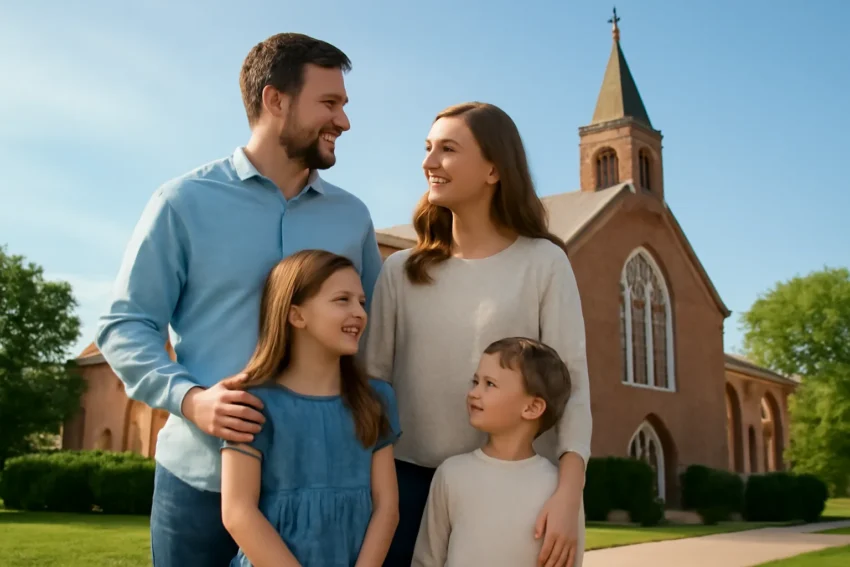
In today’s spiritual landscape, many communities are asking a simple, powerful question: how can a church with family life be designed so that faith grows in every member of the household?
The answer is not a single program, but a living ecosystem where family faith formation
and church life reinforce one another. When a faith community intentionally builds
spaces and rhythms that acknowledge the realities of busy homes, parenting, aging, and adolescence, the
trajectory of spiritual growth becomes more intentional, durable, and deeply meaningful. This article
explores what a family-centered church looks like in practice, why it matters, and how
families and churches can partner for lifelong discipleship.
The central idea of a family-centered church is not to replace parent-led faith with a
church program, but to extend the family’s spiritual formation into the church and to invite the church into the daily life of the home. When a family walks into the doors
of a welcoming congregation, they should feel seen, supported, and equipped to live out their faith in
ordinary moments—around the dinner table, on the way to school, at bedtime, and in times of celebration or
struggle. This framing emphasizes that faith is not confined to Sunday mornings but is a continuous
journey that binds generations together.
The Principles Behind a Family-Integrated Faith Community
A thriving church family model rests on several key principles. These are not checkboxes
but a ethos that guides decisions, staffing, programming, and worship. When churches embody these
principles, families experience continuity between home and church and are more likely to sustain faith
across life stages.
Generational inclusion: Designing spaces and programs that welcome children, youth, parents,
grandparents, and individuals at all life stages.
Shared worship and service: Creating occasions where families can worship and serve together
or with clear, age-appropriate roles.
Relational hospitality: Building a culture of welcome where families form meaningful
connections inside and beyond their households.
Home–church alignment: Encouraging conversation and collaboration between families and church
leaders to align values, practices, and expectations.
Biblically grounded discipleship: Prioritizing Scripture-based teaching that is accessible,
practically applicable, and transformative for all ages.
Foundations of a Family-Cocused Church: Theological Grounding and Practical Practice
Theological Basis for Family in the Life of the Church
The concept of a family ministry is rooted in Scripture’s broad invitation to discipleship that
encompasses households. In many faith traditions, families are viewed as small ecclesial units—the domestic
church—where love, forgiveness, and instruction are lived out in tangible ways. A church with family
acknowledges that faith formation begins at home and continues in the gathered community. Theological grounds for
this approach include:
Imago Dei and intrinsic worth of every family member, encouraging dignified participation at all ages.
Scriptural examples of multi-generational teaching and mentoring, where parents and elders model faithful living.
The Great Commandment as a family-wide invitation: love God with all your heart, soul, mind, and strength, and love your neighbor as yourself—an invitation that spans generations.
Practical Principles for a Family Ministries Strategy
A robust family-focused strategy is practical, not merely aspirational. It should address programming, leadership,
and the day-to-day realities of households. Consider these practical principles:
Clear pathways for faith formation across ages, including clearly labeled tracks for preschoolers,
children, preteens, teens, young adults, and families.
Intergenerational experiences that intentionally break down silos, enabling shared learning,
service, and worship.
Adaptive programming that respects different family rhythms—weeknights, weekends, and family
outreach opportunities, with options for those who have caregiving responsibilities.
Parental empowerment through resources, training, and mentorship that equips parents to lead
spiritual conversations at home.
Growing Faith at Home: Everyday Practices for a Family’s Spiritual Life
Creating a Home as a Place of Worship and Formation
A home-first faith practice does not replace the church’s role but complements it. When families
design routines that center on Scripture, prayer, and shared reflection, faith becomes everyday
practice, not an occasional event. Some families foster a rhythm that includes:
Daily devotionals with age-appropriate content that engages each member.
Family prayer time that invites children to lead or participate in a circle of thanksgiving and needs.
Scripture memorization through fun, kid-friendly activities and family challenges.
Service at home or in the neighborhood, modeling generosity and care for others.
Family Worship: Including Children in the Gathered Church Experience
A family-friendly church seeks to design worship that includes all ages. This does not mean
abandoning depth or reverence but balancing the needs of young participants with the simplicity and dignity
needed by new believers and seasoned attendees. Practical steps include:
Accessible language in prayers and sermons, with occasional family-friendly homilies or
sermon notes that translate complex ideas into memorable takeaways.
Active roles for families in worship, such as responsive readings, liturgical prayers that involve children, or
occasional intergenerational elements.
Quiet spaces and sensory accommodations for children who need room to move or rest during services.
Memorizing Scripture as a Family
Memorizing verses is a practical bridge between church life and home life. When a family commits to scripture memory together, verses become a language that shapes daily decisions. Techniques include
shared memory challenges, setting verse-of-the-week goals, and creating mnemonic devices that involve family
members of different ages.
Church Life that Includes Every Generation
Intergenerational Worship and Learning
An effective intergenerational church environment intentionally blends learning across ages. The
goal is not standardizing every experience but creating moments where grandparents, parents, teens, and young
children can learn in dialogue, ask questions, and practice faith together. These experiences can take the form of:
Intergenerational worship services that feature elements appealing to both children and adults.
Storytelling sessions where elders share testimonies and younger members contribute practical insights.
Shared service projects that connect generations through compassion and mission.
Programs for Kids, Youth, and Parents
A family ministry program should balance age-specific teaching with cross-generational
connection. Programs to consider:
Sunday School and midweek clubs with age-appropriate curricula that still center on the
same core truths as the adult program.
Family small groups or households that meet regularly for prayer, accountability, and support.
Youth mentorship where young people are paired with trusted adults for guidance, prayers, and
shared activities.
Parenting workshops that address practical questions about faith formation in adolescence, digital life, and
resilience.
Grandparents and Multi-Generational Roles
A family-in-the-church approach recognizes the wisdom of older generations as a vital resource
for younger families. Engaging grandparents, elders, and retired teachers can enrich the church’s
witness and provide stability for families navigating life transitions. Ideas include:
Senior volunteers who lead storytelling times for children.
Intergenerational mentoring circles that pair families with elder mentors.
Grandparent-led devotionals and intergenerational retreats that foster connection and continuity.
Programs and Structures that Support Family Growth
Sunday School, Small Groups, and Beyond
A genuine church-family ecosystem integrates multiple formats for discipleship. While Sunday
morning programs remain central, families benefit from additional channels that fit their schedules. Key
structures include:
Curriculum alignment across age-based programs so families can discuss the same themes at home.
Family ministries council to coordinate programming, assess impact, and plan cross-generational
events.
Flexible scheduling with weekend gatherings, online resources, and on-demand content to meet diverse
family rhythms.
Family Small Groups and Care Circles
Small group ministry tailored for families can provide accountability, encouragement, and practical support.
A well-designed family small group fosters mutual encouragement, prayer, and shared mission
projects. Components might include:
Participation options that accommodate younger children and caregivers, including parent-and-child groups.
Regular times of prayer for family needs, with space for testimonies and practical sharing of burdens.
Resource sharing, such as parenting books, devotionals for couples, and faith-based family activities.
Volunteerism and Service as Family Practice
A family ministry thrives when families serve together. Service projects teach generosity,
empathy, and responsibility, and they provide practical contexts for applying faith. Ways to engage families in
service:
Family service days that partner with local nonprofits, shelters, food banks, and community centers.
Service roles that accommodate small children, such as making cards for neighbors or assisting with food drives.
Longer-term missional partnerships that allow families to participate in ongoing projects.
Bridging Obstacles: Navigating Common Challenges in a Family-Integrated Model
Time, Schedules, and Modern Demands
One of the most common barriers to a thriving family church partnership is time. Busy
calendars, work obligations, and after-school activities can make it hard for families to participate
consistently. Leadership can respond by offering flexible options, rotating schedules, and asynchronous
resources that families can use on their own time. Practical responses include:
Evening and weekend options that align with school calendars and family routines.
Recorded sermons and online devotionals for families who cannot attend in person.
Short, high-impact worship segments that can be used at home or in car rides.
Inclusion, Diversity, and Accessibility
A healthy church with family seeks to be inclusive of diverse family structures—single parents,
blended families, multi-racial households, and families with adopted or special-needs children. Accessibility
extends beyond physical access to include language, culture, and financial considerations. Practical steps:
Provide materials in multiple formats (print, digital, large print, audio) to accommodate different needs.
Offer translation or bilingual programming where appropriate.
Create scholarship funds or sliding-scale options for families who need financial support to participate.
Balancing Depth with Accessibility
The challenge of “depth vs. accessibility” is real. The aim is to preserve theological integrity while ensuring
that families can engage meaningfully at their own level. This balance is achieved by:
Presenting core doctrines in clear, memorable ways without watering down essential truth.
Providing age-appropriate explanations without talking down to younger participants.
Using visuals, storytelling, and hands-on activities to illustrate complex concepts.
Measuring Impact: How to Know if a Family-Centered Approach is Working
Qualitative Indicators
Beyond attendance, churches can assess outcomes that reveal meaningful growth in family faith. Qualitative
indicators include:
Testimonials from families about meaningful home–church conversations.
Observed increase in intergenerational collaboration during worship and service.
Stories of families applying biblical principles to real-life decisions and conflicts.
Quantitative Indicators
Collecting data helps churches refine their approach. Useful metrics might include:
Numbers of families participating in family-focused programs and small groups.
Participation rates in intergenerational events and service days.
Retention of families across program cycles and growth in youth and children’s participation.
Case Studies: Diverse Expressions of a Church with Family
While each congregation has its unique culture and context, several patterns recur in churches that emphasize
family life within the broader faith community. Here are illustrative scenarios that demonstrate family
ministry in action:
Case Study A: A Multi-Generational Worship-Cavor Approach
A mid-sized congregation redesigned its Sunday service to include an intergenerational segment
each week. Children helped with liturgical prayers, youth joined in with contemporary expressions, and elders
shared personal stories of faith. The effect was a sense of shared ownership: families felt that “the church”
was theirs to participate in, not an audience to observe.
Case Study B: Home–Church Partnership for New Parents
A church with a growing number of young families created a new parenting network that offered
practical tips for faith development in infancy, toddlerhood, and early childhood. The network included
mentors, small group leaders, and an online resource hub. As families grew, the church provided clear pathways
to move from infancy to elementary programs while preserving family identity and participation.
Case Study C: Inclusive Programs Across Diverse Households
In a community with a rich diversity of family structures, a church prioritized accessibility and inclusion.
It implemented language-accessible materials, caregiver-friendly service times, and alternative ways to engage
families who could not attend weekly services. The result was a strong sense of belonging, not merely
attendance, and a robust network of families supporting one another.
Practical Toolkit: How to Start or Strengthen a Family-Centered Church
For congregations seeking to cultivate a church with family atmosphere, a practical, step-by-step
approach can help. Use this toolkit as a starting point or a periodic refresh to align practices with desired outcomes.
Clarify vision and priorities: Articulate a clear statement of family faith formation and how it intersects with worship, teaching, and service.
Audit current programs: Review existing ministries to identify where families find value, where gaps exist, and where collaboration could happen.
Form a family ministries council: Include parents, grandparents, children, teachers, and volunteers to guide decisions.
Develop an age-inclusive curriculum map: Align themes across age groups so families can discuss the same topics at home.
Invest in leadership development: Train volunteers to work with families, emphasizing empathy, inclusivity, and practical teaching skills.
Offer flexible participation options: Provide in-person, online, and hybrid formats to accommodate varied schedules and needs.
Foster home–church conversations: Create conversation guides, devotionals, and discussion questions that families can use at home.
Celebrate family contributions: Highlight stories of families who are growing in faith and serving together.
Build partnerships with local ministries: Extend the church’s reach through service projects that relate to the community’s needs.
Living Out the Vision: Everyday Examples of a Church with Family in Action
The most powerful testimonies of a family-friendly church are the everyday moments when faith
becomes a shared habit. Here are some real-world illustrations of what this looks like in practice:
Families praying for neighbors or community members as part of a regularly scheduled prayer time.
Children and parents reading a Bible story together and discussing its application to a recent school situation.
Teens leading praise music or teaching segments with adult mentors present for guidance and support.
Grandparents sharing biblical wisdom during a family retreat or midweek gathering.
Measuring Success: When to Celebrate and How to Improve
Celebration Moments
Recognizing milestones in a family-centered church helps reinforce the value of faith formation for all ages:
Participation in family service projects with multiple generations contributing.
Successful family devotion series that lead to deeper home conversations.
New family-led initiatives, such as a family mentorship circle or a parent’s prayer group.
Continuous Improvement
A vibrant church family partnership is never static. It evolves as families grow, communities
change, and needs shift. To stay responsive:
Gather regular feedback from families about what’s working and what isn’t.
Adjust programming to reflect the seasons of life—births, school transitions, job changes, and caregiving needs.
Experiment with new formats, such as short urban outreach events, family mission trips, or digital devotionals.
Conclusion: A Shared Journey Toward Growing Faith and Family Together
A true church with family invites every member of the household into a shared journey—one where faith
is cultivated not only in private moments but also in communal witness. When the home and the church walk
together, families are strengthened, communities are served, and the faith tradition is preserved for future
generations. The goal is not to create a perfect system but to cultivate a living culture of discipleship that is
generous, hopeful, and resilient. In such a model, family faith formation becomes a natural part
of life—a rhythm that can be carried into adolescence, adulthood, marriage, parenting, and even aging with grace
and purpose.
If you are a church leader, a parent, grandparent, or a volunteer considering how to move toward a more family-centered church, begin with small, intentional steps. Start with conversation, map out a
shared vision, and invite families to co-create the elements that will shape their spiritual life. If you are a
family member seeking a place to grow in faith, look for a community that demonstrates hospitality, clear pathways
for growth, and partnerships that honor your role as a primary faith-former in your home. Remember that every small
act of faith—prayer at the dinner table, a Bible verse memorized before bed, a family service project—contributes
to a larger, enduring story: a church that grows together with the families it serves.
In the end, a healthy church with family is not merely a program or a strategy—it is a way of
life. It is a church that expects children to grow in wisdom alongside their parents, that honors the gifts of
every generation, and that sees the home as a vital extension of the sacred work of the church. The journey is
lifelong, and the shared path toward growing faith and family together is a gift worth cultivating, day after day,
season after season.
Note: This article uses variations of the phrase «church with family» to underscore the semantic breadth of the concept—family-centered church, family ministry, and families in the church all point to the same core goal: integrate faith formation across home and gathered church life for lasting discipleship.