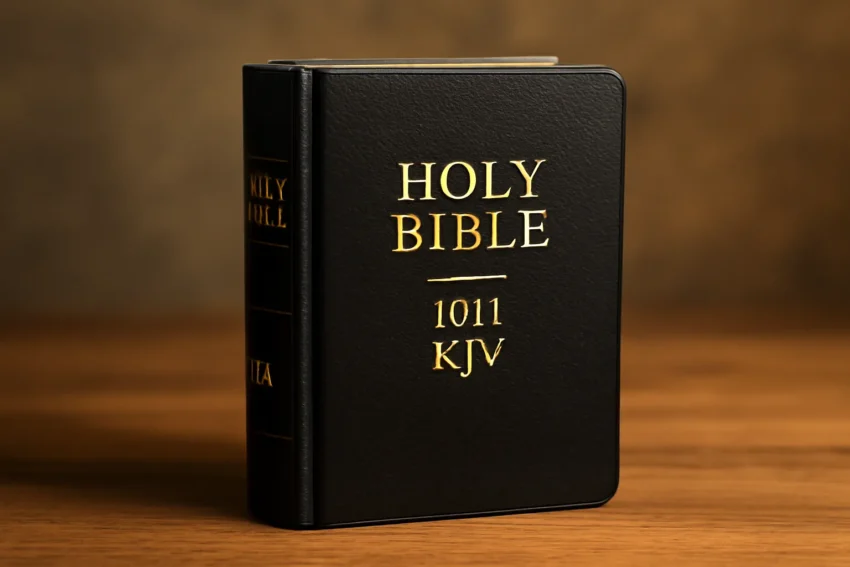
The 1611 KJV Bible, officially known as the Authorized Version of 1611, stands as a foundational artifact in the history of the English language and Christian scholarship. Often referred to simply as the King James Version or the KJV, this translation emerged from a tumultuous yet fruitful moment in early 17th‑century Britain and has influenced generations of Bible readers, theologians, and writers. In this article, we will explore the history, the distinctive features, and the practical question of where to read online a 1611 edition or its scholarly descendants. The discussion uses a range of expressions—1611 edition, King James Bible of 1611, the AV 1611, and KJV 1611—to reflect how people refer to this work across time and contexts.
The genesis of the 1611 King James Bible lies in a desire by King James I of England to produce a single, authoritative English translation of the Bible for the Church of England. In 1604, under royal authorization, a group of scholars—drawn from six committees located at Westminster, Cambridge, and Oxford—began the delicate work. The aim was not merely to produce a fresh text, but to craft a translation that would be both faithful to the original languages and accessible to educated readers across the realm. In many ways, the project sought to unify religious practice around a common English edition, while addressing perceived shortcomings of earlier English translations and the competing Geneva Bible. The result is what contemporary readers often call the Authorized Version—the AV that would be widely adopted in Anglican worship and private study. The translators drew upon the best available source texts of their era, including the Hebrew Masoretic text for the Old Testament and the Greek Textus Receptus for the New Testament, while consulting earlier English versions to preserve traditional phrasing where it served clarity and reverence.
Over the span of years, the translators labored with care, balancing textual fidelity and literary cadence in a language that would be both majestic and comprehensible. They annotated their work with a sense of humility and accountability, and they produced a preface that has since become famous for its combination of scholarly seriousness and pastoral aspiration. The result was a translation designed not only for clergy but for lay readers, for schools, and for households across England and beyond. The language choices—such as retaining traditional pronouns like thee and thou in certain contexts—reflected a desire to preserve both reverence and intimate address in sacred text. The project thus embodies a turning point in English Bible translation, one that would shape later translations and influence English prose for centuries.
Printing and the first edition
When the first edition of the AV 1611 rolled off the London presses in 1611, it represented a major publishing achievement. The printing was undertaken under the authority of the Stationers’ Company, with the title page identifying the work as the Holy Bible and noting that it was “Imprinted in London by Robert Barker, Printer to the King’s most excellent Majesty,” a declaration that signaled both royal endorsement and national significance. The first edition was a substantial volume, richly structured with divisions by books, chapters, and verses, and it included a prefatory material such as “The Translators to the Reader,” which offered readers direct insight into the editors’ aims and methods. The 1611 edition also contained marginal notes, cross‑references, and typographic ornaments that were characteristic of early 17th‑century print culture. For readers today, the physical appearance of the first edition represents a historical artifact as much as a sacred text.
One notable practical feature of the initial print run was the use of italicized words to signal words supplied by the translator for grammatical completeness in English. This practice helped readers follow the translators’ interpretive choices while remaining anchored to the underlying Hebrew or Greek texts. The layout itself—pocket‑friendly yet substantial enough for congregational reading—influenced how English audiences approached Scripture in communal settings. The printings also included a distinct arrangement of the Apocrypha in many copies, a characteristic that would become a familiar point of reference for readers accustomed to older and newer editions alike.
The term “Authorized Version” and the broad reception
In the decades after publication, the King James Bible came to be known as the Authorized Version because it carried the royal license and ecclesiastical sanction that allowed its use in churches and education. This authorization helped standardize English Bible reading across parishes, schools, and households. The KJV quickly gained a reputation for its dignified language, its sophisticated cadence, and its use in public worship and private devotion. It also earned a place in the broader cultural life of Britain and the English‑speaking world, shaping poetry, rhetoric, and even everyday speech. The translation’s influence spread beyond the Church of England through colonial expansion, missionary activity, and the long arc of English literary culture. The first edition’s reception, therefore, was not merely theological but cultural, linguistic, and educational.
Variants, revisions, and the long arc of a living text
Despite its authoritative status, the KJV did not remain unchanged. As generations passed, printers and scholars produced revised editions to address typographical errors, to standardize spelling and punctuation, and to improve readability. The most influential revision came in 1769 under the oversight of Dr. Benjamin Blayney at Oxford University and other printers, producing what is often called the 1769 Blayney edition. This edition did not rewrite the translation; rather, it corrected misprints, modernized certain spellings, and refined capitalization and punctuation to align the text with evolving English usage. The Blayney revision is the edition most commonly used by modern English readers today, and it served as the basis for many subsequent printings, including digital versions. It’s important to recognize this as a major moment in the KJV’s textual history, because it standardizes the text for contemporary readers while preserving the essential character of the original 1611 work. The 1611 edition is still studied and revered as the source text, but the 1769 Blayney text is a practical standard in most libraries and online platforms.
Key features of the 1611 KJV Bible
Language, style, and translation philosophy
The 1611 King James Bible embodies a distinctive early modern English style that is simultaneously majestic and careful. Its translators worked to produce a text that was both reverent in tone and readable in majesty for congregational use. The language includes formal phrasing, ceremonial vocabulary, and poetic cadence that invites ritual repetition and literary reflection. The translators also exercised a careful balance between word-for-word fidelity and dynamic equivalence—an approach that sought to preserve meaning while preserving the rhythm of original texts. In many places, the translators consulted earlier English renderings to harmonize doctrine and doctrine‑driven interpretation with the canonical texts. The result is a text known for its poised rhetoric and its capacity to convey theological ideas with both precision and a sense of grandeur. For scholars, the 1611 edition offers a lens into how English readers in the early modern period encountered Scripture. For general readers, it remains a powerful, memorable mode of devotional reading.
Another characteristic feature is the way the edition handles pronouns and names, along with distinct forms such as thee, thou, thy, and thine in certain contexts. The use of formal address and intimate address reflects a careful attempt to render reverential speech in sacred dialogue. The text also preserves some archaisms and neologisms that have since become embedded in English literary culture, contributing to a sense of timelessness that readers often associate with the Bible. The 1611 AV also includes translation notes in marginal sections and sometimes cross‑references that guide readers toward alternative readings or related passages. These features, when studied together, reveal the translators’ intention to present a Bible text that could function both as public liturgy and personal devotion.
Typography, layout, and physical presentation
From a typographic standpoint, the AV 1611 exemplifies the design sensibilities of its era. The first edition and its early successors used a form of roman type with some decorative initials and marginal apparatus. The pages were dense with content, yet the editors aimed to make the arrangement navigable for readers who followed the chapter and verse structure that had become familiar in English Bible reading. The inclusion of the Apocrypha in many copies is a notable feature for readers who have encountered the full deuterocanonical collection in other traditions. These design decisions—chapter divisions, verse numbering, marginal notes, and cross references—collectively facilitated study and contemplation across a wide spectrum of readers. In a broader sense, the typography of the 1611 edition contributed to the ceremonial feel of Scripture reading in churches and homes. Even as modern editions adopt contemporary typesetting, many readers still sense a link to that historic shape whenever they encounter the familiar Black Letter or the distinctive page layouts that hark back to the early 17th century.
Content structure: Old Testament, Apocrypha, and New Testament
The canonical arrangement of the KJV traditional edition typically presents the Old Testament first, followed by the Apocrypha in a dedicated section, and then the New Testament. The division of books, chapters, and verses mirrors the approach of most Protestant Bible traditions and supports both liturgical use and personal study. The Old Testament sections include the law, prophets, and writings, while the New Testament contains the Gospels, the Acts, the Epistles, and Revelation. The marginal materials and editorial apparatus—such as maps, glosses, and cross references—are arranged to help readers navigate complex genealogies, promises, prophecies, and exhortations. A modern reader can still appreciate how the 1611 edition organizes information, enabling a reader to trace themes across covenants, to compare prophetic fulfillment with gospel narrative, and to observe the way the translators approached a text that was both ancient and intimately relevant to the readers of their own era.
Differences between the 1611 edition and later versions
The 1769 Blayney revision and standardization
Perhaps the most influential update to the King James Bible text in the modern era is the 1769 Blayney edition. Although the translation itself remained the same, this revision corrected a substantial number of typographical errors, standardized spelling, and refined punctuation. The result is a version that preserves the spirit and many of the words of the 1611 AV while providing improved readability for modern readers. The Blayney edition became the widely used text in libraries, publishing houses, and schools throughout the British Empire and later in the wider English‑speaking world. For students and scholars, the Blayney edition serves as a practical baseline text, with textual variations that are carefully documented in textual criticism work. The distinction between the 1611 edition and the 1769 Blayney edition is thus not a matter of doctrine but of typography, spelling, and readability.
Beyond Blayney, there are numerous printings and digital versions that reflect ongoing philological work, including facsimiles of the original 1611 edition, modern critical editions, and study Bibles that annotate linguistic shifts, historical context, and translation choices. Some scholars distinguish between the textual tradition of the 1611 AV and the later standardizations that have emerged in the 19th and 20th centuries. Contemporary readers may encounter variants in punctuation, capitalization, or wording, particularly in specialized study editions that present the 1611 text alongside marginal glosses and alternative renderings. These resources are valuable for those who wish to understand not only what the text says, but how it was read and interpreted in the past.
Where to read online: practical guides to accessing the 1611 King James Bible
Public domain and freely accessible sources
Because the 1611 King James Bible lies well within the public domain, a range of digital hosts offer full texts and high‑quality scans. Here are several reliable options for online access, each with its own strengths for study or casual reading:
Project Gutenberg (PG) hosts a broad range of public domain Bible texts, including editions derived from the King James Version. The site offers text search, downloadable formats (HTML, ePub, Kindle), and cross‑referencing tools that facilitate reading across chapters and verses.
Internet Archive provides scanned images of the 1611 AV and related editions. Users can view page images, download full volumes, or access OCR text for scholarly work. For those who want to see the physical layout and typography of early printings, the Internet Archive is an invaluable resource.
Google Books and various university library portals offer digitized copies of the AV 1611 or its early reprintings. These scans allow researchers to inspect marginal notes, printer’s marks, and the overall page design that accompanied the English Bible of that era.
Online Bible platforms that document historical Bibles often include a 1611 KJV text or a page‑by‑page facsimile. Examples include dedicated KJV archives and scholarly hubs, which present the text alongside historical commentary and translator notes.
Modern, accessible online repositories
Several modern websites host the King James Bible in formats designed for contemporary readers. When you search for “KJV 1611 online” you may encounter pages that present the text in a clean, searchable layout, sometimes with the option to switch to the 1769 Blayney text or to view the 1611 text with marginal notes. These resources are especially useful for casual readers who want to read in a browser, as well as for students who need to compare verse renderings across editions. When visiting these sites, look for disclaimers about which edition is being presented, and check whether the platform indicates the edition (e.g., “1611 AV,” “1769 Blayney,” or “KJV text”).
Tips for online study of the 1611 AV
Be aware of edition differences: some online readers display the 1611 text with modernized punctuation, while others reproduce the original punctuation exactly as printed in the early edition.
Use parallel view or side‑by‑side editions to compare the 1611 text with the 1769 Blayney revision or other modern translations. This can illuminate translation choices and historical context.
Take advantage of marginal notes and cross references if you want to trace allusions, varying renderings, and the translators’ prefatory remarks.
For scholarly work, consult facsimile scans or high‑resolution images of the 1611 edition to study typography, ink, and page layout. Such details can reveal editorial decisions embedded in the print run.
The 1611 KJV Bible’s features and far‑reaching impact
Literary and linguistic influence
Even for readers who approach the King James Bible from a purely literary perspective, the text stands as a monumental achievement in English prose. Its balance of gravitas and accessibility—paired with a rhythmic cadence and memorable phraseology—rendered it a standard of English that subsequent writers studied, admired, or parodied. The 1611 edition contributed to shaping the norms of English grammar and vocabulary, influencing poets, playwrights, and orators who sought a similar blend of formality and clarity. Phrases originating in the AV—such as “the Lord is my shepherd,” “the root of all evil,” and many others—have permeated prayers, sermons, and everyday speech. The text’s enduring resonance is visible not only in religious life but also in the broader culture of English literature. King James English became a standard by which other translations could be measured, and its cadence often informs modern English writers who desire a sense of historical continuity.
From a theological standpoint, the 1611 KJV Bible supported Protestant doctrine while also fostering a devotional spirituality rooted in liturgical reading and memorization. The translators’ approach—careful, reverent, and pastorally oriented—emphasized the Bible as the living Word of God to be encountered in worship, study, and prayer. Over the centuries, the AV 1611 helped shape preaching styles, catechetical curricula, and Sunday school materials, making Bible narratives and doctrinal statements accessible to a broad public. The Apocrypha’s inclusion in many editions of the era reflected the diversity of British Christian practice at the time and offered historical and literary value, even as it was debated in Protestant theological circles. Read today, the 1611 KJV offers a window into the devotional life of a generation that valued reverent diction, ceremonial poise, and a deep sense of the Bible as a sacred work.
One frequent misunderstanding is that the 1611 King James Bible is the sole true or definitive text of Scripture in English. In reality, the AV 1611 is one historical edition among many, and it sits within a family of English translations. The 1769 Blayney revision and later modern editions remain authoritative for many readers due to editorial standardization and readability. The value of the 1611 lies both in its original translators’ work and in its historical influence, not in a claim to exclusive textual primacy.
Misconception: All 1611 KJV copies are identical
Because printers in the early modern period produced multiple printings with minor variations, no two physical copies are absolutely identical. Differences may appear in punctuation, spelling variants, marginal notes, and minor typographic details. Scholarly work distinguishes between the base text (the translation itself) and the printer’s apparatus (the way the text appears on the page). For critical study, it is important to indicate which edition or printing is being used. Modern facsimiles and scholarly editions help readers understand the range of variation while preserving the core translation.
How to study the 1611 KJV Bible effectively
Approaches for students and serious readers
Studying the 1611 AV can be deeply rewarding when approached with purposeful methods. Here are several practical approaches to maximize understanding and appreciation:
Verse‑by‑verse study: Start with short passages to trace key terms, themes, and cross‑references. Use a parallel edition to compare renderings with the 1769 Blayney text or with modern translations to see how wording changes can affect nuance.
Historical context: Read prefatory material and translator notes to understand the aims, limitations, and cultural context of the translation project. Consider how political and religious concerns of the early 17th century influenced word choices and phrasing.
Literary analysis: Focus on rhythm, parallelism, and imagery. Notice how sentence structure and cadence contribute to the text’s memorability and oratorical power.
Glosses and marginalia: When available, study marginal notes that reveal alternative readings or interpretive guidance. These notes illuminate how readers in the past approached the text’s complexities.
Devotional use: Incorporate daily readings, memorization of key verses, and prayerful reflection to experience the text as a living spiritual resource, not just a historical artifact.
Resources for teachers and pastors
Educators and church leaders often turn to the 1611 AV for historical context and sermonic language. In parallel with modern study Bibles, they may use:
Scholarly introductions that outline the translation theory and textual basis.
Critical apparatus showing textual variants and editorial decisions.
Historical facsimiles and digital scans to illustrate printing practices and page layout.
Comparative commentaries that help explain how language changes over time affect interpretation.
Conclusion: why the 1611 KJV remains relevant
In sum, the 1611 KJV Bible—also known as the Authorized Version—stands as a milestone in English religious and literary history. Its history traces a deliberate effort to unite a nation around a single English translation, while its features—from elevated diction to careful marginalia—offer a distinctive reading experience that has resonated for centuries. For readers today, the question of where to read online is answered by a spectrum of public domain sources, simultaneously providing access to the original text, its modern revisions, and high‑quality facsimiles. Whether you encounter the 1611 AV through a scanned facsimile, a searchable online edition, or a modern reproduction, the text invites a careful engagement with its cadence, its theology, and its enduring place in the story of English Bible translation. The King James Bible of 1611 remains not only a religious document but a living cultural artifact that continues to shape how generations encounter sacred text, language, and literature.
As you explore, you may notice how the phrase “1611 KJV Bible”, “King James Version”, “Authorized Version”, and “AV 1611” are used interchangeably in different contexts. Each label signals a slightly different emphasis—a testament to the text’s rich history and its ongoing resonance in contemporary study and devotion. Whether you are a scholar tracing textual lineage, a preacher preparing a sermon, or a curious reader seeking a window into early modern English, the 1611 KJV Bible offers a durable, meaningful, and profoundly influential encounter with Scripture.