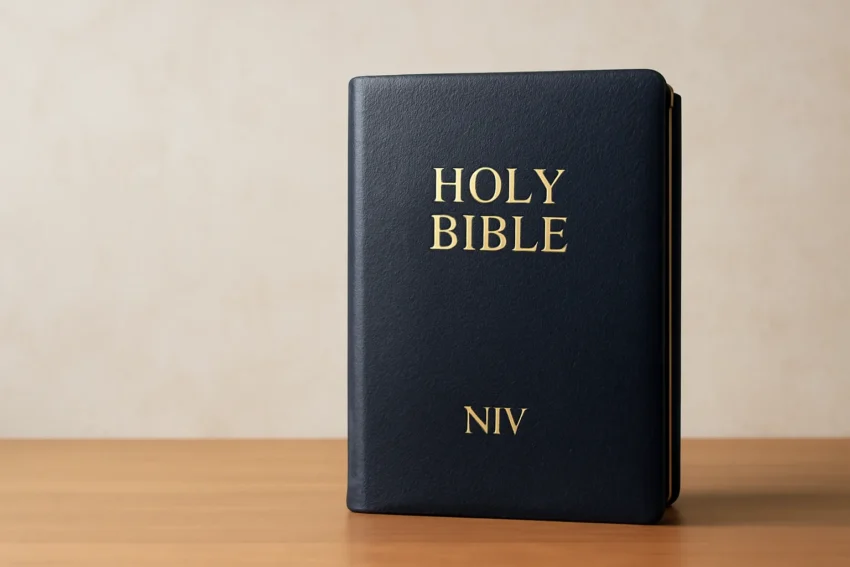
Introduction to Books NIV Bible: The Ultimate Guide to NIV Bible Editions, Versions, and Study Resources
The New International Version (NIV) is one of the most widely read English translations of the Bible in the modern era. For readers seeking a balance between readability and fidelity to the original texts, the NIV has become a go-to resource across churches, schools, and personal study. This article—often referred to in a few different ways as the NIV Bible editions, NIV Bible versions, or books NIV Bible—offers a comprehensive, practical guide to understanding the range of NIV editions, the stylistic and translation decisions behind them, and the wealth of study resources that accompany these volumes. Whether you are a long-time reader who wants to understand how the latest edition differs from earlier printings, a student selecting a study Bible for coursework, or a casual reader exploring a new NIV Bible for devotional use, this guide will help you navigate the options with confidence.
What is the NIV Bible?
The New International Version is an English translation created by a broad team of scholars from around the world. It was designed to be both accurate to the original languages (Hebrew, Aramaic, and Greek) and accessible to modern readers. The NIV’s translation philosophy centers on functional equivalence or dynamic equivalence: the aim is to convey meaning and nuance in natural, contemporary English without sacrificing essential details of the original texts. This approach makes the NIV a popular choice for personal reading, public worship, and academic study alike.
A brief history of the NIV and its major milestones
The NIV’s history includes several key moments that shaped its current form and reputation. The translation project began in the 1960s and culminated in the 1978 NIV edition, which immediately gained traction for its readability. An important revision followed in 1984, commonly referred to as the NIV 1984 update, which refined wording, updated vocabulary, and clarified certain passages while preserving the overall translation philosophy. In the early 2000s, debates about inclusive language led to a separate edition known as the TNIV (Today’s New International Version), which aimed to render gender-inclusive language where the original languages supported it. NIV 2011 later emerged as the official revision that reengaged with contemporary English usage and updated scholarship, while maintaining strong alignment with the 1978 baseline. Today, many publishers maintain printings of the NIV 2011 edition, along with companion study Bibles and digital versions that adapt the translation to a variety of formats and audiences.
Versions and editions: what counts as a “NIV” book
When people talk about NIV editions or NIV Bible versions, they’re often distinguishing between printings that use the same base translation and those that package the text with different study notes, commentary, or supplementary content. Some terms you will encounter include:
NIV 1978 and NIV 1984 editions—the early baseline text and its first major update.
NIV 2011—the widely used modern revision that reflects updated scholarship and contemporary language while preserving much of the 1984 wording.
TNIV—the separate edition (Today’s New International Version) that explored more expansive gender-inclusive translateability; it has largely given way to the NIV 2011 in most markets.
UK and other regional NIV editions—local language touches or formatting variations while retaining the same underlying translation.
In addition to the base text, there are special editions designed for particular needs, such as NIV Study Bibles (which pair the NIV text with extensive notes and resources), NIV Cultural Backgrounds Study Bible (which emphasizes historical settings and cultural context), and NIV Archaeological Study Bible (which highlights archaeological findings relevant to biblical text). Across these variants, the core is the same NIV translation, but the packaging and supplemental material differ to support different readers and purposes.
Below is a high-level map of common NIV editions you might encounter in libraries, bookstores, or online platforms. This is not an exhaustive catalog, but it covers the most widely used forms that readers consider “books NIV Bible” in everyday language.
The classic NIV and its updates
The 1978 NIV was the original widely used edition introduced to the public, praised for its readability in modern English. The 1984 NIV update refined phrasing, punctuation, and some translation choices to improve consistency and clarity. Together, these form the historical bedrock of contemporary NIV usage and are still found in many libraries and personal collections. When you purchase a print copy labeled NIV 1984 or NIV 2011, you are engaging with the same translation lineage, presented with different editorial decisions over time.
The NIV 2011 edition
The NIV 2011 revision aimed to balance updated scholarship with readability. It focused on refining gender-language decisions, adjusting certain terms for precision, and aligning with modern English usage. For many readers, the NIV 2011 edition represents the most current, widely supported translation in print today, though digital platforms may offer alternative formats or accompanying study resources. When people refer to NIV 2011, they are typically pointing to the modern standard used in many churches and Bible study groups.
TNIV and other historical notes
Although TNIV (Today’s New International Version) played a notable role in early 2000s discussions about inclusive language, most contemporary readers now engage with the NIV 2011 text. It’s helpful to understand this historical note because some older books NIV Bible or study resources may reference TNIV language or layouts. If you encounter a resource labeled TNIV, know that it reflects a transitional phase in NIV history rather than the current standard.
Regional and specialized editions
In addition to the base text, publishers issue regionally adapted or feature-rich editions. You might see:
NIV UK editions with slightly different typographic conventions or page layouts.
NIV Large Print and NIV Comfort Print editions designed for easier reading.
NIV Study Bible and NIV Life Application Study Bible with extensive notes, maps, and cross-references.
NIV Cultural Backgrounds Study Bible and NIV Archaeological Study Bible with specialized articles and sidebars.
Choosing the right NIV Bible for your needs
With a range of NIV editions and NIV Bible versions available, selecting the right one depends on your goals as a reader. Here are some practical considerations to guide your choice:
Purpose: Are you reading for personal devotion, classroom study, or sermon preparation? A NIV Study Bible or NIV Life Application Study Bible may be best for study, while a reader-friendly NIV Readable Edition suits daily devotions.
Readability: If you prefer smoother, contemporary language, the NIV 2011 is a reliable choice. If you want minimal editorial changes, you might explore earlier printings, bearing in mind modern readability standards.
Study resources: How important are notes, cross-references, maps, and articles? Editions with robust study resources will support deeper understanding, especially for unfamiliar passages.
Format: Consider print size, binding, margins, and whether you want large print, compact, or handy study Bibles for travel or classroom use.
Digital access: Do you prefer a Bible app with searchability, pericope alignments, and offline access? Many NIV editions are available digitally, often with added study tools.
NIV study resources: how to access and use them
One of the key advantages of the NIV is the breadth of study resources that accompany or complement the text. These resources help readers understand context, language, culture, and application. Here are some major categories and examples you may encounter in the realm of books NIV Bible study resources:
Printed study Bibles
Printed study Bibles pair the NIV text with extensive notes, maps, timelines, charts, and cross-references. Examples include:
NIV Study Bible (notes tailored to the NIV text, with book introductions and topical indices).
NIV Life Application Study Bible (practical application notes designed to connect biblical passages to everyday life).
NIV Cultural Backgrounds Study Bible (articles and notes emphasizing historical and cultural context).
NIV Archaeological Study Bible (features related to archaeological findings and their relevance to the biblical text).
Digital study resources and platform-based tools
In the digital realm, the NIV is accessible through a variety of platforms that enhance study and comparison:
Bible study apps (YouVersion, Bible Gateway, Olive Tree, etc.) that offer NIV editions with offline access and bookmarking.
Logo and software libraries (Logos, Faithlife) that provide sophisticated search capabilities, original language tools, and a wide array of NIV-compatible commentaries.
Online study resources (article libraries, interlinear views, and cross-referencing tools) that allow readers to explore NIV passages within broader biblical scholarship.
Advanced readers often engage with linguistic tools alongside the NIV text. Useful resources include:
Lexicons and Hebrew/Greek word studies that illuminate nuance behind key terms in the NIV translation.
Dictionaries of biblical terms and cultural concepts to deepen understanding of historical context.
Concordances that help locate NIV renderings of specific strings of words across the biblical corpus.
How the NIV editions affect study and worship
Different NIV editions are designed to meet distinct use cases. For example, a NIV Study Bible with its footnotes and cross-references can facilitate in-depth scholarly study and sermon preparation. Conversely, a NIV Daily Reading Edition may be optimized for consistent daily devotions with concise notes. The NIV Cultural Backgrounds Study Bible emphasizes historical settings and customs to enrich understanding during corporate worship or personal reflection. These variations illustrate how the same NIV translation can serve diverse audiences without altering the core text.
Understanding translation philosophy in NIV editions
At the heart of any Bible translation is a translation philosophy. The NIV emphasizes dynamic equivalence, prioritizing clarity and natural flow while preserving essential meaning. This differs from a strictly formal equivalence approach, which aims for a closer, almost word-for-word rendering. Readers should recognize that edits for readability may involve rephrasing or reorganizing sentences. However, the NIV’s editors strive to maintain fidelity to the intended sense of the scriptures and to the underlying linguistic evidence. When you compare editions—say, the NIV 1984 update versus the NIV 2011 edition—you may notice careful refinements rather than radical shifts in interpretation. Understanding this helps readers use books NIV Bible editions consciously rather than assuming a wholesale rewrite of scripture.
Practical tips for using NIV editions in study
Whether you are preparing for sermons, leading a small group, or pursuing personal growth, the NIV offers practical pathways for study. Consider these strategies to maximize the value of NIV Bible editions:
Start with a good study Bible that includes book introductions, outlines, and cross-references explicit to the NIV text.
Use parallel editions to compare translation choices across NIV variants and related Bible translations.
Take advantage of cultural background notes when reading passages that reference customs, geography, or historical events.
Annotate and connect—make margin notes, highlight themes, and trace motifs across books to build a cohesive understanding of biblical narrative.
Leverage digital tools—search terms, topic guides, and linked articles can reveal connections you might miss in print alone.
Where to find and acquire NIV Bibles and resources
Access to the NIV is widespread, with options spanning bookstores, church shops, libraries, and online platforms. Here are common routes for obtaining NIV books and their resources:
Print editions—NIV Study Bibles, large print NIV Bibles, and compact study editions are regularly stocked by major publishers and religious bookstores.
Online retailers—websites often offer multiple NIV Bible versions and bundle study resources with the text.
Digital Bible platforms—apps and websites provide instant access to NIV translations, with features like bookmarking, note-taking, and cross-referencing.
Libraries and academic institutions—collections may include historical NIV printings as well as modern study resources for scholarly work.
Common questions about NIV editions and usage
Readers new to the NIV or transitioning between editions often have questions. Here are some frequent queries and concise answers to help clarify concerns about books NIV Bible and their study implications:
Is NIV 2011 the latest official edition? Yes, in most markets the NIV 2011 revision is the current standard, though digital publishers may update formatting regularly.
Why do some editions differ in wording? Minor wording changes reflect ongoing scholarly review, updated scholarship, and community feedback while preserving the translation’s overall intent.
Are TNIV texts still used? The TNIV is largely superseded by the NIV 2011 in most contemporary printings, though some older resources may reference it.
Which NIV edition is best for classroom use? A NIV Study Bible or a NIV Life Application Study Bible is often preferred for guided study, while a straightforward NIV 2011 text can be suitable for assignments that require close reading of the Scripture itself.
Can I rely on NIV for careful language study? Yes, in combination with lexicons and commentaries, the NIV can be a solid base text for serious study, especially when paired with tools that explore original languages and cultural backgrounds.
How to approach reading and study with the NIV
To get the most from any NIV Bible edition, consider a plan that integrates translation understanding with historical context, linguistic insights, and practical application. Here is a suggested approach suitable for individuals, small groups, or classrooms:
Begin with a book overview using the NIV’s introductions or a corresponding study Bible’s notes to understand authorship, audience, structure, and themes.
Read in blocks—consider reading in sections (e.g., a pericope or a chapter) before consulting notes to experience the flow of the narrative or argument.
Consult cross-references—use cross-references in the study notes to explore related passages that illuminate a given theme or event.
Incorporate cultural background notes—when encountering passages with cultural references, read the related background articles to improve comprehension.
Apply the text—use the Life Application notes or discussion prompts from study Bibles to translate ancient messages into contemporary life.
Practical considerations when purchasing a NIV Bible
If you are shopping for a books NIV Bible, the following practical factors can help ensure your purchase matches your needs:
Format and size: Decide between compact editions for travel or larger formats with wider margins for note-taking.
Typography and readability: Some editions offer larger type, “Comfort Print,” or other typography enhancements to reduce eye strain.
Study notes and extras: Evaluate the breadth of notes, maps, timelines, and reference tools included in the edition.
Supplemental materials: Consider if you want concordances, dictionaries, or color maps included in the same volume.
Digital compatibility: If you use a tablet or phone, check whether the edition is available as a digital edition and whether it supports features you value (search, note-taking, offline mode).
Examples of popular NIV study resources and companion materials
Readers often pair the NIV translation with companion resources that expand understanding and facilitate teaching, preaching, and study. Some widely recognized resources include:
NIV Study Bible with comprehensive notes and book introductions.
NIV Life Application Study Bible for practical, everyday application and reflective questions.
NIV Cultural Backgrounds Study Bible highlighting historical and cultural contexts.
NIV Archaeological Study Bible featuring archaeological insights relevant to biblical passages.
NIV Zondervan Illustrated Bible Dictionary offering clear definitions and context for key terms.
Understanding the audience and purpose of different NIV editions
Different NIV editions are designed with distinct audiences in mind. For example, a student preparing for a biblical languages course may benefit from a study Bible with robust scholarly notes, while a busy parent might prefer a large print NIV Bible that is easy to read during a quick devotional. Church leaders may choose a devotional edition or a pastoral edition that includes practical sermon aids and teaching outlines. The NIV remains versatile because its translation framework supports both formal study and devotional reading, allowing readers to select books NIV Bible that align with their goals without sacrificing access to the broader biblical message.
As with any widely used translation, there are a few myths that readers sometimes encounter. A few clarifications can help:
Myth: The NIV is a paraphrase. Truth: The NIV is a formal effort to translate the meaning of the original languages into clear English, not a paraphrase. Its approach aims for readability while preserving accuracy.
Myth: The NIV is biased or agenda-driven. Truth: The NIV is produced by a broad, ecumenical group of scholars who seek to reflect scholarly consensus and textual evidence. It is not aligned with a single denomination or ideological position.
Myth: The NIV 2011 is the same as TNIV. Truth: TNIV was a separate translation that borrowed a period of gender-inclusive language. The NIV 2011 revision supersedes that edition in most current printings and platforms.
Summary: why readers choose the NIV and how it serves modern readers
In summary, books NIV Bible editions offer a flexible, readable, and academically respectful path through the biblical text. The NIV’s enduring popularity stems from its careful balance of readability and translation accuracy, along with a broad ecosystem of study resources, print formats, and digital tools. Whether you are exploring the NIV 2011 edition for personal devotion, using a NIV Life Application Study Bible in a small group, or studying NIV Cultural Backgrounds Study Bible for academic work, you are engaging with a translation that has become a central part of contemporary biblical scholarship and Christian practice around the world.
Final thoughts: building a personal library around the NIV
If you are building or refining a personal library focused on the NIV Bible, consider curating a set of volumes that together meet your needs across contexts. A dependable NIV Study Bible for in-depth study, a NIV Life Application Study Bible for practical application, and a NIV Cultural Backgrounds Study Bible for contextual understanding can form a well-rounded suite. Don’t overlook digital companions—many platforms offer robust NIV resources, including original-language lexicons, topic guides, and cross-referenced essays that complement the printed pages. By choosing a combination of NIV editions and study resources, you can tailor a reading plan and study routine that grows with your questions and curiosity about the biblical text.
Conclusion
Across books NIV Bible editions—from the classic 1984 update to the contemporary NIV 2011 edition and its diverse study formats—the NIV remains a trusted, accessible, and deeply useful translation for readers at every level. Whether you approach the Bible as a source of spiritual nourishment, historical insight, or linguistic study, the NIV’s breadth of editions and available resources equips you to engage with the text meaningfully. As you explore NIV Bible editions and select appropriate resources for your needs, you are participating in a long-standing tradition of scholarship and devotion that seeks to bring the ancient texts into clear, living language for today’s readers.