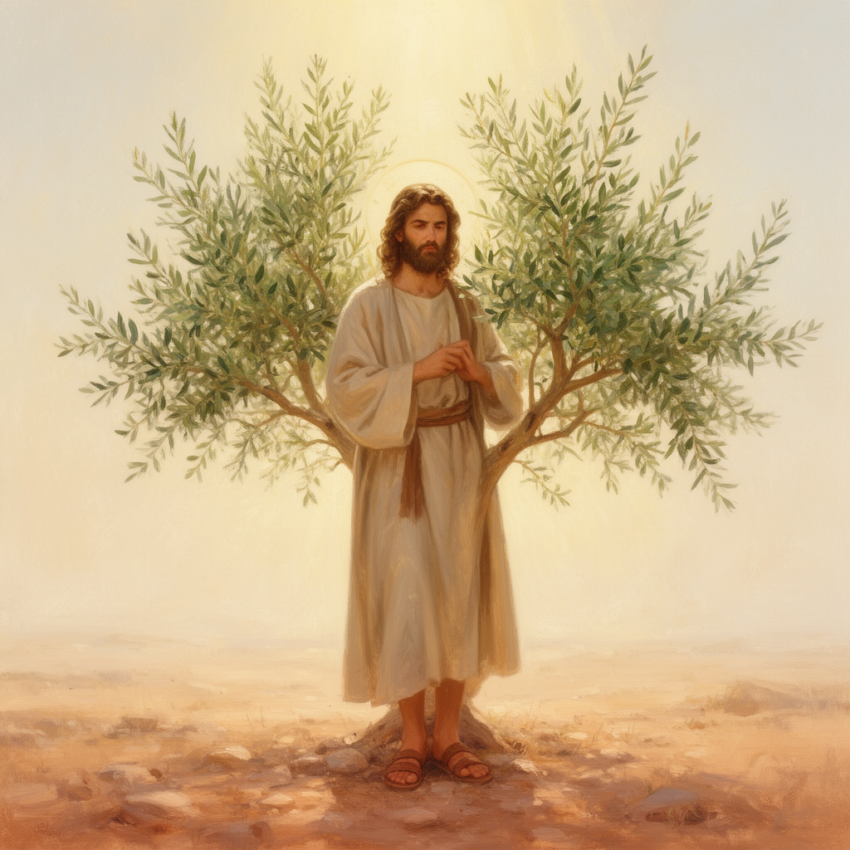
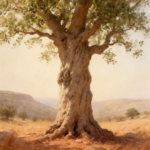
The Tamarisk is a deciduous or evergreen shrub or small tree, typically reaching 2-8 meters tall. It features slender, airy branches with feathery, scale-like leaves that are gray-green. Tiny, pale pink to white flowers form dense spike-like clusters, blooming in spring and summer. The plant produces small, capsule-like fruits that release tiny seeds dispersed by wind and water. Tamarisk thrives in arid, saline soils, especially near water sources like riverbanks and oases, tolerating drought and high salinity, making it a hardy landscape species in dry climates.
Scientific Name
Tamarix spp. (Debated between Tamarix aphylla and Tamarix nilotica)
Hebrew/Greek Name
תמריק (Tamarik)
Common Names
Tamarisk, Salt Cedar
Native Habitat
Native to southwestern Asia, North Africa, and the Middle East, Tamarisk is well-adapted to arid and semi-arid environments. It commonly grows along riverbanks, in saline soils, and desert margins within Israel, Jordan, Egypt, and surrounding regions. It favorably inhabits hot, dry climates with well-drained, alkaline soils.
First Biblical Mention
Genesis 21:33
📖 Biblical References
Reference
Context
Significance
Genesis 21:33
Abraham plants a tamarisk at Beersheba as a sign of covenant and divine blessing.
Symbolizes divine provision, hospitality, and Abraham’s lasting legacy in the land.
2 Samuel 17:27-29
Absalom’s allies bring Tamarisk branches with balsam and honey to nourish David’s men.
Represents relief, support, and the integration of natural resources into military and sustenance practices.
The Tamarisk at Beersheba embodies endurance, resilience, and divine blessing amidst harsh, arid conditions. Its hardy nature reflects faith and trust in God's provision in times of dryness and hardship. In biblical symbolism, it signifies hospitality and refuge, representing God's salvation and protection. The plant’s adaptability highlights themes of faithfulness and divine sustaining power, reminding believers of God's covenant and the importance of steadfastness in spiritual life. Its association with Abraham links it to the divine promise of land and prosperity, emphasizing hope and divine assurance even in barren environments.
🏺 Cultural Uses in the Ancient World
Ancient peoples utilized Tamarisk for making charcoal, building materials, and as ornamental or shade plants. Its resin and twigs were used medicinally to treat inflammation and digestive issues. Tamarisk branches served in ritual purification and as offerings in religious ceremonies, especially in the Near East. The plant’s salinity tolerance made it valuable for soil stabilization and as a windbreak in agricultural settings. Its aromatic wood was also employed in incense and trade, highlighting its practical and spiritual significance in daily life.
✡️ In Jewish Tradition
Tamarisk symbolizes repentance and spiritual renewal in Jewish tradition. In rabbinic literature, it represents resilience and divine kindness, often associated with reflections on God's sustaining care in deserts and wilderness. During certain festivals, Tamarisk branches are used in rituals, emphasizing purity and renewal. Its presence in the Land of Israel highlights its historical and spiritual connection to Jewish identity and heritage.
✝️ In Christian Tradition
Christian portrayal of Tamarisk aligns it with themes of endurance, faithfulness, and divine provision. It is sometimes viewed as a symbol of life sprouting amid barrenness, echoing biblical themes of hope in adversity. In ecclesiastical symbolism, Tamarisk can represent steadfastness in faith, echoing its biblical roots as a divine blessing in dry, desolate places. Its resilience serves as a metaphor for spiritual perseverance and divine grace in Christian teachings.
Scholars generally identify the biblical Tamarisk with species in the Tamarix genus, primarily Tamarix aphylla or Tamarix nilotica. There is some debate, as Tamarix species vary greatly across regions and ecosystems. Both candidates are salt-tolerant, drought-resistant trees common in Middle Eastern arid landscapes. Currently, Tamarix remains the most accepted botanical candidate for the biblical Tamarisk, though precise identification at the species level is still under study.
🗺️ Where Is It Found Today?
Today, Tamarisk can be found along watercourses, deserts, and saline soils in Israel, Jordan, Egypt, and surrounding Middle Eastern areas. It is cultivated in xeriscape gardens and used for landscape stabilization in arid regions across the Middle East. Many ancient Tamarisk groves near archaeological sites like Beersheba still stand, serving as living links to biblical history.
❓ Frequently Asked Questions
What does the Tamarisk symbolize in the Bible?
It symbolizes endurance, divine provision, and divine blessing amid harsh environments. Its resilience reflects faithfulness and God’s sustaining power.
Is the Tamarisk the same as the salt cedar?
Yes, Tamarisk is commonly known as salt cedar due to its high salinity tolerance and its preference for saline soils.
Can Tamarisk be used today for practical purposes?
Absolutely. Its drought resistance makes it useful for erosion control, windbreaks, and landscape in arid regions, while its historical significance adds cultural value.
✨ Did You Know?
Tamarisk is one of the oldest known cultivated desert trees, with archaeological evidence of its use dating back thousands of years. Its remarkable ability to thrive in extreme salinity has made it a symbol of resilience in both biblical and modern desert landscapes.