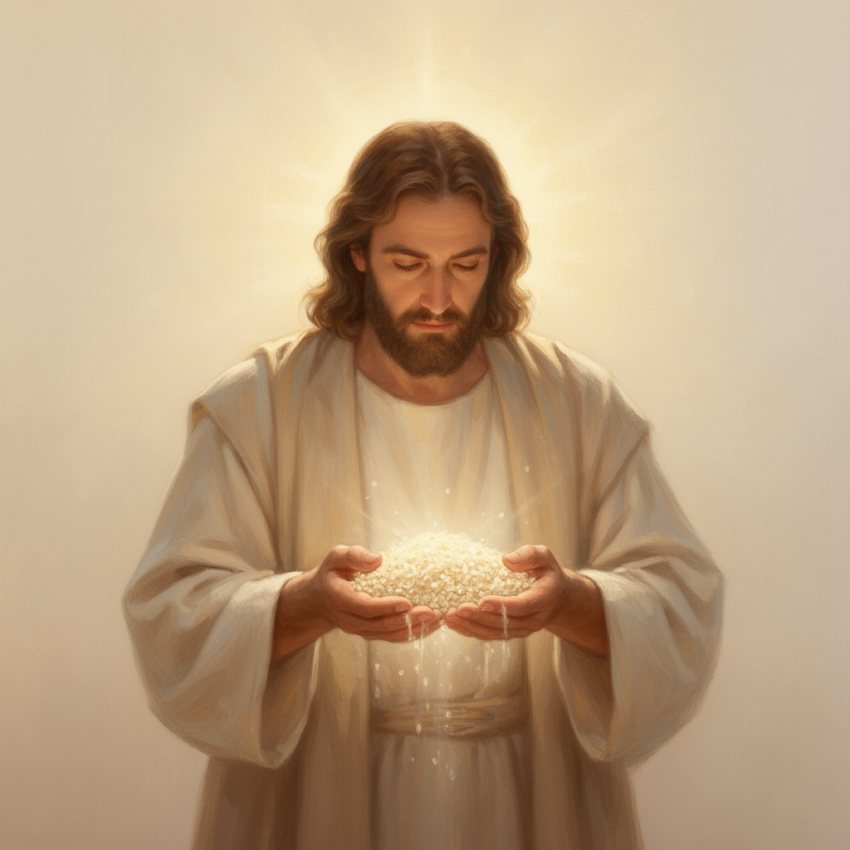
Manna is described biblically as a whitish, flaky substance resembling coriander seed or hoarfrost, which appeared on the ground each morning. If collected, it was ground into flour, cooked, or eaten raw, suggesting a versatile, small seed or resinous exudate. Some propose it could be a kind of edible insect secretions or a resin, but its precise nature remains uncertain. Its appearance was fine, cloud-like, or crystalline, attracting early Israelites in the wilderness. The plant or substance would thrive in arid, desert climates, with episodic production tied to specific environmental triggers. In terms of physical structure, candidates range from resinous exudates to small seeds, aligning with biblical descriptions of its appearance and edibility, though no definitive botanical identity exists.
Believed to grow in arid and semi-arid regions of the Middle East, particularly around the Sinai Peninsula and Negev Desert. It is associated with desert shrublands and rocky slopes, thriving in soils of poor fertility under harsh sun and dry conditions.
First Biblical Mention
Exodus 16:15, where the Israelites find manna on the ground after God rains it down from heaven.
Manna appears as daily sustenance in the wilderness, provided by God for the Israelites’ survival during their journey to Canaan.
It symbolizes divine providence, dependence on God’s provision, and trust in His daily care.
John 6:31-35
Jesus likens Himself to the bread from heaven, paralleling manna as a symbol of spiritual sustenance.
Highlights the spiritual significance of divine provision, pointing to Christ as the true bread of life.
✨ Symbolic Meaning in Scripture
Manna represents God's miraculous provision and faithfulness in times of need, embodying dependence on divine grace. Spiritually, it signifies sustenance beyond physical hunger, pointing to Christ as the spiritual bread that nourishes eternal life. Its ephemeral, daily nature teaches reliance on God's ongoing provision and trust, emphasizing humility and gratitude. Throughout Scripture, manna serves as a reminder of divine sovereignty, blessing, and the necessity of divine nourishment in both material and spiritual realms.
🏺 Cultural Uses in the Ancient World
Ancient Israelites regarded manna as a divine gift with no known human cultivation. In some traditions, it was viewed as a miraculous, otherworldly substance, symbolizing divine sustenance. Beyond biblical times, there is little evidence of widespread use, but some hypothesize it may have been a resin, honey, or seed edible by desert inhabitants, possibly used in ritual offerings or medicinal preparations in neighboring cultures.
✡️ In Jewish Tradition
Manna is celebrated in Jewish prayers and texts as the symbol of divine provision and trust in God's sustenance. The Purim festival, for instance, remembers God's miraculous care during exile, paralleling manna's significance. Rabbinic literature discusses its nature and the lessons of dependence on God, emphasizing humility and gratitude in daily life.
Christians view manna as a type of Christ, representing divine provision and spiritual nourishment. Jesus' reference in John aligns manna with His offering of eternal life, emphasizing that true sustenance comes from faith in Him. The spiritual lesson underscores reliance on God's grace and the importance of spiritual bread over material sustenance.
🔬 Modern Botanical Identification
Scholars remain divided; some suggest manna was a resinous exudate such as tamarisk or a secretion from desert insects, while others propose it was a seed like that of Ziziphus or a natural fungal or lichen substance. No consensus exists, and it may have been a unique, now extinct or unknown plant-product, possibly a combination of natural desert findings and divine miracle.
🗺️ Where Is It Found Today?
Small patches of potential manna-producing plants, like Tamarix species, grow in arid, rocky regions across Israel, Palestine, Egypt, and Jordan. The Sinai Peninsula and Negev Desert are still habitats of similar desert-adapted flora, though natural production as described biblically is rare or considered a miraculous event.
❓ Frequently Asked Questions
Is manna a plant or a natural substance?
Manna is believed to be a natural substance, possibly a resin, seed, or secretion from desert plants or insects, but its exact botanical identity remains debated among scholars.
Could manna be edible today?
While some desert resins or seeds are edible, the biblical manna’s unique nature and divine origin mean it isn’t replicable today. However, some desert plants are still used for medicinal or traditional purposes.
What lessons does manna teach us spiritually?
Manna teaches reliance on God’s daily provision, humility, gratitude, and faith in divine care. It also foreshadows spiritual sustenance through Christ, the true bread of life.
✨ Did You Know?
Some researchers suggest that the Bible's manna could have been a naturally occurring desert resin or lichen, which modern science occasionally uncovers in arid environments. Archaeological findings of ancient resin or exudates support the possibility that such substances could have inspired biblical descriptions of manna.