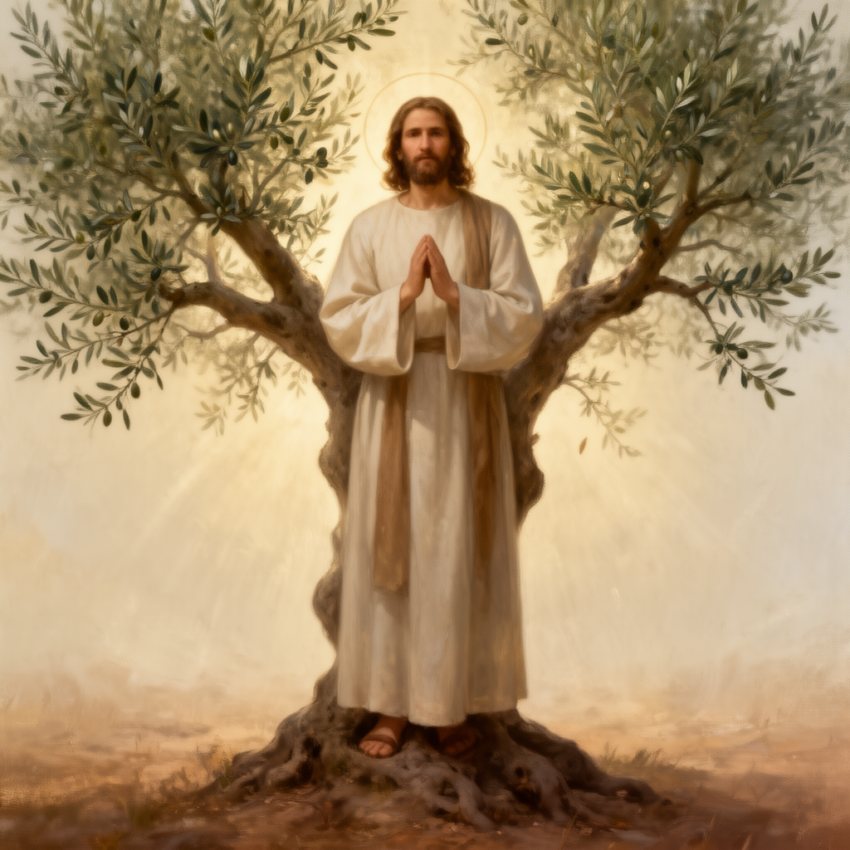
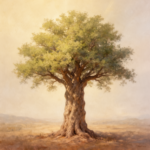
The olive tree (Olea europaea) is an evergreen shrub or small tree, reaching heights of 4-12 meters, with gnarled, silvery-green leaves that are narrow and leathery. It produces small, spherical, purple-black berries (olives), clustered on slender branches. The cedar of Lebanon (Cedrus libani) is a majestic coniferous tree, growing up to 40 meters tall, with broad canopy, needle-like leaves in dense rosettes, and large seed cones. Both thrive in Mediterranean climates, preferring well-drained, rocky soils. They symbolize endurance, strength, and abundance in their regions.
Scientific Name
Debated (Possibly Olea europaea for olive, Cedrus libani for cedar)
Hebrew/Greek Name
Hebrew: זָית (zayit) for olive; Greek: κέδρος (kédros) for cedar
Common Names
Olive Tree, Lebanese Cedar, Cedar of Lebanon
Native Habitat
Native to the Mediterranean Basin, especially Lebanon, Israel, and surrounding regions, these plants prefer dry, rocky hillsides, with hot, dry summers and mild, wet winters. The cedar is iconic in Lebanon’s mountains, while the olive is widespread across Israel and Palestine, cultivated for millennia.
First Biblical Mention
Judges 9:8 — The olive, cedar, and fig trees are first mentioned in the context of Jotham's parable to assess leadership qualities.
Jotham’s fable describes trees seeking a king, with the olive and cedar symbolizing leadership and stability.
The trees symbolize pride, strength, and leadership qualities, serving as an allegory for Israel’s rulers and their qualities.
✨ Symbolic Meaning in Scripture
In Scripture, the olive tree symbolizes peace, prosperity, and divine blessing, often representing Israel’s resilience and divine favor. The cedar of Lebanon signifies strength, majesty, and eternity—qualities of steadfast faith and kingship. Jotham’s fable uses these trees to teach humility, pride, and the importance of true leadership rooted in service and wisdom. Symbolically, these trees exemplify the relationship between divine provision and human humility, illustrating that true greatness lies in humble service rather than arrogance. Together, they evoke themes of stability, divine blessing, and moral integrity throughout biblical theology.
🏺 Cultural Uses in the Ancient World
Ancient Israelites highly valued olives for food, oil, and anointing practices, integral in religious rituals and daily life. The cedar of Lebanon was prized for construction—used in temples, palaces, and ships—symbolizing prestige and durability. Both plants held economic importance, traded across regions, and featured prominently in religious offerings and festivals. Olive branches signified peace, while cedar logs were symbolic of nobility and divine authority. These trees also played roles in medicinal practices and traditional fertility rites, embedding them deeply into Near Eastern culture and economy.
✡️ In Jewish Tradition
In Jewish tradition, the olive is associated with peace and settlers’ prosperity, symbolized in the olive branch as a sign of divine blessing. The cedar represents strength and divine majesty, often linked to the Temple’s architecture and divine presence. Rabbinic texts highlight the olive’s purity and the cedar’s might, emphasizing moral virtues of humility and humility in leadership. During festivals like Sukkot, palm, willow, and myrtle are used, but the olive remains emblematic of peace and endurance in Jewish thought.
Christianity sees the olive as a symbol of peace, reconciliation, and the Holy Spirit’s anointing, stemming from its biblical uses. The cedar is often viewed as representing divine strength and eternal life. The parables and symbolism of these trees relate to Christ’s teachings on humility, service, and divine authority. The olive branch, in particular, reminds believers of God’s covenant with humanity, emphasizing hope and divine faithfulness through biblical history and liturgy.
🔬 Modern Botanical Identification
Most scholars identify the biblical olive tree as Olea europaea, widely cultivated today in Israel and the Mediterranean. The cedar of Lebanon is generally accepted as Cedrus libani. While some debate exists about exact species, these identifications are supported by botanical and archaeological evidence, confirming their historical presence and significance. Alternative candidates for trees in similar contexts are less likely, given the distinct botanical traits and historical references.
🗺️ Where Is It Found Today?
Olive trees continue to thrive throughout Israel, Palestine, Lebanon, and Mediterranean countries, often hundreds or thousands of years old. Ceders of Lebanon are preserved in national parks and groves, especially in Lebanon’s mountains, serving as national symbols and tourist attractions. Both plants are cultivated commercially and preserved in ancient groves, maintaining their biblical and cultural significance.
❓ Frequently Asked Questions
What is the significance of the olive and cedar trees in the Bible?
They symbolize peace, divine blessing, strength, and leadership. Jotham’s fable uses them to illustrate qualities desirable in rulers and leaders as virtues rooted in humility and divine service.
Are the biblical olive and cedar trees the same as those grown today?
Yes, the biblical olive tree is generally identified as Olea europaea, and the cedar as Cedrus libani. These species still grow in Israel and Lebanon, maintaining their biblical symbolism and cultural importance.
How are these trees used in modern culture or religion?
Olive branches symbolize peace and reconciliation in Christianity and Judaism, often used during religious festivals and in peace treaties. The cedar remains a national symbol of Lebanon and represents strength and endurance in religious and cultural contexts.
✨ Did You Know?
The cedar of Lebanon has an ancient reputation among archaeologists; surviving ancient logs in ruins date back over 3,000 years, attesting to its durability and importance in constructing royal and sacred buildings. The olive tree can live for over a thousand years, with some groves in Israel believed to be nearly 2,000 years old, symbolizing endurance and divine blessing through millennia.