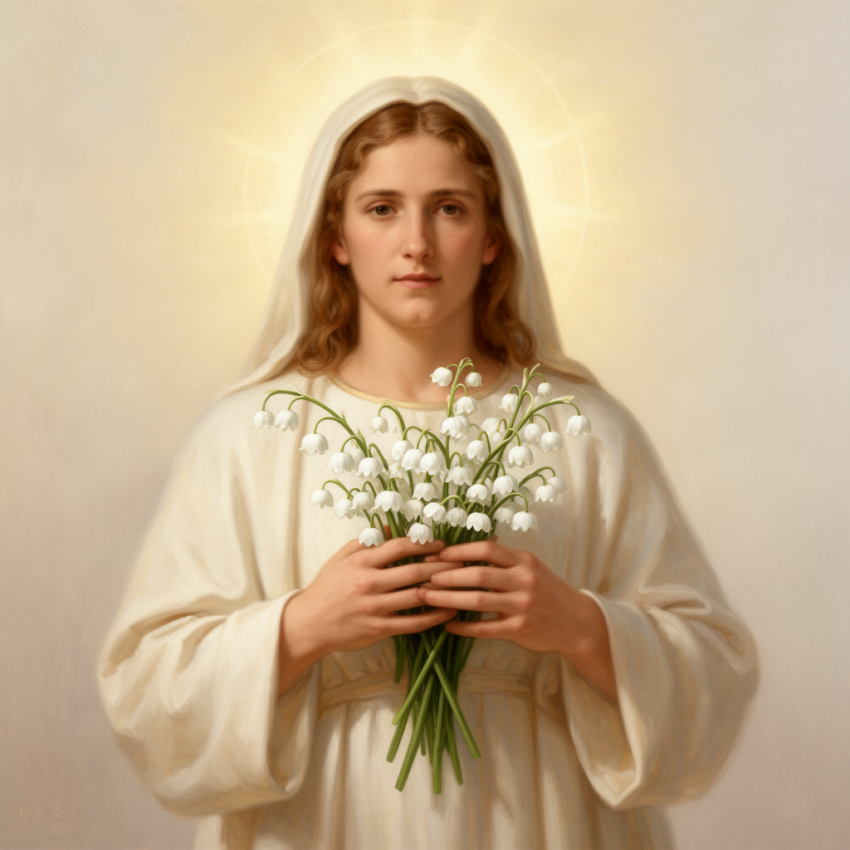
Convallaria majalis is a perennial herbaceous plant, typically growing 15-30 cm tall. It features arching, lance-shaped green leaves 10-20 cm long, appearing in pairs. Its nodding, bell-shaped flowers, usually white, bloom in spring, emitting a sweet fragrance. The flowers cluster in terminal racemes, each with six petal-like tepals. The plant prefers shaded, woodland environments with moist, well-drained, humus-rich soil. Its rhizomatous root system spreads slowly, forming dense ground covers. While rarely cultivated commercially, it is prized for ornamental use and symbolic meaning. Toxic if ingested, it emphasizes purity and humility through its delicate beauty.
Scientific Name
Convallaria majalis
Hebrew/Greek Name
Hebrew: שושן (
Common Names
Native Habitat
Native to temperate Europe and parts of Asia, particularly forests and shaded woodlands. It thrives in moist, acidic soils with plenty of organic matter. It adapts well to shaded gardens and naturalized woodland gardens, often growing beneath deciduous trees. Historically, it was prevalent in the woodlands of Israel, the Balkans, and Central Europe, aligning with biblical references to lush, sheltered gardens.
First Biblical Mention
Song of Solomon 2:1 — 'I am the rose of Sharon, the lily of the valleys.' This poetic verse elevates the plant as a symbol of lovely humility and divine beauty.
The beloved compares herself to a lily among thorns, symbolizing purity and beauty amidst hardship.
Signifies innocence, purity, and beauty, portraying idealized love and divine grace in a garden setting.
✨ Symbolic Meaning in Scripture
The Lily of the Valley often symbolizes humility, purity, and renewal in biblical theology. Its delicate appearance and sweet fragrance evoke the qualities of meekness and divine grace, reminding believers of Christ’s humility and the promise of spiritual rebirth. Throughout Scripture, similar flowers are associated with divine tenderness and the Resurrection, emphasizing hope and the beauty of spiritual innocence. In the spiritual journey, it represents humility that leads to divine elevation, inspiring believers to cultivate gentleness and trust in God's grace. Its modest bloom masks profound spiritual truths, serving as a metaphor for the hidden divine presence within humble humanity.
🏺 Cultural Uses in the Ancient World
In ancient Israel and surrounding cultures, Lily of the Valley was valued for its fragrant flowers and medicinal properties. It was used to alleviate headaches and promote mental clarity. Its beauty made it a choice for adornment in religious ceremonies and decorative garden planting. Its symbolism extended to notions of renewal and divine blessing, often included in local folk practices and temple offerings. The plant's low growth and lush appearance made it popular in modest, sacred spaces, reinforcing its spiritual significance.
✡️ In Jewish Tradition
Though not explicitly classical in rabbinic literature, flowers like the lily have been associated with divine beauty and sanctity in Jewish tradition. The flower’s symbolism of humility and divine grace echoes themes in Jewish hymns and poetry. During festivals like Sukkot, flowers representing God's blessing are prominently displayed, and the Lily of the Valley’s qualities align with these spiritual values of purity and divine favor.
In Christianity, the lily, including the Lily of the Valley, symbolizes the Annunciation, purity, and the Resurrection. Its association with the Virgin Mary emphasizes innocence and divine grace. The flower's delicate, fragrant presence is often used in Easter celebrations and wedding rituals to symbolize new beginnings, spiritual renewal, and divine humility. St. Paul describes believers as 'a lily among thorns,' reinforcing its role as a symbol of spiritual purity amidst worldly struggles.
🔬 Modern Botanical Identification
Most scholars identify the biblical 'lily' with the Lily of the Valley (Convallaria majalis), though some debate exists due to the poetic and symbolic language in Scripture. The plant’s delicate appearance and fragrance support this identification; however, other lilies like Lilium candidum are also considered candidates. The exact species remains debated, but Convallaria is widely accepted in botanical and theological circles as a poetic and symbolic match.
🗺️ Where Is It Found Today?
Today, Lily of the Valley is cultivated in temperate regions worldwide, including gardens across Israel, Europe, and North America. In Israel, it can be found in shaded woodland gardens and naturalized areas, especially in temperate zones with cool, moist climates. Its growing popularity in ornamental horticulture keeps its biblical symbolism alive in contemporary spirituality and garden design.
❓ Frequently Asked Questions
Is the Lily of the Valley the only flower that the Bible associates with lilies?
No, the Bible mentions lilies in various contexts, notably lilies of the field and the flower in the Song of Solomon, but the specific ‘lily’ in poetic references is often associated with symbolic flowers like the Lily of the Valley, which match its poetic qualities.
Can the Lily of the Valley be safely grown in gardens today?
Yes, it is widely cultivated in shaded garden areas compatible with its moisture and soil needs. However, caution is advised as it is toxic if ingested, especially to children and pets.
What does the Lily of the Valley symbolize in Christian art?
It often symbolizes humility, purity, and the Resurrection. Its depiction in religious art underscores themes of divine grace, renewal, and Christ’s humility and victory over death.
✨ Did You Know?
Despite its delicate appearance, Lily of the Valley is highly toxic; historically, it was used in small doses as a heart remedy. Archaeological evidence suggests the plant has been appreciated since ancient times, with its fragrance considered divine and its symbolism enduring across cultures.