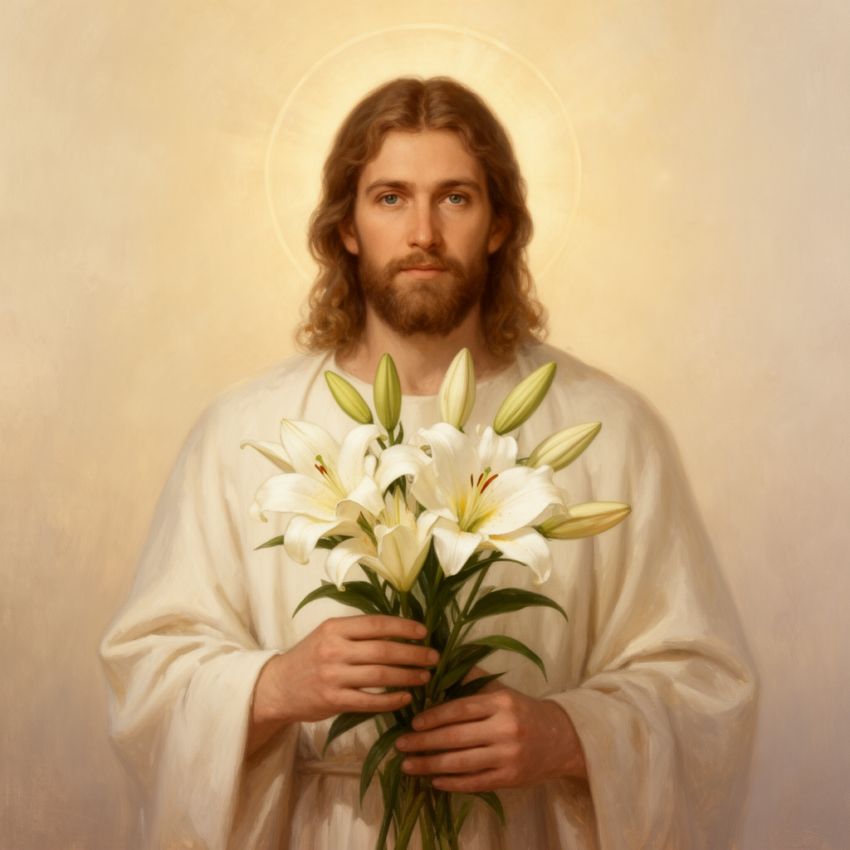
The lilies of the field are likely wild members of the Lilium genus or related bulbous flowering plants. Typically, they grow to about 1-3 feet tall, with slender, lance-shaped leaves that appear alternately along the stem. Their large, trumpet-shaped flowers are often white, yellow, or pink with prominent stamens, blooming in late spring to early summer. The plants thrive in well-drained, open areas with full sun or partial shade and prefer temperate climates. Their bulbs store energy for flowering, and they produce a sweet fragrance to attract pollinators. The plant’s hardy nature and vibrant blossoms have made it a symbol of purity and beauty in various cultures.
Scientific Name
Debated; candidates include Lilium spp. (true lilies) or Asphodelus spp.
Hebrew/Greek Name
Hebrew: שושן (Shoshann), Greek: κρίνον (krín): 'lily' or 'flower'
Common Names
Lily, Field Lily
Native Habitat
Native to the Mediterranean region, including Israel, southern Europe, and parts of North Africa, these plants flourish in temperate zones with rocky soils. They typically grow in meadows, grasslands, and scrublands, favoring well-drained, slightly alkaline soils and full sun exposure. Their adaptability enables them to survive drought conditions common in their native regions.
First Biblical Mention
Matthew 6:28 — 'Consider the lilies of the field…'
Jesus refers to lilies when teaching about trusting God’s provision, using them as an example of God’s care for creation.
The lilies symbolize divine beauty and the trust believers can have in God’s provision, emphasizing that life’s needs are provided for by God’s grace.
Song of Solomon 2:1
The bride describes herself as a lily among thorns, symbolizing purity and beauty amidst adversity.
It highlights innocence, beauty, and divine favor, often interpreted as spiritual or romantic metaphor.
✨ Symbolic Meaning in Scripture
Throughout scripture, lilies represent purity, divine beauty, and spiritual renewal. Their ephemeral yet brilliant blossoms symbolize transient earthly beauty and the divine providence that sustains life. Jesus' reference underscores trust in God’s provision, reminding believers that beauty and sustenance are gifts from the Creator. The lily’s elegance often denotes spiritual innocence and the sanctity of divine creation. In Christian theology, lilies also serve as a symbol of resurrection and new life, mirroring Christ’s victory over death. The flower's simplicity and grace inspire humility and faith, encouraging believers to focus on divine abundance rather than worldly concerns. Overall, lilies embody the harmony of divine love, purity, and hope throughout biblical narrative and Christian symbolism.
🏺 Cultural Uses in the Ancient World
In ancient Israel and surrounding cultures, lilies and similar wildflowers were used decoratively in religious festivals, tabernacle adornments, and wedding ceremonies. Their bulbs and flowers may have been used medicinally for treating ailments like coughs or wounds, although direct evidence is limited. The blooms' aromatic qualities could have also contributed to perfumes or offerings in worship rituals. Additionally, wild lilies served as symbols of fertility and beauty in local art and poetry, inspiring craftsmanship and decorative arts. Their presence in the landscape was appreciated for their natural beauty and spiritual symbolism, often linked to divine blessings and harvest fertility.
✡️ In Jewish Tradition
Lilies are associated with beauty and divine creation in Jewish tradition. They appear in rabbinic literature as symbols of purity and divine favor. During festivals like Passover, decorative flowers, including lilies, enrich the ceremonial environment, emphasizing divine blessing and renewal. The biblical association with the “Song of Songs” also elevates the lily as an emblem of romantic and spiritual purity within Jewish poetry and symbolism.
Christianity interprets lilies as symbols of resurrection, purity, and divine grace, especially linked to the Easter celebration. They are often used in church decorations and iconography to symbolize the Virgin Mary’s purity and Christ’s resurrection. The flower’s mention in biblical teachings underscores trust in divine providence, inspiring spiritual reflection on the transient nature of earthly beauty and eternal divine life. The Easter lily, in particular, has become an emblem of hope, renewal, and divine blessing within Christian liturgy and art.
🔬 Modern Botanical Identification
Scholars generally identify biblical lilies with wild members of the Lilium genus or related Asiatic lilies, though there remains debate over specific species due to regional differences in flora. Some suggest the asphodel or wild narcissus may also be candidates. The exact species continues to be debated, but Lilium candidum and similar wild lilies are strong contenders, given their appearance and historical distribution. No definitive consensus exists, but the association with true lilies remains dominant.
🗺️ Where Is It Found Today?
Wild lilies still grow in Israel and the eastern Mediterranean, thriving in rocky, well-drained soils of open fields, hillsides, and nature reserves. They can be found in regions such as the Galilee, Judean Hills, and Negev. Cultivated varieties are widely grown in gardens worldwide, appreciated for their aesthetic appeal and biblical significance. Conservation efforts protect wild populations due to their cultural and ecological importance.
❓ Frequently Asked Questions
Are biblically referenced lilies the same as the modern Easter lily?
Not exactly. The biblical lilies are likely wild species native to the Mediterranean, while the Easter lily is a cultivated cultivar, often Lilium longiflorum, developed for ornamental and symbolic use. They share visual similarities but differ in origin and historical context.
What do lilies symbolize in Christianity?
In Christianity, lilies primarily symbolize purity, divine grace, resurrection, and eternal life. They are closely associated with the Virgin Mary and Easter, representing hope and spiritual renewal.
Can lilies grow in Israel today?
Yes, wild lilies naturally grow in Israel’s rocky and mountainous regions, surviving in open, sunny habitats. Cultivated varieties are also widely available in gardens around the world for decorative and symbolic purposes.
✨ Did You Know?
The Easter lily (Lilium longiflorum), a cultivated species, was originally native to the Ryukyu Islands, but has become a global symbol of Easter and renewal. Archaeological evidence suggests that ancient peoples valued lily-like flowers in ritual contexts, emphasizing their long-standing importance in spiritual and cultural traditions.