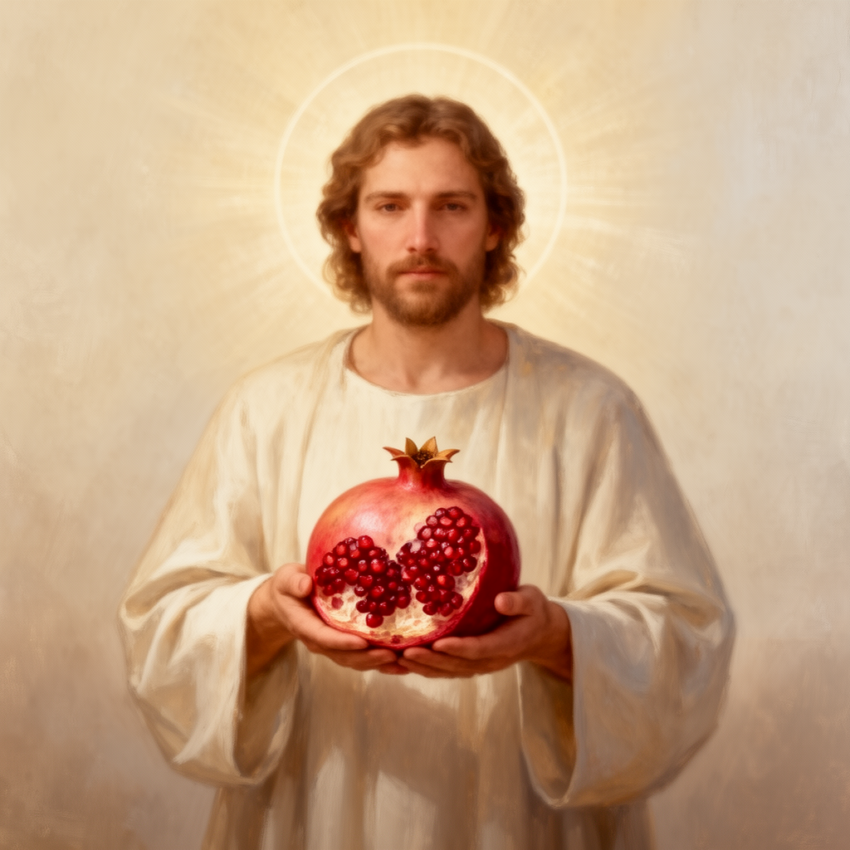
The pomegranate is a deciduous shrub or small tree reaching 5-8 meters in height. It features glossy, leathery ovate leaves, and showy, bell-shaped flowers in shades of red, orange, or scarlet, often with a crown-like calyx. The fruit is a round, berry-like pome, approximately 5-12 cm in diameter, with a tough outer rind and abundant arils (juice sacs) inside. The arils are ruby-red, sweet-tart in flavor, and packed with seeds. It thrives in semi-arid, well-drained soils and full sun, common in warm Mediterranean climates, including Israel. Its hardy nature makes it adaptable to various conditions, but it prefers dry summers and mild winters.
Native to Iran and the Himalayan regions, the pomegranate has spread across the Mediterranean basin, including Israel, Jordan, and Lebanon. It grows naturally in rocky, well-drained soils with warm, arid to semi-arid climates. Historically cultivated since ancient times, it is well-adapted to Mediterranean landscapes and extends into parts of North Africa, the Middle East, and South Asia.
First Biblical Mention
Numbers 13:23, where spies bring a cluster of pomegranates from Canaan
📖 Biblical References
Reference
Context
Significance
Numbers 13:23
The spies returning from Canaan carry a cluster of pomegranates as a sign of the land’s fertility.
Represents the richness of the Promised Land, abundance, and divine provision.
Song of Solomon 4:13-14
The lover’s garden is described with pomegranates among other fragrant plants.
Symbolizes beauty, desire, and divine blessing in love and abundance.
Deuteronomy 8:8
The land God gives Israel is described as a land of wheat, barley, vines, fig trees, pomegranates, and olive oil.
Embodies prosperity, divine blessing, and the fruitful soil of the Promised Land.
In biblical theology, the pomegranate symbolizes fertility, righteousness, blessing, and divine abundance. Its numerous seeds represent prosperity, fruitfulness, and the divine promise of plentiful harvests. The fruit's lush, red arils evoke themes of beauty and divine favor, while its recurring presence in sacred texts underscores its role as a symbol of the covenant between God and His people. Throughout Scripture, the pomegranate stands as a metaphor for righteousness and goodness, reflecting the rewards of obedience and faithfulness. Its divine symbolism extends to its use in temple ornamentation and priestly garments, emphasizing holiness, divine presence, and the ideal of spiritual fruitfulness. The pomegranate inspires notions of spiritual richness and divine blessing in the biblical narrative, making it a profound emblem of hope, abundance, and divine blessing in biblical life and theology.
🏺 Cultural Uses in the Ancient World
Ancient Israelites and neighboring cultures highly valued the pomegranate for its culinary, medicinal, and decorative uses. It was consumed fresh, dried, or pressed for juice, often incorporated into feasts and offerings. Its seeds symbolized fertility and abundance, used in decorative art and temple adornments. Medicinally, parts of the plant were used to treat various ailments, including digestive issues and inflammation. The fruit also had significance in trade, valued as a luxury item, and was used in perfumes and dyes derived from its rind and seeds. Pomegranates appeared in mosaics, jewelry, and ritual objects, underlining their cultural importance. Their versatility made them a symbol of prosperity, fertility, and divine favor across the ancient Near East.
✡️ In Jewish Tradition
In Jewish tradition, the pomegranate is a symbol of righteousness and fruitfulness, often associated with virtue and good deeds, as tradition states that pomegranates have 613 seeds, corresponding to the 613 commandments of the Torah. During Rosh Hashanah, it is customary to eat pomegranates to invoke a year filled with good deeds and blessings. The fruit's imagery appears in synagogue decorations, amulets, and rabbinic literature as a symbol of blessing and divine approval. Its significance is also emphasized in teachings about virtues, reflecting the hope for a fruitful and righteous year and the ideal of spiritual abundance.
Christian interpretations view the pomegranate as a symbol of resurrection, spiritual fullness, and divine blessing. Its numerous seeds are seen as representing the multitude of believers or the fruits of the Spirit. The fruit often appears in Christian art and iconography, illustrating themes of redemption, eternal life, and divine grace. Early Christian writers associated it with Christ's promise of spiritual resurrection and abundance. The pomegranate’s image has been used to emphasize spiritual richness and the promise of eternal life through faith in Christ, reinforcing its symbolism as a sign of divine blessing and spiritual harvest.
🔬 Modern Botanical Identification
Botanically, the pomegranate is identified as Punica granatum, with wide scholarly consensus. However, there have been debates about its precise biblical counterparts due to regional variations in fruit appearance and cultivation. Some suggest ancient references may also describe related species, but Punica granatum remains the standard identification. Genetic studies support its classification within the Lythraceae family, and it is extensively cultivated worldwide under this species name.
🗺️ Where Is It Found Today?
Today, pomegranates are widely cultivated in Israel, the Middle East, North Africa, the Mediterranean, India, and California. In Israel, they grow prominently in regions like the Beersheba Valley and Galilee, thriving in warm, dry Mediterranean climates. They are routinely cultivated both commercially and in home gardens, emphasizing their cultural and culinary significance.
❓ Frequently Asked Questions
Why is the pomegranate considered sacred in the Bible?
The pomegranate is seen as a symbol of divine blessing, fertility, and righteousness. Its frequent mention highlights its importance as a fruit that embodies God’s generosity and the spiritual richness of His covenant with His people.
How many seeds does a typical pomegranate contain?
A typical pomegranate contains about 200-1400 seeds, which is why it’s associated with abundance and fertility in biblical and cultural symbolism.
Are pomegranates still cultivated today in Israel?
Yes, pomegranates are widely cultivated across Israel today, especially in regions like Galilee and the Negev, where the climate is ideal for growth and they continue to symbolize fertility and blessing.
✨ Did You Know?
Archaeological evidence shows pomegranate seeds in ancient Egyptian tombs over 3,000 years old, indicating its long-standing role as a cultural symbol. In addition, the fruit's characteristic tough rind has inspired ancient innovations in dyeing and waterproofing materials.