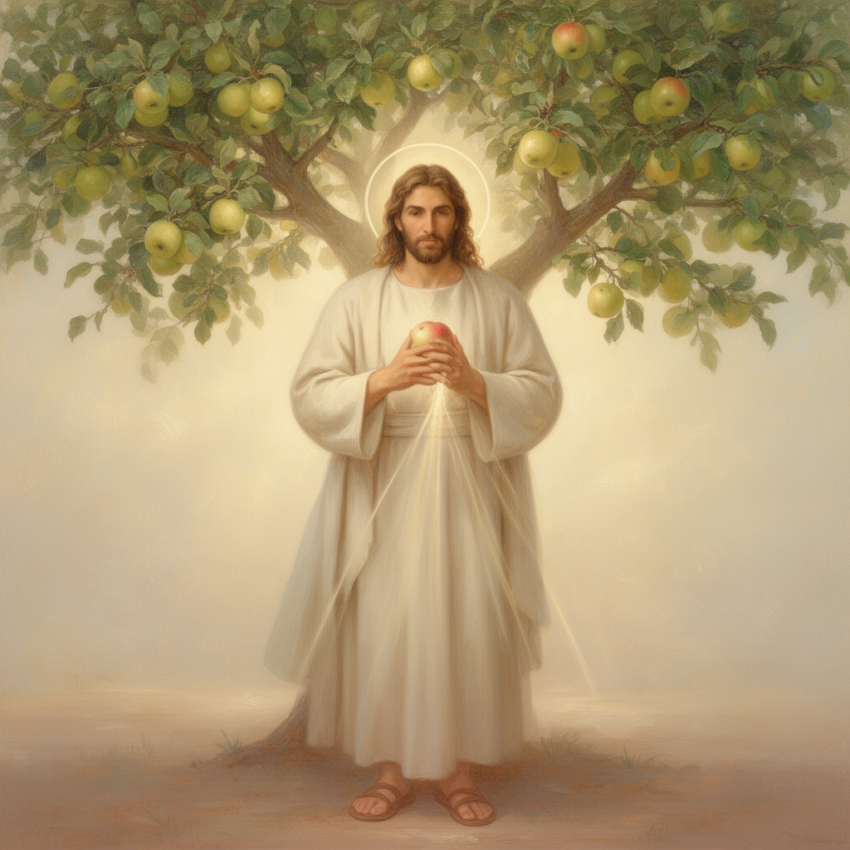
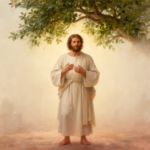
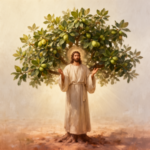
The apple tree (Malus domestica) is a deciduous tree reaching 3–12 meters tall, with spreading branches and a broad canopy. It has simple, oval leaves with serrated edges, yellowish-green or reddish in color. Spring blossoms produce five-petaled white flowers with pink tinges. Its fruit is typically round, varying from small to large, with a smooth skin over firm, juicy flesh. The apple prefers temperate climates, well-drained soils, and full sunlight, thriving in orchards worldwide. Its adaptability makes it one of the most cultivated fruit trees, valued for fruit, ornamental purposes, and cultural symbolism.
Scientific Name
Malus domestica
Hebrew/Greek Name
Hebrew: תַּפּוּחַ (tapuach); Greek: Μῆλον (mēlon)
Common Names
Apple, Malus
Native Habitat
Native to Central Asia, specifically the mountainous regions of Kazakhstan, the apple was cultivated early in Eurasia. Today, it is grown in temperate zones globally, especially in Europe, North America, and the Middle East, thriving in well-drained loamy soils with temperate climates.
First Biblical Mention
Genesis 3:6
📖 Biblical References
Reference
Context
Significance
Genesis 3:6
Eve takes the fruit from the Tree of Knowledge of Good and Evil after being tempted by the serpent.
Symbolizes temptation, knowledge, and the fall of man; often associated with innocence lost.
Song of Solomon 2:3
The beloved is described as an apple tree among the trees of the forest.
Represents beauty, love, and desire; a symbol of vitality and divine blessing.
Revelation 22:2
The tree of life bears twelve kinds of fruit, yielding its fruit each month.
Indicates eternal life, divine bounty, and restoration in the eschatological vision.
Throughout Scripture, the apple tree embodies themes of temptation, temptation’s consequences, love, and divine sustenance. Its fruit signifies temptation and knowledge in Eden, but also abundance, health, and divine blessing in later biblical passages. In Christian theology, the apple often symbolizes original sin and humanity's fall, yet also points toward redemption and eternal life with its connection to the Tree of Life. The tree's contrasting symbolism—innocence in Eden versus human temptation—reflects the journey of mankind from innocence to spiritual growth. In poetic texts, the apple tree represents beauty, love, and divine favor, emphasizing life’s bounty and the spiritual nourishment procured through faith.
🏺 Cultural Uses in the Ancient World
Ancient Israelites and Near Eastern peoples cultivated apples as both food and offerings. They valued the fruit for its sweetness and medicinal properties, often using apple-derived products in remedies. The fruit also played a role in trade, symbolic rituals, and festivals. The wood was utilized in crafting and construction, while the fruit was enjoyed fresh or dried. Apples held promise of health and prosperity, and their depiction in art and literature underscored their cultural significance in the ancient Levant.
✡️ In Jewish Tradition
In Jewish tradition, apples symbolize sweetness and blessings, especially during Rosh Hashanah when apples dipped in honey invoke hopes for a sweet new year. The fruit appears in rabbinic literature as a symbol of Torah and spiritual nourishment. The apple's presence in various legends emphasizes its role as a sign of divine grace and human prosperity. Harvest festivals often celebrated apple offerings, emphasizing gratitude for God's bounty.
Christianity uses the apple as a metaphor for temptation and original sin, rooted in its biblical association with the forbidden fruit. It also symbolizes knowledge, temptation, and the fall, yet in redemption narratives, it points toward spiritual nourishment and the promise of eternal life—especially through the imagery of the Tree of Life in Revelation. Artists and theologians have historically employed the apple to represent both mankind’s fall and divine grace, emphasizing redemption and spiritual awakening.
🔬 Modern Botanical Identification
The common biblical 'apple' is identified as Malus domestica, though some scholars debate whether the original Hebrew term refers to pomegranates or other fruits. There is no complete consensus; the apple’s symbolism was strengthened by later European art. Alternative candidates include the pomegranate or quince, based on symbolic and botanical considerations, but Malus domestica remains the most widely accepted identification.
🗺️ Where Is It Found Today?
Today, apple trees thrive in Israel, Turkey, Lebanon, and throughout the Mediterranean, especially in orchard regions such as the Galilee and Jezreel Valley. They are cultivated for commercial fruit production and decorative purposes, continuing their biblical and cultural legacy in modern Israel.
❓ Frequently Asked Questions
Is the biblical apple the same as the modern apple?
Not necessarily. The Hebrew term may refer to different fruits like pomegranate or quince, but culturally and artistically, it became associated with the apple over time, especially in Western tradition.
Why is the apple associated with temptation in the Bible?
Because Genesis 3 describes a fruit from the Tree of Knowledge perceived as an apple in Western tradition, symbolizing temptation, disobedience, and the fall of man. The actual fruit is not named explicitly in the original text.
What biblical significance does the apple have today?
It symbolizes temptation, knowledge, love, and redemption. In Christian and Jewish thought, it continues to represent divine blessings, human sin, and the hope of spiritual renewal.
✨ Did You Know?
Archaeological evidence suggests that apple cultivation dates back over 4,000 years in the Near East. Ancient texts and artifacts indicate that apples were prized not only as food but also in medicinal and religious contexts throughout history.