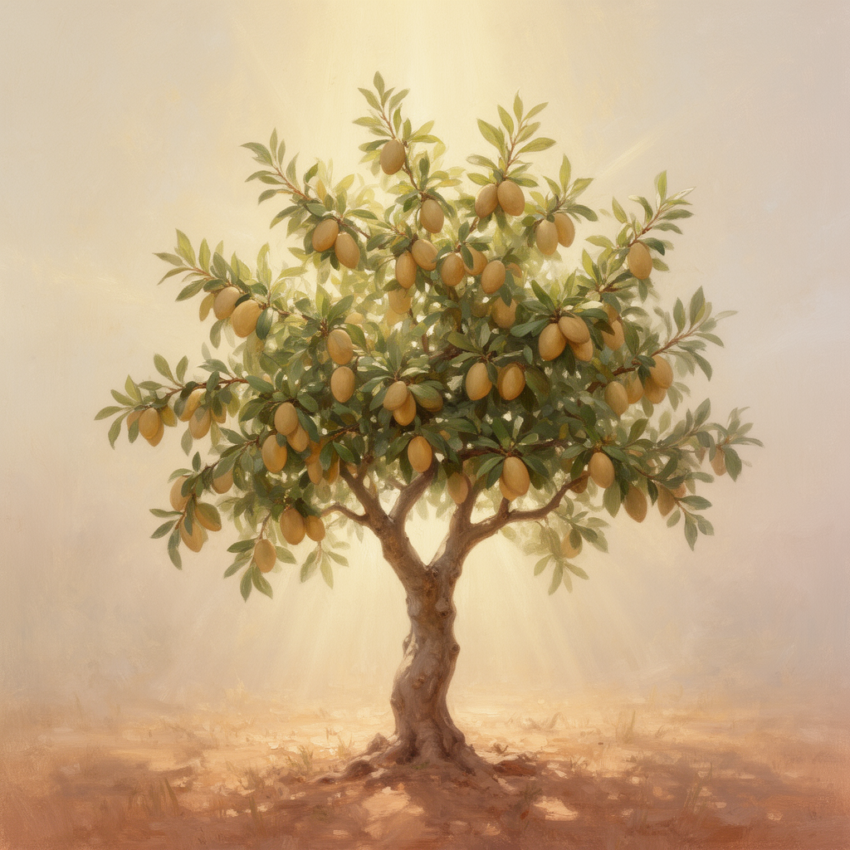
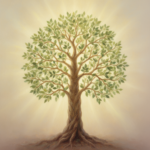
The almond tree (Prunus dulcis) is a small deciduous tree reaching 4-10 meters in height. It features smooth, grayish bark and slender branches. Its pointed, lance-shaped leaves are about 4-8 cm long, with finely serrated edges. In early spring, the tree produces fragrant white to pale pink blossoms before leaf emergence, typically in clusters of 2-8 flowers. The fruit is a drupe with a hard shell and contains a single edible seed—the almond nut—covered by a thin, papery membrane. The almond prefers well-drained, sandy or loamy soils in Mediterranean climates, thriving with ample sunlight and moderate rainfall.
Native to the Levant, including modern-day Israel, Lebanon, and Syria, the almond thrived in the Mediterranean basin. It prefers warm, dry summers and mild, wet winters, growing naturally in foothills and valleys with well-drained soils. Today, it is cultivated throughout the Mediterranean, California, and parts of the Middle East.
First Biblical Mention
Exodus 25:33-34 (the menorah's almond-shaped decorations)
📖 Biblical References
Reference
Context
Significance
Exodus 25:33-34
Description of the candlestick (menorah) with almond-shaped cups and ornaments
Represents divine illumination, purity, and the awakening of spiritual light
Numbers 17:8
Aaron’s rod blossoms and bears almonds as a sign of divine selection
Symbolizes God’s chosen authority and the promise of renewal and life
Jeremiah 1:11-12
Prophet Jeremiah’s vision of an almond branch
Represents God’s vigilance and the swift fulfillment of His promises
Song of Solomon 2:1
The bride describes herself as an almond tree
Symbolizes beauty, renewal, and awaiting divine favor
The almond tree is a powerful symbol of divine faithfulness, vigilance, and renewal throughout Scripture. Its early blossoms herald hope and new beginnings, reflecting God's readiness to fulfill His promises. The almond’s rapid flowering despite harsh conditions symbolizes God's swiftness in answering prayers and executing judgment. In biblical symbolism, it signifies awakening, divine light (as seen in the menorah), and the promise of life amid adversity. Its resilience and early bloom serve as metaphors for spiritual alertness and trust in God's timing. The almond branch also symbolizes authority and divine choice, emphasizing God's active role in guiding and sustaining His people. Overall, it embodies steadfastness, renewal, and divine vigilance, aligning with themes of hope and divine faithfulness in biblical theology.
🏺 Cultural Uses in the Ancient World
Ancient Israelites valued almonds for food and trade, as they produced nutritious nuts that stored well during droughts. Almond wood was used in construction and for crafting utensils due to its durability. The nuts also played a role in religious offerings and festivals, symbolizing divine blessing and prosperity. Carob and almond shells served as fuel, and the tree’s early blossoms marked the beginning of spring and agricultural cycles. The almond was also associated with wisdom and vigilance in Near Eastern cultures, often depicted in art and ritual objects, emphasizing its spiritual importance alongside its practical uses.
✡️ In Jewish Tradition
In Jewish tradition, the almond tree’s early blossoming symbolizes vigilance and divine justice, especially during Rosh Hashanah when the 'Shaking of the Almond Branch' signifies awakening and divine mercy. The almond's rapid flowering is linked to God's swift fulfillment of promises. Rabbinic texts associate the almond with renewal and light, underscoring divine attentiveness and hope. Some customs include planting almond trees as symbols of prayer for swift answers to petitions, reflecting its biblical symbolism of divine watchfulness and faithfulness.
Christian interpretation often associates the almond tree with God's faithfulness and the promise of resurrection. Its early spring blossoms are seen as a sign of hope and divine revelation. The almond’s symbolism of swift divine action resonates with Christian themes of divine intervention and salvation. In art and sermons, it underscores the motif of renewal and divine vigilance, emphasizing God's readiness to respond to human needs and the promise of new life through Christ.
🔬 Modern Botanical Identification
Botanically, the almond tree is identified as Prunus dulcis, a well-established species with clear botanical and genetic markers. Scholars generally agree on this identification, though some debated candidates historically included related Prunus species such as the apricot (Prunus armeniaca). The almond's distinctive blossoms and nut make identification straightforward with modern botany.
🗺️ Where Is It Found Today?
Today, almond trees flourish in Israel's Mediterranean climate, especially in regions like the Sharon Plain, Galilee, and Negev highlands. They are widely cultivated in California and the Mediterranean basin, thriving in well-drained soils with favorable climates that mimic their native environment.
❓ Frequently Asked Questions
Why is the almond tree associated with divine vigilance in the Bible?
Because its early blossoms symbolize God’s swift response to prayers and divine promises, representing alertness and divine watchfulness.
What does the almond branch symbolize in biblical stories?
It signifies divine authority, divine choice, renewal, and the fulfillment of God’s promises, as seen in Aaron’s rod and Jeremiah’s vision.
Can the almond tree be grown outside the Middle East today?
Yes, almond trees are cultivated in regions with Mediterranean climates, particularly in California, Spain, and parts of Australia, thriving in well-drained, sandy soils.
✨ Did You Know?
Archaeological excavations in the Levant have uncovered ancient almond pits dating back to 2000 BCE, indicating almond cultivation during early biblical times. Additionally, the almond blossom is still culturally celebrated in Israel during early spring festivals, symbolizing renewal and hope.