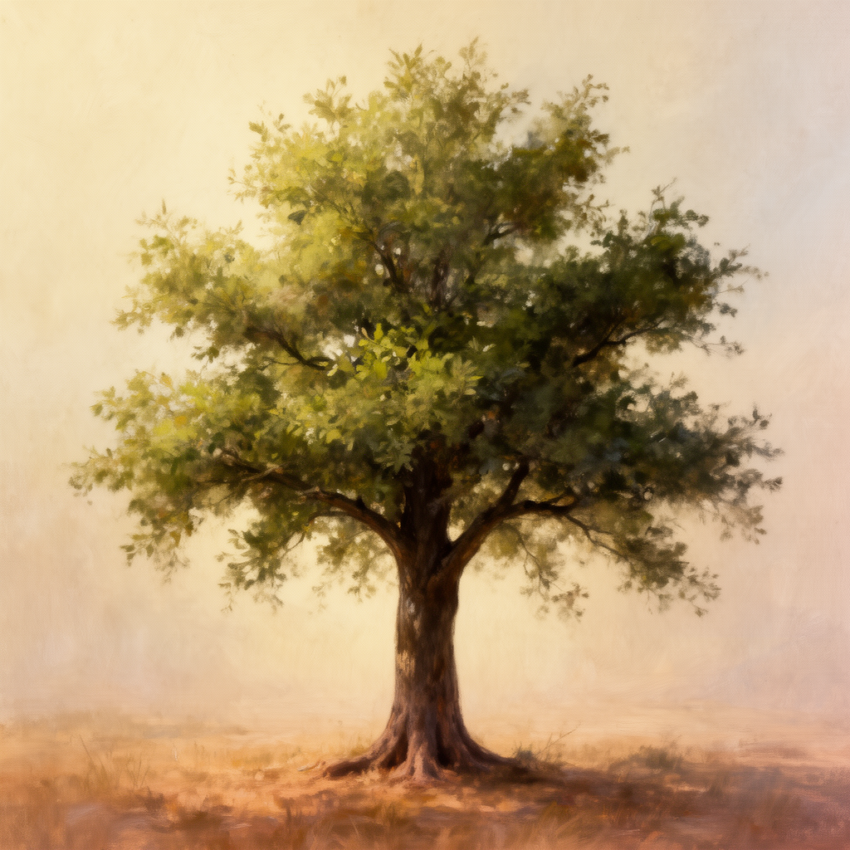
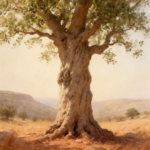
Ebony trees are typically medium to large evergreen or deciduous trees, reaching 10-20 meters in height. They possess dense, dark-colored heartwood known for its striking black or very dark brown hue, which is highly valued in woodworking. Leaves are simple, elliptical, and smooth-edged, providing a lush green canopy. Flowers are small and usually unremarkable, often producing berries that turn black upon ripening. The tree thrives in tropical and subtropical climates, favoring well-drained, fertile soils with ample rainfall, notably in parts of Africa, India, and Southeast Asia. Its dense wood resists pests and decay, making it prized for carving and ornamentation.
Scientific Name
Diospyros spp.
Hebrew/Greek Name
Setim (סתים) / Diospyros (Debated)
Common Names
Ebony, Dark Wood Tree
Native Habitat
Native to tropical regions of Africa, particularly West and Central Africa, as well as select parts of South Asia (India, Sri Lanka). It thrives in humid, subtropical to tropical climates with well-drained, fertile soils and abundant rainfall. It is often found in mixed forests and along riverine zones.
First Biblical Mention
Ezekiel 27:15, around 6th century BCE, referencing trade in ebony.
📖 Biblical References
Reference
Context
Significance
Ezekiel 27:15
Ezekiel describes Tyrian ships trading in ebony, indicating it was a luxury commodity used in shipbuilding and ornamentation.
Highlights the high value and desirability of ebony wood among ancient civilizations, symbolizing wealth and craftsmanship.
Song of Solomon 1:5
The poet mentions being darkened like the curtains of Solomon, possibly referencing dark, rich woods or dyes.
While not explicit, it suggests symbolic associations of dark beauty with depth and richness.
Ebony, with its deep, dark tone and durable nature, symbolizes strength, resilience, and mystery in biblical literature. Its luxurious quality often signifies wealth, status, and divine endurance. Spiritually, ebony can represent the profound depths of wisdom and the hidden treasures of God's creation. The darkness of ebony underscores themes of the divine mystery, the shadowed yet precious aspects of spiritual life, and God's eternal strength. Its use in sacred and royal contexts highlights its association with dignity, permanence, and divine authority. Thus, the ebony tree embodies both earthly richness and divine profundity, encouraging believers to seek spiritual depth beyond external appearances.
🏺 Cultural Uses in the Ancient World
Ancient peoples in the Near East used ebony for fine carvings, ceremonial objects, and luxury furniture, valuing its durability and rich color. Its dense heartwood was used in making musical instruments, royal thrones, and religious artifacts. Medicinally, crushed ebony provided traditional remedies for various ailments, and the wood's durability made it a sought-after trade item, fostering commerce between Africa and the Middle East. Ebony also played a role in ritual offerings and decorative arts, symbolizing wealth and divine favor.
✡️ In Jewish Tradition
In Jewish tradition, ebony is associated with luxury and divine splendor, often mentioned in contexts of adornment of sacred spaces and objects. Its symbolism relates to wisdom and the divine mystery, with rabbinic literature occasionally referencing ebony as a metaphor for profound spiritual truths and the hidden aspects of divine wisdom. Ebony's durability also echoes themes of steadfastness and resilience in faith.
Christian symbolism views ebony as representing depth, mystery, and divine strength. Its dark hue signifies the somber realities of human suffering and sin, yet also the richness of God's grace. Historically, ebony has been used in church furnishings and altar adornments, symbolizing the solemn majesty and eternal permanence of divine truth.
🔬 Modern Botanical Identification
Scholars generally identify biblical ebony as species in the genus Diospyros, such as Diospyros crassiflora or Diospyros mespiliformis. There is some debate over the precise species due to regional variations and archaeological evidence, but Diospyros remains the accepted candidate. Its distinctive dark heartwood and historical trade make the identification fairly consensus-driven.
🗺️ Where Is It Found Today?
Today, ebony trees grow in West Africa, Central Africa, India, Sri Lanka, and Southeast Asia. In Israel and the Middle East, wild populations are limited or non-native, but cultivated ebony exists in botanical gardens and nurseries for ornamental and craft purposes.
❓ Frequently Asked Questions
Is biblical ebony the same as modern ebony wood?
Mostly yes; biblical references to ebony likely refer to species within Diospyros, known today as ebony. However, the exact regional species may differ, and ancient trade practices influenced what was known or imported as ebony.
What does ebony symbolize spiritually in the Bible?
Ebony symbolizes strength, resilience, divine mystery, and wealth. Its dark, durable quality reflects spiritual depth, steadfastness in faith, and the profound, hidden treasures of God’s wisdom.
Can ebony trees be found in Israel today?
Ebony trees are not native to Israel but are cultivated elsewhere such as Africa and Asia. Some botanical gardens or nurseries in Israel may grow cultivated ebony for ornamental or craft purposes.
✨ Did You Know?
Ebony's dense wood is so hard that it was historically used for making the black keys on pianos and fine inlays, prized for its beauty and durability. Archaeological traces of ebony artifacts dating back thousands of years testify to its long-standing cultural significance.