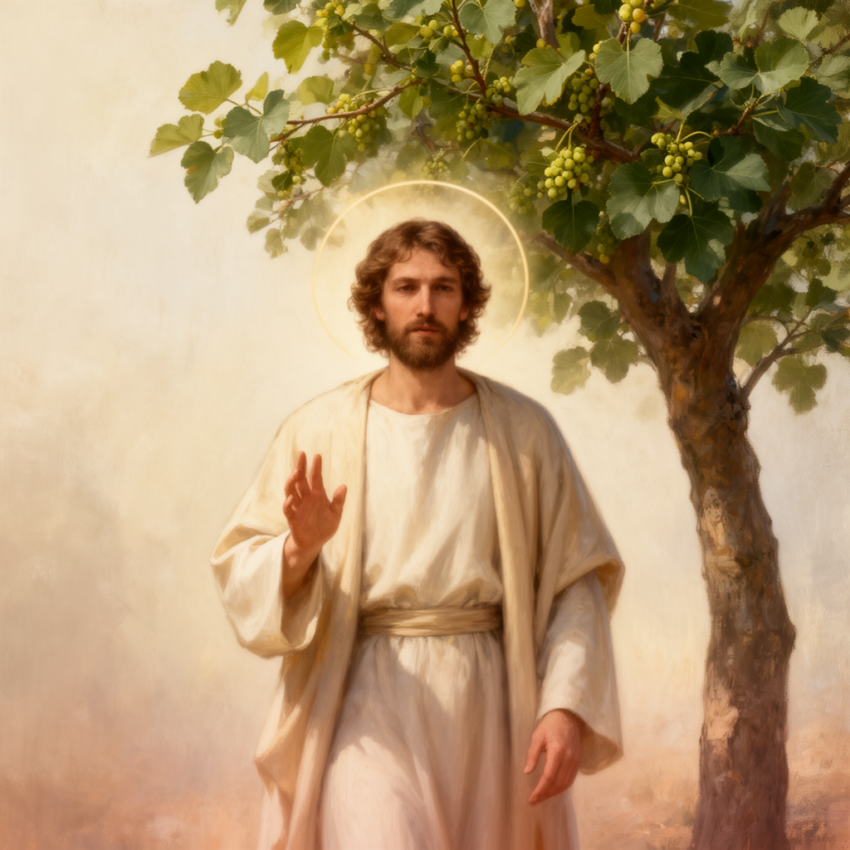
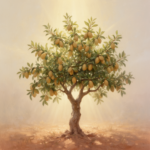
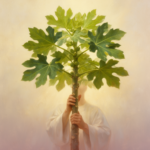
The mulberry tree is a deciduous, fast-growing shrub or small tree reaching 10–20 meters in height. It features lobed, serrated leaves, often velvety beneath, and produces small, clustered flowers that are either unisexual or bisexual. Its fruit varies from white to deep purple or black when ripe, sweet, and edible. The tree prefers warm, temperate climates with well-drained soils and full sunlight. Its flexible branches and dense foliage make it suitable for various terrains. Its bark is smooth or slightly rough, often light gray or brown. The tree's resilience and rapid growth enable it to thrive in both cultivated orchards and wild settings, providing food and shade.
Scientific Name
Morus alba (white mulberry) / Morus nigra (black mulberry) / Morus spp. (debatable)
Hebrew/Greek Name
Hebrew: תְּאֹה (te'oh) / Greek: συκιά (sukia)
Common Names
Mulberry Tree, Sycamore-Mulberry, White Mulberry, Black Mulberry
Native Habitat
Native to Asia, particularly China, India, and Iran, the mulberry has been cultivated for thousands of years. It prefers temperate to subtropical climates, thriving in well-drained loamy soils. Historically, it spread along trade routes to the Middle East and Mediterranean regions, adapting to diverse landscapes and cultivated extensively for its fruit and silkworm nourishment.
First Biblical Mention
First explicitly linked to the mulberry in biblical context is not certain; the 'sycomore' (possibly a mulberry or fig) appears in 2 Samuel 5:23–24, but the specific mention of 'mulberry' is not explicit.
Jesus speaks about faith and barked literal and metaphorical imagery, referencing a small accaunt of faith capable of uprooting a mulberry tree.
This highlights the symbolic potential of faith, illustrating that even seemingly insignificant things can have profound spiritual impact, much like a tree’s roots or fruit.
Isaiah 41:19
God promises to plant cedar, cypress, myrtle, and trees like the mulberry in the wilderness.
Symbolizes divine restoration and the flourishing of life in inhospitable places, emphasizing hope and renewal.
2 Samuel 5:23-24
King David uses a strategy involving trees, with some interpretations linking related trees (like the mulberry) to divine guidance.
Associates trees with divine guidance and strategic planning in biblical narrative.
✨ Symbolic Meaning in Scripture
The mulberry tree in biblical symbolism often represents faith, resilience, and divine provision. Its rapid growth and capacity to flourish in harsh conditions symbolize spiritual vitality and God’s ability to nurture life amidst adversity. The mention of faith capable of moving mountains like a mulberry tree underscores the importance of trust in divine power. The tree’s ability to produce nourishing fruit also reflects spiritual nourishment and the Đức (cultural) of divine blessing. As a symbol, it encompasses themes of perseverance, renewal, and the fruitful life that comes from trusting God's promises, making it a motif of hope and steadfastness in biblical theology.
🏺 Cultural Uses in the Ancient World
Ancient Israelites and Near Eastern peoples cultivated mulberries primarily for their fruit, which was eaten fresh, dried, or used in preserves. The trees provided shade and were valued for their timber in some contexts. The leaves also served as food for silkworms in later traditions, especially in Persia and China. Medicinally, mulberry leaves and fruits were used in traditional remedies for respiratory issues and to boost vitality. The tree’s importance in trade grew with silk production, and its fruit was integral to local diets and offerings in religious rituals. Additionally, its adaptable nature made it a common landscape feature in orchards and gardens.
✡️ In Jewish Tradition
While the mulberry itself is not central to major Jewish festivals, its fruit and tree are often linked to themes of prosperity and divine blessing in rabbinic literature. It may be referenced metaphorically in teachings about growth and faith. During festivals, figs and pomegranates are more prominent, but mulberry trees symbolically represent fertility and resilience, aligning with biblical themes of divine provision and renewal in Jewish thought.
Christian interpretation often sees the mulberry tree as symbolic of faith and the power of belief in divine authority, echoing Luke 17:6. Some theologians view the tree as representing the potential for spiritual growth and the fruits of faith that can 'move mountains.' Its mention in Scripture underscores the importance of trust and obedience to God's will. Over centuries, mulberry imagery has been used in Christian art and sermons to emphasize faith’s capacity for transformation and divine intervention.
🔬 Modern Botanical Identification
The biblical 'sycamore' is debated; some scholars identify it as Morus spp., i.e., mulberry, due to linguistic and botanical clues, while others suggest it refers to the fig tree (Ficus sycomorus). There is no full consensus, but the mulberry is a strong candidate. Ancient texts sometimes interchange terms, adding to the ambiguity.
🗺️ Where Is It Found Today?
Mulberry trees grow widely today across the Middle East, including Israel, Iran, Turkey, and parts of North Africa. They are cultivated both for their fruit and ornamental value in parks, orchards, and gardens. Wild populations persist along riverbanks and in semi-wild areas, maintaining a historical connection to biblical lands.
❓ Frequently Asked Questions
Is the biblical mulberry tree the same as the fruit we eat today?
The biblical ‘mulberry’ likely refers to what we now call morus species, known for their edible fruit. While similar, ancient descriptions may encompass multiple fruit-bearing trees, making precise identification challenging.
What does a faith like a mulberry tree symbolize?
Jesus’ metaphor indicates that genuine faith has great power—so much so that it can overcome obstacles or uproot metaphorical mountains, emphasizing trust in divine strength.
Are mulberry trees found in Israel today?
Yes, mulberries are cultivated and grow wild in Israel and neighboring regions, with many old trees still visible in historical and agricultural sites.
✨ Did You Know?
Ancient Silk Road travelers relied heavily on mulberry leaves to feed silkworms, making the tree central to early global trade and economic development. Archaeological finds suggest mulberry cultivation dates back over 4,000 years in ancient Persia and China, linking biblical flora to significant historical commerce.