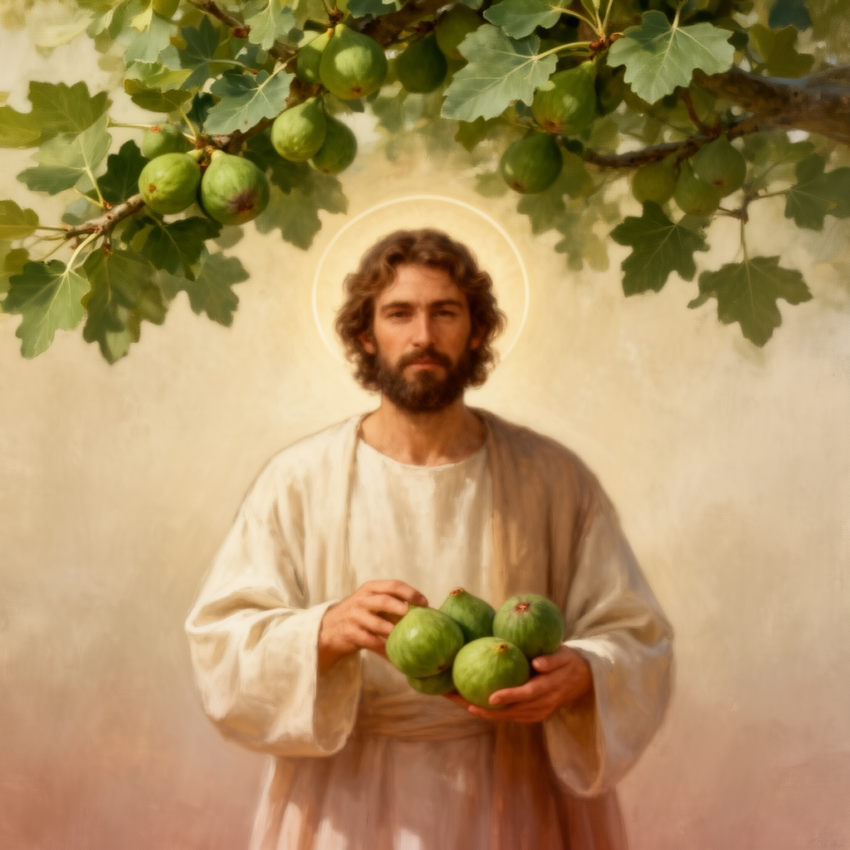
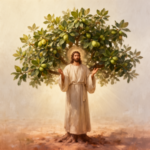
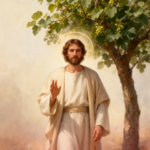
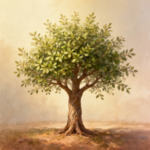
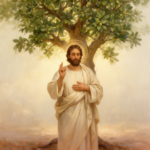
Ficus sycomorus, known as the Sycamore Fig, is a large deciduous tree reaching 15-25 meters tall. It has smooth, slightly mottled gray bark and broad, lobed leaves around 10-20 cm long with prominent veins. Its flowers are tiny and enclosed within a sterile, syconium-type structure, which develops into dense clusters of edible figs. The fruit is pear-shaped, yellow to greenish-yellow when ripe, and yields abundant sweet, fig-like flesh. The tree prefers well-drained, loamy soils in warm, subtropical climates and thrives in full sun. Known for its longevity, it often grows in ancient ruins and dry plains, providing shade and fruit for millennia.
Scientific Name
Ficus sycomorus
Hebrew/Greek Name
עֲקַלָּה (ʿAkkālā, 'Akkalah') / σικαμώρ (sikamōr)
Common Names
Sycamore Fig, Fig Tree, Sycomore
Native Habitat
Native to the Middle East and North Africa, particularly in Egypt, Israel, Jordan, Lebanon, and Syria. It grows in arid or semi-arid regions with Mediterranean climate zones, thriving in valleys and rocky slopes with well-drained soil conditions.
First Biblical Mention
Amos 7:14, where Amos mentions tending the sycamore figs during his prophetic calling.
📖 Biblical References
Reference
Context
Significance
Amos 7:14
Amos defends his divine call, stating he was not a prophet nor a prophet’s son but a caretaker of sycamore figs.
This emphasizes the commonality of the tree in everyday life, symbolizing simplicity and humble trust in God’s message.
Mark 11:12-14, 20-21
Jesus curses a barren fig tree, often identified with the sycamore fig, as a symbol of judgment and spiritual fruitfulness.
The fig tree symbolizes spiritual fruitfulness and judgment; its barrenness reflects a call to genuine faith and obedience.
The Sycamore Fig is rich in biblical symbolism; it often represents prosperity, stability, and divine blessing, given its long-lasting, life-sustaining qualities. Its ability to produce abundant fruit symbolized spiritual nourishment and fruitfulness. Conversely, its appearance as a symbol of judgment in the curse of the barren fig tree denotes divine discipline and the expectation of spiritual productivity. In biblical thought, the tree also embodies the concept of rootedness and faithfulness, bearing fruit in due season. Its resilience and enduring presence serve as metaphors for God's steadfastness and the necessity of genuine spiritual growth, underscoring themes of accountability, divine providence, and the importance of spiritual fruitfulness in one's life.
🏺 Cultural Uses in the Ancient World
Ancient Israelites cultivated Ficus sycomorus not only for its abundant edible figs but also used its wood in construction and furniture due to its durable, light qualities. The trees provided shade and were integral in early trade, serving as landmarks and income sources. The figs were eaten fresh or dried, a vital food source in arid regions. Medicinally, parts of the tree were used in traditional remedies to treat ailments like sore throats and wounds. Its roots and bark occasionally held symbolic significance in rituals. The tree's significance extended into the cultural fabric, representing prosperity and divine blessing in local lore and agricultural practices.
✡️ In Jewish Tradition
The Sycamore Fig holds a place in Jewish tradition as a symbol of protection and faithfulness, mentioned in rabbinic literature reflecting on its resilience. During some festivals, its leaves and branches were used in processions, and it is associated with the biblical landscapes of Israel. The Talmud discusses its role in various legal and ritual contexts, emphasizing its importance as a staple tree in biblical and post-biblical times. Its symbolism of sustenance and divine providence underscores many rabbinic teachings about trusting in God's provision.
Christians interpret the fig tree symbolically as a lesson on spiritual fruitfulness and judgment, drawing on Jesus’ cursing of the barren tree. It serves as a reminder of the importance of genuine faith and readiness to bear spiritual fruits. The fig tree also generally symbolizes blessing, peace, and divine provision in Christian theology, often reflecting the idea of divine judgment versus mercy. It is occasionally referenced in sermons and teachings to illustrate themes of repentance, faithfulness, and the need for spiritual nourishment.
🔬 Modern Botanical Identification
Scholars widely identify the biblical Sycamore Fig as Ficus sycomorus, prevalent in ancient Middle Eastern landscapes. Some debate exists with regard to similar species like Ficus carica (common fig), but the ancient habitat and textual clues favor Ficus sycomorus as the specific tree. Archaeobotanical remains support this identification, especially in ancient ruins in Israel and Egypt. The candidate species differ mainly in leaf shape and fruit size, but Ficus sycomorus remains the most accepted identification among biblical botanists.
🗺️ Where Is It Found Today?
Today, Ficus sycomorus still grows in Israel, Jordan, and surrounding Middle Eastern regions, especially in preserved ancient sites and garden cultivation. It can be seen in archaeological parks, botanical gardens, and rural areas where its drought-resistant qualities make it suitable for dry landscapes. Wild specimens persist in some semi-arid zones, reflecting their resilience and historical continuity in the region.
❓ Frequently Asked Questions
Is the biblical sycamore fig the same as the common fig?
No, the biblical sycamore fig is widely identified as Ficus sycomorus, which produces larger, pear-shaped figs, different from the smaller, rounder edible figs of Ficus carica, the common fig.
What does Jesus’ curse of the fig tree symbolize today?
It is interpreted as a lesson on spiritual fruitfulness and accountability, emphasizing the importance of genuine faith and readiness to produce spiritual ‘fruits’ in one’s life.
Can you still find Sycamore Fig trees in Israel?
Yes, ancient and modern Ficus sycomorus trees can still be found in Israel, especially in archaeological sites, old gardens, and semi-arid regions where they thrive.
✨ Did You Know?
Ficus sycomorus is one of the few fig species that produce large, edible figs suitable for harvesting and trade, dating back to ancient Egypt. Remarkably, remnants of these trees have been discovered in archaeological excavations, indicating their cultural importance for thousands of years, blending botanical longevity with biblical history.