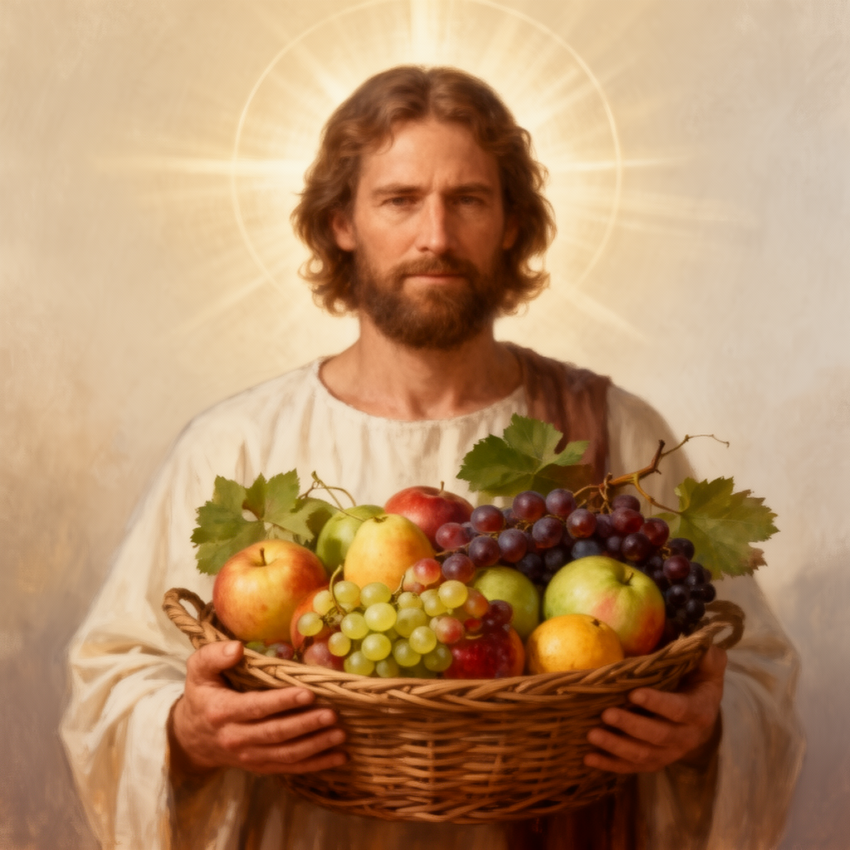
The 'Basket of Summer Fruit' likely refers to a fruit-bearing tree or shrub characterized by abundant, colorful, and flavorful fruit. If pomegranates, they have a rounded shape, reddish rind, and compartments filled with seeds encased in sweet, edible pulp. Alternative hypotheses include citrus varieties like grapefruits, which are large, aromatic, with thick rinds and juicy segments. These plants are typically trees or shrubs thriving in warm, dry climates, with leathery leaves and fragrant blossoms. The fruit appears in late summer to early fall, indicating a seasonal bounty that signifies prosperity and abundance.
Scientific Name
Debated: possibly Punica granatum (pomegranate) or Citrus species
Pomegranate, Grapefruit, Uncertain – summer fruit basket
Native Habitat
Native to the Middle East, regions of modern-day Israel, Jordan, and surrounding areas. They thrive in semi-arid, Mediterranean climates with well-drained soils and hot summers. These plants are adaptable to various terrains but favor rocky or limestone-rich soils typical of historic Israel.
First Biblical Mention
Amos 8:1-2
📖 Biblical References
Reference
Context
Significance
Amos 8:1-2
Amos describes a basket of summer fruit as a symbol of impending judgment and culmination of Israel’s prosperity.
The image signifies the fullness of time and the ripeness of Israel’s history, signaling an appointed time for correction and divine judgment.
The 'Basket of Summer Fruit' symbolizes abundance, harvest, and God's patience reaching its limit. In biblical theology, it reflects the culmination of seasons—both agricultural and divine—indicating readiness for judgment or fulfillment of promises. The ripe fruit portrays a state of maturity, emphasizing both blessings and accountability. It warns of divine consequences for unrepentant Israel, illustrating how divine sovereignty brings seasons of blessing and discipline. The image also evokes hope, as abundant fruit signifies God's provision and the hope of restoration after judgment. Overall, it encapsulates themes of divine timing, harvest, and the call for repentance within biblical narrative frames.
🏺 Cultural Uses in the Ancient World
In ancient Israel and the Near East, pomegranates were prized for their symbolic and practical value. They were used in religious rituals, including offerings in the Temple, and served as decorative motifs in art and architecture. The fruit's seeds represented fertility and prosperity, often exchanged in trade. Extracts of pomegranate were used medicinally for their antioxidant properties. Citrus fruits, if considered, were valued for their juice and scent, used in perfumes, medicinal preparations, and as food accompaniments. Overall, these fruits played a vital role in diet, ritual, and economy, symbolizing abundance and divine blessing.
✡️ In Jewish Tradition
Pomegranates are prominent in Jewish tradition, symbolizing righteousness, fertility, and divine blessing. They are included in festive decorations, and their seeds are associated with commandments and mitzvot, representing fruitfulness of good deeds. During Rosh Hashanah, pomegranates are traditionally eaten to symbolize a year filled with good deeds. The fruit appears in rabbinic literature as a metaphor for righteousness and divine justice. Its inclusion in sacred art and Torah scroll adornments underscores its spiritual significance, embodying the hope for abundance in the coming year.
In Christianity, the 'Basket of Summer Fruit' often symbolizes spiritual harvest, divine blessing, and the maturity of faith. It serves as a reminder of God's provision and the importance of cultivating good deeds. The fruit’s ripeness can also depict the fulfillment of God's promises or the need for spiritual readiness before judgment. Christians may interpret the image and its associated passages as emphasizing the importance of spiritual maturity and readiness for the return of Christ, echoing themes of harvest, judgment, and redemption.
🔬 Modern Botanical Identification
Scholars generally identify the biblical term as referring to pomegranates (Punica granatum) due to their prominence in biblical art and references, though some suggest citrus fruits like grapefruit or citron as possible candidates. The debate arises because the term 'summer fruit' is broad and could encompass various large, ripe fruits harvested in late summer. The consensus leans toward pomegranate because of its cultural and symbolic significance and textual clues, but botanical certainty remains elusive due to limited archaeological evidence pinpointing specific species within biblical contexts.
🗺️ Where Is It Found Today?
Today, pomegranates are cultivated throughout the Middle East, including Israel, Jordan, and Palestine. Citrus varieties such as grapefruit are also common in Israel and Mediterranean regions, thriving in similar climates. These fruits are widely available in local markets and are grown in orchards that replicate their traditional habitats. The pomegranate tree, with its distinctive bark and fruit, is still a symbol of fertility and abundance in biblical lands.
❓ Frequently Asked Questions
Is the ‘Basket of Summer Fruit’ specifically a pomegranate?
While many scholars favor pomegranate due to its biblical and symbolic significance, some suggest citrus fruits like grapefruit could also be possibilities. The exact identification remains debated, but pomegranate is the most likely candidate.
What does the ‘Basket of Summer Fruit’ symbolize in biblical terms?
It symbolizes abundance, divine timing, and the culmination of a season—often representing God’s patience and the impending judgment or fulfillment of promises in Israel’s history.
Are these fruits still found in modern Israel?
Yes, pomegranates and citrus fruits are still widely cultivated in Israel and the Middle East, maintaining their cultural and biblical significance alongside modern agriculture.
✨ Did You Know?
Historical records from archaeological excavations in Israel reveal ancient pomegranate seeds and motifs in decorative arts dating back to the Iron Age. Interestingly, some ancient pomegranate varieties cultivated today are remarkably similar to those depicted in biblical art, connecting modern cultivation with biblical traditions across millennia.