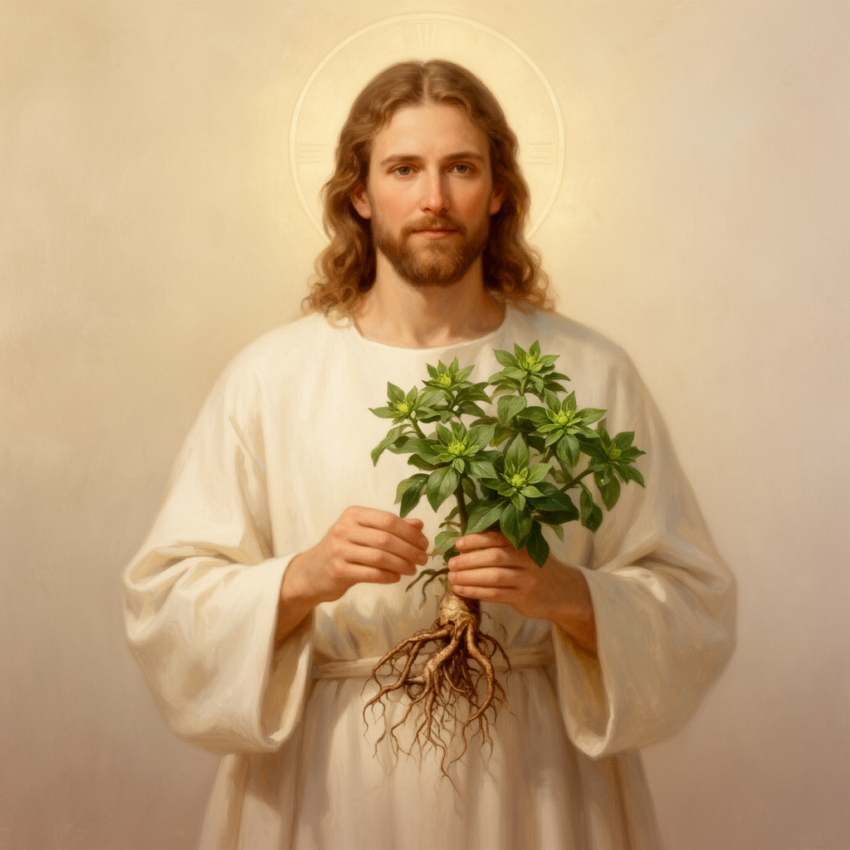
Mandrakes are perennial herbaceous plants growing up to 30–60 cm tall, characterized by broad, ovate leaves forming a rosette. They produce bell-shaped, violet or purple flowers with a distinctive scent. The root, often forked and human-shaped, resembles a small figure and contains alkaloids. The fruit is a yellowish, berry-like drupe with black seeds. Preferring rocky, well-drained soils, mandrakes thrive in Mediterranean climates, requiring warm summers and mild winters. Their notable human-like root has contributed to their mythic reputation and symbolism.
Scientific Name
Debated (Dentellaria species, possibly Mandragora officinarum or similar)
Hebrew/Greek Name
Hebrew: דְּרָכָה (dərāḵā́); Greek: Mandragoras
Common Names
Mandrake, Mandragora
Native Habitat
Native to the Mediterranean region, especially Israel, Palestine, Greece, and North Africa, mandrakes grow in dry, rocky soils, often in cultivated or overgrown ancient sites with Mediterranean-type climates—hot, dry summers and mild, wet winters.
First Biblical Mention
Genesis 30:14 (Rachel's pursuit of mandrakes for fertility)
📖 Biblical References
Reference
Context
Significance
Genesis 30:14
Rachel finds mandrakes in the field and considers them a source of fertility.
Represents fertility and longing for children, symbolizing hope and divine blessing in biblical narrative.
Song of Solomon 7:13
The lover is compared to a mandrake offering fragrance.
Embodies desirability, beauty, and sensuality, also hinting at fertility symbolism.
1 Samuel 6:14
The Ark of the Lord is placed on a new cart pulled by cows with mandrakes nearby.
Shows mandrakes used as a fertility aid or offering; also reflects their agricultural importance.
Throughout Scripture, mandrakes are potent symbols of fertility, longing, and divine blessing. Their human-like roots evoke themes of creation and divine craftsmanship, often representing the desire for offspring and divine favor. In biblical stories, they underscore the significance of fertility in blessing families and nations. Their fragrant flowers symbolize beauty and attraction, while their mysterious roots evoke human connection to nature and divine mystery. The plant’s ambivalent nature—being both a natural fertility aid and associated with superstition—mirrors biblical ideas of divine intervention versus reliance on physical means. Overall, mandrakes serve as a rich emblem of life, hope, and God’s providence in human fertility struggles and divine blessing.
🏺 Cultural Uses in the Ancient World
Ancient Israelites and neighboring cultures utilized mandrakes primarily as fertility charms. They were harvested and sometimes used in rituals, believed to enhance conception or as amulets. The fleshy roots and berries were also employed medicinally, with some traditions associating them with aphrodisiac properties and healing. Additionally, mandrake roots served in folk medicine for various ailments, and the plant's striking appearance made it a notable feature in gardens and agricultural practices. Its value extended into trade, and its mystical reputation persisted in folklore and amulets, reflecting its importance in ancient Near Eastern life and religious practices.
✡️ In Jewish Tradition
Mandrakes hold a place in rabbinic literature as symbols of fertility and divine blessing. They are sometimes mentioned in Talmudic texts as part of discussions on fertility remedies and rituals. The plant's reputation as a fertility enhancer made it a common feature in wedding customs, and some communities regarded mandrakes as sacred or talismanic objects linked to divine favor. Their mention in Jewish texts underscores their cultural importance, blending botanical reality with spiritual symbolism related to family and life.
Christian interpretatio n often sees mandrakes as emblematic of human longing for divine blessing and fertility, with references emphasizing spiritual renewal and life. The human-like root symbolized the imago Dei (image of God) and the divine capacity to nurture life. Over centuries, mandrakes have also come to symbolize temptation and the mysterious power of nature, reminding believers of God's creation and the importance of trusting divine providence over superstition. In medieval Christian art, they occasionally appear as allegories of temptation or divine intervention.
🔬 Modern Botanical Identification
Botanically, mandrakes are most often linked to Mandragora officinarum, a member of the nightshade family with psychoactive alkaloids. However, scholarly consensus remains debated due to historical ambiguity and regional variations. Some scholars consider other species like Datura or certain Dentellaria varieties as candidates, but Mandragora officinarum remains the best-known candidate. The plant’s human-shaped root and psychoactive properties contributed to its mythic reputation, though identification remains cautious due to similarity with other nightshades.
🗺️ Where Is It Found Today?
Mandrakes still grow in the wild in parts of the eastern Mediterranean, especially in Israel, Lebanon, and Greece. They are cultivated in botanical gardens and research institutions. Occasionally, wild specimens are found in rocky, well-drained areas, but due to its psychoactive properties, collection is limited and regulated in many regions.
❓ Frequently Asked Questions
Is the biblical mandrake the same as the modern plant?
While traditionally associated with Mandragora officinarum, the identification is debated among scholars. The biblical description aligns closely with certain nightshade species, but definitive identification remains uncertain.
Was mandrake used for medicinal purposes in biblical times?
Yes, mandrake was believed to enhance fertility and was sometimes used in healing practices, reflecting its cultural and spiritual significance as a fertility enhancer.
Are mandrakes dangerous to handle today?
Yes, mandrakes contain psychoactive and toxic alkaloids, and handling or ingesting them without proper knowledge can be hazardous. Caution is advised, and they are best appreciated as historical or botanical curiosities.
✨ Did You Know?
Mandrake roots sometimes resemble human figures, leading to their mythic association with magic and enchantment in ancient cultures. Archaeological findings include depictions and amulets bearing mandrake images, highlighting its significance in ancient medicine and ritual practices.