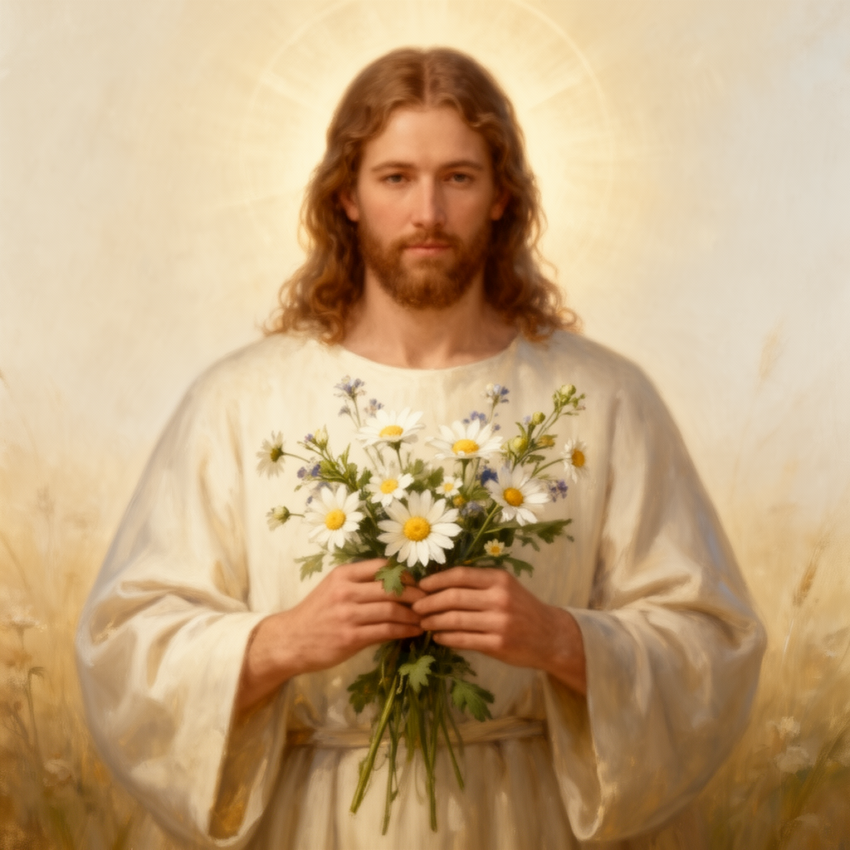
Flowers of the Field are typically small, delicate herbaceous plants that bloom in open, sunny areas. They often grow low to the ground, with slender stems and vibrant petals ranging from white to yellow, sometimes tinged with pink. Their leaves are narrow and grass-like, and they produce modest, often solitary flowers with a sweet fragrance. The plants thrive in well-drained soils and are common in arid or semi-arid regions, particularly in spring after rains. They have a seasonal bloom cycle, sprouting quickly in favorable conditions, contributing color and life to the landscape amidst drought-resistant shrubs and grasses.
Scientific Name
Debated (likely *Hymenocallidaceae* or *Narcissus* spp.)
Hebrew/Greek Name
דֶּאתָן (detan), transliteration: 'detan'
Common Names
Wildflowers, Desert Flowers, Spring Flowers
Native Habitat
Native to the Middle East, particularly Israel, Jordan, and surrounding arid regions. They thrive in sandy and rocky soils, often in grasslands, semi-deserts, and open fields, adapting to seasonal rainfall and dry conditions typical of the Mediterranean climate.
First Biblical Mention
Matthew 6:28-29, where Jesus refers to the lilies of the field as symbols of God's care.
📖 Biblical References
Reference
Context
Significance
Matthew 6:28-29
Jesus references the flowers of the field to illustrate God’s provision and the transient beauty of life.
Highlights divine care and the fleeting nature of earthly beauty, emphasizing trust in God’s provision.
Song of Solomon 2:12
Poetic description of blooming flowers signaling renewal and love.
Symbolizes nature’s beauty, renewal, and love’s sweetness in biblical poetry.
Isaiah 40:6-8
Describes the transient nature of human life compared to enduring God’s word, mentioning grass and flowers.
Emphasizes mortality, humility, and the eternal word of God contrasted with fleeting earthly beauty.
Flowers of the field symbolize divine beauty, temporary earthly riches, humility, and trust in God's providence. Their fleeting bloom underscores life's brevity and God's sovereignty. They remind believers that spiritual riches supersede material beauty, encouraging reliance on God's care. The flowers' vibrant but transient nature serves as a metaphor for spiritual growth, renewal, and the importance of trusting God's timing. Throughout Scripture, they evoke themes of humility, divine provision, and the impermanence of worldly pursuits, inviting reflection on eternal values versus worldly appearances.
🏺 Cultural Uses in the Ancient World
Ancient Israelites and neighboring cultures valued these wildflowers for their aesthetic appeal in springtime. They used parts of certain species in traditional medicine for ailments like skin irritations and headaches. Additionally, the flowers occasionally served in religious festivals as symbols of renewal and beauty, while dried blossoms might have been woven into wreaths or used in offerings to deities. They contributed to the local trade of wild herbs and were appreciated for their natural dyes and aromatic qualities. Their presence in the landscape also inspired poetry and artistic expression in biblical and surrounding literary traditions.
✡️ In Jewish Tradition
While not a central focus in rabbinic literature, flowers of the field are often associated with themes of humility and divine creation during Passover and spring festivals. They symbolize renewal and God's kindness in creating beautiful and transient things, reminding Jews of God's mercy. Some passages interpret floral imagery in biblical poetry to emphasize spiritual humility and dependence on God's grace, especially in the context of creation and divine provision.
Christians interpret these flowers as symbols of God's care and the transient nature of earthly life, emphasizing reliance on divine providence. They are viewed as reminders of God's promise of renewal and eternal life, inspiring trust beyond material pursuits. The flowers illustrate the spiritual principle that God's beauty and provision surpass worldly riches, reinforcing themes of humility, faith, and divine sovereignty in teachings and sermons.
🔬 Modern Botanical Identification
Scholars have debated the exact species, with candidates including various wild narcissus (*Narcissus tazetta*) or *Hymenocallis*. There is no complete consensus, as biblical descriptions are poetic and general. Some propose that the biblical 'flowers of the field' refer more broadly to seasonal wildflowers common in ancient Israel rather than a specific species. This ambiguity reflects the poetic and symbolic rather than botanical focus of biblical texts.
🗺️ Where Is It Found Today?
Such wildflowers still grow in Israel's springtime landscapes, especially in open fields, rocky hillsides, and nature reserves like the Judean Desert and the Galilee. They bloom between March and May, adding vibrant color to the arid and semi-arid terrains of the Middle East. They are also cultivated in botanical gardens focused on native Middle Eastern flora.
❓ Frequently Asked Questions
Are the flowers of the field the same as lilies?
Not necessarily; ‘flowers of the field’ is a broader term that may include various wildflowers, not exclusively lilies. In biblical context, it emphasizes transient, natural blooms rather than cultivated or specific species.
Can I find flowers of the field in modern Israel?
Yes, similar wildflowers bloom in Israel’s countryside during spring, especially in open, rocky, or grassy areas after seasonal rains. They are part of the natural landscape and are appreciated for their beauty.
What do these flowers symbolize spiritually?
Spiritually, they symbolize God’s provision, the transient nature of earthly life, humility, renewal, and reliance on divine grace. They serve as gentle reminders to trust God’s eternal promises over temporary beauty.
✨ Did You Know?
Some ancient archaeological sites in Israel have yielded fossilized pollen and remnants of wildflowers consistent with biblical descriptions, suggesting these plants have been part of the region's natural landscape for thousands of years. Additionally, certain species are cultivated today as ornamental plants, echoing their biblical and cultural significance.