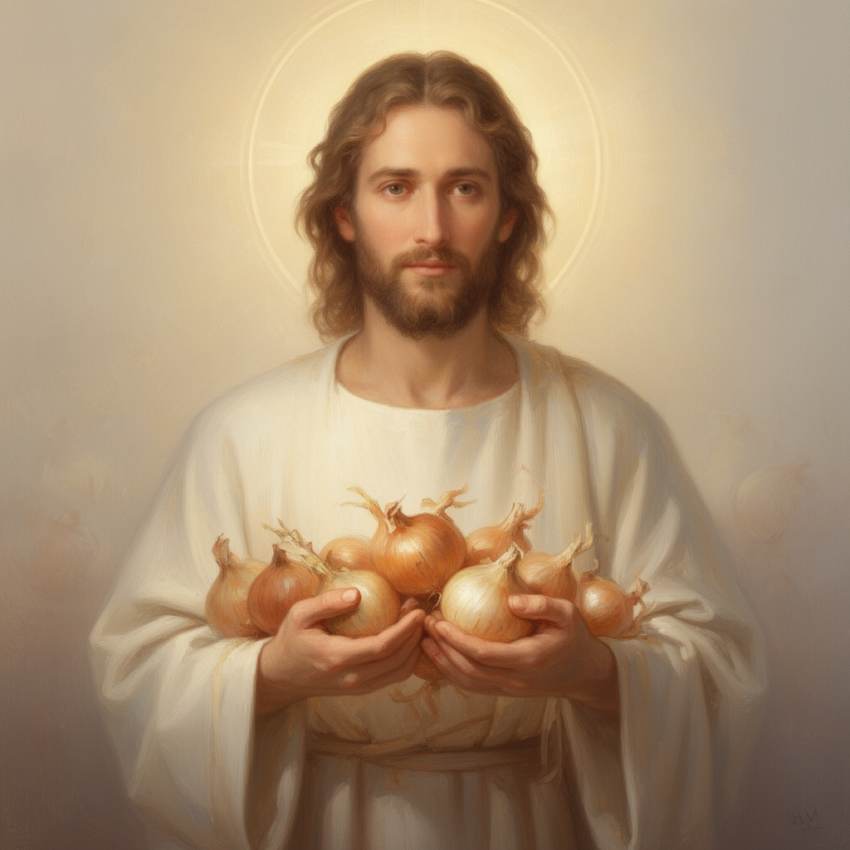
The onion is a perennial bulbous plant characterized by its large, round, sulfur-yellow or white bulb underground. Above ground, it bears slender, hollow, bluish-green to grayish leaves that arch outward. During growing season, it produces small, star-shaped white or pinkish flowers arranged in an umbel. The onion thrives in well-drained soils with full sun exposure, typically in temperate climates. Its bulb stores nutrients, forming from a basal plate of overlapping scales, and has a pungent aroma due to sulfur compounds. It’s a hardy plant, cultivated worldwide for culinary and medicinal uses, generally reaching 1 to 2 feet in height.
Scientific Name
Allium cepa
Hebrew/Greek Name
Hebrew: בצל (batzal); Greek: κρεμμύδι (kremmydi)
Common Names
Onion, Bulb Onion
Native Habitat
Onions are believed to originate from Central Asia and the Middle East, thriving naturally in semi-arid regions with well-drained soils. Historically cultivated across the Fertile Crescent, they adapt well to Mediterranean climates with hot, dry summers and mild, wet winters. Today, they are widely grown throughout Israel, the Levant, North Africa, and Mediterranean countries.
First Biblical Mention
Numbers 11:5 — Israelites recall eating onions in Egypt during their slavery.
📖 Biblical References
Reference
Context
Significance
Numbers 11:5
The Israelites lament their past and mention onions as part of their preserved foods in Egypt.
Onions symbolize longing for the past, comfort, and the simplicity of life in Egypt, reflecting a nostalgic yearning.
Numbers 11:5
Reference to onions being part of their diet in captivity.
Highlights how essential and valued onions were in the diet of ancient Israelites and their role in their everyday life.
Song of Solomon 2:12
Poetic reference alluding to blooming plants, possibly including onion flowers.
Represents renewal and beauty, linking natural growth to love and divine beauty.
In biblical symbolism, onions represent humility, the hardships of captivity, and the longing for liberation and divine favor. Their pungency and layers mirror the spiritual journey—initial hardship revealing deeper truths beneath superficial appearances. Onions are also associated with sustenance, God providing daily bread, and the necessity of perseverance. As a layered plant, they symbolize the spiritual layers of human life—external struggles concealing inward virtues. In some traditions, the pungent aroma signifies repentance and returning to God, while the layered nature speaks to growth through challenges and divine revelation. Overall, onions embody humility, spiritual longing, and the hope for divine deliverance amidst adversity.
🏺 Cultural Uses in the Ancient World
Ancient peoples, including Israelites, used onions as food, medicine, and offerings. Valued for their preservative qualities and flavor, they were a staple in diet, especially among laborers and slaves. Medicinally, they were used to treat respiratory ailments, swelling, and infections, thanks to their antibacterial properties. Onions also played roles in trade, symbolizing wealth and sustenance. Their scent and durability made them ideal for long journeys and offerings. Additionally, ancient artisans used dried onion skins in natural dyeing processes, and bulbs served as barter items in marketplaces, illustrating their multifaceted role in Early Near Eastern culture.
✡️ In Jewish Tradition
In Jewish tradition, onions are often linked to Passover and other festivals as symbols of humility and gratitude for sustenance. Talmudic literature mentions onions as healing and purifying foods, emphasizing their role in health and ritual purity. Some customs involve eating onions to remember the hardships of exile and slavery, fostering empathy and spiritual resilience. The layered nature of onions also echoes the layered understanding of God's mysteries in rabbinic thought, encouraging reflection on divine concealment and revelation.
Christian interpretation often views onions as symbols of humility and the human condition—layers of life needing divine peeling back. They serve as reminders of Christ's humility and the necessity of spiritual perseverance amid suffering. During Holy Week and Lent, some traditions relate onions to penance and humility, emphasizing their modesty and utility. The biblical narrative of longing and liberation connected to onions also echoes the Christian hope in salvation and divine deliverance, reinforcing the idea of spiritual growth through perseverance and faith.
🔬 Modern Botanical Identification
Botanically identified as Allium cepa, the common onion's classification is well-established, with scholarly consensus. Some debated candidates include wild Allium species related to cultivation, like Allium sativum (garlic), but onions are distinctly recognized as A. cepa. Archaeological finds and genetic studies support its identification, though ancient varieties may have differed slightly from modern cultivars. No serious scholarly controversy exists about the plant's identity, but research continues into ancient cultivars and domestication origins.
🗺️ Where Is It Found Today?
Today, onions are cultivated globally, with significant production in Israel, Turkey, India, and the Mediterranean region. In Israel, they are grown in the Galilee, Negev, and central plains, thriving in irrigated fields and traditional farms. Onions are also widely cultivated in the United States, China, and Europe, making them one of the world’s most consumed vegetables. Their adaptability allows cultivation in various climates, from temperate to subtropical regions.
❓ Frequently Asked Questions
Are onions mentioned multiple times in the Bible?
Yes, onions are mentioned specifically in Numbers 11:5 as part of the Israelites’ diet in Egypt and symbolically in poetic texts. Their repeated mention underlines their importance nutritionally and culturally.
What do onions symbolize spiritually in biblical context?
Onions symbolize humility, suffering, and longing for spiritual liberation. Their layered structure represents the unfolding of divine truths through perseverance and spiritual growth.
Can onions be used as a religious or ritual symbol today?
While not commonly used in contemporary rituals, onions historically symbolized humility and dependence on divine provision. Some modern spiritual reflections interpret their layers as symbols of personal spiritual journeying.
✨ Did You Know?
Ancient Egyptian mummies have been found with onion bulbs placed in their tombs, symbolizing eternal life and divine power. This reveals the onion's cultural significance as a sacred and protective plant in early civilizations, predating biblical times and extending into Egyptian and Near Eastern religious practices.