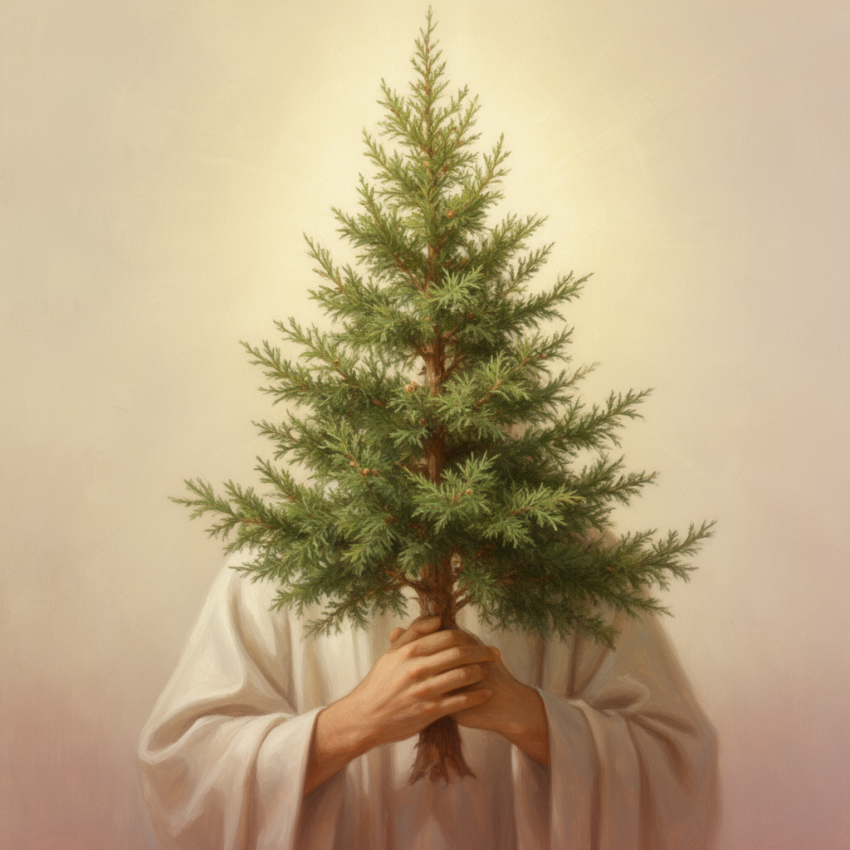
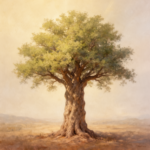
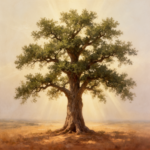
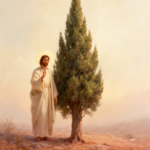
Cedrus libani is an evergreen coniferous tree reaching heights of 40–60 meters (130–200 ft). It features a straight, massive trunk with reddish-brown, deeply grooved bark. Its branches spread widely, forming a broad conical crown, especially in youth. The leaves are needle-like, about 1-2 cm long, arranged in dense clusters, with a bluish-green hue. In spring, it produces clusters of small, yellowish to reddish male cones and larger female cones, which mature to woody, winged seeds. The tree thrives in montane limestone regions and prefers well-drained, rocky soils, thriving in Mediterranean climates with hot, dry summers and cool, wet winters.
Scientific Name
Cedrus libani
Hebrew/Greek Name
אֶלָּה (Elah) / Κέδρος (Kedros)
Common Names
Lebanese Cedar, Cedrus, cedar of Lebanon
Native Habitat
Native to the mountainous regions of Lebanon, Syria, and parts of Turkey, the cedar prefers high-altitude limestone slopes. It is adapted to Mediterranean climate zones with seasonal drought, well-drained rocky soils, and altitude between 1,000–2,000 meters. Historically, it grew extensively in the mountainous forests of the Levant.
First Biblical Mention
First mentioned in Genesis 13:18, where Abram dwells in the Plain of Mamre near the oaks of Mamre, traditionally associated with cedar forests.
Describes the construction of Solomon’s Temple with cedar logs imported from Lebanon.
Highlights the cedar’s role as a symbol of divine splendor, craftsmanship, and divine favor in temple-building.
Psalm 92:12
Refers to the righteous flourishing like the cedar in Lebanon.
Symbolizes strength, resilience, and longevity rooted in divine blessing.
Ezekiel 31:3-14
Depicts Egypt as a cedar in Lebanon, emphasizing its majestic stature and downfall.
Represents imperial power, pride, and divine judgment.
✨ Symbolic Meaning in Scripture
The cedar of Lebanon symbolizes strength, durability, and divine majesty throughout Scripture. Its towering height and resilient wood depict divine strength and eternal stability. In biblical narratives, it often signifies splendor and divine favor, as exemplified in Solomon’s temple. Its enduring nature makes it a metaphor for righteousness and enduring faith. The majestic cedar serves as a symbol of God's greatness and his providence over nature and nations, representing spiritual resilience and divine authority. Its stature inspires awe and reverence, emphasizing the divine connection to the natural world and the importance of spiritual steadfastness amidst life's storms.
🏺 Cultural Uses in the Ancient World
Ancient Israelites used cedar wood extensively for constructing temples, palaces, and ships, valuing its durability and aromatic properties. It was also traded throughout the Near East, signifying wealth and prestige. The cedar’s resin and wood had medicinal uses, and its scent was believed to purify spaces and ward off pests. Cedar wood was prominent in religious rituals and offerings. Its importance extended to agriculture, where cedar branches may have been used in ceremonial displays, symbolizing divine protection and blessing.
✡️ In Jewish Tradition
In Jewish tradition, the cedar symbolizes righteousness, spiritual strength, and divine protection. It appears in rabbinic writings highlighting its lofty stature and divine favor. The tradition recognizes the cedar as a symbol of Israel’s spiritual resilience and divine blessing, often associated with the Messianic age. The cedar's enduring strength is commemorated in various festivals and prayers, symbolizing steadfast faith and divine sovereignty.
Christian interpretation sees the cedar as a symbol of divine majesty, eternal strength, and spiritual steadfastness. It often represents Christ's divine authority and the Church’s enduring nature, rooted in biblical symbolism of steadfast faith amidst trials. The majestic cedar reminds believers of God's providence and the importance of spiritual resilience. Its use in church art and hymnody underscores themes of divine glory and eternal life.
🔬 Modern Botanical Identification
Scholars unanimously identify the biblical cedar as Cedrus libani, native to Lebanon and surrounding regions. While historically over-extended forests have declined, the species remains extant and highly symbolically significant. Some debates exist about the exact historical extent of ancient cedar forests, but Cedrus libani is the consensus candidate based on botanical and archaeological evidence.
🗺️ Where Is It Found Today?
Today, Cedrus libani still grows in the mountains of Lebanon, Syria, and Turkey. Several protected forests, such as the Cedars of God in Lebanon, preserve ancient stands. It is cultivated in botanical gardens worldwide and occasionally planted for ornament in parks within the region.
❓ Frequently Asked Questions
Why is the cedar of Lebanon considered a biblical symbol?
Its impressive height, durability, and majestic appearance made the cedar a symbol of divine strength, sovereignty, and divine blessing in biblical narratives.
Are cedar trees still found in the Holy Land?
Yes, notably in Lebanon and some parts of Syria and Turkey. Efforts are underway to preserve and replant cedar groves, such as the famous Cedars of God.
What practical uses did ancient Israelites have for cedar wood?
They used cedar for building temples, palaces, ships, and other architecture due to its strength, aroma, and resistance to decay, symbolizing divine favor and permanence.
✨ Did You Know?
The Cedars of Lebanon are among the oldest living trees, with some specimens over 1,000 years old. Archaeological evidence suggests ancient civilizations actively harvested and valued these trees for construction and trade, integrating the cedar deeply into regional history.