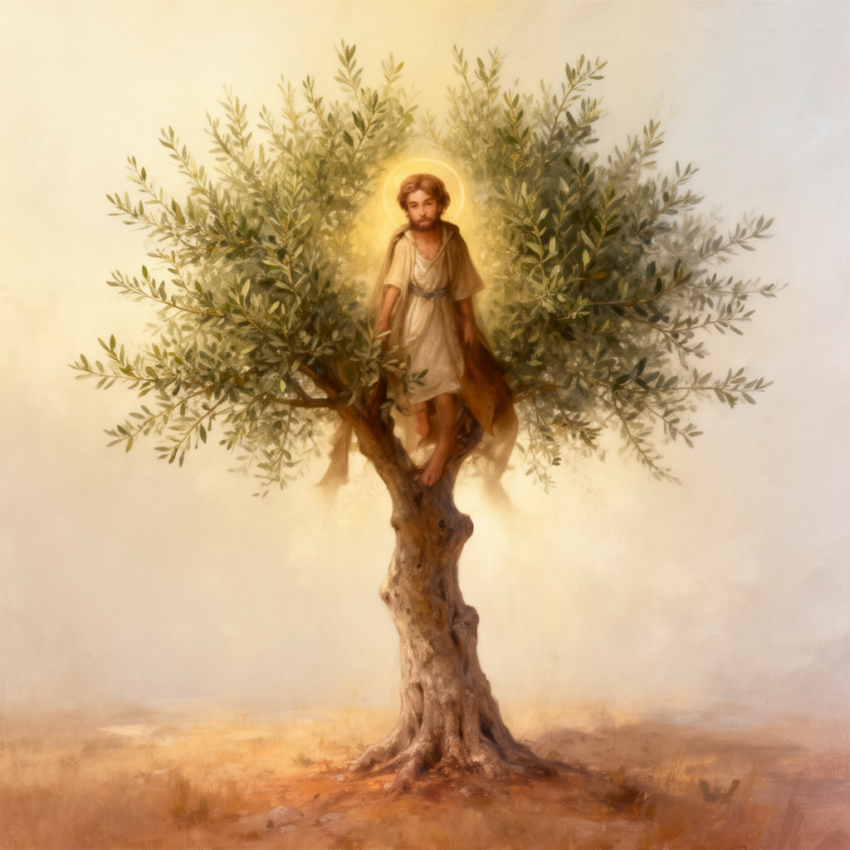
The Terebinth is a small to medium, deciduous tree reaching 4-12 meters in height. It has a gnarled, spreading trunk with rough, leathery green to dark green compound leaves. In spring, it produces small umbels of yellowish-green flowers, sometimes with reddish hues. Its fruit is a drupe, small and round, turning from green to reddish or purple when ripe. The tree prefers rocky, well-drained soils and thrives in Mediterranean climates, including areas of Israel. Its aromatic resin, historically used as turpentine, is obtained from the resinous bark and wood, contributing to its name and uses.
Scientific Name
Pistacia terebinthus (commonly accepted), with some debate involving Pistacia atlantica
Native to the eastern Mediterranean region, including Israel, Lebanon, Syria, Turkey, and North Africa. It flourishes in limestone and rocky terrains, typical of hill country and semi-arid environments, adapted to dry, hot summers and mild winters.
First Biblical Mention
Genesis 12:6, where Abram encounters the Terebinth at Shechem.
📖 Biblical References
Reference
Context
Significance
Genesis 12:6
Abram journeys through Canaan and pitches his tent near the Terebinth at Shechem.
The Terebinth signifies a sacred site and acts as a landmark associated with ancient patriarchal narratives.
Judges 4:5
Deborah sat under the palm and Terebinth in Ramah, where Israelites gathered for judgment.
Represents a place of judgment, community gathering, and divine guidance.
1 Kings 13:14
The prophet flees and rests beneath a Terebinth, highlighting its role as a refuge.
Symbolizes protection and divine presence in times of crisis.
The Terebinth in Scripture embodies steadfastness, divine encounter, and sacred space. Its hardy, enduring nature signifies resilience and the strength of faith, often marking holy sites or covenant boundaries. It symbolizes divine protection, judgment, and divine-human relationships, serving as a spiritual landmark. Its shade was a refuge, and its enduring nature reflects God's eternal promises. As a symbol of sacredness, the Terebinth points to God's covenantal faithfulness and His establishment of holy places where humans meet the divine, making it a powerful emblem of spiritual steadfastness amid adversity.
🏺 Cultural Uses in the Ancient World
Ancient Israelites utilized the Terebinth for various purposes: its resin was harvested for medicinal and incense uses; its wood served in construction, furniture, and ritual objects; and its berries were sometimes used in traditional medicine. The tree’s shade provided shelter during gatherings, and its resin contributed to trade along the regional routes. Its aromatic resin was valued in religious rituals and as a source of turpentine, demonstrating its economic and spiritual significance in Near Eastern culture.
✡️ In Jewish Tradition
The Terebinth’s role as a sacred marker and gathering place is emphasized in rabbinic literature, where trees like the Terebinth are seen as sites of divine revelation and community assembly. It symbolizes steadfastness and divine protection, often associated with patriarchal narratives and prophetic activity in Jewish tradition. Its mention reinforces the importance of natural landmarks within biblical and rabbinic spirituality.
✝️ In Christian Tradition
Christian interpretations see the Terebinth as a symbol of enduring faith and divine presence. Its associations with sacred spaces mirror themes of altar and sanctuary symbolism, representing Christ as the true refuge and the steadfast promise of God's covenant. The tree’s resilience and ancient roots are likened to spiritual steadfastness in faith through trials and tribulations.
Modern botanists identify the biblical Terebinth as Pistacia terebinthus, a member of the Anacardiaceae family. While widely accepted, some scholars discuss alternative candidates like Pistacia atlantica due to overlapping regional distributions. Overall, there is scholarly consensus on Pistacia terebinthus as the primary candidate for the biblical Terebinth.
🗺️ Where Is It Found Today?
Today, Pistacia terebinthus still grows wild across Israel, the eastern Mediterranean, and parts of North Africa. It can be seen in rocky hillsides, nature reserves, and rural areas, thriving especially in semi-arid regions and rocky terrains of Israel's hills and valleys.
❓ Frequently Asked Questions
Is the Terebinth the same as the cedar tree mentioned in the Bible?
No, the Terebinth (Pistacia terebinthus) is a deciduous shrub or small tree, whereas cedar trees like Cedrus libani are coniferous and much larger. They are different species with distinct appearances and symbolic roles.
What is the significance of the Terebinth in biblical sites today?
Many ancient Terebinths are believed to be the same or similar over millennia and are considered sacred landmarks. They serve as historical and religious symbols, connecting modern visitors with biblical heritage and divine encounters.
Can the resin from Pistacia terebinthus be used commercially today?
Yes, the resin is still collected and used in traditional medicine, aromatherapy, and as a natural source of turpentine. It remains valued for its aromatic and medicinal properties in some regions.
✨ Did You Know?
The aromatic resin exuded from the bark of Pistacia terebinthus has been utilized since ancient times for medicinal, incense, and aromatic purposes. Archaeological evidence suggests that its resin was traded in the Levant thousands of years ago, emphasizing its longstanding economic and cultural importance.