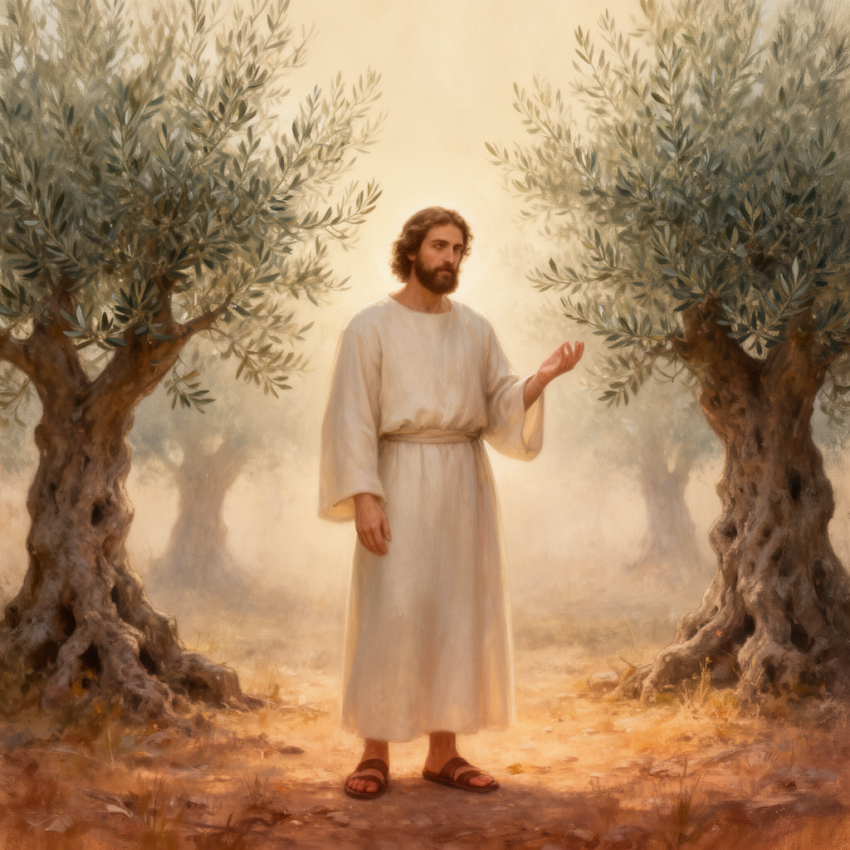
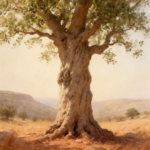
The olive tree is an evergreen, slow-growing perennial reaching 8–15 meters in height. It features a gnarled, twisted trunk with silvery-green, narrow, elongated leathery leaves. In spring and early summer, it produces small, white to pale purple fragrant flowers in clusters. The tree bears small, oval, drupaceous fruits, initially green and turning black upon ripening, rich in oil. Preferring well-drained, calcareous soils, it thrives in Mediterranean climates with hot, dry summers and mild, wet winters, making it ideal for the arid to semi-arid environment of the Middle East.
Scientific Name
Olea europaea ssp. europaea
Hebrew/Greek Name
זַיִת (Zayit) / ἐλαία (Elaia)
Common Names
Olive Tree, Sacred Olive
Native Habitat
Native to the eastern Mediterranean basin, including regions of modern-day Israel, Palestine, Syria, Lebanon, and Turkey. It flourishes in limestone-rich soils, with a climate characterized by hot, dry summers and cool, rainy winters—ideal for olive cultivation.
First Biblical Mention
Genesis 8:11 – The dove returns with an olive leaf, symbolizing peace after the Flood.
📖 Biblical References
Reference
Context
Significance
Luke 22:39-41
Jesus and disciples went to Gethsemane after the Last Supper; Jesus prayed while surrounded by olive trees.
The olive trees symbolize peace, obedience, and the path of suffering, serving as a spiritual backdrop for Jesus’ prayer and agony.
Romans 11:17-24
Paul describes believers as branches grafted onto the olive tree.
This highlights Israel’s historical connection to the olive and its symbolism of divine blessing, endurance, and spiritual renewal.
Olive trees in scripture symbolize divine blessing, peace, renewal, and eternal life. The olive branch became a universal symbol of reconciliation, hope, and God's promise of salvation. The oil extracted from olives represents sacredness, purification, and the Holy Spirit, integral to worship and anointing practices. The enduring nature of the olive tree reflects resilience, patience, and the enduring covenant between God and His people. In Gethsemane, the trees’ ancient presence underscores themes of devotion and the weight of divine destiny, reinforcing the olive as both a literal and spiritual emblem of perseverance through trials and the hope of redemption.
🏺 Cultural Uses in the Ancient World
Ancient Israelites cultivated olives for food, pressing olives for oil used in cooking, lamps, and anointing rituals. Olive branches symbolized peace and victory, traded regionally and used in ceremonies. The wood was valued for building, while the oil served medicinal purposes and religious functions. Olive cultivation was central to the economy and spiritual life, with trees often planted near temples and homes as symbols of divine blessing and longevity.
✡️ In Jewish Tradition
In Jewish tradition, the olive tree is revered as a symbol of peace, prosperity, and divine favor. The Torah commands the planting of olive trees on the Sabbath-year land, and the olive leaf is a sign of hope. During the Sukkot festival, the lulav includes a myrtle branch; while not an olive, the olive tree’s importance underscores themes of divine blessing and abundance cherished in rabbinic teachings.
✝️ In Christian Tradition
Christianity interprets the olive and its branches as symbols of peace, reconciliation, and divine blessing. The olive tree’s association with Jesus in Gethsemane emphasizes surrender and spiritual obedience. The oil represents the Holy Spirit and purification, integral to sacraments like baptism and anointing, symbolizing sanctification and divine grace.
The Gethsemane olive trees are likely Oliva europaea subspecies europaea, with scholarly consensus supporting this identification. Some debate exists regarding the age and historical continuity of the trees, but genetically, these trees are clearly cultivated Olea europaea varieties typical of the region. Recent archaeological and botanical studies suggest the trees are over a hundred years old, possibly older, but not ancient specimens from biblical times.
🗺️ Where Is It Found Today?
Today, olive trees grow widely across Israel, particularly in the Gethsemane Gardens, which contain some of the oldest cultivated trees in the region. They are also prevalent throughout the Mediterranean basin, including southern Spain, Greece, Italy, and Turkey, thriving in similar climatic and soil conditions.
❓ Frequently Asked Questions
Are the olive trees in Gethsemane the same age as biblical times?
Most trees are believed to be several centuries old, with some possibly over 900 years, but they are not the original trees from biblical times. They are often grafted clones representing the historical continuity of olive cultivation.
What does the olive tree symbolize in Christianity?
In Christianity, the olive tree symbolizes peace, reconciliation, and divine blessing. It also represents the Holy Spirit because of the olive oil used in sacraments and spiritual rituals.
Can olive trees be grown outside of the Mediterranean region?
Yes, olive trees can be cultivated in similar climates with hot, dry summers and mild winters. They are grown in parts of California, South Australia, and South Africa, but they require well-drained soil and full sun.
✨ Did You Know?
Some of the trees in Gethsemane are believed to be over 900 years old, testament to the longevity of olive trees; however, these are likely grafted clones rather than direct ancient descendants. Archaeologists have uncovered ancient olive pressings and artifacts near Gethsemane, underlining the long-standing agricultural significance of the site.