Introduction: A New Era for Christian Artwork Modern Understandings
In recent years, modern Christian art has moved from the margins of faith communities into the mainstream of home interiors, worship spaces, and public culture. Across galleries, studios, and online platforms, artists are exploring the sacred through fresh media, new aesthetics, and contemporary narrative voices. What we call contemporary Christian art today encompasses a wide range of practices—from digital installations and mixed-media canvases to sculptural pieces and liturgical textiles—each inviting viewers to encounter spiritual themes in accessible, visually compelling ways. The phrase Christian artwork modern invites a broad inquiry: how do artists interpret the gospel, embody theology, and respond to modern life while honoring tradition? This article explores the landscape of modern Christian art and its relevance for homes, churches, schools, and communities seeking meaningful visual culture.
What Is Contemporary Christian Art? Defining a Broad Movement
Modern Christian art is not a single style or recipe. It is a dynamic field characterized by plurality, cross-pollination, and engagement with current social, technological, and ecological issues. Some core facets include:
Interpretive clarity—art that communicates biblical or spiritual themes in a way that respects diverse audiences.
Visual experimentation—an openness to abstract forms, unconventional materials, and innovative exhibition contexts.
Theological conversation—works that raise questions, reflect on grace, and invite contemplation rather than simply depicting a scene.
Cultural responsiveness—pieces that address contemporary concerns such as justice, peace, migration, and care for creation.
Accessibility—art that can be encountered in homes and churches alike, without requiring specialized training to be meaningful.
As you encounter this field, you will meet terms like modern Christian art, contemporary Christian art, and Christian artwork modern being used interchangeably in some contexts. While there are distinctions in emphasis—some artists foreground liturgical function, others foreground personal storytelling—what unites them is a shared commitment to faith-inspired creativity in a contemporary idiom.
Historical Context and the Continuity of Christian Imagery
The story of Christian artwork modern sits alongside a long history of sacred imagery. From medieval icons to Renaissance altarpieces, from Protestant revival banners to Catholic modernist commissions, religious art has continually reinvented itself to speak to new audiences. In the modern era, artists draw on both ancient traditions and current vernacular—street art, graphic design, and digital media—to convey timeless truths with fresh vitality.
This continuity matters: you will often find that a modern Christian sculpture or a contemporary church mural echoes iconographic patterns while using contemporary materials. The result is artwork that can be deeply rooted in tradition yet resonant with people who live in today’s digital culture. For home buyers and church stewards alike, this fusion of lineage and innovation is part of what makes Christian artwork modern so compelling and accessible.
Themes in Modern Christian Art: Sacred Narratives Reimagined
Across the spectrum of modern Christian art, artists tend to explore a recurrent set of themes, but with individualized approaches. Here are some prominent strands you will encounter:
Grief, Hope, and Redemption
Many works wrestle with pain—whether personal loss, communal trauma, or global conflict—while pointing toward healing in faith. The arcs of redemption and restoration are often rendered through luminous color fields, delicate drawing, or restrained sculpture.
Incarnation, Presence, and Sacrament
The mystery of the Incarnation invites artists to portray divinity in tangible form. Contemporary depictions might place sacred figures in modern settings, or they may employ symbolic multiplicity—light, breath, or sound—to evoke the spiritual presence in everyday life.
Justice, Compassion, and Ecology
Reflecting current ethical concerns, a growing number of artists link gospel values to social action. You may see works that address migration, racial justice, environmental stewardship, or care for the vulnerable, turning faith into lived practice expressed through imagery and material choice.
Some creators favor clear narrative scenes rendered in realism to teach or comfort, while others favor abstraction, using color, form, and texture to evoke spiritual resonance without relying on explicit stories. Both paths contribute to a rich gallery of Christian artwork modern options.
Iconography Reimagined for a Secular World
Icon-like works—where recurring symbols (the cross, dove, lamb, phoenix, fish, or shepherd) are reinterpreted—offer intelligible references for believers while inviting curiosity from non-specialists. This cross-cultural, cross-denominational vitality is part of what makes contemporary Christian art accessible to a broad audience.
Materials and Techniques: The Media of Modern Christian Art
The realm of modern Christian art embraces an interdisciplinary toolkit. Artists blend traditional media with digital technologies to find new modes of expression, while others emphasize craft and material texture to create tactile spiritual experiences. Here are representative categories:
Traditional Painting and Drawing with a Modern Twist
Oil, acrylic, gouache, and ink remain foundational, but artists expand the vocabulary with textural layering, non-traditional support surfaces (reclaimed wood, metal panels, fabric), and mixed media approaches that create depth and resonance.
Sculpture, Installation, and Public Art
Three-dimensional works—from figurative sculpture to large-scale installations—offer immersive encounters. Public art projects in schools, churches, and outdoor spaces use durable materials and site-specific design to engage visitors in contemplative, participatory experiences.
Digital Media, Video, and Interactive Art
In the era of screens, many creators leverage digital painting, projection mapping, and interactive installations. These pieces invite viewers to engage with sacred themes through time-based media, sometimes integrating user input or motion.
Textiles, Glass, and Craft-Based Traditions
Tapestry, stained glass, and woven or embroidered pieces connect contemporary aesthetics with traditional ecclesial crafts. These media can translate liturgical function into modern form, such as illuminated banners or prayer textiles that enrich worship spaces.
Printmaking and Reproductions
Limited-edition prints, screenprints, and lithographs enable broader access to Christian artwork modern imagery. High-quality reproductions allow families and congregations to collect and display meaningful works with affordable options.
Styles and Movements within Contemporary Christian Art
The field is diverse by design. You will encounter a spectrum from figurative realism to bold abstraction, and from icon-inspired imagery to conceptual installations. Here are some notable stylistic tendencies:
Figurative Realism with Contemporary Contexts
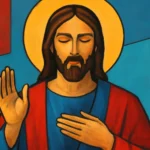
Portraits and narrative scenes that place biblical figures or contemporary believers in recognizable environments—urban settings, homes, or public squares—are common. This approach helps viewers connect traditional stories with present life.
Abstract and Non-Representational Work
Abstract modern Christian art can convey spiritual resonance through color, gesture, and form. Light and space often become protagonists, inviting contemplation about transcendent realities beyond concrete depiction.
Icon-Inspired Modern Icons
Some artists draw directly on icon traditions, adapting symmetry, halo concepts, or gold accents to a 21st-century sensibility. These works often function as devotional aids or contemplative focal points in worship settings.
Geometric and Minimalist Approaches
Clean lines, modular compositions, and geometric motifs can distill complex themes into essential visual clarity. Minimalist works frequently emphasize invitation, breath, and stillness as a counterbalance to rapid modern life.
Eclectic and Cross-Cultural Fusions
Global perspectives enrich Christian artwork modern by incorporating regional textures, languages, and design traditions. This pluralism reflects the church’s global witness and invites a wider audience to engage with the sacred story.
Choosing Art for Home and Church: Practical Guidelines
Selecting the right piece of modern Christian art involves aligning aesthetics with intention, theological taste, and spatial realities. The following practical guidelines can help homes and churches curate meaningful collections.
Purpose and Context
Identify the intended function: is the piece for daily meditation in a private space, for worship and liturgy in a chapel, or for public display in a foyer or fellowship hall? Grounding the artwork in a clear purpose helps narrow the field of options.
Theological Alignment
Consider the piece’s theological language. Does it speak clearly to your tradition (Catholic, Protestant, Orthodox, Pentecostal, or independent congregations), or is it broadly ecumenical? Some viewers prefer explicit scriptural narratives, while others value symbolic or contemplative expressions that transcend specific doctrinal formulations.
Scale and Proportion
The physical size of a work affects its impact. Large works can anchor a worship space or a living room, while intimate pieces invite personal reflection. Pay attention to wall space, ceiling height, and lighting to ensure the piece resonates without overwhelming the room.
Medium and Maintenance
Some media require specialized care (e.g., textiles, glass, or certain pigments). If the space is a family home with kids or a busy church corridor, you may favor durable, easy-care materials or pieces with protective framing and UV-resistant finishes.
Budget and Availability
Contemporary Christian artwork modern spans a broad price range. Consider prints or editions for cost-effective access, or commission an original piece for a unique devotional center. Remember to discuss licensing rights and reproduction options if you intend to reproduce imagery for multiple spaces.
When selecting art inspired by Christian themes, be mindful of cultural representation and context. Choose works that honor diverse voices within the global church and avoid stereotypes or appropriations. This sensitivity strengthens the art’s integrity and the community’s trust.
Display and Care: Installing Christian Artwork Modern Pieces
Proper display enhances the impact of modern Christian art and extends its lifespan. Here are practical steps to present and preserve these works in homes and church settings.
Framing and Mounting
Choose frames that complement the piece and protect its surfaces. UV-protective glazing can preserve colors, while moisture-resistant backing helps in humid environments. For large canvases, secure hanging systems that distribute weight evenly to prevent sagging.
Lighting and Ambience
Lighting dramatically affects perception. Use warm white or neutral LED lighting to highlight textures without creating glare. Consider spotlighting for focal works or ambient lighting to create a contemplative atmosphere in a prayer corner.
Placement and Sequence
Think in terms of sightlines and journey. In a home, a centerpiece in the living room or library can act as a daily anchor. In a church, a series of works can tell a liturgical or thematic arc across a corridor, nave, or chapel.
Preservation and Handling
Dust regularly and avoid placing artworks in direct sunlight for extended periods. For sensitive media, follow the artist’s care instructions or consult a conservator. For textiles and mixed-media pieces, monitor humidity and temperature to prevent warping or deterioration.
Commissioning and Collecting: Building a Personal or Congregational Collection
Commissioning new works is a meaningful way to tailor Christian artwork modern pieces to your community’s character and needs. Whether you are decorating a private home or a church, you can engage artists in a collaborative process that respects theology, aesthetics, and budget.
Commissioning Process: A Step-by-Step Guide
Define goals: Clarify the spiritual themes, space, and audience. Decide whether you want a narrative piece, an abstract meditation, or a liturgical object.
Choose an artist: Seek artists whose portfolios demonstrate alignment with your theological and aesthetic aims. Consider local artists for a community-centered project or bring in national/international talents for a broader conversation.
Discuss materials and timeline: Agree on media, durability, installation needs, and a realistic timeline. Confirm revisions, milestones, and delivery dates.
Agree on budget and rights: Establish a clear budget, payment schedule, and ownership/licensing terms. Address future reproductions, prints, or loan agreements if relevant.
Install and bless: Plan a commissioning ceremony or dedication. This moment can deepen the artwork’s sense of sacramental value within the community.
Collector’s Considerations: Building a Cohesive Collection
If you are assembling a collection for a church or personal library, think in terms of curatorial themes, seasons of the liturgical year, and the educational potential of the works. A cohesive collection may include:
Seasonal pairs (Advent and Christmas, Lent and Easter) to support alternating displays.
Multi-denominational voices to foster dialogue and inclusivity within a diverse audience.
Accessibility-friendly pieces that invite participation from children, seniors, and newcomers.
Educational materials such as artist statements, interpretation guides, and discussion prompts to accompany the artworks.
Educational Value: Art as Catechesis and Spiritual Practice
Christian artwork modern offers more than decoration. It can function as a form of catechesis—an invitation to learn, reflect, and discuss faith in meaningful ways. Schools, churches, and faith communities often use contemporary imagery to:
Explain biblical narratives through contemporary scenes that students relate to.
Prompt discussion about grace, justice, mercy, and compassion.
Support personal devotion and group worship with visually rich focal points.
Encourage cross-cultural literacy by featuring diverse artistic voices.
In addition to religious education, modern Christian art can nurture critical thinking about image, symbol, and meaning. Engaging with these works helps students, congregants, and visitors articulate what faith looks like in the 21st century.
Ethical and Cultural Considerations in Contemporary Christian Art
As with any art form, Christian artwork modern raises questions about representation, power, and context. Thoughtful institutions and individuals seek to honor the dignity of the subjects depicted, avoid stereotypes, and recognize the contribution of artists from varied backgrounds. Key considerations include:
Respect for tradition while allowing space for innovation and dialogue.
Inclusive representation of people, cultures, and perspectives within a shared faith story.
Authentic storytelling that avoids oversimplification of complex issues.
Responsible storytelling about sensitive topics, ensuring that art invites reflection rather than harm.
Where to Find Modern Christian Art: Galleries, Museums, and Online Platforms
Discovering contemporary Christian artwork modern can begin with local galleries and church-sponsored exhibits, but it increasingly happens online. Here are several reliable pathways to explore:
Galleries and Museums with a Theological or Faith-Based Focus
Specialized religious art galleries that host contemporary exhibitions and commissions.
University galleries and religious studies programs featuring artists who explore theology in visual form.
Cathedral or church-affiliated spaces that curate rotating shows for congregations and visitors.
Artist Studios and Collectives
Artist-run spaces that welcome open studio days, talks, and collaborative projects.
Collectives focusing on ecumenical or interfaith dialogue through visual art.
Online Platforms and Marketplaces
Artist websites and social media portfolios showcasing portfolios, commissions, and prints.
Secure art marketplaces offering limited editions, museum-quality prints, and licensing options.
Digital art libraries and educational portals that provide context, artist statements, and interpretive resources.
Community and Church Networks
parish art committees, diocesan art programs, and youth ministry resources highlighting contemporary works.
Local art fairs, faith-based festivals, and evangelistic events featuring living artists and new media.
Resources and Further Reading: Deepening Your Understanding of Christian Artwork Modern
For readers interested in exploring more about Christian artwork modern and its implications for worship, theology, education, and design, here are suggested avenues:
Introductory overviews of modern Christian art and its historical roots.
Artist monographs and critical essays that examine contemporary approaches to sacred imagery.
Curatorial catalogues from galleries and museums that focus on faith-inspired visual culture.
Educational guides for teachers and pastors that connect art with Bible study and liturgy.
Project briefs and commission briefs to help church leaders and home collectors articulate their goals with artists.
As you delve into these resources, look for opportunities to engage with artists, priests, pastors, designers, and educators who are shaping the field. The conversation surrounding modern Christian art is ongoing, inclusive, and increasingly collaborative, drawing on diverse voices to articulate what faith looks like in form, color, and space.
Practical Tips for Homeowners: How to Integrate Modern Christian Art into Your Living Space
Bringing Christian artwork modern into a private home can enrich daily life, foster meaningful conversations, and create an atmosphere of reflection. Consider the following practical tips to ensure your selection serves your family well.
Start with Intentionality
Clarify why you want a piece: for daily meditation, for guests to engage with faith, or as a family conversation starter. A clearly defined purpose helps guide choices and reduces impulse purchases.
Balance and Harmony
Seek a balance between color, scale, and subject matter. A single strong piece can anchor a room, while a small suite of works can create a thematic rhythm across living spaces.
Seasonal and Liturgical Considerations
Some families enjoy aligning their art with the seasons of the Christian calendar. Rotating artwork by season or year can keep the collection dynamic and spiritually resonant.
Educational and Intergenerational Value
Choose works that invite questions and discussion across generations. Pieces with accessible symbolism or narrative clarity often work well in households with children or newcomers to faith communities.
Conclusion: Embracing a Living Tradition in the Age of Global Visual Culture
The landscape of Christian artwork modern offers a vibrant, inclusive, and culturally rich route to encounter faith through image. Whether you are curating a private collection for a home sanctuary or stewarding art for a church, you are participating in a long tradition of using color, form, and material to communicate sacred truths. The stories you choose to display—whether literal narratives, symbolic meditations, or immersive installations—can invite hospitality, provoke contemplation, and deepen a community’s shared life. By engaging with contemporary Christian art, you join artists and communities across time and space who seek to witness to the transcendent through everyday beauty. In a world saturated by images, deliberate, thoughtful Christian artwork modern can be a luminous counterpoint—an invitation to pause, reflect, and re-imagine the Gospel for today.
Appendix: Quick Reference Guide
If you need a compact reference for planning, here is a quick checklist to consider when exploring or purchasing modern Christian art pieces.
Purpose — devotional, educational, liturgical, or conversational
Theme — narrative, incarnation, justice, mercy, or abstraction
Medium — painting, sculpture, textile, glass, digital
Space — home wall, foyer, chapel, classroom, or outdoor installation
Lighting — natural, ambient, or accent lighting to enhance mood
Maintenance — durability, cleaning needs, and environmental controls
Budget — purchase vs. commission, editions vs. originals
Ethics — representation, cultural sensitivity, and artist rights
Reception — how different audiences may respond and discuss the work
Whether you are drawn to the lifelike presence of a contemporary church painting, the quiet dignity of a modern Christian sculpture, or the fresh energy of a digital religious artwork, there is a place for you in the evolving conversation about faith and form. The world of Christian artwork modern is expansive, inviting, and continually renewed by creators who see beauty as a pathway to understanding and worship. Embrace the journey of discovery: as you encounter different voices and visions, you will likely find that your own relationship with faith deepens through the art you choose to live with, display, and share.