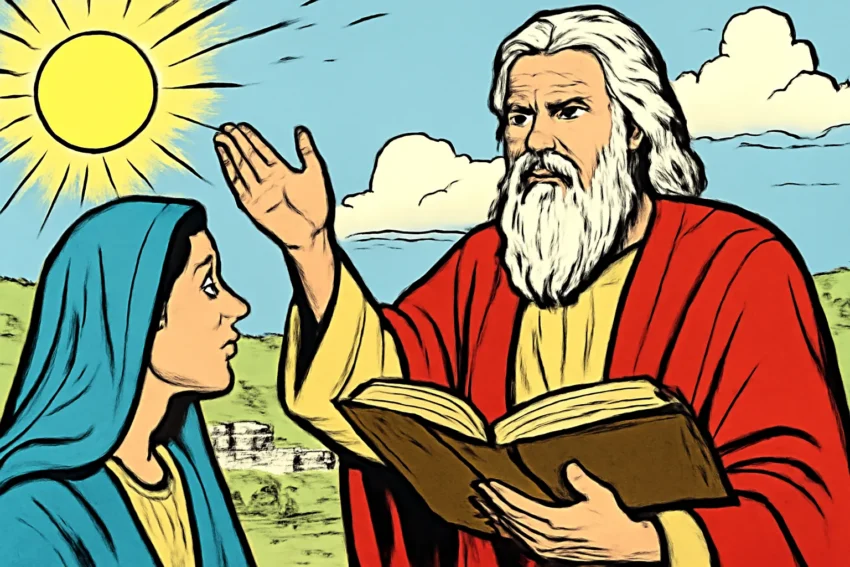
In contemporary publishing, bible comics have emerged as a dynamic bridge between ancient scripture and modern visual culture. These graphic Bibles pair art and storytelling to convey biblical narratives in a format that is accessible, memorable, and engaging for readers of all ages. Whether used for individual reading, family devotion, or classroom instruction, bible comics offer a distinctive approach to exploring faith, history, and cultural context. This article provides a thorough look at what bible comics are, their history, the range of formats and styles, their advantages and limitations, and practical guidance for selecting and using them in educational or devotional settings.
Bible comics are narrative works that retell or adapt passages from the Bible using sequential art—panels, speech bubbles, captions, and character-driven visuals. They may be standalone graphic novels, part of a serialized comic book line, or integrated into teaching curricula. The storytelling technique draws on the conventions of comic art—visual momentum, panel transitions, and stylized character design—to help readers grasp plot, character motivation, geography, and chronology in a way that complements textual study.
Found in a variety of formats, biblical graphic novels often aim to balance accuracy with readability. Some emphasize a straightforward retelling of stories (for example, creation, exodus, or life of Jesus) while others tackle more complex narratives (such as prophetic books, wisdom literature, or apocalyptic visions) through interpretive lenses. Across these variants, you will encounter several recurring features:
Panel-driven pacing that can compress long narratives into a readable arc.
Character-driven scenes that highlight choices, conflicts, and outcomes.
Historical and cultural context annotations or captions to illuminate customs, settings, and social structures.
Visual motifs and symbolism that reinforce themes without overburdening the reader with exposition.
Historical Roots and Evolution
The idea of telling biblical stories through pictures is ancient, but the modern form of bible comics as a published, standalone medium emerged with the rise of mass-market comics, religious publishing, and educational media in the 20th and 21st centuries. Early efforts often took the form of illustrated Scripture readers for children or simplified picture bibles designed to accompany family devotional time. As printing technology advanced and artists and publishers experimented with cross-genre storytelling, graphic Bible projects grew more ambitious—producing dense narratives, art styles ranging from painterly to slickly graphic, and formats that could be used in schools or at home.
Several cultural and educational currents helped shape the trajectory of biblical comics:
Education and literacy: Comics’ visual grammar supports comprehension, especially for new or complex material, including historical and biblical contexts.
Evangelical and mainline church contexts: Publishers sought to provide tools for faith formation that were engaging without compromising doctrinal integrity.
Globalization and translated editions: Manga-inspired and cross-cultural graphic formats broaden access to biblical narratives across languages and cultures.
Digital media: The rise of tablets and smartphones created demand for digital comics, webcomics, and interactive graphic experiences tied to Scripture.
Today, the landscape includes a spectrum from classic retellings to contemporary graphic novels, from classroom-ready curricula to personal devotionals, and from traditional Western art sensibilities to manga-inspired aesthetics. This diversity helps ensure that readers with different tastes, ages, and faith backgrounds can encounter the biblical story in a format that resonates with them.
Formats and Styles: A Rich Spectrum
The category of bible comics encompasses multiple formats and artistic styles. Writers, editors, and artists collaborate to adapt biblical material for different audiences and purposes. Here are some representative categories you are likely to encounter:
Standalone Graphic Novels and Adaptations
These are complete, book-length stories that retell a collection of biblical episodes or a single extended narrative. They tend to provide more depth than shorter comic strips and are well-suited for individual readers or family libraries. Characteristics often include a clearly defined arc, developed characters, and careful handling of sensitive topics. Examples across the field commonly emphasize moral and theological themes while preserving historical context.
Designed for educational settings—such as Sunday schools, Bible study groups, or homeschool curricula—these titles align with learning objectives and often include teacher guides, discussion questions, and activities. Features might include:
Unit-by-unit progressions that mirror a syllabus
Cross-references to scripture passages
Accompanying activities, such as timelines, map work, or character studies
These educationally minded scripture comics help instructors scaffold understanding and enable learners to connect visual content with the biblical text.
Manga-Influenced and East–West Hybrid Styles
In recent decades, several publishers have explored manga-inspired or hybrid graphic styles to appeal to younger readers and fans of contemporary illustration. These graphic Bible narratives often employ dynamic line work, dynamic lighting, and expressive character design to convey emotion and action. While the aesthetics differ from traditional Western sacred art, the storytelling remains firmly rooted in biblical material and theological themes.
Picture Bible and Illustrated Story Bibles
These are often intended for younger children or early readers. They emphasize clear, simple narrative progression and large, colorful artwork. While they may compress complex plotlines, they provide a foundational exposure to Bible stories and key figures, crystallizing essential moments in a visually digestible format.
Audience and Educational Use: Who Benefits from Bible Comics?
One of the strengths of bible comics is their versatility across ages, backgrounds, and learning styles. The visual medium supports diverse audiences in several meaningful ways:
Children discover stories through pictures that reinforce memory, association, and attention to detail.
Youth and teens encounter complex narratives with immediacy, helping them engage with themes such as leadership, courage, mercy, and justice.
Families use devotional formats that combine reading, discussion, and reflection, turning Bible study into an interactive shared activity.
Educators integrate comic-based resources into curricula to diversify teaching methods and reach students with different strengths.
Adults appreciate accessible re-tellings of familiar episodes or fresh takes on lesser-known books, inviting renewed interest in sacred texts.
Benefits of Bible Comics: Why This Genre Matters
Using bible comics can offer several distinct benefits for readers, families, and communities. These advantages are not merely pedagogical; they also touch on spiritual formation, cultural literacy, and media literacy in the digital age.
Enhancing Engagement and Retention
Visual storytelling integrates text with imagery to create memorable scenes. For many readers, a single powerful image—paired with concise dialogue—can anchor a lesson or a moral teaching more effectively than a page of prose. The combination of narrative pacing and visual cues often improves recall of characters, places, and events long after the initial reading.
Supporting Visual Literacy and Critical Thinking
Graphic Bibles help readers interpret imagery, symbolism, and narrative structure. Students and families can practice noticing details, analyzing character motives, and questioning how an artwork choice (color, composition, perspective) conveys meaning. In this way, visual literacy becomes a tool for biblical interpretation and spiritual discernment.
Accessibility and Inclusive Learning
For readers who struggle with dense or archaic language, comics provide an approachable入口 into biblical text. With carefully chosen captions and dialogue, bible comics can reduce barriers to understanding while preserving the core events and theological messages of the scriptures.
Cross-Cultural and Intergenerational Appeal
Because art and storytelling translate across cultures, graphic Bibles offer a bridge for diverse audiences. They can facilitate intergenerational dialogue, with parents, grandparents, and children sharing a common visual vocabulary and a conversation about faith, values, and history.
Challenges and Considerations: Balancing Faithfulness and Creativity
As with any adaptation, creating bible comics involves careful decision-making to balance accuracy, faith integrity, accessibility, and artistic expression. Several considerations commonly arise:
Scriptural accuracy: Publishers and creators strive to stay faithful to canonical texts. Yet, space limitations and artistic interpretation can necessitate condensation or reordering, which requires thoughtful commentary and, when possible, companion study materials.
Denominational diversity: Different Christian traditions emphasize different doctrinal emphases. Graphic translations and retellings should be aware of these variances and present material in a respectful, non-denominational manner when appropriate.
Handling sensitive topics: Biblical narratives include violence, hardship, and controversial actions by biblical figures. Comic creators often face the challenge of conveying these events with sensitivity while avoiding sensationalism.
Ethical portrayal of characters: Visual portrayals can shape readers’ perceptions. Careful depiction of power dynamics, ethnicity, and gender helps prevent stereotyping and encourages critical reflection on the narrative.
Educational context: When used in classrooms or curricula, graphic Bible materials should complement textual study and be integrated with reflective questions, discussion prompts, and additional readings.
Choosing a Bible Comic: Practical Guidance for Readers, Parents, and Educators
With a broad range of titles available, selecting the right bible comic for a given setting can feel daunting. Here are practical criteria to guide decisions, whether purchasing for a home library, a classroom, or a church resource center:
Consider Your Audience
Assess the age, background, and reading level of the intended readers. Some graphic Bibles are clearly designed for young children, with simple plots and large panels, while others target teens or adults with more complex narratives and sophisticated artwork.
Review the publisher’s statement of faith and the material’s didactic aims. If doctrinal alignment is important in your community, look for resources that explicitly address theological themes in a way that aligns with your tradition, or choose titles accompanied by teacher guides that offer doctrinal context.
Assess Content and Tone
Consider the handling of violence, miracles, and miracles’ outcomes. Some readers prefer a restrained, reverent tone, while others appreciate a more dynamic, action-oriented presentation. Decide which approach best serves your goals—devotional reading, study, or outreach.
Check Supplemental Materials
Many graphic Bibles come with extras such as teacher guides, discussion questions, maps, glossaries, and timelines. These tools can significantly enhance classroom use or family discussion, enabling deeper engagement with the material.
Look for Professional Craft and Storytelling
Quality artwork, cohesive paneling, clear lettering, and strong narrative pacing are markers of a well-produced graphic Bible. A well-crafted visual language supports comprehension and deepens emotional connection to the stories.
Taking Bible Comics Beyond Reading: Activities and Practices
Using bible comics as a springboard for learning and formation can be enriched through structured activities and reflective practice. Here are practical ideas to extend reading into discussion, study, and community engagement:
Discussion prompts tied to each chapter or segment, encouraging readers to articulate insights, questions, and connections to their own lives.
Timeline projects that place the comic’s events within the broader biblical chronology, helping readers visualize sequences and historical context.
Character studies focusing on motivations, choices, and consequences, with written or spoken reflections on how the story relates to modern life.
Artistic extensions such as fan art, alternate endings, or short scripts that explore a scene from a different perspective, nurturing creativity alongside comprehension.
Cross-curricular links to history, geography, or theology, using maps, cultural background notes, and doctrinal summaries to deepen understanding beyond the narrative.
Impact on Faith Formation and Community Life
Authentic engagement with bible comics can influence faith formation by making biblical narratives more relatable, especially in communities where visual media plays a central role in learning. When integrated thoughtfully—alongside traditional study of Scripture, prayer, and discussion—graphic Bibles can encourage discipleship and lifelong learning, inviting readers to reflect on the application of biblical principles in daily life. They can also foster a sense of shared experience in families and congregations, as members read and discuss common stories through a common visual language.
However, like any interpretive medium, these works should be approached with discernment. Readers are encouraged to compare comic retellings with the biblical text, consult commentary resources when needed, and participate in communal conversations that explore not only what happened in the story, but what it means for faith, ethics, and community life today.
Glossary of Key Terms
To help readers navigate discussions about this genre, here is a concise glossary of terms commonly used in conversations about Bible comics:
Graphic novel: a book-length narrative in comic form that explores longer story arcs and character development, often in an emotionally or thematically cohesive way.
Panel: a single frame or image in a comic page that contains a moment in the story; multiple panels create sequence and pacing.
Story arc: the overall narrative progression that spans chapters or volumes, including setup, climax, and resolution.
Adaptation: a retelling of a source text (in this case, biblical material) in a new medium or format, preserving core events while shaping them for a different audience.
Illustration style: the artistic approach used to render characters, settings, and action, which can range from highly realistic to stylized or cartoony.
Publishers of bible comics often release multiple formats to widen accessibility. In addition to print editions, many titles are available as digital comics, eBooks, or web-based readers. Some publishers also offer educator guides, promo videos, and interactive features that enhance immersion and learning. When selecting resources, consider whether digital access, print quality, or a combination of both will best serve the intended audience and the intended setting.
Accessibility considerations include font size, page layout, and color contrast, especially for readers with visual impairments. Likewise, consider language options for multilingual communities, including translations or bilingual editions that preserve meaning while making the material approachable for non-native speakers.
Ethical and Theological Reflections on Bible Comics
As with any artistic representation of sacred material, bible comics raise thoughtful questions about interpretation, authority, and responsibility. Some readers approach these works as devotional aids, while others view them as supplementary resources for understanding biblical narratives. The following reflections are helpful reminders for readers and educators:
Respect for the text: Use graphic retellings to enhance understanding, not to replace direct study of Scripture.
Respect for diverse beliefs: Acknowledge that readers come from varied theological backgrounds; present content with sensitivity and openness to dialogue.
Promotion of discernment: Encourage readers to compare comic adaptations with the biblical text and scholarly resources, cultivating critical thinking in a faith-informed context.
Case Studies: How Bible Comics Are Used in Real Settings
Across churches, schools, libraries, and family homes, bible comics are employed in diverse ways. Here are a few illustrative approaches that demonstrate their practical impact:
In Sunday School and Religious Education
In classroom settings, educators often integrate graphic Bibles into a broader curriculum. A typical approach might include reading a segment of a graphic adaptation, followed by discussion questions, a timeline exercise, and a craft or activity that reflects the story’s themes. This method harnesses the visual appeal of the medium to sustain attention while rooting discussion in scripture and doctrine.
In Libraries and Community Centers
Public libraries and faith-based community centers may stock Bible comics as part of religious studies or youth literacy programming. Advisory notes or reading guides accompany the titles to help readers navigate the content responsibly. Programs may include author Q&As, artist demonstrations, or collaborative storytelling sessions that invite community participation.
In Family Devotion and Home Learning
Families often adopt graphic Bibles as family devotional tools. Short readings paired with discussion prompts, journaling, and related activities can turn a routine reading into a meaningful ritual. The visual format can make Bible stories tangible for children while offering depth for parents and older siblings to reflect on together.
Throughout their diverse forms, bible comics offer a compelling value proposition: they pair the timeless narratives of the Bible with the immediacy and emotional resonance of visual storytelling. For readers who are drawn to images, for learners who benefit from dual coding (text plus picture), or for communities seeking inclusive, engaging ways to explore faith, graphic Bibles can be a powerful companion to traditional study. When chosen thoughtfully and used with discernment, these works can enrich understanding, invite discussion, and nurture spiritual curiosity across generations.
As with any resource touching on sacred texts, the key is intentional use. Readers, teachers, and families are encouraged to approach bible comics as part of a balanced ecosystem of study, prayer, reflection, and community dialogue. By leveraging the strengths of visual storytelling—clarity, pacing, and emotional engagement—these graphic narratives can illuminate biblical themes, make ancient stories feel immediate, and invite readers into a deeper encounter with Scripture.
In sum, bible comics are more than just illustrated Bible stories. They are a dynamic vehicle for biblical literacy, faith formation, and intercultural dialogue. Whether you are exploring them for personal growth, classroom instruction, or family enrichment, you will likely find that the combination of art and text offers a fresh, memorable, and meaningful way to encounter the biblical text—an invitation to see the Bible not only as a source of ancient wisdom but also as a vibrant, ongoing conversation that continues to speak across generations.