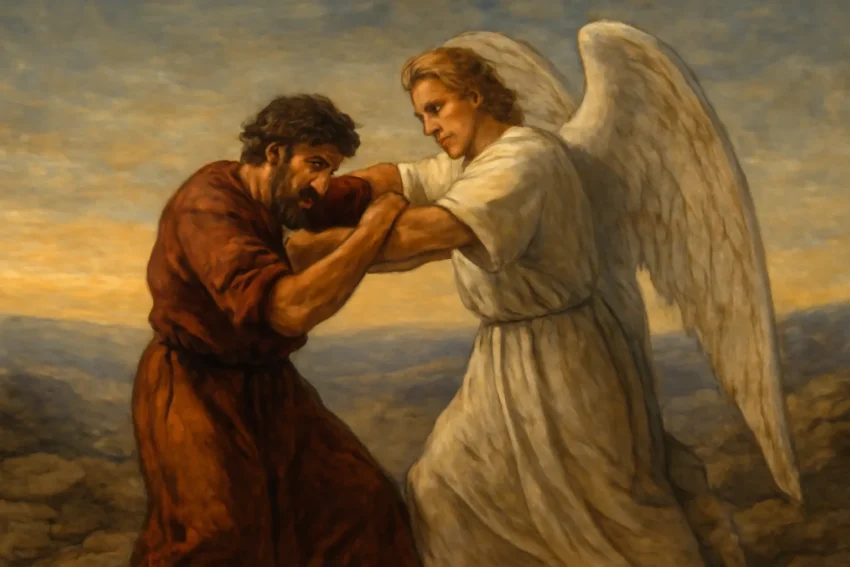
And Jacob Wrestled with God: Lessons from Genesis 32 on Faith and Transformation
Wrestling with the divine is a provocative image. In the biblical narrative of Jacob, it becomes a doorway into how faith can be born through human dependence, struggle, and courage. The episode commonly titled “And Jacob Wrestled with God” or, in longer form, the nocturnal struggle that reshapes a life, is not merely a bedtime tale of a stubborn patriarch. It is a careful study of how a person’s fear, dreams, and history can be subverted and reoriented by a decisive encounter with the holy. In Genesis 32, the text places Jacob at a crossroads: he faces a future that involves reconciliation with his brother Esau, a future that requires more than clever schemes or bravado. What he encounters instead is a force that demands the surrender of control in exchange for a blessing. This article explores the narrative, its themes, and the enduring lessons for faith and transformation that continue to resonate in liturgy, preaching, and personal devotion.
Across linguistic and interpretive horizons, scholars and readers describe this event with a spectrum of phrases: Jacob’s night-long struggle, theophany at Peniel, the blessing after wrestling, and, more simply, the moment when Jacob is renamed Israel. To capture the breadth of this story, we will use variations of the phrase “and jacob wrestled with god” throughout the discussion—honoring the traditional naming while acknowledging alternate readings that emphasize the person, the divine presence, or the entire event as a transformative encounter. The result is a layered portrait of faith that invites readers to examine how struggle, vulnerability, and blessing function together in the journey of a life and a people.
The Context: A Moment Before Peniel
To understand the weight of the wrestling at night, we must first situate Jacob within the larger family saga. He is the younger son of Isaac and Rebekah, the grandson of Abraham, and the recipient of divine promises. Yet those promises are braided with fear, flight, and intrigue. Jacob’s decision to flee from his brother Esau—to escape impending confrontation and to secure a family fortune through cunning—sets up the nocturnal confrontation with a figure who is never merely a rival but an encounter with the living God or the divine messenger. The scene is framed by a journey: Jacob travels with Laban’s land as a background, his future tangled with the possibility of reconciliation with Esau, and his present tense as an imperfect vessel trying to secure a blessing in a way that might be more human than divine.
In this sense, the episode is not a simple moral test. It is a theological test—the moment when Jacob’s dependence on his own strategies is confronted by a demand for something more: to be blessed without manipulating the blessing, to be spared without pretending strength where there is fragility, and to emerge with a transformed identity rather than a secured advantage. The narrative’s arc suggests that faith is not the absence of struggle but the endurance through it. In the Psalms and prophetic literature, similar calls to wrestle with God appear, inviting readers to see wrestling not as a sign of doubt alone, but as a disciplined form of prayer in which one refuses to relinquish the pursuit of blessing until the blessing is granted—or until the one who gives the blessing gently redefines the terms of the encounter.
Wrestling: A Metaphor for Faith and Prayer
Wrestling with God as a metaphor is a powerful theological tool. It reframes faith from a private sentiment to a dynamic practice in which trust is formed through conflict, conversation, and endurance. But what does this metaphor tell us about the nature of prayer and the shape of transformation? There are several dimensions worth noting:
Honest confrontation: Jacob refuses to release his hold until he receives a blessing. This mirrors how many people experience prayer as a frank exchange with the divine—honest questions, raw emotions, and a posture of persistence rather than mere ritual repetition.
Vulnerability and demand: The seeker enters a space where vulnerability is not a liability but a doorway to grace. The wrestling showcases an insistence on being met where one actually is, not where one pretends to be.
Transformation through encounter: The aim of the struggle is not domination but transformation. The encounter changes Jacob’s name, his body, and the way he navigates the risks of his life. The change is both personal and communal because Jacob becomes Israel, the man who will father a nation.
Ambiguity and blessing: The narrative leaves the blessing contingent on the transformation. The divine blessing emerges in response to a life opened to change, not merely to a clever argument before God.
Scholars often note that the figure Jacob wrestles with is described in ambiguous terms—“a man,” “a divine being,” or “the Lord” in some venerable readings. That ambiguity is not a literary accident. It reflects the complexity of religious experience, in which the divine presence can be encountered in ways that are both intimate and elusive. The encounter invites readers to reflect on how they interpret God’s presence in their own moments of hardship. The text’s ambiguity invites a multi-angled reading: some see a theophany (a visible manifestation of God), others see an angelic messenger, and still others emphasize God’s self-disclosure through the body—Jacob’s hip being touched, his limping as a sign of contact with the holy. Each interpretation carries different emphases, but all converge on the same core claim: an encounter with the divine can reorient a life.
One of the most compelling outcomes of this nocturnal struggle is the name change. After Jacob’s prolonged grappling, the figure who wrestles with him blesses him and pronounces a new name: Israel, often translated as “he who struggles with God” or “God fights.” The moment is more than a renaming; it marks a reorientation of destiny. The name Israel becomes the name under which a people will identify themselves in generations to come. The narrative encodes a necessary paradox: blessing follows struggle, and identity is forged not through ease but through encounter. This is not merely an ancient anecdote about a patriarch; it is a statement about the formation of a people whose spiritual self-understanding will be shaped by struggle, perseverance, and trust in divine purposes.
In this sense, the biblical phrase “And Jacob wrestled with God” expands beyond its immediate moment. Across centuries and traditions, readers hear echoes of that struggle whenever a person faces a profound life decision, when a community discerns its vocation, or when one inherits a legacy that requires both courage and humility. The transformation from Jacob to Israel is thus a blueprint for a life that bears weighty history while leaning into grace. The loom of this transformation is the ongoing relationship with the divine, a relationship that remains active through generations and challenges the bearers of the name to live into their covenantal calling.
Interpretive Perspectives: The Divine Presence and the Theophany
The Genesis account invites several interpretive angles, each with theological significance. It is helpful to map these angles to understand how diverse faith communities have engaged the same text.
The Theophany Reading: God’s Immanence in Human Struggle
In this reading, the figure with whom Jacob wrestles is God or a visible manifestation of God. The encounter underscores the immanence of the divine in the human sphere: God does not remain distant but enters into the night-time drama of Jacob’s life. The limp and the new name become tangible signs of this nearness—the transformation is not only spiritual but bodily and vocational. This reading emphasizes that God participates in human history, often through means that involve a real contest of wills, questions, and refusals to surrender. The night becomes a sacramental space where the divine and human meet in a way that is neither predictable nor sanitized.
The Angelic Reading: Mediator and Messenger
Some interpreters see the wrestling match as Jacob’ encounter with an angel, a messenger who mediates the divine will. In this view, the angel’s identity is less important than the encounter’s outcome: a blessing granted on the condition of dependence and perseverance. The blessing, in this sense, is a confirmation of the covenant promises already given to Abraham and Isaac, now extended to Jacob’s progeny through a renewed sense of purpose. The angelic reading grounds the drama in the relational dimension of biblical faith—the divine speaks through a messenger who cannot be dismissed but must be wrestled with, welcomed, and ultimately honored.
The Anthropological Reading: Human Limitation and Divine Grace
Another productive approach centers on the human dimension: Jacob’s fear, his strategy-making, his wrestling as a form of prayer. From this angle, the story becomes less about metaphysical combat and more about how a person comes to understand vulnerability as a strength that invites grace. The hip’s dislocation becomes a metaphor for the way humans are changed—often imperfectly—through encounters with something greater than themselves. The narrative then invites readers to reflect on what, in their own lives, must be “dislocated” for grace to arrive or for transformation to take place.
The Symbolism of the Hip: The Limp as a Sign and a School
The moment of the blessing includes a physical sign: Jacob’s hip is touched, and he walks with a limp from then on. The body bears witness to the encounter. But this limp is not merely a sign of injury; it is a covenantal sign—an embodied reminder that the divine encounter leaves its mark. The limp can be read in several ways:
Humility: The limp signals a fundamental shift from self-assured effort to dependence on grace. Jacob’s posture changes not only his gait but his sense of where power lies.
Memory: The physical sign helps preserve memory of the event and its meaning for future generations who will hear the story and weigh its implications for their own lives.
Identity continuity: Even as Jacob is renamed, the limp ties his transformed identity back to his former self. Transformation does not erase history; it reclaims it under a new vocation.
These readings are not mutually exclusive. They invite believers to consider how identity formation often happens through the body and through lived experience, with the divine acting in ways that leave residual effects—some visible, some spiritual—long after the moment has passed.
Lessons for Life: What Does It Mean to Wrestle with God?
From the narrative’s cadence and its motifs emerges a set of practical, enduring lessons for personal faith and communal life. The structure of the article itself mirrors a process: recognizing struggle, persisting in plea and presence, receiving a blessing that redefines destiny, and walking forward changed by the encounter. Here are some core takeaways, with attention to the faith of the individual, the vocation of the people, and the ethics of transformation.
Lesson 1: Struggle is Not a Sign of Failure
To wrestle with God is not an admission of defect but a confession of audacious trust. Jacob’s insistence—“I will not let you go till you bless me”—is a model for perseverance in prayer. The lesson is not that hardship is admirable in itself, but that a faith which refuses to retreat in the face of fear can be refined into steadfast dependence on divine grace. This is a corrective to spiritual passivity and a reminder that vitality in faith often arises from honest struggle rather than from idealized certainty.
Blessing here is not simply a benevolent gift but a reorientation of purpose. Jacob’s blessing includes a new name and a new vocation: to become a father of a nation, to bear the burden of blessing others in the name of the covenant. For readers today, this underscores a crucial insight: authentic blessing often requires changes in how we think, speak, and act. Transformation is not incidental to blessing; it is the medium through which blessing becomes a lived reality.
Lesson 3: Vulnerability is Not a Weakness, It Is a Doorway
Jacob’s vulnerability—emotionally naked before the possibility of losing everything—becomes the gateway to a stronger, more durable life. The encounter invites readers to reframe vulnerability as a doorway to grace, not a liability to be hidden. In a culture that prizes control and competence, the Genesis account offers a countercultural invitation to disclose fears, admit insecurities, and lean into prayer in ways that do not seek triumph over God but alignment with God’s gracious purposes.
Lesson 4: The Body as Witness to Spiritual Truth
The limp is a physical testimony that the supernatural encounter has real consequences in the ordinary world. This is a reminder that spiritual truth often becomes manifest in the body, the daily routine, and the decisions a person makes after a night of wrestling. The body’s continuity with the divine encounter invites a holistic understanding of faith—one that integrates heart, mind, and body in the pursuit of a life shaped by grace.
Lesson 5: Covenant and Community
The blessing given to Jacob extends beyond his own life to the future of a people. The narrative suggests that personal transformation has communal implications. A life touched by God participates in a larger story and contributes to a community’s sense of purpose, mission, and identity. The pageant of transformation is, in this sense, both intimate and public, personal and political, spiritual and social.
Applying the Story Today: Practices for Faithful Living
How can a reader translate the insights of “and jacob wrestled with god” into daily life? The following practical practices emerge from the text and from traditional devotional and liturgical use of this story. They are designed for individuals, families, and faith communities seeking to cultivate a faith that endures through struggle and is shaped by a divine encounter.
Practice honest prayer: When fear or confusion arises, name it. Pray with specificity, even if the words feel inadequate. The goal is not eloquence but honesty before God.
Practice persistence: Do not disengage at the first signs of resistance. Continue with a posture of listening and seeking, even when the path is unclear. Jacob’s example shows that persistence can open space for blessing.
Invite transformation, not control: Seek alignment with God’s purposes rather than dominance over outcomes. The blessing may reframe plans in surprising ways, but those reframings are what sustain a faithful life over time.
Embrace vulnerability as strength: Talk openly about fears, doubts, and wounds. Vulnerability can be a gateway to healing and to deeper trust in God’s faithfulness.
Honor the body as a site of encounter: Recognize that physical, emotional, and spiritual dimensions are interconnected. A physical sign (like the limp) can become a meaningful reminder to persevere in faith even when pain persists.
Family and Community Rituals
Communities might incorporate the night-encounter motif into reflective practices. Suggestions include:
Retellings of the Genesis 32 narrative in small group settings, focusing on the emotions and choices of Jacob rather than only the outcome.
Guided prayer services that engage in nocturnal prayer, wrestling with prayers of supplication and petitions for blessing and reconciliation.
Study guides comparing different interpretive angles—divine manifestation, angelic mediation, and human vulnerability—to foster dialogue about how God may be encountered in contemporary life.
Public commissioning rituals where a leader or community member seeks an emblem or blessing for a new phase, acknowledging that transformation often requires humility and dependence on grace.
The narrative has been influential in Jewish, Christian, and Islamic thought, though not all traditions interpret the encounter identically. Recognizing these variations can deepen understanding and enrich interfaith dialogue.
In Jewish tradition, the emphasis often centers on the name change to Israel and the covenantal role of Jacob’s descendants. The encounter reinforces the covenant’s resilience even after a complicated life story, highlighting themes of continuity, repentance, and destiny.
In Christian interpretive circles, the event is frequently foregrounded as a prefiguration of Christ’s encounter with humanity in human form, placing emphasis on grace breaking through human effort. The New Testament tradition tends to read the blessing as a sign of God’s initiative in salvation, with Israel’s naming as a reminder of divine sovereignty in history.
In Islamic commentary, while the exact Genesis narrative is not a central theological event in the same form, the motif of wrestling with the divine and seeking blessing resonates with broader themes of submission to God and perseverance in faith, illustrating how patriarchal narratives contribute to a shared memory of believing communities.
The story of Jacob’s nocturnal struggle has consequences that extend beyond a single family saga. It offers a lens through which to view the formation of ethical commitments, religious identity, and communal vocation in the biblical world and in modern faith communities. The episode invites readers to consider how forgiveness, reconciliation, and national identity are forged through confrontation with the divine and the human willingness to be changed by that encounter. It also raises important questions about how people interpret victory and blessing: blessing is not always victory in the moment—it can be a call to a lifelong vocation.
In this sense, the narrative’s endurance depends on how communities remember it and how they allow it to inform their own struggles with power, history, and faith. The theme of wrestling with God is not an invitation to wrestle for the sake of wrestling but an invitation to a discipline of trust—one that recognizes God’s sovereignty while courageously engaging with life’s uncertainties. The text encourages a robust, dynamic faith that can carry the burdens of a complex history while remaining open to renewal and hope.
Reflections for Readers: A Personal Engagement
For readers today, the story of and Jacob wrestled with God can function as a mirror and a map. It is a mirror, showing that a person’s motives, fears, and ambitions can collide with the divine will in surprising ways. It is a map, guiding how to navigate the aftermath of such encounters—how to live with a new name, a new purpose, and a new relationship to one’s own past. The encounter’s enduring power lies in its invitation to persevere in faith, to value vulnerability as a path to grace, and to recognize that transformation often carries a lasting bodily reminder in the form of a limp, a symbol that faith and history are interwoven.
To echo the recurring refrain of this article: And jacob wrestled with god is not a story of triumph solely by power or intellect. It is a story of survival through grace—grace that enters through struggle, blesses through transformation, and calls a new people into a future shaped by a faith that has learned to persevere in the night.
Frequently Asked Questions
Was Jacob fighting against God or with God? The text allows for both readings. Some traditions emphasize a theophany or divine encounter, while others highlight a mediator figure. The central point is that the encounter leads to blessing and a changed life.
Why is Jacob called Israel after the encounter? The name Israel signifies a people who have wrestled with God and with humans and have overcome. It encodes a vocation marked by struggle, faith, and covenant faithfulness.
What does the limp symbolize? The limp serves as a durable sign of the encounter, a reminder of the vulnerability and humility that accompany transformation, and a witness to ongoing dependence on God’s grace.
How can modern readers relate to this story? Readers can relate by acknowledging their own “nocturnal struggles”—moments of fear, confusion, or longing for blessing—and using those moments as invitations to lean into prayer, community, and a renewed sense of vocation.
Conclusion: The Enduring Message of a Night of Wrestling
The episode in Genesis 32—often summarized as “And Jacob wrestled with God”—is more than a narrative curiosity. It offers a theology of struggle, blessing, and identity. It invites believers to embrace the difficulty of faith, to persist in prayer, and to accept the transformation that follows when a life is opened to the divine. The story speaks a timeless truth: transformation is possible when a person is willing to be changed by an encounter with the holy. The result is not merely a personal victory but the birth of a people whose vocation is to live in faithful relationship with God and to bear witness to that relationship in the life of the world. As you reflect on this nocturnal encounter, may you find courage to wrestle with God in your own life—knowing that blessing awaits those who do not let go, who stay with the struggle, and who walk away with a name and a purpose renewed by grace.