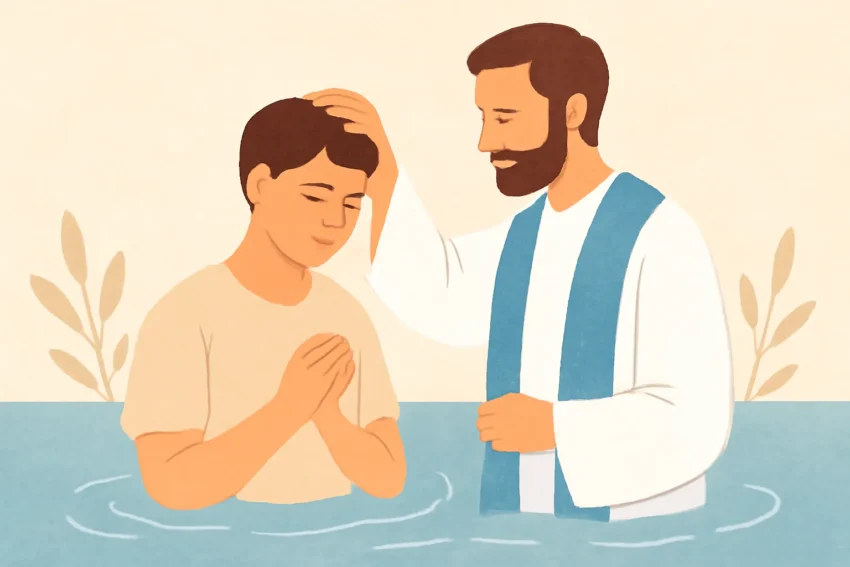
Baptism Passages: Inspiring Bible Verses for Water Baptism
Baptism is a landmark moment in the life of a believer, a public declaration of faith that signals a turn from the old life toward the new life found in Christ. The Bible collects a rich set of passages that speak about water baptism from different angles: as a symbol of death to sin and resurrection to new life, as an act of obedience in response to God’s saving work, as a unifying sign within the community of faith, and as a doorway into the work of the Holy Spirit. In this article, we survey key passages—both narrative and teaching—that illuminate the meaning, method, and motivation of baptism.
Whether you are preparing to be baptized, ministering to someone considering baptism, or simply studying the biblical framework, these verses form a cohesive map. They show how immersion into water often corresponds to the inward realities of conversion—repentance, faith, forgiveness, and new life in Jesus. We will look at passages from the life of Christ, from the teaching of Jesus to His followers, from the early church in Acts, and from Pauline and Petrine writings that outline what baptism means for the church as the body of Christ.
Foundational Passages About Baptism
Below are foundational passages that establish the theological and symbolic core of water baptism. Each subsection highlights the core truth and offers a succinct reflection to guide study or teaching.
Matthew 3:13-17 — The Baptism of Jesus and the Trinity at the River
In Matthew 3:13-17, Jesus comes to John to be baptized, and when He is immersed, the heavens open and the Spirit descends like a dove while the Father’s voice declares, “This is my Son, whom I love; with him I am well pleased.” This scene is a powerful template for understanding baptism as a moment of identification with God’s mission and as a moment where the Trinity is present in the same event. The phrase “coming up out of the water” underscores the physical immersion as a visible sign accompanying an inward grace. For readers, this passage emphasizes that baptism is a concrete response to divine invitation, not merely a human ritual.
Matthew 28:19-20 — The Great Commission and Baptism in the Name of the Triune God
The closing commission in Matthew 28:19-20 anchors baptism in the mission of the church: “Go and make disciples of all nations, baptizing them in the name of the Father and of the Son and of the Holy Spirit, and teaching them to obey everything I have commanded you.” The formula “in the name of” signals a baptism grounded in the authority of the Triune God, aligning the act with the believer’s confession of faith. This passage highlights two enduring elements: evangelism that leads to baptism and ongoing discipleship that grows out of that baptismal initiation.
Mark 16:16 — Belief, Baptism, and Salvation
Mark 16:16 ties belief and baptism to salvation: “Whoever believes and is baptized will be saved, but whoever does not believe will be condemned.” This verse emphasizes two components—faith and baptism—as the pathway into the saving work of Christ. It is a concise reminder that baptism is not merely a ritual but an expression of trust in the gospel. The emphasis falls on the order of response: belief first, baptism as a following step of obedience and proclamation.
John 3:5 — Entry into the Kingdom: Water and Spirit
In John 3:5, Jesus says, “Truly, I tell you, no one can enter the kingdom of God unless they are born of water and the Spirit.” This statement links baptism to the inward work of the Spirit, presenting water baptism as the outward sign erected on the foundation of spiritual birth. The verse invites readers to see baptism not as superstition but as a response of faith to the Spirit’s internal renewal.
Romans 6:3-4 — Baptism into Christ’s Death and New Life
Romans 6:3-4 offers a powerful syntactical image: “Or don’t you know that all of us who were baptized into Christ Jesus were baptized into his death? We were therefore buried with him through baptism into death in order that, just as Christ was raised from the dead, we too may live a new life.” The imagery of burial and resurrection makes clear that baptism communicates a profound transformation: a death to sin and a new life in Christ. This passage invites readers to reflect on how the physical act mirrors an inward reality of union with Christ in His death and resurrection.
Galatians 3:27 — Putting on Christ
Galatians 3:27 speaks succinctly to identity: “For all of you who were baptized into Christ have clothed yourselves with Christ.” The metaphor of putting on Christ captures the transformative identity baptism marks: believers are not merely cleansed inwardly but spiritually clothed in the character and righteousness of Jesus. This verse is often cited to highlight the confessional aspect of baptism as signaling a new social and spiritual identity within the community of faith.
Colossians 2:12 — Buried with Christ and Raised with Him
In Colossians 2:12, Paul writes that believers are “buried with him in baptism, in which you were also raised with him through your faith in the working of God, who raised him from the dead.” The strongest thread here is the combined symbolism of burial and resurrection with a clear note of faith operating through God’s work. Baptism becomes the sign that God has completed a inward transformation, and the public act confirms and enacts that transformation in the visible world.
1 Peter 3:21 — An Appeal to a Clear Conscience through Baptism
1 Peter 3:21 presents baptism as an appeal to God for a good conscience: “This water symbolises baptism that now saves you also—not the removal of dirt from the body but the pledge of a clear conscience toward God.” The emphasis shifts baptism from mere cleansing to an ethical and spiritual stance: a response that aligns a believer’s conduct with the mercy and grace of God. This passage helps readers see baptism as a setting of intention toward holiness—an outward declaration of inward trust.
1 Corinthians 12:13 highlights the ecclesial dimension of baptism: “We were all baptized by one Spirit so as to form one body—whether Jews or Gentiles, slave or free—and we were all given the one Spirit to drink.” The verse foregrounds how baptism unites diverse people into God’s single people. It emphasizes that baptism participates in the unity of the church, transcending cultural or social differences as the Spirit binds believers into one body.
Ephesians 4:5 distills the experiential and doctrinal unity of baptism: “one Lord, one faith, one baptism.” This compact verse asserts that there is a shared, canonical model of baptism among genuine believers, anchoring practice in the larger confession of faith and the person of Christ.
Titus 3:5-6 — Washing, Rebirth, and Renewal by the Spirit
Titus 3:5-6 marries baptism to God’s saving work: “he saved us, not because of righteous things we had done, but because of his mercy. He saved us through the washing