Many families approach the topic of baptism or christening with a mix of curiosity, tradition, and a sense of sacred obligation. Although the terms are often used interchangeably in everyday language, they can carry distinct theological and cultural meanings depending on the religious tradition, the age of the initiate, and the goals of the ceremony. This article explores baptism and christening in depth—clarifying differences, explaining their meanings, and offering practical guidance on how to select the rite that best fits your beliefs, community, and family traditions. Whether you are preparing for an infant ceremony, an adult confession of faith, or a re-affirmation of vows, understanding the nuances can help you approach the process with clarity and purpose.
Overview: Baptism and Christening—Two Names, One Rite
At the heart of Christian initiation, the terms baptism and christening describe a ceremonial act that begins a lifelong journey of faith. In many churches, the words refer to the same rite or to closely related practices. In others, they signal different emphases or stages within a broader liturgical calendar. In common parlance, baptism is frequently used in Protestant and Catholic settings to describe the sacramental act of washing away sin or entering the Christian life, often with a strong emphasis on faith and the spiritual rebirth of the person being baptized. Christening, meanwhile, is sometimes associated with the naming aspect of the ceremony and may emphasize the formal naming of the child along with the commitment made by parents and sponsors.
For many families, the distinction matters most when choosing a ceremony for a child or for themselves as adults. In some traditions, the terms are treated as synonyms; in others, one term is preferred and the other reserved for specific circumstances. The important thing to remember is that the rite is about an encounter with the divine, a response of faith, and a public declaration of belonging to a spiritual community. Throughout this article, we will use baptism and christening with attention to context, and we will highlight where meanings diverge across denominations and cultures.
Baptism is a water rite recognized as a sacrament, ordinance, or sacred ritual in many Christian traditions. It is commonly understood as a sign of purification, rebirth, and incorporation into the body of Christ. In Catholic, Orthodox, Anglican, Lutheran, and some Protestant communities, baptism is considered a sacrament or holy mystery that communicates grace to the believer. In other Protestant groups, baptism may be described as an ordinance—a symbolic act of obedience and public faith rather than a sacramental channel of grace. The theological language varies, but the central idea remains consistent: a rite that marks someone as a member of the Christian community and initiates a lifelong journey of discipleship.
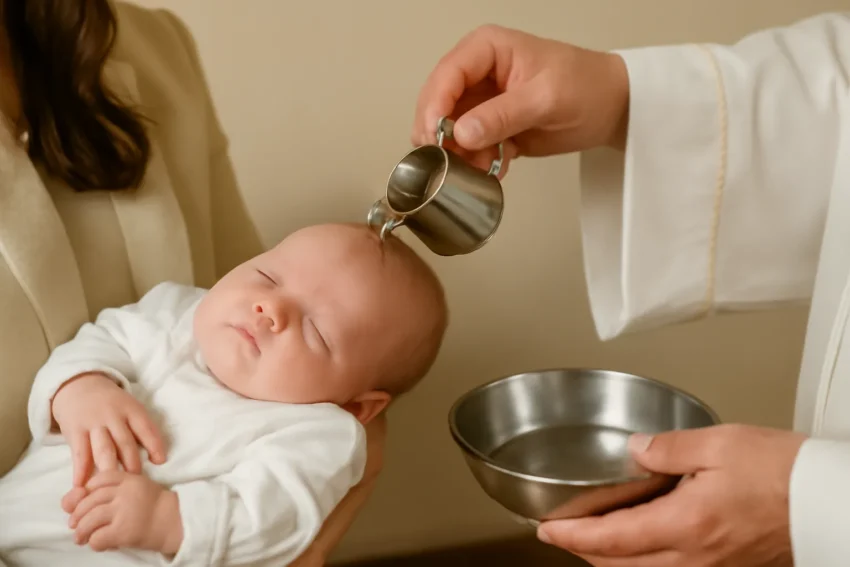
Typical elements of the baptismal rite include water (immersion, pouring, or sprinkling), the invocation of the Trinity, prayer, a vow by the participant or by the parents and sponsors on behalf of the child, and a public welcome into the church. The symbolism is powerful: water signifies cleansing, death to an old life, and rising to new life in Christ. In many traditions, baptism is administered only once, as it is understood to be an irreversible entry into Christian identity.
What is christening?
Christening is often described as the ceremony that includes the naming of the child and the formal declaration of intent by the parents and sponsors to raise the child in the faith. In several traditions, christening emphasizes the naming ceremony alongside the baptism itself. The term can imply a more liturgical, ceremony-centered approach with emphasis on the community’s vows to support the child’s Christian upbringing. In some contexts, christening and baptism are used interchangeably; in others, christening may focus on the naming and welcome aspect, while baptism is reserved for the theological act of initiating the believer into the Christian life.
In many Anglican, Catholic, and Lutheran settings, christening is closely tied to the baptismal rite, so families may refer to a christening baptism when both naming and initiation are celebrated together. In other traditions, such as certain Baptist or evangelical churches, the term christening may be less common, with the emphasis squarely on baptism as the act of faith and commitment. Regardless of terminology, the ceremony is generally a public, ceremonial act that invites the community to witness and support the new member’s spiritual journey.
Key differences between baptism and christening
While the two terms often overlap, several distinguishing features deserve attention. Here are key differences in practice, theology, and emphasis, summarized to help you decide which path aligns with your beliefs and circumstances.
Theological framing: In many Catholic and Orthodox traditions, baptism is a sacrament conferring grace. In some Protestant contexts, it is primarily an outward sign of an inward decision. Christening may emphasize naming and early upbringing in the faith, alongside or within the baptismal act itself.
Age and eligibility: Infant baptism is common in Catholic, Orthodox, and many mainline Protestant churches, while believer’s baptism or adult baptism is typical in Baptist and some Pentecostal communities. The latter often requires a personal profession of faith prior to baptism, especially for older initiates.
Mode of water: The ritual use of water can vary—immersion (full submersion), pouring (affusion), or sprinkling (aspersion)—depending on denomination and local practice. This can influence the perceived symbolism and the suitability for infants or individuals with certain medical considerations.
Role of sponsors: In most churches, parents act as primary custodians for an infant; in many traditions, godparents or sponsors are named to support the child’s Christian upbringing and to stand in for the child when needed in spiritual matters. Some traditions emphasize a clearly defined role for sponsors, while others see it as symbolic support.
Naming and vows: Christening often includes a formal naming act as part of the ceremony, whereas baptism traditionally centers on the act of initiation and the spiritual rebirth. In some cultures, the naming is a separate ritual that occurs around the same time but is not strictly required by all traditions.
Community visibility: In many settings, baptism or christening is a public declaration before the faith community. The level of public commitment and parental consent can differ, and some communities place greater emphasis on the witness of the congregation than others.
Understanding baptism and christening also benefits from a look at history and doctrine. The rite has evolved in form and meaning across centuries and across church bodies. For example, early Christian communities often practiced baptism in the context of catechesis—instruction in the Christian faith—before initiation. In the centuries that followed, baptism became a central sacramental practice in the Catholic and Orthodox traditions, with a strong emphasis on the cleansing of original sin and incorporation into the church.
During the Protestant Reformation, reformers like Martin Luther and John Calvin reinterpreted baptism in various ways, highlighting it as a sign of faith and a means of grace for some traditions while emphasizing believer’s confession for others. This historical divergence laid the groundwork for modern differences between infant baptism and adult baptism, and between sacramental and symbolic understandings of the rite. In contemporary settings, many churches continue to adapt the ceremony to local culture, family needs, and pastoral goals while preserving its core meaning: a public invitation into the life of faith and a pledge to raise the child in alignment with shared beliefs.
Modes and practices in baptismal rites
The physical aspects of the rite—the way water is used, the words spoken, and the accompanying rituals—vary widely. Here is a concise overview of common practices, with notes on how they relate to meaning and inclusion.
Immersion: Full submersion of the candidate beneath or into water. Often associated with a strong sign of death and rebirth, especially in adult or teenage baptisms where the symbolism is particularly explicit.
Pouring: Water poured over the head or face of the person being baptized. A widely used method in many traditions, including Catholic and Protestant churches, including infant baptisms. It emphasizes cleansing, blessing, and the inspiration of the Holy Spirit.
Sprinkling: A light sprinking of water on the forehead. Common in some liturgical communities and in practices designed for practicality and modesty, including infant ceremonies.
Trinitarian formula: Most baptisms invoke the name of the Trinity—the Father, the Son, and the Holy Spirit—explicitly in the baptismal words. This formula is central to the theology of many traditions and signals the communal nature of initiation.
Public vows and prayers: Vows by parents and sponsors (and sometimes the person being baptized) are a standard element. In believer’s baptism, the initiate often articulates personal faith and repentance.
Symbols accompanying water: Candles, white garments, baptismal fonts, and oil (chrism) may accompany the rite. Each symbol carries layered meaning—purity, new life, the Spirit’s empowerment, and belonging to the Christian family.
Godparents or sponsors: In many traditions, the presence of sponsors underscores the community’s responsibility to nurture and guide the child or adult in their spiritual journey.
Who can be baptized? Infants, children, and adults
Eligibility for baptism and christening is not identical across all Christian groups. The central question often comes down to one’s faith tradition and the expectations of the local church. Here are typical patterns along with common considerations for families and individuals.
Infant baptism: In Catholic, Orthodox, Anglican, Methodist, and many mainline Protestant communities, infants are baptized to initiate them into the faith and the church. Parents usually commit to raising the child in the Christian tradition, with sponsors sometimes named to support that mission. The theological rationale emphasizes the role of grace and the community in the child’s spiritual life.
Child or adolescent baptism: Some traditions practice baptism in childhood, followed by catechesis or confirmation as a separate step when the child is older. This sequence emphasizes education in the faith and a transition to more mature faith commitments.
Adult or believer’s baptism: In Baptist, Amish-like Anabaptist traditions, Pentecostal groups, and some non-denominational churches, baptism is reserved for those who can consciously confess faith in Christ. The act becomes a public profession of personal belief and repentance, often following a period of instruction or conversion.
Re-baptism concerns: In some contexts, a person who was baptized as an infant may be re-baptized as an adult if they later join a tradition that requires believer’s baptism. This is a nuanced issue that theologians and church authorities discuss carefully because it touches on baptism’s meaning as a once-for-all initiation in many streams.
Regardless of age, the readiness to participate in the ceremony often depends on the local church’s requirements, the child’s parents’ willingness to commit to a spiritual upbringing, and the sponsors’ ability to fulfill their supportive role.
Naming and vows: The role of christening and child naming
Many christenings begin with or include a formal naming ceremony, especially when parents wish to mark the child’s identity in the faith community. The naming aspect can be especially meaningful in cultures where names carry family or spiritual significance. For some families, the name given at birth is retained, while in others there may be a traditional or baptismal name chosen for the liturgical ceremony. In this way, christening can be both a spiritual initiation and a social ceremony, reinforcing the child’s connection to the church and the wider family network.
Vows and commitments are another essential aspect of the rite. Parents promise to raise their child in the Christian faith, teach the child about their beliefs, and model a life of virtue and service. Sponsors pledge to support the family and encourage the child’s spiritual growth. The public nature of these promises underscores the community’s duty to aid in the child’s formation and to stand with the family through the child’s faith journey.
Meaning and significance: What the rite conveys
Beyond the technical details, baptism and christening express several layered meanings that differ in emphasis across traditions. Here are core aspects often highlighted in discussions about the rite:
Grace and new life: In sacramental interpretations, baptism is a sign of God’s grace entering a life, washing away spiritual deadness, and inaugurating a new creature in Christ.
Identity and belonging: The rite publicly identifies the individual as part of the Christian community, with a shared set of beliefs, hopes, and responsibilities.
Initiation and discipleship: Baptism marks the beginning of a life of following Jesus, including ongoing faith formation, prayer, worship, and service.
Parental and communal role: For infants and children, the ceremony expresses a shared responsibility among parents, sponsors, and the church to nurture spiritual growth.
Symbolism of water: Water as cleansing, renewal, and spiritual rebirth continues to be a powerful image across cultures and ages.
Liturgical identity: The rite situates individuals within a liturgical calendar—season of the year, the specific feast days, and the rhythm of the church’s year—connecting personal faith with the life of the church.
Different traditions may place greater emphasis on particular aspects. Some communities stress the sacramental element—that grace is conferred in the rite—while others highlight the public commitment to nurture faith and the responsibility of the church to support families. In all cases, baptismal or christening rituals aim to anchor a person or a family within a community of faith that shares common beliefs and practices.
How to choose the right ceremony for you
Choosing the right baptism or christening ceremony involves thoughtful consideration of theology, community, practical constraints, and personal or family goals. Here is a practical guide to help you navigate decisions and select a rite that aligns with your beliefs and circumstances.
1. Clarify your theological framework
Begin by articulating your own beliefs about grace, faith, and salvation. Do you favor a sacramental view where grace is imparted through the rite? Or do you lean toward a believer’s baptism that emphasizes personal faith and confession? Your answer will influence the denomination or church you select, the type of baptismal mode you prefer (immersion, pouring, or sprinkling), and the age at which the initiation takes place.
2. Consider age and readiness
The age of the initiate is a practical and theological factor. Infants and toddlers benefit from the communal nurture and the spiritual blessing of the church, while older children or adults may be better suited to believer’s baptism after a period of instruction and personal decision. If you are planning for an infant, evaluate how the parents intend to raise the child in the faith and whether the church supports ongoing catechesis and family involvement.
3. Reflect on the mode of baptism
Immersion is often valued for its dramatic symbolism of death and new life, but it requires space and practical considerations for infants or individuals unable to be fully immersed. Pouring is versatile, gentle, and compatible with most church buildings. Sprinkling may be the most practical option in older church facilities and for very young children. The mode you choose can affect the pace of the ceremony, the materials required, and the spiritual emphasis you wish to highlight.
4. Examine denominational practices and expectations
Different churches have distinct expectations for sponsors, catechesis, and presentation in front of the congregation. Some denominations require formal classes or a time of instruction before baptism. Others invite immediate participation in a simple, unhurried rite. Consider whether you want a traditional liturgy, contemporary worship style, or a blend that respects your family’s preferences while preserving the integrity of the rite.
5. Evaluate the community and liturgy
The setting and liturgical form will shape the atmosphere of the ceremony. Do you prefer a solemn, cathedral-like experience or a warm, family-oriented gathering in a local parish or chapel? Liturgy can vary in length, inclusivity, language, and music. If you value a certain musical tradition or a particular liturgical structure (for example, a coming of age catechesis, a baptismal vow, or a blessing by Godparents), make those preferences clear when you discuss options with church leadership.
6. Check practical details and logistics
Logistics include the availability of a baptismal font or pool, the required documentation, scheduling with a priest or minister, financial considerations (if any), photography or videography policies, and the possibility of an interfaith or blended family arrangement. Clarify questions such as: Are godparents required to be church members? Is there a rehearsal? What are the expectations for family attire and reception after the ceremony?
7. Respect cultural and familial traditions
In many families, baptism or christening is a cross-cultural event that honors grandparents, heritage, and community. If your family comes from a particular tradition (e.g., a specific linguistic or cultural background), you may want to incorporate meaningful customs alongside the standard rite. This approach can deepen the sense of belonging and provide a bridge between past and present faith expressions.
8. Align with spiritual goals and ongoing nurture
Ask yourself what you want to achieve beyond the moment of the rite. Baptism or christening is best understood as the gateway to a life of faith, prayer, study, and service. Choose a setting where you feel confident that the church will provide ongoing spiritual formation, family support, and opportunities to participate in worship, catechesis, and service projects. The rite is not merely a symbolic act; it should be the beginning of a durable relationship with a faith community.
Practical steps for planning the ceremony
Once you have chosen a path—infant baptism, child baptism, or believer’s baptism—use this practical checklist to organize the process and ensure that the ceremony reflects your intentions and values.
Contact your church or religious community with a clear sense of your goals, the person to be baptized, and preferred dates. Ask about eligibility, required classes, and the format of the ceremony.
Identify sponsors or godparents who are prepared to support the spiritual upbringing. Confirm their roles and responsibilities and ensure they understand any church-specific requirements.
Prepare necessary documents such as birth certificates, proof of baptismal eligibility, letters of sponsorship, and any required parental consent forms.
Choose the timing and format—whether the rite will be part of a regular worship service, a dedicated ceremony, or a separate parish event. Consider the length of the service and any music selections.
Decide on the water mode—immersion, pouring, or sprinkling—and confirm with the clergy that the chosen method is feasible in the church setting.
Plan the liturgy with your pastor or priest. This includes opening prayers, readings, hymns or songs, the baptismal rite, the promises by parents and sponsors, and the reception of the initiate into the church community.
Discuss dress and symbolism—white garments for purity, candles for light in Christ, oils for anointing, and any other meaningful symbols you wish to include.
Coordinate photography and memory-making with the church’s policies and with family expectations. Decide whether photographs will be taken during the service or after.
Plan post-ceremony gatherings—a family celebration, a small reception, or a simple meal to mark the occasion in a way that suits your community and budget.
To avoid misunderstandings and ensure that the ceremony aligns with your beliefs, prepare a list of questions for the pastor, priest, or minister. Here are practical prompts worth discussing:
Which rite is most appropriate for our situation? infant baptism, child baptism, or believer’s baptism?
What is the expected role of the parents and sponsors? Are classes required? Is there a formal vow or creed to recite?
What mode of water do you practice? immersion, pouring, or sprinkling, and why?
Is the rite to occur during a worship service or as a separate event?
What preparation is needed? pre-baptismal instruction, catechesis, or confession of faith?
Are there restrictions for families with diverse religious backgrounds? How inclusive is the ceremony?
What follow-up spiritual formation is offered? baptismal catechesis, confirmation classes, or youth mentoring?
Common questions and myths about baptism and christening
Public understanding of baptism and christening can be muddled by myths and assumptions. Here are clarifications to help you approach the rite with accurate expectations:
Myth: Baptism saves a person automatically. Clarification: In many traditions, baptism is a sign of grace and an act of obedience, but the belief about salvation itself often involves the person’s faith in Christ. The exact understanding varies by denomination.
Myth: Infants must be baptized to go to heaven. Clarification: Many churches baptize infants as an initiation into the faith, while others emphasize personal faith. The assurance of eternal life is expressed differently across traditions.
Myth: Christening is only about naming and has no spiritual significance. Clarification: In many settings, christening combines naming with initiation, vows, and community commitment, making it a meaningful spiritual milestone as well as a social one.
Myth: The rite is only for church members. Clarification: Some communities welcome families who are exploring faith, while others have stricter requirements. It’s important to check the policy of the individual church you are considering.
Myth: The water type or mode determines the value of the rite. Clarification: The symbolic significance of water remains central regardless of whether immersion, pouring, or sprinkling is used; the deeper questions concern faith, baptismal vows, and ongoing spiritual nurture.
Depending on tradition, the baptism or christening ceremony can feature a range of symbolic elements. Here are common ritual details and their meanings to help you appreciate what you’re witnessing or participating in:
Water: The primary symbol of cleansing, renewal, and life in Christ. The mode of water can reflect theological emphasis and practicality.
White garment: Purity and new life in Christ; a classic symbol for those entering into a life of faith.
Candle: The light of Christ illuminating the new believer’s path and the call to live as a light in the world.
Oil (chrism): Anointing with the Spirit and the empowerment for service and witness.
Godparents or sponsors: Representing the church’s commitment to nurture and guide the child or individual in faith.
Liturgy and prayers: Readings, prayers, and creedal statements that articulate beliefs and commitments.
Communal welcome: The congregation’s embrace of the initiate into ongoing participation in the church’s life.
What to expect in a baptism or christening ceremony
While corded to tradition, ceremonies can vary in style—rituals range from formal liturgies in grand churches to intimate gatherings in a small chapel or home church. Regardless of setting, most ceremonies include a sequence of familiar elements: a processional or opening prayer, a readings or psalms section, the baptismal rite (water and invocation of the Trinity), an exchange of vows, the lighting of a baptismal candle or other symbolic acts, and a final blessing or sending forth. In infant baptisms, the ceremony typically includes the parents’ and sponsors’ expressions of commitment, while in believer’s baptism, the candidate may articulate a personal confession of faith prior to immersion, pouring, or sprinkling. The post-ritual reception, if any, is often a sign of communal support and celebration for the new member of the faith family.
Integrating baptism or christening into a diverse family and community
In today’s world, families often come together from multiple faith backgrounds, or they may be exploring spirituality with friends and relatives who hold different beliefs. When planning a baptism or christening in such contexts, you may consider:
Interfaith considerations: Some families opt for a ceremony that respects other religious traditions while preserving the core Christian meaning of the rite. Open dialogue with church leadership can help determine what is permissible and how to honor guests respectfully.
Ecumenical options: Some parishes collaborate with other churches to offer a ceremony that reflects shared beliefs while acknowledging distinct denominational identities.
Modern liturgies: Contemporary services can blend traditional elements with modern music, inclusive language, and flexible formats that emphasize personal faith journeys and family stories.
Community involvement: Incorporating community prayers, readings from family members, or shared testimonies can deepen the sense of belonging and support for the initiate.
Conclusion: Choosing with confidence and care
Whether you call it baptism, christening, or a combination of both terms, the core purpose of the rite is to invite a person into the life of faith, to welcome them into a spiritual family, and to begin a path of transformation, discipleship, and service. The differences among baptism and christening—encompassing theology, age, water mode, vows, and community expectations—should help you choose a ceremony that aligns with your convictions, your family’s needs, and your cultural context. By understanding the meanings, examining denominational practices, and planning with intention, you can approach this sacred rite with clarity, reverence, and shared joy.
In the end, the decision about which ceremony to pursue—whether infant baptism in a traditional liturgy, a believer’s baptism with a personal confession of faith, or a christening that emphasizes naming and sponsorship—reflects a lived faith journey. It is a choice not only about a moment in time but about a future shaped by grace, community, and steadfast commitment to nurturing the spiritual life of the one being welcomed into the faith.