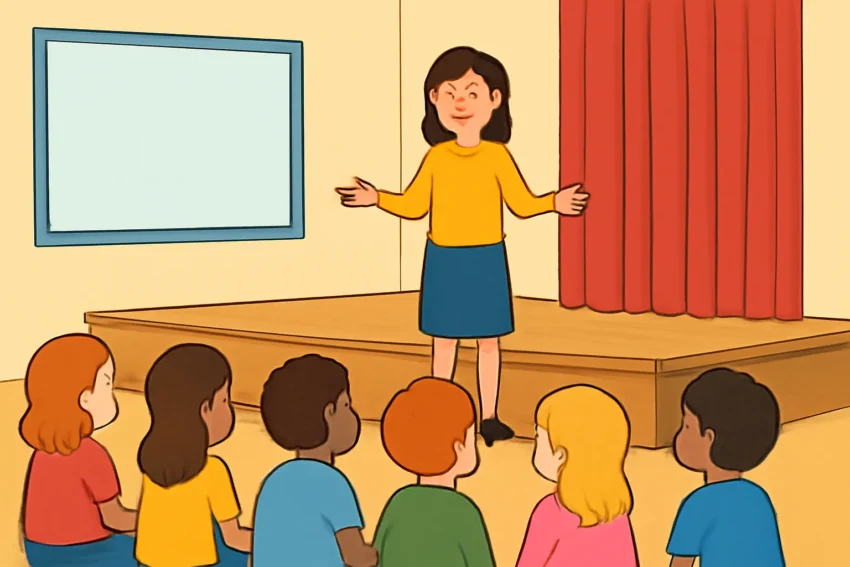
Assemblies in primary schools are more than just a break in the timetable. They are purposeful gatherings that bring the school community together to share learning, celebrate achievements, explore big ideas, and reinforce the school’s values. A well-planned sequence of assemblies can support literacy, numeracy, social and emotional learning, and community cohesion, while also offering students opportunities to lead, perform, reflect and collaborate. This article provides ideas, plans and activities for assemblies across the primary age range, with practical guidance on how to design engaging, inclusive and meaningful experiences for all pupils.
In a primary school, an assembly is a scheduled gathering that typically involves a large group of pupils, teachers, and often families or visitors. Assemblies can be short and focused or longer and more theatrical, but they usually share a central message, provide a platform for pupil voice, and reinforce school culture. They can be led by teachers, senior pupils, visiting speakers, or community partners. The key is to align each assembly with the school’s vision and values and to make the content accessible and engaging for diverse learners.
Benefits of a well-planned assemblies program
Consistency in messaging about values such as respect, responsibility, kindness, and resilience.
Opportunities for cross-curricular links (literacy, science, drama, music, art, numeracy, digital literacy).
Development of communication and oracy skills as pupils speak, sing, act, or read aloud to an audience.
Promotion of inclusion by giving everyone a chance to participate, regardless of ability or background.
Support for wellbeing, mindfulness, and a sense of belonging within the school community.
A platform for celebration of achievement, effort, and improvement, not just high attainment.
Enhanced parental and community engagement through participatory events and shared experiences.
Planning an effective assembly program
Creating a coherent assembly program requires consideration of aims, format, staff roles, safety, and evaluation. Below is a practical framework you can adapt to your school context.
Setting clear aims
Define what you want the assembly to achieve in the short term (e.g., reinforcing a specific value, introducing a topic, or celebrating a class project).
Connect aims to the school’s curriculum goals and the school’s broader wellbeing strategy.
Ensure aims are inclusive and accessible for pupils with different language abilities, cultural backgrounds, and learning needs.
Choosing formats and timing
Decide on assembly length (typical windows are 15–25 minutes for a whole-school assembly, with shorter slots for class assemblies).
Mix formats (storytelling, drama, songs, demonstrations, guest speakers) to cater to different learners.
Plan a weekly rhythm (e.g., values-focused on Mondays, celebration on Fridays) or a termly theme (e.g., “Courage and perseverance”).
Consider online or hybrid elements for guest speakers who cannot attend in person, but ensure accessibility and interaction.
Roles, teams and leadership
Establish a small assembly planning team including teachers, a representative pupil leader, and support staff.
Give pupils real roles: hosts, readers, performers, tech operators, or audience helpers.
Provide coaching on public speaking and performance skills, including gesture, voice projection, and pace.
Safety, safeguarding and inclusion
Carry out a safeguarding checklist before any assembly, including risk assessments for props, stage use, and audience spacing.
Make content accessible for children with hearing or visual impairments, neurodiversity, or limited English proficiency (provide captions, sign language, or glossaries as needed).
Be sensitive to cultural and religious diversity in choice of material and reception by different families.
Themes and ideas for assemblies
Assemblies can cover a wide range of topics. Here are thematic ideas with concrete activities you can adapt to your school context. You’ll find a mix of character education, academic enrichment, cultural awareness, and wellbeing themes. Use age-appropriate language and provide opportunities for student leadership and audience participation.
Character education and values
Kindness and empathy: read a short story about helping a peer, followed by a paired discussion and a class pledge to perform one act of kindness that week.
Resilience and growth mindset: share a speaker or video about overcoming challenges; pupils write a “I can” statement and showcase a mini gallery of growth stories.
Honesty and integrity: perform a scripted scene showing ethical decision-making; invite a pupil to reflect on consequences.
Respect and inclusion: celebrate diversity with a world-culture showcase and a classroom challenge to learn a few phrases in another language.
Academic focus assemblies
Reading and literacy: host a “Book Talk Bonanza” with short author-style readings, book recommendations, and a read-aloud demonstration by older pupils.
Mathematics in the real world: showcase practical math tasks such as counting, measuring in the environment, or a “maths market” where pupils price items using multiples and decimals.
Science and inquiry: a quick science demo (e.g., simple chemical reaction, wind turbine model), followed by pupil explanations of the results.
History and geography: a mini-assembly theater with a “timeline” performance or a props-and-map exploration of a local landmark.
Cultural awareness and diversity
World cultures: a “culture fair” segment where pupils present dances, music, or traditions from different countries; include a glossary slide with key words in several languages.
Language appreciation: celebrate bilingual or multilingual pupils by inviting language ambassadors to share greetings and simple phrases.
Festival and seasonal traditions: present a calendar of celebrations from various cultures, with classroom artefacts or a short performance.
Environmental and sustainability themes
Reduce, reuse, recycle: a demonstration of how to sort recycling correctly and how to make compost; pupils lead a “green pledge” and sign a school-wide poster.
Outdoor learning: highlight a recent field trip or nature walk; show photographs and a short guided reflection on what was learned.
Climate action at school: plan a simple energy-saving challenge (turn off lights, close taps) and announce progress in assembly.
Health, wellbeing and mental health
Wellbeing routines: teach a 2-3 minute body scan or breathing exercise; invite pupils to lead a mini session for peers.
Sleep, nutrition and activity: share tips for healthy routines with a child-friendly infographic; involve a foretaste of a school-wide healthy-habits week.
Digital wellbeing: introduce a short talk on online safety, digital footprints, and respectful online communication; model a respectful response to online issues.
Charity, community and service
Harvest and food charity: present a donation drive and explain how collected items will support local families; include a thank-you message from partner charities.
Community service: invite a local volunteer or firefighter to speak; pupils present a plan for a small community project they can participate in.
Pen-pals and global citizenship: share letters or exchange artworks with a partner school abroad; discuss how small acts can have a global impact.
Remembrance, history and celebration of achievements
Remembrance and reflection: a respectful remembrance moment for a historical event or a school milestone; include a moment of silence and a school-wide message of peace.
Achievement and effort: celebrate improvement, perseverance, kindness, and teamwork with certificates, badges, or a slide show of “before and after” work.
Arts and performance: showcase a short theatre piece or musical performance created by pupils; invite a parent audience to applauds and encouragement.
Activities you can include in assemblies
To keep assemblies dynamic and engaging, incorporate a mix of activities that develop speaking, listening, collaboration, creativity and critical thinking. Below are practical activity ideas you can adapt to any theme.
Drama sketches based on a scenario related to the theme, performed by pupils in small groups or as a single class piece.
Song and music sessions where pupils sing, play simple instruments, or perform percussion routines tied to the theme.
Storytelling segments using a short story, followed by an invitation for pupils to predict outcomes or infer moral lessons.
Poetry and spoken word readings by students, with optional chorus or call-and-response lines for audience participation.
Audience involvement activities such as a “vote with your feet” for opinions, or a quick show of hands to illustrate concepts (e.g., which choice demonstrates kindness).
Short experiments or demonstrations that illustrate a concept explained in a supportive, age-appropriate way.
Visual storytelling using a series of images or props that pupils interpret and present to the audience.
Video clips with a post-viewing reflection prompt or a problem-solving discussion.
Live demonstrations by pupil teams (e.g., a simple science experiment, a mini handwriting demonstration, or a math challenge).
Guest performances from visiting artists, poets or athletes who can provide a short, interactive experience.
Reflection and prayer or mindfulness segments where appropriate and inclusive, focusing on gratitude, calm, or silence.
Formats and delivery options for assemblies
Diversity in format helps reach different learners and keeps the experience fresh. Here are several formats to consider, along with practical tips for execution.
Standard whole-school assemblies with a single stage area, a clear start and finish, and a unifying message.
Class-based mini-assemblies where a class presents a short piece to their peers, followed by a quick reflection or discussion.
Themed term assemblies with a rotating focus each term, allowing for deeper exploration of a topic across multiple weeks.
Outdoor or pavilion assemblies when weather and space permit; plan for shade, sun protection, and sound amplification if required.
Video-enabled assemblies that combine pre-recorded content with live introductions or debriefs, suitable for guest speakers who cannot attend in person.
Hybrid or virtual assemblies to include remote pupils, families, or guest speakers; ensure reliable technology and accessibility features.
Thematic showcases where several classes contribute short segments on a common theme, stitched together into a cohesive event.
Planning templates and sample scripts
Having practical planning documents can save time and ensure consistency. Below are simple templates and a sample skeleton script you can adapt.
Assembly planning template (one-page)
Date and time — start time, duration, and any break between sessions.
Aim — one sentence describing the core purpose.
Theme — short descriptor of the topic.
Format — whole-school, class-led, or virtual; include tech needs.
Leaders and roles — hosts, readers, musicians, technicians, audience helpers.
Materials — props, costumes, posters, slides, or video clips.
Health and safety — risk assessment notes, emergency plan, seating, and accessibility considerations.
Assessment and reflection — how you will capture impact (feedback forms, quick quiz, or pupil reflection).
Skeleton script for a 15–20 minute assembly
Opening (1–2 minutes): a welcome from hosts, a brief outline of the assembly’s aim, and a short, memorable hook (a question, a rhyme, or a chant).
Intro to theme (2–3 minutes): a short story, a scenario, or a video clip that introduces the topic.
Main activity (7–8 minutes): drama, song, or a pupil-led demonstration that shows the message in action.
Reflection (3–4 minutes): pupils connect the activity to their own lives; include a quick think-pair-share or a written prompt on small cards.
Closing and call to action (2–3 minutes): summarize the key message, invite pupils to practice one concrete action, and signpost follow-up activities or learning in class.
Measuring impact and gathering feedback
A successful assembly program is evaluated to improve. Use a mix of qualitative and quantitative methods to understand impact, inform future planning, and celebrate progress.
Short pupil feedback: after the assembly, use quick thumbs-up/down, one-line reflections, or a 3-question survey adapted for age group.
Teacher observations: note changes in pupil engagement during assemblies, including participation by quieter students.
Parental feedback: gather comments via school newsletters or suggestion forms about how families perceive assemblies.
Impact on ethos: track indicators such as acts of kindness reported in class, or a rise in pupil leadership activities.
Portfolio or display evidence: compile photos or short clips of assemblies to showcase on the school website or in the front hall, with consent and privacy considerations.
Age-appropriate approaches for different primary levels
Primary schools often serve pupils across Key Stages 1 and 2. Tailoring assemblies to age, language level, and social development helps maximise engagement and learning outcomes.
Early KS1 (ages 5–7): focus on simple messages, clear visuals, interactive songs, puppetry, and short attention spans. Use lots of repetition and movement.
Lower KS2 (ages 7–9): introduce more structured storytelling, longer narratives, and opportunities for pupils to perform with peers or lead sections of the assembly.
Upper KS2 (ages 9–11): incorporate independent pupil leadership, more complex problem-solving activities, and opportunities for pupils to present and defend ideas.
Involving pupils in the planning and delivery
Pupil involvement is important for motivation and ownership. Here are strategies to empower students as partners in assemblies rather than passive participants.
Pupil committees for planning topics, sourcing materials, and rehearsing segments.
Student hosts to welcome audiences, introduce speakers, and guide transitions.
Peer coaching where older pupils mentor younger peers in performance skills or public speaking.
Rotating roles such as listeners, time-keepers, or technology operators to develop responsibility and teamwork.
Accessibility, inclusivity and cultural responsiveness
Creating inclusive assemblies means ensuring that every pupil can participate meaningfully and feel respected. Consider the following practices.
Language access: provide translations or glossaries for key terms; allow time for peers to explain concepts in simpler language when needed.
Multi-modal presentations: combine spoken word with visuals, sign language, captions, and tactile props where appropriate.
Varied talents: showcase a broad range of skills (art, music, sport, coding, drama) to recognize diverse strengths.
Flexible participation: allow pupils to observe or contribute in different ways; avoid forcing speech where a pupil is anxious or overwhelmed.
Resources, equipment and classroom connections
Having the right resources makes assemblies run smoothly and safely. Below is a practical checklist, with notes on how to integrate resources with classroom learning.
Audiovisual equipment: projector or interactive whiteboard, speakers, microphone for larger audiences, and a back-up plan for technical issues.
Props and costumes: simple, safe props that relate to the theme; store these in a labeled kit for quick access.
Print and poster materials: age-appropriate posters and handouts that reinforce the key message; consider a one-page summary for families.
Music and sound cues: access to short loops, jingles or a musical cue sheet to signal transitions.
Safety gear: if you plan outdoor assemblies, ensure sun protection, hydration, and clear emergency procedures.
Technology and software: simple video editing tools or slide software to prepare visuals; maintain a backup copy of all materials.
Common challenges and practical solutions
Every school encounters obstacles when implementing an assemblies program. Anticipating challenges and having ready-made solutions helps maintain momentum.
Limited time: fit short, high-impact segments into tight windows; use a modular design so you can flip in or out sections as needed.
Engaging all pupils: ensure roles are distributed across year groups; schedule pupil-led slots so all children have a chance to contribute.
Language barriers: provide time for peer support and peer-to-peer explanations; use visuals and gestures to convey meaning.
Safety concerns: conduct risk assessments for all activities and rehearse procedures for emergencies or incidents.
Attendance and participation: offer multiple formats (live, recorded, or a written reflection) to include children who cannot attend in person.
Daily, weekly, and termly rhythms of assemblies
To create a coherent program, schools often adopt a rhythm that aligns with the school calendar. Here are common patterns and ideas for each:
Weekly assemblies: a short, focused message each week; alternates between value-based topics and celebration segments.
Termly themes: deeper exploration of a theme across several weeks, culminating in a showcase assembly.
Seasonal and calendar-based events: tie assemblies to national events, religious or cultural holidays, or school milestones (e.g., book week, science fair, sports day).
Open assemblies for families: occasional events where families are invited to witness student-led performances and displays.
Case studies: sample term plans and example themes
Shareable term plans help staff map out assembly content and ensure continuity. The examples below show how a school might structure a term around a few central themes, with aligned activities and outcomes.
Example term plan: Term of kindness, courage and community
Week 1: Theme introduction assembly — what kindness looks like in school; pupil hosts explain the plan for the term.
Week 2: Courage in daily life — short drama piece about trying something new and asking for help.
Week 3: Community helpers — guests (local police officer, nurse, firefighter) visit or an in-school professional talk plus pupil questions.
Week 4: Kindness challenges — a week-long class competition to complete acts of kindness and record them in a shared class journal.
Week 5: Reflection and gratitude — pupils reflect on acts of kindness and write a thank-you note to someone who made a difference.
Week 6: Celebration assembly — showcase a “Kindness Gallery” of student work and celebrate achievements and progress.
Example term plan: Science and discovery
Week 1: Welcome to science — a simple demonstration and a challenge to design a solution to a everyday problem.
Week 2: The wonders of the natural world — short video and a pupil-led explanation of a local habitat.
Week 3: Forces and motion — a safe, hands-on demonstration with simple equipment and a run-through of the scientific method.
Week 4: Planet and environment — a multimedia presentation about climate, ecosystems, and personal actions to reduce waste.
Week 5: Inviting scientists — invite a scientist or engineer to answer questions and model inquiry.
Week 6: Science fair and ideas — pupils present a mini-project or poster, with a concluding assembly to recognize effort and curiosity.
Practical tips for running successful assemblies
Consider these practical tips to streamline delivery, enhance quality, and maintain momentum across the year.
Rehearsals are essential: schedule short, focused rehearsals; involve all participants in a 10–15 minute run-through to check timing and transitions.
Keep a reusable toolkit: a kit with props, sign/song sheets, and a simple script can be reused and adapted for future assemblies.
Use visuals: posters, slides, and symbols help convey messages and support memory; ensure readability from a distance.
Practice inclusive timings: account for children who need extra time to speak or present; allow pauses for translation or explanation.
Document and reflect: capture feedback after each assembly and use it to improve future sessions.
Balance performance with participation: ensure pupils who are not comfortable performing still have a meaningful role (e.g., timekeeping, audience engagement).
Examples of variations in assemblies to broaden semantic breadth
Using a range of formats and topics helps broaden the semantic breadth of assemblies, ensuring that the content connects with different areas of the curriculum and with pupils’ lived experiences.
Book-Week Assemblies: highlight authors, reading aloud sessions, and a mini «author talk» from a pupil or visiting guest; integrate a literacy challenge for the week.
Healthy Schools Week: introduce healthy eating, physical activity, and mental wellbeing through demonstrations, a dance or movement routine, and a sharing circle.
Equality and Diversity Day: celebrate diversity with stories, role-plays, and language-friendly activities; include a reflection on equality and respect.
Technology and Digital Literacy: showcase digital citizenship skills and safe online practices through scenario-based discussions and a coder’s showcase.
Environmental Learning: tie in environmental science with a “green pledge” assembly and student-led school-wide actions to reduce waste and conserve energy.
Safety, safeguarding and policy alignment
Assemblies must align with school policies and safeguarding requirements. Here are core considerations to keep in mind.
Risk assessment: assess stage use, movement, props, and outdoor settings; have a clear plan for emergencies and lost-property handling.
Data and privacy: obtain parental consent for pupil photographs or video; ensure pupils’ images are used appropriately and with consent.
Accessibility: plan for pupils with sensory needs; provide captions, sign language interpretation, or written materials as needed.
Wellbeing: monitor pupil stress and anxiety; provide opt-outs for pupils who may find certain activities challenging, with alternative participation options.
Frequently asked questions about primary assemblies
To support schools and staff, here are concise answers to common questions that come up when planning assemblies.
How long should a primary school assembly be? Typically 15–25 minutes for a whole-school session, shorter for younger pupils or when multiple classes perform.
How often should assemblies occur? Many schools schedule weekly or biweekly assemblies with a termly theme or a series of short, targeted messages.
Who can lead assemblies? Teachers, pupil leaders, external guests, or a mix of all three; the key is clarity of roles and rehearsal.
How can I involve the quieter pupils? Assign non-speaking roles (e.g., timekeeper, helper, artist), or provide short, supported speaking opportunities with prompts.
Closing thoughts
Assemblies are a powerful, dynamic instrument for shaping school culture. When thoughtfully designed, they bridge classroom learning with the real world, giving children a platform to practice public speaking, collaboration, empathy, and curiosity. A thriving assembly program supports not only academic growth but the development of a confident, reflective, and responsible young citizenry. By combining clear aims, inclusive practices, a range of formats, and deliberate reflection and feedback, primary schools can create assemblies that are memorable, meaningful, and genuinely educational.
Whether you are a school looking to overhaul an underperforming assembly program or a new staff member seeking a practical framework, the ideas, plans and activities outlined here offer a solid foundation for designing assemblies that are engaging, educational and inclusive for all pupils.