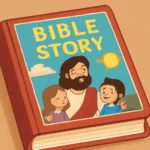
The Bible Story Bible is more than a collection of ancient tales; it is a guide to timeless narratives that have shaped faith, culture, and personal meaning for generations. In this ultimate guide to the bible story bible—and its variants such as the bible stories collection or the story Bible—readers find a roadmap for understanding how stories work, why they matter, and how to read them with discernment, imagination, and heart. This article explores the purpose, structure, and value of the Bible’s stories, offering practical paths for studying, teaching, and applying them today. Whether you are coming to the bible story bible for devotional nourishment, scholarly inquiry, or classroom instruction, you will discover patterns, themes, and tools that illuminate these ancient narratives in a modern light.
Across centuries and cultures, the heart of the Bible Story Bible remains the same: to invite readers into encounters with characters who wrestle with faith, doubt, consequence, and hope. By tracing themes of covenant, redemption, and human striving within a coherent tapestry, this guide helps you see how a single story can echo across multiple books, genres, and contexts. In what follows, you will find a practical framework for approaching the Bible’s narratives as a living conversation between the sacred text and contemporary life.
What is a Bible Story Bible?
A bible story bible is a curated compendium that gathers the Bible’s narrative threads into a cohesive, accessible resource. Rather than presenting isolated verses, a story Bible emphasizes story arcs—the journeys of individuals and communities from creation through revelation—and the connections that bind them. It seeks to:
Highlight narrative flow by tracing how one story leads into another and how themes recur in diverse settings.
Expose literary forms such as history, poetry, prophecy, wisdom literature, and apocalyptic writing, showing how each form supports meaning.
Provide context through concise background notes, timelines, and cross-references that illuminate culture, geography, and historical circumstances.
Illustrate character development by mapping motives, decisions, and transformations across episodes.
Bridge to application with contemplation prompts, discussion questions, and practical takeaways for daily living.
Origins and evolution
While there are many textual editions and study aids that carry the name bible story bible, the essential aim remains consistent: to present a narrative-centered understanding of Scripture. Some versions emphasize a chronological framework, others prioritize thematic strands such as covenant, exile, and restoration, and still others foreground literary devices like foreshadowing and typology. Across these variants, the core value persists: stories are not merely historical records or moral lessons; they are living conversations that invite readers to encounter the sacred in the ordinary—in family meals, in journeys, in moments of crisis, and in acts of courage.
The Scope of Timeless Bible Narratives
The phrase timeless bible narratives points to stories whose themes endure beyond their original setting. These narratives address universal questions: Who am I? Why is there suffering? What is the nature of justice and mercy? How do communities flourish or falter under leadership and law? The bible story bible is structured to help readers recognize that the text speaks in layers: it records specific events, but it also reveals enduring patterns of trust, rebellion, discipline, repentance, and hope.
In a practical sense, the timelessness of these stories emerges when readers notice:
Agency and accountability—characters make choices with consequences that ripple through generations.
Divine-human relationship—covenants, promises, and calls that shape identity and purpose.
Justice and mercy—themes that wrestle with wrongdoing, punishment, forgiveness, and restoration.
Hope amid exile—the tendency of the narrative to pivot toward restoration and new beginnings.
Community and leadership—how societies organize, elect leaders, and respond to crisis.
A typical study framework may follow a broad arc: creation → fall → patriarchs → exodus → wilderness wanderings → conquest and exile → prophetic voices and wisdom → life of Jesus → early church → apocalyptic hope. The bible story bible helps readers see how each segment is interwoven with the next, and how promises extend across centuries to find fulfillment in unexpected places.
Key Stories That Define the Bible Story Bible
Below is a guided tour of pivotal stories, presented as concise entries within the larger tapestry of the bible story bible. Each entry highlights why the story matters, its essential themes, and how it can be read for insight and growth today.
Creation and the Garden — The opening act establishes the world as good, arranged for relationship between God, humanity, and creation. The narrative invites readers to consider vocation, stewardship, and the responsibility that comes with freedom. Themes of trust, obedience, and peace emerge as foundational elements for later stories.
Noah and the Flood — A story about faith amid a broken world and the covenant that follows. It foregrounds issues of and justice, divine restraint, and a fresh start. The preservation of life through an ark becomes a motif for rescue and renewal that recurs in various forms throughout the Bible.
Abraham and the Covenant — A narrative about calling, trust, and unconditional promise. The idea that a people can be formed through a promise challenges readers to reflect on faith in the unseen and the shaping of identity through obedience.
Egypt, Moses, and the Exodus — A defining moment in which a nation learns dependence on a merciful liberator. This story emphasizes leadership, law, and redemption, and it introduces the concept of a sacred journey toward a promised land.
David and the United Monarchy — A series of stories about kingship, courage, failure, repentance, and community identity. The arc of David’s life shows both the fallibility of leaders and the possibility of restoration through humility and faith.
Prophets and Wisdom — The voices that challenge injustice, call for repentance, and offer guidance for living in light of God’s purposes. Poetry, proverbs, and prophetic oracles enrich the texture of the story Bible and provide language for lament, praise, and hopeful critique.
The Life of Jesus — The center of the narrative cosmos for many readers. Jesus embodies the kingdom of God, teaches through parables, performs healings, faces opposition, and inaugurates a new pattern of love and sacrifice.
Crucifixion, Resurrection, and Ascension — The culminating events that transform despair into hope and reshape human understanding of life, death, and purpose. This arc invites reflection on salvation, atonement, and the meaning of new creation.
Early Church and Mission — The spread of the message, the formation of communities, and the challenges of living out faith in diverse cultures. This section underlines the call to witness, service, and communal integrity amid trial.
Timeless Themes Across the Bible Story Bible
From the earliest pages to the closing visions, the Bible’s stories bear recurring themes that remain relevant across time and culture. The bible story bible highlights these motifs not as mere abstractions but as live, actionable ideas that readers can apply in everyday life.
Covenant and Promise — The binding agreements that shape identity and destiny. Trust in a promise is central to many stories, even when fulfillment is delayed or difficult to discern.
Faith and Obedience — The journey from doubt to trust, and the courage to act in alignment with a higher purpose, even in uncertainty.
Redemption and Restoration — The arc from brokenness to healing, and the belief that repair is possible through mercy and grace.
Exile and Return — Displacement as a turning point that intensifies longing for home and clarity about what truly sustains a people.
Justice and Mercy — A continued tension between right ordering of society and acts of compassion that redefine power and leadership.
Wisdom and Insight — The pursuit of knowledge, prudence, and discernment as a life-long exercise that shapes decisions and character.
Community and Hospitality — How relationships, shared meals, and open-handed generosity create resilient households and societies.
Sacrifice and Love — The costly path of self-giving that models ethical brilliance and transformative power.
One of the distinctive strengths of the bible story bible is showing how a single theme recurs in different contexts. For example, the idea of trust under pressure appears in Abraham’s willingness to sacrifice comfort for a promise, in the courage of the exodus generation, and in the disciples’ obedience to a risen Christ. Seeing these echoes helps readers grasp the continuity of Scripture rather than treating each book as a separate island.
Genres and Literary Techniques in Bible Story Bible
To appreciate the full richness of the bible story bible, it helps to recognize the varied genres and the literary tools employed across its pages. The narrative unfolds in multiple modes—each chosen to convey particular truths in memorable, impactful ways.
Genres within the narrative collection
Historical narrative—Accounts of events, settings, and people, often with a particular theological aim guiding interpretation.
Poetry and Song—Lyrics that capture emotional depth, praise, lament, and longing; they often illuminate interior life and divine perspective.
Prophecy—Calls to justice, warning, and visions of future fulfillment, inviting readers to see beyond immediate circumstances.
Wisdom literature—Guidance on daily living, ethics, and practical discernment, often framed as poetic or proverbs-based teachings.
Parables and teaching stories—Brief narratives that reveal ethical or spiritual truths through everyday situations and surprising twists.
Apocalyptic literature—Visions and symbols that disclose ultimate realities, inviting endurance and hope in the face of oppression.
Literary devices that illuminate the stories
Foreshadowing — Early hints that point toward later fulfillments, creating a through-line of expectation.
Typology — People, events, or institutions in the Hebrew scriptures seen as prefiguring, or foreshadowing, later realities.
Chiasm — A symmetrical structure that emphasizes the central idea by mirroring elements around it.
Character development — The evolution of individuals through crises, choices, and consequences.
Symbolism — Objects, numbers, or actions that carry deeper spiritual meanings beyond their surface level.
How to Read and Use the Bible Story Bible
Reading the bible story bible is a skill that grows with practice. The following guidance is designed to help readers engage deeply, retain what matters, and translate insights into action.
Choose a lens — Decide whether you want to study by theme, by character, by genre, or by chronology. This choice shapes your questions and discoveries.
Read with context — Use brief background notes to situate the event, time period, geography, and cultural setting. Context clarifies motives and constraints, preventing anachronistic conclusions.
Track arcs — Identify the beginning, turning point, and resolution of each narrative arc. Note how consequences unfold across chapters or books.
Ask interpretive questions — What does this story reveal about God? What does it reveal about human nature? What is the ethical instruction or invitation?
Cross-reference — Compare parallel patterns or allusions across books. The bible story bible encourages readers to notice echoes and fulfillment across testaments.
Journal reflections — Record insights, questions, prayers, or commitments. Let personal application emerge from the narrative’s truth claims.
Discuss and teach — Engage with others through study groups or teaching moments. Explaining a story to others often clarifies your own understanding.
Apply with integrity — Translate insights into ethical decisions, acts of kindness, and community engagement. The goal is not only understanding but transformation.
Reading strategies for different readers
Beginners — Start with highly narrative books like Genesis, Exodus, Ruth, Esther, Mark, Luke, and Acts to experience storytelling pace and character focus.
Intermediate readers — Add poetry and wisdom literature (Psalms, Proverbs, Ecclesiastes, Song of Songs) to appreciate lyrical language and practical wisdom.
Advanced readers — Explore prophetic books and apocalyptic sections (Isaiah, Jeremiah, Daniel, Revelation) to understand symbolic language and layered meanings.
Teaching and Application
The bible story bible is frequently used in classrooms, family devotionals, small groups, and sermons. Its value lies in translating ancient narratives into relevant, concrete lessons for modern life, without distorting the text’s integrity.
Family settings — Use brief stories as nightly devotionals, inviting children to reflect on choices, responsibilities, and kindness. Create practical activities that connect biblical themes to daily routines.
Classroom use — Structure lessons around narrative arcs, followed by discussion prompts, role-play, or creative writing that helps students internalize themes such as justice, mercy, and courage.
Sermon and preaching — Ground exhortation in a clear narrative through-line, showing not only what happened, but what it means for faith and practice today.
Pastoral care — Use stories to accompany individuals through seasons of doubt, grief, or transition, offering language for lament, hope, and resilience.
Common pitfalls and best practices
In teaching or study, avoid over-simplification or presentism—the inclination to read modern categories into ancient contexts. Instead:
Acknowledge historical-cultural distance while still recognizing universal themes.
Respect genre distinctions; interpret poetry as poetry and prophecy as proclamation within their own frames.
Balance narrative appreciation with critical inquiry about authorship, date, and audience.
Encourage curiosity and questions, rather than providing overly neat answers.
Impact on Culture and Art
The timeless narratives of the Bible have fueled a vast array of cultural expressions. The bible story bible serves not only as a spiritual manuscript but as a wellspring for literature, music, film, and visual arts. Across generations, artists have drawn on biblical plots to explore universal questions about power, identity, suffering, and redemption. This enduring influence demonstrates the narratives’ capacity to speak across contexts, encouraging readers to interpret and re-interpret these stories in ways that reflect their own era and community.
Literature — Novels and poetry often echo biblical structures of waiting, exile, and return, emphasizing the moral and existential weight of human choices.
Music — From hymns of praise to modern worship songs and orchestral works, the themes of longing for justice and hope in dark times recur in compelling melodies.
Visual arts — Iconography and narrative scenes—such as the covenant motif or the crucifixion—have been depicted in paintings, mosaics, and stained glass, turning stories into visual meditations.
Film and theater — Retellings translate ancient scenes into contemporary language, inviting new audiences to engage with familiar themes through immediacy and drama.
Digital and Print Formats
In the modern era, the bible story bible has expanded beyond print into digital platforms, apps, and interactive study guides. These formats offer:
Searchable texts — Rapid cross-referencing, topic tagging, and keyword search to locate stories and themes quickly.
Timelines and maps — Visual aids that place events in geographic and chronological context, aiding spatial understanding and historical orientation.
Commentaries and reflections — Expert perspectives that illuminate difficult passages and offer multiple interpretive angles.
Devotional and study plans — Structured paths for daily or weekly engagement with narratives, designed to foster steady growth.
Whether you prefer a traditional print edition, a modern e-book, or an interactive online resource, the bible stories collection is designed to accommodate diverse learning styles and schedules. The overarching goal remains the same: to cultivate a living encounter with timeless narrative power.
Conclusion
The Bible Story Bible—in its many variations and formats—offers a comprehensive, narrative-centered path through Scripture. It invites readers to engage with timeless narratives by recognizing recurring themes, appreciating literary craft, and applying insights to contemporary life. By focusing on story arcs, character development, and ethical implications, this approach makes ancient texts accessible, meaningful, and transformative.
As you explore the Bible’s stories through the lens of the bible story bible, you will encounter a living conversation: a dialogue between a sacred text and a reader who seeks truth, purpose, and hope. Whether you study alone, teach others, or share these narratives in community, the journey through the Bible’s timeless narratives can become a map for personal growth, communal integrity, and a more compassionate understanding of the world.