Church Christmas Hymns: Timeless Worship for Your Congregation
Christmas is a season when a church’s worship life can become especially declarative, intimate, and communal. Church Christmas hymns—including traditional carols, modern worship songs, choral anthems, and meditative instrumental pieces—provide a sonic and theological thread that ties a congregation to the historic narrative of the Incarnation while inviting personal encounter with the mystery of Christmas. This article explores what makes Christmas hymns powerful for congregational use, how to organize and expand a repertoire, and practical considerations for pastors, music directors, and worship teams seeking to cultivate timeless worship across generations.
The word hymn itself conveys more than a simple song. In a church context, a hymn often serves as a faithful expression of belief, a catechetical teaching tool, and a communal moment of praise. Hymnody during Christmas has the capacity to reframe the service around God’s self-disclosure in the Christ event, to instruct younger worshippers in the language of faith, and to accompany older members through sacred memory. When chosen and arranged with care, Christmas hymns can sustain a sense of liturgical rhythm—anticipation in Advent, proclamation at Christmas Eve, and hopeful expectation as the Christmas season unfolds.
In this guide, you’ll find a holistic approach to church Christmas hymnody, including exploration of origins, theological themes, practical selection criteria, and suggestions for a robust, inclusive, and musically accessible program. The aim is not simply to fill a service with familiar tunes, but to deepen understanding, strengthen congregational singing, and celebrate the beauty of the Christmas story through sound and word.
Origins and Purpose of Christmas Hymns
Christmas hymns have a long and intricate history that mirrors the development of Christian worship itself. The repertoire ranges from ancient canticles to medieval processions, from Reformation-era hymnody to Victorian revival carols, and into contemporary church songs that blend gospel, liturgical, and pop influences. Each era brought new musical languages, but all contributed to a shared bulletin of belief: that the God of Israel has entered history as a human being, to redeem and renew creation.
Ancient roots and liturgical function
The earliest Christmas songs grew out of scriptural recitation and psalm-based worship in the synagogue and the early church. The Magnificat and the Benedictus—canticles from Luke’s gospel—became prototypes for Christian hymnody, shaping the sense that God’s work in Christ unfolds within divine history. Over time, communities developed liturgical seasons (Advent and Christmas) and borrowed from chant traditions to enact the Advent expectation and the Nativity narrative through vocal music, processions, and responsive hymns.
Key ideas in these origins include:
The incarnation as central theological claim—God’s presence with us becomes a central lyric and creed.
Use of familiar melodies to teach, memorize, and declare faith across generations.
Community participation—hymns become a shared act of worship, not a performance to be watched.
The medieval and Reformation periods
In the medieval period, Christmas carols flourished as vivid storytelling set to memorable tunes, often sung in vernacular languages by congregations and guilds. The Reformation sparked a renewed emphasis on congregational singing, enabling lay voices to carry the faith through accessible texts and robust melodies. Hymnals began to standardize, and biblical themes—annunciation, shepherds, angels, and the Nativity—were recast in forms that could be taught and remembered easily.
The Reformation era also opened space for doctrinal precision and congregational participation. Hymns like those that celebrate the Incarnation and the Nativity bridged reformers’ theological aims with the longing of ordinary worshippers. This period established a pattern of pairing sturdy melodies with theologically rich lyrics—an approach that many churches still admire in both traditional carols and modern hymns.
The Victorian revival and modern transformation
The 19th and 20th centuries brought a national and global expansion of Christmas hymnody. The Victorian revival, with its flourishing of carol writers, harmonized voices, and emphatic choral arrangements, remodeled how churches experienced Christmas music. A more expansive orchestration, along with choir-led pieces, helped congregations encounter the narrative of Christmas with resonance and grandeur.
In contemporary worship settings, Christmas hymns continue to evolve. Many churches embrace contemporary Christmas songs that retain classic theological centers while offering fresh languages and contemporary musical textures. This evolution doesn’t replace the past; it adds to it, expanding the spectrum of expression—from timeless carol settings to vibrant, rhythmically engaging anthems that speak to a diverse audience.
Characteristics and Theological Themes
When selecting and shaping a repertoire for a church’s Christmas season, it helps to identify recurring theological themes and musical characteristics that make Christmas hymnody effective in worship. These features create unity within a service and help worshippers encounter the mystery of Christmas in a meaningful way.
Incarnation—God becoming flesh, as proclaimed in the hymn texts and reflected in melodic contours that move from longing to rejoicing.
Adoration and praise—voices lifting in reverent celebration of the newborn King.
Light in darkness—the gift of divine light breaking into a world that longs for redemption.
Peace, joy, and hope—the Christmas message reframed as a lived experience for the congregation.
Glory to God in the highest—the cosmic dimension of Christmas intersecting with the personal devotion of worshippers.
Musical and textual characteristics
Accessible melodic lines that can be sung by mixed-voice congregations, often within a moderate vocal range.
Textual clarity so that theology is intelligible to children, new believers, and seasoned worshippers alike.
Strong narrative arcs—carols that tell a story, as well as hymns that declare a theological truth.
Arrangements that accommodate a spectrum of resources—from organ and piano to simple guitar and a cappella voices.
Categories of Christmas Hymns for a Church Service
A robust Christmas program benefits from diversity within the repertoire. The categories below offer categories and examples to help you plan a balanced service that honors tradition while inviting fresh engagement.
Traditional carols
Traditional carols have endured across centuries and continents because their melodies are memorable and their texts capture the Christmas narrative with simplicity and reverence. These pieces are often well suited for a broad cross-section of a congregation, including families and visitors.
Hark! The Herald Angels Sing—a triumphant proclamation of the Nativity with regal harmonies.
O Come, All Ye Faithful—a call to worship that invites the whole church into the scene of Bethlehem.
Silent Night—a contemplative lullaby of peace that can be performed in unison or with gentle harmony.
Joy to the World—a climactic celebration of Christ’s birth with jubilant rhythms.
The First Noel—a narrative-leaning carol that recounts the Christmas story.
Contemporary worship songs
Contemporary Christmas worship songs bring fresh imagery, contemporary harmonies, and often a more directly personal worship posture. They can connect with younger worshippers while still teaching classic truths about the incarnation.
Emmanuel—a modern text focusing on God-with-us and the promise of divine presence.
A King Is Born—a joyful, energetic celebration that blends traditional themes with modern musical language.
Born Is He—a concise, lyrically rich song about the Nativity narrative.
Light of the World—a worshipful reflection on Christ as the source of light in a dark world.
He Shall Reign Forevermore—a robust Christmas anthem suitable for choir and congregation alike.
Hymn-based choral settings and anthems
For larger congregations or a concert-style Christmas service, choral anthems and hymn-based canticles offer theological depth and musical grandeur. These works are well-suited for choirs, brass, organ, and orchestral accompaniment, creating a sense of celebration and awe.
Ave Maria or Marian-inflected Christmas settings (textual choices vary by tradition) for a reflective moment in the service.
Multi-movement Christmas cantatas—structured experiences with narrative arcs spanning scripture, text, and musical development.
Anthem adaptations of familiar carols—a familiar tune with expanded harmonies and instrumental textures.
Spirituals and folk-inspired Christmas songs
Spirituals and folk-inspired Christmas tunes bring warmth, color, and humanity to a worship service. They can introduce cultural diversity and provide a bridge to communities with rich musical heritages.
Go Tell It on the Mountain—a festive, call-and-response piece with a strong rhythm.
Angels We Have Heard on High (folk arrangements)—a traditional melody imbued with variations that can be arranged for voice and piano or small ensemble.
Mary, Did You Know?—a contemporary text that invites reflective storytelling about the Nativity.
Instrumental and liturgical meditations
Instrumental pieces and liturgical meditations can serve as bridges between major sections of a service, or as contemplative preludes and postludes that extend the contemplative space of Christmas.
Piano preludes on carols—unfolding harmonies that gently lead the congregation into worship.
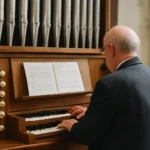
Organ meditations on Advent themes—rich textures that glow in the nave and set a reflective mood.
Instrumental interludes with congregational singing—tools to maintain engagement while allowing focus on the text.
Repertoire Examples and How to Use Them
A practical way to approach Christmas hymnody is to think in terms of service segments: opening call to worship, Advent reflections, nativity narrative, proclamation, and dismissal. The following examples illustrate how different categories can fill each segment while maintaining thematic coherence. The aim is to pair texts with melodies that the congregation can reasonably sing, while also offering moments for choir and instrumentalists to shine.
Opening energizers: Joyful carols and bright contemporary numbers that invite the space into praise (e.g., Joy to the World; Angles We Have Heard on High in an upbeat arrangement).
Narrative moments: Texts that tell the Nativity story with musical storytelling (e.g., The First Noel, O Little Town of Bethlehem in a narrative setting).
Theological reflections: Meditative hymns or chorale-based pieces that invite contemplation on the Incarnation (e.g., Silent Night in a contemplative arrangement).
Choral anthems: A seasonal anthem that brings choir-based depth and congregation engagement simultaneously (e.g., a cantata movement focusing on the shepherds or the shepherds and angels).
Closing doxologies: A jubilant confirmation of the Nativity’s meaning and a hopeful send-off (e.g., a doxology or a final carol with full choir and organ).
When planning, consider the seasonal arc—Advent builds anticipation, Christmas Eve heightens proclamation, and the days after Christmas invite gratitude and mission. You can structure your service to weave these arcs together by alternating between carols, hymns, and choral textures, ensuring the theological thread remains clear throughout.
Selecting Hymns for Your Congregation
Selecting hymns for a church’s Christmas season involves balancing artistry, theology, accessibility, and pastoral sensitivity. Below are practical criteria to guide your planning process. Use these criteria as a framework for a living repertoire that grows with your community.
Congregational familiarity — choose a mix of well-known tunes and new pieces to invite participation while offering opportunities to learn.
Text readability and theology — ensure the language is clear, the theology is consistent with your tradition, and the imagery is accessible to children and newcomers.
Musical range and difficulty — select pieces that accommodate choir, soloists, and the average voice in the room; provide alternate voicings for different instrumentations.
Liturgy and season alignment — match hymns to Advent themes, Christmas Eve, and post-Christmas messaging (epiphany readings, etc.).
Congregational engagement — choose songs that encourage participation through call-and-response, unison singing, or simple refrain structures.
Text and tune pairing — look for texts that speak to the season and tunes that are singable in a worship setting, ideally with a stable tempo and clear cadences.
Instrumentation and resources — consider what your church can realistically support: organ, piano, guitar, small ensemble, or full choir.
Copyright and licensing — verify you have permissions for print, projection, and performance rights, especially for newer songs or arrangements.
Cultural and linguistic inclusivity — include pieces that speak to your congregation’s diversity and, when possible, bilingual or multilingual settings.
A practical approach is to assemble a rotating list of primary, secondary, and seasonal pieces. Primary pieces are core hymns the congregation can reliably sing year after year. Secondary pieces are newer or less familiar songs introduced gradually. Seasonal pieces are reserved for Advent and Christmas and should be chosen with attention to pacing and liturgical narrative.
Arrangements, Accompaniment, and Resources
How you accompany and arrange Christmas hymns can dramatically affect their accessibility and impact. The best arrangements support the text and theology, rather than merely showcasing virtuosity. Below are practical recommendations for your church’s instrumental and vocal teams.
Accompaniment options
Organ and piano are traditional foundations for Christmas hymnody, providing harmonic support and dynamic contrast.
Guitar or string ensemble can offer intimate textures that suit smaller congregations or more contemporary settings.
Full choir or praise team—for choirs, consider multi-voice arrangements with brass, percussion, and orchestral colors for special services.
Orchestral or chamber ensemble—rare in every service but powerful for cantatas and special Christmas concerts.
Voice and choir considerations
Plan for a balanced SATB (soprano, alto, tenor, bass) approach while providing flexible voicings for smaller choirs.
Offer unison or two-part singing for congregations with limited choir resources.
Include brief instruction moments (e.g., breath support, diction, pronunciation of tricky text) to improve overall singing quality.
Practical tips for rehearsal planning
Start rehearsals with text study—read the biblical context behind a hymn before singing.
Use reference recordings to teach unfamiliar rhythms and phrasing.
Incorporate short polishes (e.g., articulation, dynamics) rather than long, fatigue-inducing sessions.
Resources and licensing
Keep a well-organized library of public domain carols for simple arrangement flexibility.
When using modern hymns, ensure you have the licensing and print rights for projection and distribution in your church bulletin or slides.
Explore licensed digital hymnals or streaming services that align with your denomination’s policies.
Accessibility, Diversity, and Pastoral Care in Christmas Hymnody
A church’s Christmas worship should extend hospitality to every member and guest. Accessibility and inclusivity in hymnody mean more than offering a single quiet space for reflection; it means inviting voices to share in the Christmas story through language, melody, and culture that reflect the community.
Inclusive language and texts
Choose texts that avoid outdated or gender-exclusive phrasing when possible and available in translations that reflect your community’s demographics.
Include multilingual hymns or English-language versions of songs commonly sung in other languages, encouraging cross-cultural participation.
Multilingual and multicultural considerations
Offer portions of the service in multiple languages when appropriate to your congregation, or provide printed translations for parallel slide displays.
Invite guest musicians or readers who represent diverse cultural backgrounds to contribute to the Christmas narrative through music and storytelling.
Beyond musical excellence, Christmas hymnody is an instrument of catechesis and spiritual formation. A well-planned approach to teaching hymn texts, tune families, and the historical context of Christmas songs can deepen faith and build a more resilient worshiping community.
Story-led education
Provide brief reflections on the story behind the hymn—its author, its historical moment, and its theological emphasis.
Offer mini-workshops for the music team about phrasing and diction to improve the congregational experience.
Cross-generational engagement
Involve youth and children in acclamations or simple choral parts that align with the service’s themes.
Use short narrative verses or story-led meditations between hymns to help younger worshippers connect with the Nativity storyline.
Seasonal pedagogy
Build a learning plan that unfolds over Advent: introduce a small set of new hymns each week while maintaining a core group of familiar pieces.
Offer listening guides and teaching notes that parents can use at home to talk about Christmas hymn texts with their children.
Sample Service Plan and Practical Implementation
To illustrate how these ideas come together in a real-world setting, here is a practical sample plan for a four-week Advent/Christmas cycle. The plan emphasizes balanced pacing, theological clarity, and inclusive participation. You can adapt the structure to fit your church’s size, resources, and tradition.
Week 1 — Advent Prelude and Preparatory Focus
Opening Hymn: Hark! The Herald Angels Sing (traditional carol) arranged for organ and congregation
Responsorial Psalm or Canticle: a short choral setting that emphasizes God’s coming in Christ
Sermon Theme: Expectation and preparation for the Nativity
Closing Song: a quiet benediction-like hymn, such as Silent Night in a simple arrangement
Week 2 — Nativity Narrative and Storytelling
Opening Song: The First Noel in a two-part arrangement to accommodate choir and congregation
Choral Interlude: an instrumental announcement or brief anthem that depicts the shepherd’s awe
Children’s Moment: brief retelling of the Nativity story with a simple sing-along
Closing Song: O Come, All Ye Faithful with inclusive language and optional refrain
Week 3 — The Incarnation and Personal Reflection
Responsive Reading: Scripture passage focusing on the Word becoming flesh
Contemporary Hymn: Emmanuel or another modern text that foregrounds God-with-us
Reflection Moment: a short reading or testimony about Christmas faith in daily life
Congregational Hymn: Joy to the World in a robust, festive setting
Week 4 — Christmas Eve or Christmas Day Celebration
Processional: festive carols with full choir and instrumental support
Major Anthems: a short Christmas cantata or a series of carol arrangements for a more ceremonial feel
Closing Doxology: a joyful, communal response to the Christmas narrative
The Enduring Value of Christmas Hymns
The Christian imagination has long entrusted the Christmas story to music. Hymns and carols become a ritualized medium for memory, proclamation, and worship—shaping a community’s sense of identity and its hope for the world. Christmas hymns can help a church maintain continuity with the past while inviting fresh encounter with the mysteries of God made flesh. They can be a bridge between families, youth groups, and longtime members, enabling all to participate meaningfully in the church’s worship life.
In practice, the most effective Christmas hymnody is planful, participatory, and compassionate. Planful means a clear schedule that respects Advent’s pace and Christmas Eve’s intensity. Participatory means ensuring that the congregation can sing confidently, with texts that are legible and melodies that are accessible. Compassionate means recognizing the variety of musical backgrounds within the congregation and providing options that honor reverence and joy alike. When these qualities come together, a church’s Christmas season can become a season of deepened faith, authentic worship, and joyful fellowship.
Finally, remember that Christmas hymns are not mere decorations for the church year. They are vehicles of gospel truth—about God’s love, mercy, and light entering the world through Jesus Christ. By curating a repertoire that reflects the past, honors the present, and looks toward the hope of the future, your church can offer timeless worship that resonates with today’s worshippers and endures for generations to come.
If you’d like, I can help tailor a customized repertoire list for your setting—taking into account your denomination, choir size, instrument resources, and the cultural context of your congregation. Whether you lean toward the classic carol tradition, embrace a more contemporary sound, or pursue a balanced fusion, the core aim remains the same: to magnify the mystery of Christmas through music that invites, teaches, and transforms.