Advent candles have for centuries been a visible, tactile way to accompany a church’s seasonal worship. Church Advent candles are more than decorative lights; they are a liturgical pedagogy that invites a congregation to slow down, reflect, and anticipate the coming of Christ. In many traditions, the Advent wreath becomes a centerpiece of worship on Sundays and sometimes on weekdays, linking Scripture, prayer, music, and the wanting of human hearts to the drama of God’s self-revelation in Jesus Christ. This article offers a comprehensive guide to the purpose, design, symbolism, and practical use of candles for Advent in a church setting, as well as ideas for families and educators who wish to explore Advent lightings in homes or classrooms.
Introduction: The Purpose and Power of Advent Candle Lighting
The practice of lighting Advent candles sits at the intersection of theology and devotion. It is not merely a ritual; it is a catechetical act. Each candle, each week, each prayer is a thread in a larger tapestry that declares that the long-expected Messiah has come in the person of Jesus Christ and that his coming is a call to readiness, conversion, and hope. In many congregations, the cadence of lighting candles helps worshippers organize their season-long journey from expectation to celebration.
A church’s decision about Advent candle usage—how many candles, what colors, how many Sundays to observe, and whether to include a Christ candle—outlines a theological stance. Whether the color pattern is the traditional purple and pink, an alternative such as blue and white, or a simple circle of plain white pillars for a more contemporary aesthetic, the essential aim remains the same: to guide attention to the Advent narrative and to awaken ardor for worship in the heart of the community.
History of Advent Candles and the Advent Wreath
The Advent wreath as a formal object emerged in Western European churches in the 16th century, though the concept of a circle of evergreens representing eternal life predates this period. The adoption of the four candles—one for each Sunday of Advent—developed alongside the church calendar’s emphasis on the liturgical year: anticipation, penitence, proclamation, and joy. The practice soon spread through Protestant, Catholic, Anglican, and Lutheran communities, each adapting it to fit their particular theological emphases and liturgical styles.
In many church traditions, the original emphasis was on the progression toward Christmas Day and the revelation of the Christ Child. The growing use of a fifth candle, the Christ Candle, lit on Christmas Eve or Christmas Day, signified the culmination of the Advent journey. Some churches retain all four visible candles for each Sunday leading up to Christmas, while others incorporate additional seasonal elements—such as a separate prayer service or a weekday Advent vigil—into the wreath’s life.
Branches of Tradition: How different churches view Advent lighting
Catholic and Anglican traditions often emphasize the communal, sacramental dimension of Advent, with a focus on preparation and penitence that culminates in the Nativity celebration.
Protestant and Lutheran communities frequently foreground proclamation and hope, often highlighting the prophets’ announcements and the gathering of light in Christ as a sign of divine faithfulness.
Orthodox practices around Advent may differ in timing and form, sometimes aligning Advent with Great Lent’s disciplines or choosing a distinct seasonal decor and liturgy that emphasizes anticipation and purification.
Over time, the symbolism of the wreath itself has deepened. The circular shape represents the unending life bestowed by God; the evergreen foliage symbolizes enduring life in Christ; and the lighting of candles marks a journey from darkness to light. For congregations, these elements become a shared language—one that transcends words and invites a tangible encounter with the gospel.
Design and Anatomy of the Advent Wreath
A church Advent candle display is often centered around an Advent wreath or a large arrangement that can sit on a lectern, a sanctuary table, or a dedicated altar. The design choices—size, number of candles, and the arrangement of accompanying greens—are meaningful and should reflect the worship space, the congregation size, and the liturgical plan for the season.
Common components and their roles
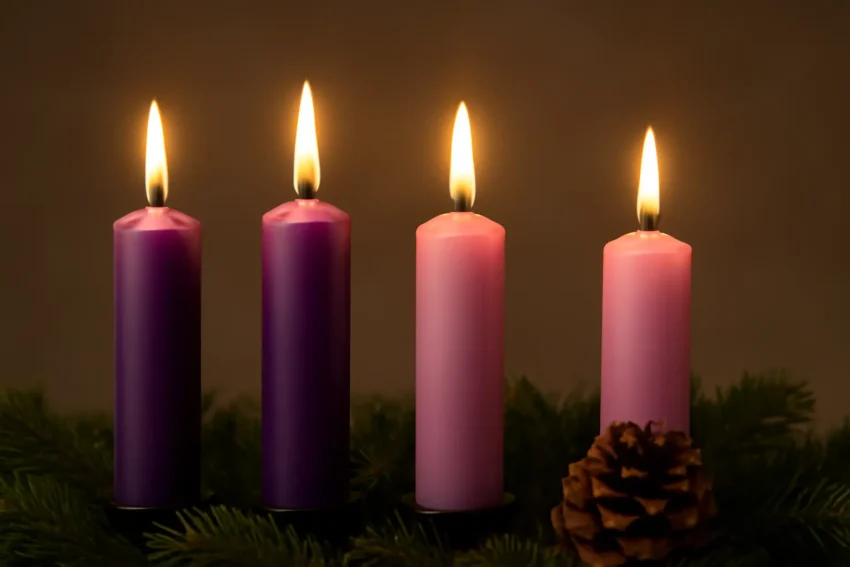
Candles: Typically four in number, but some variations include a larger group or a central Christ candle. The most common arrangement uses three Purple candles and one Pink candle, lit in a sequence that follows the Sundays of Advent. In other traditions, the colors may be blue or violet with a white Christ candle.
Wreath base: Often made of evergreens, the ring symbolizes eternal life and the continuity of God’s promises.
Decorative elements: Pinecones, ribbons, berries, or seasonal motifs may be used to enhance beauty, while staying mindful of the church’s aesthetic and sensory safety in worship spaces.
Advent candles holders: Each holder keeps candles upright and stable, minimizing the risk of dripping wax or tipping during service.
For churches planning to introduce a new Advent candle display, the following design considerations are important:
Scale relative to the sanctuary: Ensure the wreath is proportionate to the lectern, altar, or podium and visible from all seating areas.
Safety and accessibility: Use proper flame protectors, sturdy stands, and non-flammable surroundings; consider low-odor candles for spaces with sensitive air quality or with close-proximity seating.
Lighting and acoustics: Place candles to avoid glare on screen projections or hymnals; coordinate lighting cues so that the lighting of each candle aligns with the readings and prayers.
Longevity and maintenance: Use high-quality candles designed for worship, and have a cleanup plan for wax drips and wick replacement between services or on weekdays.
You may also encounter variations such as a candlelit Advent circle on the church floor or a modular display that can be rearranged for special services. Regardless of format, the essential aim remains clear: to reveal the unfolding story of Advent through light, Scripture, and prayer.
Symbolism of Colors and Candles in Advent Worship
The color scheme and the number of candles carry layered symbolic meaning, linking worship with theology. The traditional palette—purple (violet) and pink—reflects both penitential and hopeful tones. Some churches adopt alternate colors to reflect local liturgical customs or regional traditions, but the central idea of light guiding a journey through Advent endures.
Color symbolism in the Advent candles
Purple candles signal penitence, preparation, and anticipation as the church awaits the coming of the Lord.
Pink candle signifies joy and the midpoint of Advent; it marks a shift from repentance toward the dawning of Christmas celebration.
White Christ Candle (often placed in the center) represents the incarnation—the arrival of Christ, the Light of the World.
In some traditions, the Christ Candle is lit only on Christmas Eve or Christmas Day, while others light it on Christmas Sunday. The schedule may look like:
First Sunday of Advent: Light the first purple candle.
Second Sunday of Advent: Light the second purple candle.
Third Sunday of Advent: Light the pink candle.
Fourth Sunday of Advent: Light the third purple candle.
Christmas Eve or Christmas Day: Light the Christ Candle as the culmination of the season.
The sequence can be adjusted for a four-week Advent observance without a Christ Candle, but the thematic arc—preparation, expectation, joy, and final fulfillment—remains a consistent guide for preaching, teaching, and prayer.
Varieties of Advent Candle Arrangements Across Denominations
While the Advent wreath with four candles is a familiar sight in many churches, there is rich diversity in how congregations deploy Advent candles. Some communities emphasize public proclamation and congregational singing; others emphasize quiet contemplation or family-based worship. The arrangement of candles, the number of weeks observed, and even the decision to include a separate Christmas Candle can vary.
Common formats you might encounter
Four-candle wreaths for four weeks of Advent, with a separate Christ Candle if used.
Five-candle arrangements where a central Christ Candle rests inside or above a ring of four Advent candles.
Minimalist Advent greens using four small candles placed on a table or communion rail with simple green decor and no ring.
Edging or outer ring styles where the four candles are placed on a wreath, circle, or even in a linear station along a corridor for processional use.
Catholic parishes may emphasize the sacramental discipline of Advent with solemn tones and varied music, sometimes combining the wreath with other Marian or prophetic devotions.
Anglican and Lutheran churches often incorporate the Advent candle lighting into liturgies with lectionary readings that trace the prophets, the Virgin Mary, and the coming King.
Evangelical and non-denominational churches may adapt the concept to suit contemporary worship, using bold visuals or simplified color schemes while preserving the sequence of lighting and the thematic emphasis on hope and expectation.
Regardless of the exact format, congregations frequently add additional devotional elements such as scripture readings, psalms, or seasonal hymns that complement the symbolism of the candles and deepen the congregational experience of Advent.
Prayers, Readings, and Liturgical Texts for Advent Candle Lighting
The candle lighting moments are often accompanied by prayers, Scripture readings, and a short homily or reflection. The prayers for Advent candle lighting typically focus on awakening, repentance, hope, peace, and the ultimate fulfillment in Christ. A well-structured sequence can help the congregation connect personal longing with the biblical narrative.
Sample liturgical elements for each Sunday
Opening prayer inviting God to illuminate the heart and mind as the service begins.
Scripture readings that connect prophecy, the Nativity, and the coming of Christ.
Candle lighting blessing that thanks God for light and asks for guidance as the church waits.
Reflection or short meditation tying the week’s theme (hope, peace, joy, love) to daily life.
A simplified framework for a typical Sunday could be:
Greeting and opening song.
First reading from the Old Testament or Prophetic text relevant to Advent.
Response song or psalm; congregational prayer.
Second reading from the New Testament (often an Epistle) or Gospel reference.
Lighting of the current Sunday candle with a brief catechesis or homiletic note.
Prayer of illumination and conclusion with a benediction.
For families and children’s worship, consider child-friendly prayers that echo the themes of the week, such as “Let us be vessels of hope” or “Help us to share peace with those near us.” The aim is to keep the liturgy accessible while preserving doctrinal depth.
Practical Guidelines for Creating and Maintaining Advent Candle Displays
Implementing a church Advent candle display requires practical planning to ensure both beauty and safety. The following guidelines can help churches set up a resilient and meaningful arrangement.
Fire safety is paramount: use flame-retardant wreath organizers, place candles in sturdy holders, and keep a fire extinguisher accessible. Consider using LED Advent candles for spaces with high foot traffic or for safety-conscious congregations.
Ventilation and wax management: ensure the space is well-ventilated and use drip trays or non-slip mats to catch wax drips. Keep candles away from fabrics, curtains, or other flammable materials.
Accessibility: arrange the display so that candles are visible to the entire congregation, including those seated at the back. Avoid placing candles where they could obstruct movement or safety routes.
Maintenance: schedule regular wick trimming and candle changes between services if needed. Have spare candles and safety gear on hand.
Step-by-step guide to setting up a traditional four-candle Advent wreath
Assemble the base: place a circular wreath or ring on a stable base that can support candles without tipping.
Place the candles in the ring: position the three purple candles evenly around the wreath and insert the pink candle in a central position if your layout includes it.
Affix the Christ Candle (if used): place the white Christ Candle in the center or in a separate elevated stand to be lit on Christmas Eve or Christmas Day.
Secure with protections: add a glass or metal windscreen if the space is drafty, to reduce the risk of flare-ups or wax splashes.
Test the lighting cues: coordinate the lighting of each candle with the weekly liturgy, ensuring that ushers or service leaders can easily access and light the candles.
Environmentally friendly options include using beeswax or soy-based candles which have cleaner burn characteristics, and opting for LED candles with a warm glow for a durable alternative in busy sanctuaries. While LED candles can be a practical solution, many churches prefer the ambiance and aroma of natural wax because they contribute to the sensory and devotional richness of the season.
Advent Candles for Family Worship and Education
Beyond the corporate worship setting, Advent candles can be an effective educational tool for families, schools, and small groups. The rhythm of lighting a candle each week creates a predictable, meaningful routine that invites participants to reflect on Scripture, prayer, and service.
Family-friendly formats
Tabletop arrangements with four candles on a simple stand; young children can help light the candles under supervision and read short readings or prayers.
Advent calendars with candles that pair daily or weekly activities with a lighting moment, reinforcing the narrative of expectation and preparation.
Educational stations around the home or classroom that explore the meanings of hope, peace, joy, and love, with each station connected to a candle color and corresponding Bible verses.
When used for education, consider the following practical tips:
Keep explanations concise and age-appropriate; use simple language to connect the candle to biblical promises.
Offer a short moment of silence or a guided prayer that centers on personal reflection and communal care.
Encourage families to bring a small symbolic item (e.g., a sphere representing the world, a dove for peace) that relates to the liturgical theme.
For teachers and pastors, educational guides can accompany the Advent candle ritual—these might include short catechetical notes, questions for discussion, or suggested hymns that reinforce the week’s theme.
In recent decades, some churches have added modern twists to the classic Advent candle tradition. These adaptations preserve the core spiritual intention while making the practice accessible to contemporary worshipers.
Contemporary approaches to Advent lighting
Digital or projection elements: projecting candle graphics or animations on a screen to accompany candle lighting without relying solely on physical flames.
Multi-sensory experiences: pairing the lighting of candles with tactile elements (soft music, aromatics, or textures) that invite a fuller sensory encounter with the season.
Community lighting: involving a broader segment of the congregation in prayer and candle lighting—e.g., families or small groups lighting a candle in rotation during a service.
Educational overlays: integrating short videos or oral meditations that explain the biblical backdrop for each candle’s theme.
As churches explore these variations, it remains important to maintain reverence for the symbol’s meaning, ensuring that any innovation serves edification rather than spectacle.
The practice of lighting candles during Advent is deeply theological. It is rooted in the conviction that God speaks through light—that spiritual illumination comes from the divine Word who became flesh. The candles, in their gentle flames, symbolize a movement from human brokenness to divine healing, from the shadow of night to the dawn of a new day in Christ. The Advent candle ritual invites believers to participate in a communal act that reorients desires, invites repentance, and awakens hope for the coming of God’s kingdom.
Key theological emphases
Hope—God’s promises endure, and the candles point toward the fulfillment of those promises in Christ.
Peace—the advent of Christ brings reconciliation and shalom, a peace that sustains in the midst of life’s turmoil.
Joy—the mid-point candle of Advent reminds the church to rejoice in the near presence of the Savior.
Love—the climactic light of the Christ Candle reveals God’s love poured out in Jesus for creation.
For pastors preparing sermons or homilies about Advent, the candle sequence can be a practical framework for preaching. The weekly themes can align with Scriptural passages that demonstrate God’s faithfulness and invite the congregation to personal response—confession, gratitude, and acts of service.
A well-managed Advent candle program is as important as its theological intention. Regular care ensures safety, preserves the integrity of the symbolism, and extends the life of the display.
Care guidelines
Inspect weekly for wax buildup, wicks that are charred or uneven, and candle stability.
Replace as needed to avoid wax pooling or candle burning down to the holder; have a reserve of candles ready for replacement.
Clean and polish the holders to maintain aesthetic appeal and to prevent wax residues from damaging surfaces.
Document the setup with a simple plan or diagram, noting which candle is lit on which Sunday for accurate reproduction in future years.
If your congregation has concerns about sustainability or fragility of flame-based candles, consider hybrid options like LED Advent candles that mimic the glow of real flame while providing extended safe use. For worship spaces with recurring services, LED candles can reduce maintenance while preserving the ritual feel.
What is the purpose of lighting Advent candles?
The purpose is to accompany the church’s worship through a visible, embodied reminder of God’s promise and the advent of Christ. Each lighting marks a movement in the spiritual journey—from longing and preparation to rejoicing in the coming Savior.
Why are there four candles plus a Christ Candle in many traditions?
The four outer candles represent the four Sundays of Advent, each candle highlighting a thematic pillar—hope, peace, joy, and love. The central Christ Candle (if used) embodies the culmination of Advent in the Incarnation—God becoming human in Jesus Christ.
Can Advent candles be used outside of church services?
Absolutely. Families often use Advent candles at home to reinforce the rhythm of the season, or schools and catechetical programs incorporate the practice into classrooms and youth groups. The core discipline—anticipation of Christ’s coming—translates well to intimate settings and larger public liturgies alike.
Are Advent candles always color-specific?
The traditional colors are purple and pink, but some congregations adopt blue, white, or other culturally meaningful hues. The color choice should serve the season’s theology and the congregation’s liturgical identity rather than appear as mere aesthetics.
For safety, some churches use LED candles, battery-operated options, or flame-simulating alternatives in areas with high traffic, children, or when heat-sensitive equipment is nearby. If real flames are used, proper holders, wind protection, and fire safety protocols are essential.
Church Advent candles remain a meaningful, enduring practice that invites a diverse range of worshipers into a shared story. From the wreath’s circle to the single flame that marks Christmas, the tradition speaks across generations and cultures. The candles teach and exhort: to wait with hopeful patience, to seek peace in a restless world, to rejoice in God’s coming, and to love as a response to divine mercy. As you consider your congregation’s next Advent season, may your Advent candle observances become not only a sign of time but a lived invitation to encounter the Light that shines in the darkness and the darkness has not overcome it.