Introduction to the Church Organ: A Timeless Musical Instrument
The church organ is among the most enduring and versatile musical instruments in Western worship and concert life. Its distinctive voice, produced by carefully tuned pipes or electronic emulations, has shaped liturgy, architecture, and listening experiences for centuries. In this article, we explore the types of organs found in sacred spaces, the history that has formed their development, and the maintenance that keeps them singing across generations. Whether encountered in a medieval cathedral, a baroque parish church, a modern worship space, or a concert hall that hosts sacred repertoire, the organ remains a central instrument for blending tradition with technology. This discussion uses variations of the term organ to reflect its broad semantic reach, including pipe organs, digital organs, hybrid instruments, and historical forms that arose within church settings.
What is a church organ?
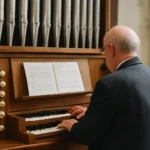
At its core, a church organ is a wind-driven keyboard instrument designed to accompany worship and community singing. It typically produces sound by forcing pressurized air through ranks of pipes or through digitally synthesized voices that imitate pipes. The sound is organized into stops, which control the timbre, dynamic, and balance of the ensemble. A complete organ often features multiple manuals (keyboards for the hands) and a pedalboard (keyboard played with the feet), with a central wind system that supplies air to the instrument’s voice pipes or digital equivalents.
The design of a church organ reflects its dual vocation: it must support congregational singing and also enable soloist performance, organ voluntaries, and liturgical drama. This requires careful planning of acoustics, casemaking, and voicing—the art of shaping each pipe’s character for the space it inhabits. Throughout history, organ builders have collaborated with clergy, architects, and acousticians to create instruments that not only produce music but also participate in the spiritual and aesthetic life of the church.
Types of church organs
Pipe organs: the classic church instrument
The pipe organ is the archetype of church organs. It relies on a regional and historical family of technologies, all designed to deliver wind pressure to a forest of pipes. Pipe organs are categorized by their sound divisions, action, and the layout within the organ case.
Divisions: Common groups include the Great (or Pedal), the Swell (enclosed to balance dynamics), the Choir, and the Solo divisions. Some instruments feature a Pipe-Organ chorus with a variety of reed and flute pipes.
Stops: A stop is a mechanical or electronic device that allows a organist to activate a particular rank or timbre. Stops create colors such as Principals, Flutes, Mixtures, and Pedal tones. Brass, reed, and flute ranks contribute to a wide sonic palette capable of echoing majestic cathedral spaces or intimate chapel acoustic.
Action types: The method by which pressing a key causes a pipe to sound is called the action. In traditional pipe organs, this is often a tracker action (mechanical linkage), though many organs use electro-pneumatic or electrical actions to move valves and allow lighter touch across long keyboard spans.
Digital and hybrid organs
Advancements in technology have yielded digital organs and hybrid organs that blend traditional pipe ranks with electronic voices. In secular and sacred spaces alike, digital components can replicate the sound of pipes with high fidelity, while offering practical advantages in maintenance, portability, and versatility.
Digital organs: These use sampled or modeled sounds to produce organ voices. They often include a larger roster of stops and voices than a comparably sized pipe organ, with the ability to simulate combinations that would be costly or impractical to realize with pipes alone.
Hybrid organs: A true hybrid couples real pipes (for authentic response and projection) with digital and electronic voices. This arrangement can be especially attractive in historic spaces where adding new pipes would be architecturally challenging or expensive.
Practical considerations: Digital components can reduce tonal drift, simplify maintenance, and offer flexibility for school performances, concerts, and interdenominational services that require a broader palette of sounds.
Smaller and portable organs
Some churches, chapels, or mission spaces employ smaller organs that retain essential organ functions yet address space or budget constraints. These instruments may be positive organs (compact, stand-alone units without a full pedal division) or light-weight portable organs used for seasonal liturgies or educational settings.
Historical and specialized variants
Beyond the standard configurations, a few specialized instruments appear in sacred settings:
Tracker-action organs: mechanical linkages connect keys to valves, offering direct tactile control and a precise connection between touch and response. They are often preferred for their immediate feedback and musical clarity.
Electro-pneumatic organs: a hybrid of electrical action and wind supply that allows lighter touch and more flexible console layout. Used widely in the 20th century, many such instruments remain in service.
Electrically assisted organs: includes organs with electric stops or pipes that rely on electronic voicing to supplement or augment the pipe organ’s primary sound.
Historical overview: from hydraulic origins to modern worship instruments
Ancient beginnings and medieval developments
The concept of a wind-driven keyboard instrument in a religious setting reaches back to antiquity. The hydraulis (also known as the hydraulic organ) of the Hellenistic world produced sound by a water-driven air system. Though rarely found in early church contexts, these early devices influenced the long arc of organ development. By the medieval period, the organ had become a staple in European churches, especially as monastic institutions and cathedrals sought to augment the liturgy with a robust and sustained musical voice.
Medieval organ builders innovated with wind reservoirs, keyboard interfaces, and early versions of the wind chest, a mechanism that stores wind and supplies it to pipes when a key is pressed. The oldest surviving organs in Christian spaces were often small, but they introduced essential ideas: portable pipes, multiple stops, and the possibility of antiphonal singing and spatial sound distribution.
Renaissance and Baroque expansion
In the Renaissance and Baroque periods, church organs grew in scale and complexity. Prominent organ builders and notable church commissions resulted in instruments with multiple manuals, extensive pedal ranges, and a more elaborate stop catalog. The architecture of the organ case, the instrument’s placement within the church, and the acoustics of the space all shaped the instrument’s voice. Composers and organists experimented with registrations that could support antiphonal choirs, accompany hymnody, or present virtuosic pedal lines.
The organ as liturgical partner grew from accompaniment to a narrative voice that could participate in the drama of the service. Repertories expanded to include sustained preludes, fugues, and toccatas that exploited the instrument’s ability to sustain notes while controlling dynamics. The distinctive swell box (an enclosed division) and the nuanced voicing of individual pipes became defining features of the era.
Romantic and modern reforms
The Romantic era and the rise of symphonic organ design in the 19th and early 20th centuries pushed organs toward orchestral scale and color. Builders extended wind supply, introduced expansive pedal lines, and developed new tonal schemes to mirror orchestral timbres. In some places, churches invested in huge grand organs that dominated the nave with an expansive dynamic range and a broad palette of tonal colors.
In the 20th century, many churches faced a crossroads: preserve historic instruments, adapt spaces for new liturgical forms, or adopt contemporary technologies. The emergence of electro-pneumatic action and later digital organs offered practical ways to maintain or expand organ capabilities without overwhelming the physical fabric of aging churches.
Construction and design elements of church organs
A church organ is a carefully engineered system of interacting parts. Understanding its main components helps explain both its sound and its maintenance requirements.
Key components
Console: The keyboard(s), pedalboard, stops, pistons, and assistants that control the instrument. The console is the organist’s interface with the instrument.
Stop mechanism: The device that selects a rank or mixture of ranks to be sounded. Stops shape the instrument’s color and dynamics.
Ranks and pipes: A rank is a set of pipes with a common timbre. Pipes come in varied shapes, materials, and scales to produce a spectrum of tones—from bright principals to mellow flutes.
Wind system: The supply of pressurized air, often regulated by bellows, an organ blower, and a wind chest. The wind must be steady and clean for consistent tone.
Wind chest: A reservoir that distributes wind to the pipes when keys are depressed. Its design influences touch, articulation, and tone.
Action: The mechanism that transfers key movement into valve operation. Choices include tracker (mechanical), electro-pneumatic, and electric actions.
Pedalboard and manuals: The pedalboard provides bass lines, typically played with the feet, while manuals are the keyboard interfaces for the hands. Some organs feature more than two manuals for extended control.
Case and acoustics: The organ case not only houses the pipes and mechanisms but also interacts with the church’s architecture, influencing resonance, projection, and the instrument’s visual presence.
Actions and touch: tracker, electric, and electro-pneumatic
The action of an organ shapes how an organist experiences touch and response:
Tracker action: A purely mechanical linkage that runs from each key to its corresponding valve. It offers a direct, tactile connection and precise control over articulation, but can be physically demanding for large instruments with many manuals and long distances from console to pipes.
Electric action: A fully electrical connection between keys and valves or electronic speakers. It allows flexible console placement and lighter touch, often used in smaller or acoustically challenging spaces.
Electro-pneumatic action: Combines electric signals with wind-pressure regulation, allowing the console to manage multiple ranks with a lighter touch while preserving some pneumatic advantages. This type was very common in many 20th-century organs.
Voicing, regulation, and tuning
The voicing process shapes a pipe’s tone by adjusting the pipe mouth, cap, and wind pressure for each rank. This is where organ technicians tailor the instrument to the space, ensuring legato lines, clear chorus, and balanced dynamics. Regulation refers to arranging the action so that keys and stops respond consistently across the keyboard and pedalboard. Tuning ensures that pipes align harmonically with each other and with the expected pitch, often requiring periodic adjustments due to temperature, air pressure, and mechanical drift.
Maintenance and care: keeping a church organ in prime condition
Proper maintenance is essential to preserve the instrument’s tonal integrity, mechanical reliability, and architectural compatibility. Maintenance encompasses routine tuning, safety checks, cleaning, and periodic restoration. The needs of an organ are influenced by its type (pipe, digital, or hybrid), its age, the environment, and how frequently it is used.
Routine tuning and voicing
Regular tuning is a baseline service for any organ, typically performed by qualified organ tuners or voicers. A tuning schedule depends on factors such as climate, usage, and the instrument’s design. In some spaces, summer heat and winter cold can cause pitch drift, requiring adjustments to maintain correct pitch relationships between ranks and to preserve ensemble coherence.
Standard tuning: Aligning the organ’s pitch to a standard reference (often A = 440 Hz, though some traditions use A = 435 Hz or other standards) so that it integrates well with choir and orchestra.
Voicing adjustments: Periodic voicing work smooths tone across scales and dynamic ranges, ensuring that the instrument projects appropriately in the nave and maintains tonal balance among divisions.
Wind system, humidity, and climate control
The wind supply is a critical element of organ stability. Fluctuations in temperature and humidity directly affect air density, pipe pitch, and wind pressure. Churches often manage microclimates with humidity control, temperature stabilization, and protective air handling. Good climate control protects wind chests, leather bellows, and wooden components from cracking, warping, or drying out.
Humidity management: Maintaining stable relative humidity helps prevent pitch drift and mechanical stress on components. In some cases, dehumidification or humidification systems are used to keep humidity within a narrow range.
Ventilation and heat management: Heating, cooling, and ventilation must be balanced so that the organ’s wind system remains steady without introducing drafts that could disrupt wind pressure or pipe voicing.
Maintenance of wind, pipes, and action
Regular maintenance involves a combination of inspection, cleaning, and component replacement. A network of specialists—organ technicians, rebuild artisans, and electricians—work together to sustain the instrument’s reliability.
Pipe maintenance: Periodic cleaning, inspection for corrosion, and regluing of loose pipe mouths ensure consistent tone. Exceptions exist for pipes made of metal or wood, which require different care.
Wind chest and bellows: Leather, fabric, and mechanical joints may wear with time. Repairing or replacing worn components reduces air leaks and improves response.
Action checkups: For tracker organs, key bushings and lever pivots may wear, affecting touch and articulation. For electric and electro-pneumatic actions, electrical components, contacts, and vacuum lines need testing and refurbishment.
Electrical and mechanical systems: safety and reliability
Modern organs rely on a combination of electrical and mechanical systems. Ensuring electrical safety means safeguarding wiring, fuses, and control circuits, particularly in damp or humid spaces. Regular inspection helps prevent tripping hazards, short circuits, or pivot failures during services.
Electrical distribution: Power supplies, fusing, and control wiring require periodic checks. In digital or hybrid organs, the integrity of electronics is essential for accurate voice reproduction.
Mechanical wear: Piston or toe-stay devices, key bushings, and action components wear with use. Re-lubrication and replacement of worn parts extend the instrument’s life and preserve touch quality.
Cleaning, protection, and environmental care
Regular cleaning helps prevent dust from interfering with valves, pipes, and electronics. It is important to use appropriate cleaners and avoid moisture buildup that could damage leather seals, wooden cases, or electronic boards. In some cases, organ spaces receive protective measures against insects or mold.
Professional stewardship: who maintains a church organ?
Maintenance is typically performed by a team that may include:
Organ tuners who adjust pitch and pitch stability.
Voicers who shape tone and balance across ranks and divisions.
Engineers or technicians who service electrical and electronic systems.
Church custodians who protect the instrument’s environment and report issues promptly.
Design considerations in church organ installation
When planning or upgrading an organ, several design concerns determine how the instrument fulfills its liturgical and musical roles. The interplay of architectural acoustics, the instrument’s layout, and the space’s usage all influence instrument choice and design modifications.
Placement and acoustical integration
The location of the organ within a church—often at the back gallery, side lofts, or beneath a tower—significantly affects projection, balance, and the audience’s listening experience. Spatial acoustics, including reverberation time and natural resonance, shape the organ’s tonal architecture. A well-integrated instrument complements the choral and congregational singing, ensuring words remain intelligible while the organ provides a rich sacral texture.
Console placement and ergonomics
The console should be accessible to the organist and visually connected to service leadership. In some settings, multiple consoles or movable consoles enable flexible use for choirs, orchestras, or school programs. Ergonomics—keyboard height, pedalboard reach, and stop layouts—affects performance comfort and longevity.
The instrument’s casework is a visual anchor in the sacred space. A case can reflect architectural style and the historical period of the church, while also providing practical considerations such as wind load distribution and pipe alignment. The aesthetic relationship between organ case, church art, and liturgical furnishings contributes to the overall worship environment.
The role of the organ in worship and performance
The organ serves multiple roles in church life. It can lead congregational singing with a guiding, sustaining presence; accompany choirs with delicate, polyphonic support; provide dramatic preludes and postludes for liturgical seasons; and function as a partner for solo organ repertoire or orchestral collaborations during concerts. In some traditions, the organ’s music functions as a narrative or contemplative thread—voiced with an eye toward spiritual imagery, psalmody, and liturgical symbolism.
Liturgy and repertoire considerations
Organists select registrations—combinations of stops and couplers—to suit the season, the service, and the acoustics. A well-planned registrations plan helps the instrument articulate text clearly, shade dynamics, and highlight organ-piano contrasts during a service.
Hymn accompaniment: A sturdy principal chorus with supportive flutes and mixtures helps congregational singing soar without overpowering the text.
Antiphonal and choral textures: Swell, great, and choir divisions create spatial effects that echo the architecture and enhance antiphonal singing.
Voluntaries and postludes: Virtuosic or meditative pieces that close services, often exploiting pedal registers and registration changes.
Preservation, restoration, and modernization
Preserving sacred instruments requires balancing respect for heritage with the practical realities of modern worship. Some churches undertake comprehensive restorations of historic pipe organs, while others adopt hybrid arrangements or digital replacements to extend usability and ensure ongoing service in the face of aging infrastructure.
Historic organ restoration and conservation
Restoring a historic organ often involves:
Stabilizing the wind system to prevent chronic pitch drift and airflow problems.
Voicing adjustments to recover or refine historical tonal characters.
Mechanical overhauls for trackers, action components, and pedal assemblies to ensure responsive touch and durability.
Case and structural work to address wood deterioration and to preserve architectural integrity.
Modernization and accessibility
In many churches, modernization projects address changes in liturgy, diversity of musical ensembles, and the need for sustainable operation. Modernization may involve:
Hybridization by combining pipe ranks with digital voices to expand tonal options while preserving key pipe sounds.
Remote control and MIDI integration to accommodate contemporary ensembles and school programs.
Maintenance-friendly upgrades such as improved electrical systems, climate controls, and easier access for technicians.
Learning and practice with church organs
For organists and choirs, a church organ is more than an instrument—it is a partner in a shared musical journey. Practice routines, registration study, and ensemble rehearsals with organ and voice demand careful planning, deep listening, and collaborative method.
Practice, repertoire, and pedagogy
Organists often cultivate a repertoire that spans liturgical settings, from simple hymn preludes to complex fugues. Pedagogical approaches emphasize a blend of coordination (hands and feet), registration planning, and precise articulation that integrates with choir and congregational singing.
Community and faith life
The organ’s presence in worship fosters a sense of continuity with church tradition and invites congregants to encounter the sacred through musical memory. Regular performance cycles, seasonal concerts, and collaborative services can enrich community life while maintaining reverence for the instrument’s historical and spiritual significance.
Glossary of core terms (brief)
A compact glossary can help readers navigate discussions about organ design, history, and maintenance.
Pipe organ: An organ that produces sound primarily through air-driven pipes.
Stop: A control that enables a rank or combination of ranks to sound; shaping timbre and dynamics.
Manual: A keyboard played with the hands; a division aligns with specific tonal colors.
Pedalboard: A keyboard played with the feet, providing bass support.
Wind system: The set of bellows, blower, wind chest, and wind reservoirs that supply air to the pipes.
Tracker action: A purely mechanical system linking keys to valve operation.
Electro-pneumatic action: An electronic signal controlling pneumatic valves for pipe sound.
Voicing: The process of shaping a pipe’s tone for balance and color in a space.
Tuning: Adjusting pitch to align with reference pitch and ensemble balance.
Conclusion: the enduring significance of church organs
Whether a monumental pipe organ in a medieval cathedral or a contemporary hybrid instrument in a modern chapel, the church organ remains a living tradition. It embodies centuries of craft, theology, acoustics, and musical imagination. The instrument’s types—from the timeless pipe organ to the adaptable digital and hybrid varieties—mirror the evolving relationship between worship, technology, and culture. With careful maintenance, ongoing restoration, and thoughtful design, the organ will continue to illuminate sacred spaces, inspire choirs and congregations, and welcome listeners into moments of transcendence.
In short, the church organ is more than an instrument. It is a communal archive in sound: a history etched into pipes, a living partner to liturgy, and a technological marvel that adapts while remaining deeply rooted in tradition. Its story—spanning ancient hydraulics to contemporary digital voices—continues to unfold in concert halls, sanctuaries, and classrooms around the world.