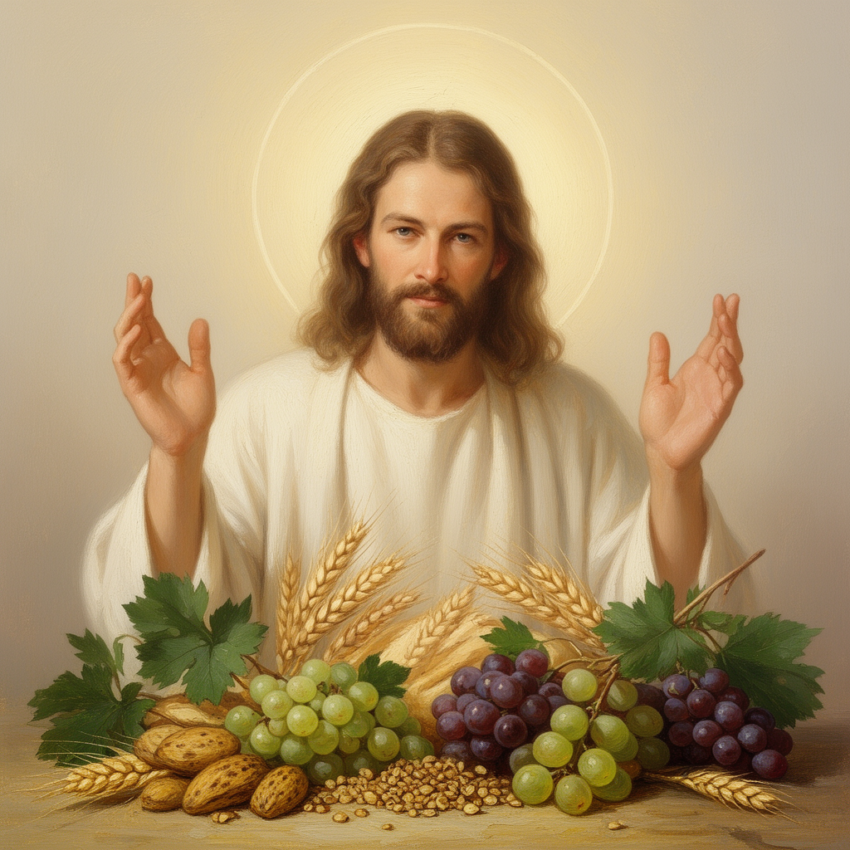
The Seven Species comprise diverse plants: wheat (Triticum spp.), a tall cereal grass with long leaves and spike-shaped seed heads; barley (Hordeum spp.), similar but shorter and with rougher grain; grapevine (Vitis vinifera), a woody vine with lobed leaves and clusters of berries; fig (Ficus carica), a deciduous tree or shrub with broad, lobed leaves and distinctive fruit; pomegranate (Punica granatum), a shrub or small tree with glossy leaves and bursting red fruit; olive (Olea europaea), a small evergreen tree with silvery-green leaves and small, oily fruit; and date palm (Phoenix dactylifera), a tall, graceful palm with feathery fronds and sweet fruit. These plants thrive in Mediterranean climatic conditions, growing in well-drained soils, often in orchards or natural groves.
Wheat, Barley, Grape Vine, Fig, Pomegranate, Olive, Date Palm
Native Habitat
Indigenous to the Eastern Mediterranean region, these species grow abundantly in Israel and surrounding areas, favoring hot, dry summers and mild, wet winters. They are adapted to rocky, well-drained soils, thriving in cultivated fields, orchards, and natural landscapes across the Levant.
First Biblical Mention
Genesis 1:11-12 (Plants created by God; the first mention of cultivated plants is wheat in Genesis 41:34-36).
Mentions the land producing wheat and barley, grapes, fig trees, pomegranates, olives, and dates.
Highlights the fertility of the Promised Land and God’s providence in its abundance.
Exodus 9:31
Refers to the wheat and barley being struck by hail during the plagues.
Demonstrates the crops’ vulnerability and the significance of these staples to Israelite sustenance.
✨ Symbolic Meaning in Scripture
The Seven Species symbolize divine blessing, fertility, and covenant. Wheat and barley denote sustenance; grapes and figs represent abundance and joy; pomegranates symbolize righteousness; olives stand for peace and blessing; dates embody grace and resilience. Collectively, they embody God's provision and the spiritual promise of maturity, fruitfulness, and spiritual nourishment throughout Scripture. Their recurring presence underscores themes of divine favor, covenant fulfillment, and the fruitful life expected of God's people.
🏺 Cultural Uses in the Ancient World
Ancient Israelites relied on these plants for daily sustenance—wheat and barley for bread, grapes for wine, figs for fruit and medicinal uses, pomegranates as symbols of fertility, olives for oil essential in cooking, lighting, and worship, and dates as nutritious food and trade commodities. These crops informed religious rituals, societal identities, and trade routes, shaping the agrarian economy and spiritual life of the region.
✡️ In Jewish Tradition
The Seven Species are foundational in Jewish religious festivals, especially Sukkot, where they are blessed as 'shehecheyanu' items. Rabbinic literature emphasizes their spiritual significance, representing divine blessing and the character of the Land of Israel. Their symbolism appears in liturgy, art, and Jewish law, reinforcing the covenant between God and Israel.
Christian interpretation often emphasizes these plants as symbols of spiritual nourishment, blessing, and growth. They exemplify themes of abundance, fruitfulness, and divine provision. Early Christians connected the vine and olives with Christ, portraying Him as the true vine and the source of spiritual oil, respectively, underscoring their theological symbolism of connection to divine life and salvation.
🔬 Modern Botanical Identification
Scholarly consensus identifies these species broadly: wheat and barley are well-established cereals; Vitis vinifera for grapes; Ficus carica for figs; Punica granatum for pomegranates; Olea europaea for olives; Phoenix dactylifera for dates. Some debates exist about the exact varieties, but these identifications are widely accepted due to archaeological and botanical evidence.
🗺️ Where Is It Found Today?
Today, these plants are widely cultivated across Israel and the Middle East. Olive trees and grapevines are iconic in the landscape, with orchards and groves in regions like Galilee, Judea, and Negev. Date palms are common in oases and southern desert areas, while wheat and barley fields are cultivated in modern agriculture.
❓ Frequently Asked Questions
Why are these seven plants considered special in the Bible?
They are designated as the seven species that exemplify the fertility and abundance of the Promised Land, symbolizing divine blessing and prosperity.
Are these plants still cultivated today in Israel?
Yes, modern Israel continues to cultivate these species extensively, maintaining their agricultural and cultural importance in the region.
How do these plants symbolize spiritual themes in Scripture?
They represent aspects of divine blessing, growth, and covenant faithfulness, illustrating spiritual nourishment, fruitfulness, and God’s providence for His people.
✨ Did You Know?
The oldest olive oil press discovered dates back over 2,500 years, highlighting the long-standing importance of olive cultivation. Archaeological remains of ancient grape presses and wheat storage reveal advanced agricultural practices in biblical times.