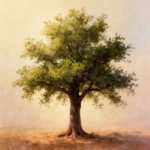
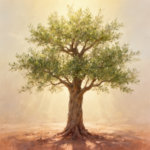
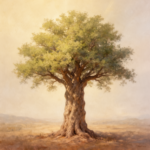
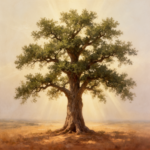
Ebony is a dense, hardwood tree characterized by its tall, upright growth reaching up to 30 meters. Its leaves are glossy, dark green, and oval-shaped, with smooth edges. The tree produces small, fragrant, white to yellowish flowers that bloom in clusters. Its fruit is a berry or drupe, turning black when ripe, containing a seed. The wood is incredibly hard, dark, and heavy, prized for its jet-black color and fine texture. It thrives in tropical climates, often in moist, well-drained soils, particularly in West Africa and parts of Southeast Asia. The tree prefers humid conditions and partial shade during young growth. Its slow growth rate contributes to its density and commercial value.
Scientific Name
Debated (Candidates: Diospyros spp., Maba spp., or Diospyros crassiflora)
Native to tropical regions of West Africa, Central Africa, and Southeast Asia, Ebony trees flourish in humid, subtropical to tropical moist forests. They favor rich, well-drained soils with stable rainfall and thrive under canopy cover in lowland forests. These regions include countries such as Ghana, Ivory Coast, Cameroon, and parts of Indonesia. Due to logging pressures, wild populations are often threatened, and cultivation occurs in controlled plantations.
First Biblical Mention
Ezekiel 27:15, where ebony is listed as a traded item of great value.
Ezekiel describes trading ships bringing exotic goods, including ebony, indicating its value and rarity.
Symbolizes wealth, luxury, and the exotic trade that connected Israel with distant lands, highlighting the importance of commerce and material prosperity.
✨ Symbolic Meaning in Scripture
Ebony in biblical and theological contexts symbolizes both divine judgment and the profound depth of God's creation. Its dark, dense nature reflects themes of mystery, depth, and judgment, often associated with God's tribunal and the inscrutable aspects of divine will. As a rare and treasured material, it also embodies themes of wealth, splendor, and the allure of the exotic. Spiritually, ebony can represent the contrast between darkness and light, serving as a reminder of God's sovereignty over all creation, including the hidden depths of the soul. Its use in sacred objects underscores its association with reverence, durability, and the divine beauty embedded within creation’s most enduring materials.
🏺 Cultural Uses in the Ancient World
Ancient Israelites and Near Eastern peoples valued ebony for its dense, durable wood, used in the construction of furniture, chests, and sacred implements. Its dark wood was also employed in artistic carvings and inlay work, signifying wealth and status. Its rarity made it a prized item in trade, often symbolizing luxury goods sent as tribute or gift. In some traditions, ebony was also believed to have medicinal properties, useful in treatments for various ailments, and its fragrant wood played roles in ceremonial offerings or sacred rituals.
✡️ In Jewish Tradition
While specific rabbinic texts do not extensively mention ebony, the emphasis on precious and exotic woods reflects the broader Jewish appreciation for beautiful and meaningful materials in temple architecture and ritual objects. Ebony's rarity makes it a symbol of divine majesty and the pursuit of sacred beauty, resonating with Jewish values of craftsmanship and reverence for creation’s finest resources.
Christian symbolism often interprets dark woods like ebony as representations of penitence, humility, and the staining of sin, contrasting with the divine light. The deep, solid nature of ebony can symbolize the strength and permanence of faith, and its use in sacred art underscores themes of sacred mystery and divine sovereignty. It also evokes the contrast between darkness and light integral to biblical theology, emphasizing Christ as the light overcoming darkness.
🔬 Modern Botanical Identification
Scholars generally identify biblical ebony with species of Diospyros, particularly Diospyros crassiflora or related tropical ebony species. However, there is debate due to the regional references and timber trade antiquity. Some suggest African ebony (Diospyros spp.) as the primary candidate, although other dark hardwoods such as Maba (Maba spp.) have been proposed. There is no complete scholarly consensus, making the identification tentative and subject to further archaeological and botanical research.
🗺️ Where Is It Found Today?
Today, ebony trees are cultivated in West Africa, Southeast Asia, and parts of Central Africa. They are found in protected forest reserves, plantations, and some national parks in Ghana, Côte d'Ivoire, Cameroon, and Indonesia. Due to high demand and overharvesting, wild populations are threatened, prompting efforts for sustainable cultivation.
❓ Frequently Asked Questions
Is ebony the same as the black wood used in making piano keys?
Yes, the black wood used in piano keys is often obtained from species of ebony, valued for its hardness and deep black coloration, which matches biblical descriptions.
Why was ebony considered so precious in ancient times?
Ebony’s rarity, durability, and striking appearance made it a luxury item for craftsmen, royalty, and religious artifacts, symbolizing wealth and divine splendor.
Can ebony trees be cultivated today?
Yes, ebony trees are cultivated in plantations, especially in West Africa and Southeast Asia, but their slow growth and high demand make sustainable management essential.
✨ Did You Know?
Ebony has one of the densest woods in the world, making it nearly impossible to carve without specialized tools. Archaeological findings suggest that ancient civilizations valued ebony so highly that it was transported over long distances as a luxury commodity, even in the early centuries CE.