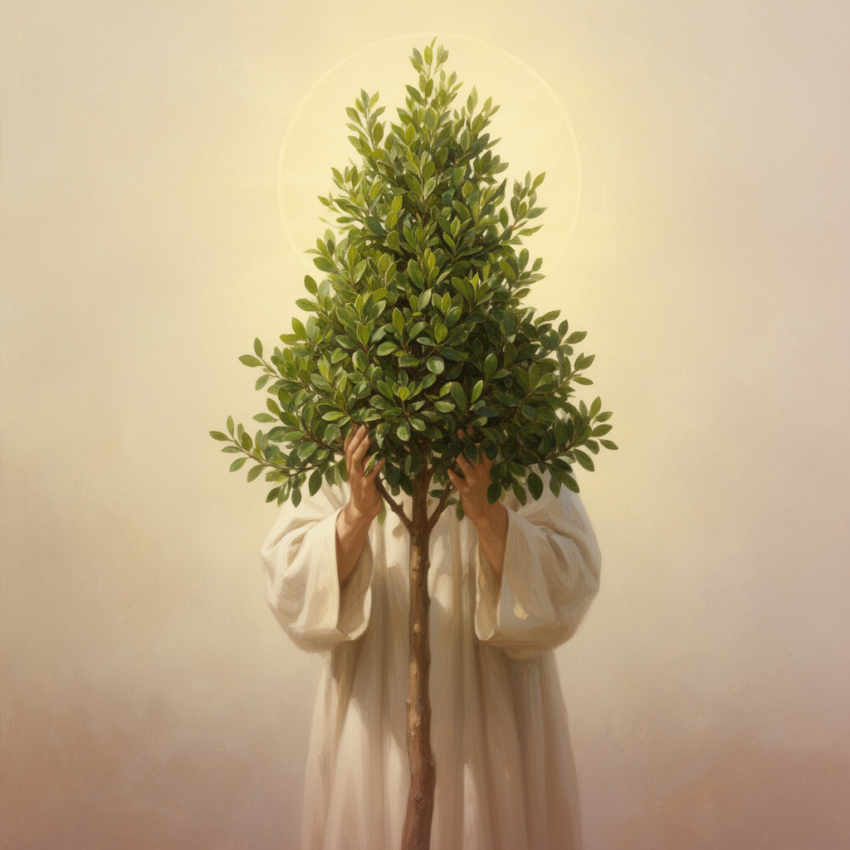
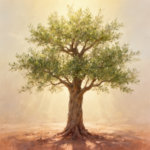
The Box Tree (Buxus sempervirens) is a dense, evergreen shrub or small tree reaching heights up to 6 meters. Its small, oval, leathery leaves are a glossy dark green, arranged alternately along woody stems. Tiny, inconspicuous flowers bloom in spring, followed by small, rounded, greenish-yellow capsules containing seeds. The plant's fine, dense foliage makes it ideal for shaping and topiary. It thrives in well-drained soils under full sun or partial shade and is tolerant of pruning, often cultivated as a hedge or ornamental shrub in Mediterranean climates.
Scientific Name
Buxus sempervirens
Hebrew/Greek Name
Hebrew: תבור (Tavor); Greek: Buxus
Common Names
Box Tree, Boxwood
Native Habitat
Native to the Mediterranean region, including parts of southern Europe, North Africa, and the Middle East. It prefers limestone or rocky soils, thriving in warm, dry summers with well-drained, calcareous soil. Its adaptability allows it to grow in various terrains, from coastal areas to inland hills.
First Biblical Mention
1 Kings 7:13 (King Solomon's construction project)
📖 Biblical References
Reference
Context
Significance
1 Kings 7:13-22
King Solomon’s construction of the Temple involved the use of various woods, including the box tree, for interior furnishings and fixtures.
The box tree’s mention signifies its valued status as an ornamental and functional plant in sacred structures, symbolizing beauty and durability.
Isaiah 41:19
God promises to plant trees including the cypress, fir, and box tree as symbols of divine provision and renewal.
Represents God’s ability to bring life, growth, and beauty even in desolate places.
In biblical symbolism, the box tree embodies resilience, humility, and enduring beauty. Its evergreen nature signifies eternal life and divine preservation. Because of its dense foliage and capacity for shaping, it also represents stability, trustworthiness, and divine order. In Scripture, it is associated with sacred spaces and the refinement of God's people, illustrating a life rooted in divine care that is both shielded and cultivated. Its use in temple construction underscores its sacred status, symbolizing spiritual endurance and the richness of divine blessings. As a plant that persists through seasons, it reminds believers of God's everlasting covenant and the promise of renewal amid adversity.
🏺 Cultural Uses in the Ancient World
Ancient Israelites and neighboring cultures valued the box tree for its durable wood, used in temple furnishings, fencing, and small containers. Its dense foliage provided excellent material for topiary and decorative hedges, often seen in royal and sacred gardens. Medicinally, some Near Eastern traditions used parts of the plant for treatments against ailments, although toxicity must be noted. Its small, compact nature made it ideal for ornamentation in religious and domestic settings. The wood's fine grain was also used in crafting writing tablets and small artifacts, emphasizing its importance in trade and craft compared to other native flora.
✡️ In Jewish Tradition
In Jewish tradition, the box tree symbolizes strength and protection, reflecting its use in sacred architecture and ritual objects. Its evergreen nature aligns with themes of eternal life and divine covenant. Historically, the plant is sometimes referenced in rabbinic texts as a symbol of humility and resilience, qualities esteemed in spiritual development. During certain festivals, the plant's imagery appears in liturgical poetry, emphasizing steadfastness in faith amidst adversity. Although not central to major festivals, it remains a subtle emblem of divine preservation and sacred beauty in Jewish thought.
Christian interpretation often views the box tree as a symbol of eternal life, divine stability, and spiritual endurance. Its evergreen leaves are seen as a reminder of Christ's everlasting covenant and the believer's hope of eternal life. Some early Christian writers associated it with spiritual renewal and humility. The plant's durability and beauty in the face of seasonal change serve as allegories for perseverance in faith and divine constancy amid trials, aligning with broader biblical themes of steadfastness and divine provision.
🔬 Modern Botanical Identification
Botanically identified as Buxus sempervirens, the common boxwood, it is well recognized among scholars. Alternative candidates like Buxus microphylla are also considered, especially in regions outside the Mediterranean. While there is widespread consensus on Buxus sempervirens as the primary candidate, some debate exists regarding ancient species or regional variants used historically. Its botanical characteristics match biblical descriptions of dense, evergreen foliage suitable for shaping and ornamentation.
🗺️ Where Is It Found Today?
Today, the box tree is widely cultivated across the Mediterranean, including Israel, Lebanon, Turkey, and southern European countries. It thrives in gardens, parks, and archaeological sites, particularly where traditional landscaping and historical reconstructions are maintained. In Israel, it is common in heritage gardens and religious sites due to its biblical associations.
❓ Frequently Asked Questions
Is the box tree the same as the holly or yew?
No, the box tree (Buxus sempervirens) is distinct from holly and yew. While all are evergreen, they belong to different botanical families with unique structural and botanical traits.
Why is the box tree considered sacred in biblical times?
Because of its durable, evergreen nature and use in temple construction, the box tree symbolized divine stability, endurance, and sacred beauty, making it a fitting emblem in religious contexts.
Can the box tree be toxic?
Yes, parts of the box tree contain alkaloids and toxins that can be harmful if ingested, so it should be handled with care, especially in medicinal or edible contexts.
✨ Did You Know?
The box tree's dense, fine-grained wood is highly resistant to pests and decay, making it ideal for carved artifacts dating back thousands of years. Archaeological evidence suggests its use in ancient temple furnishings long before biblical times, highlighting its longstanding sacred and functional importance.