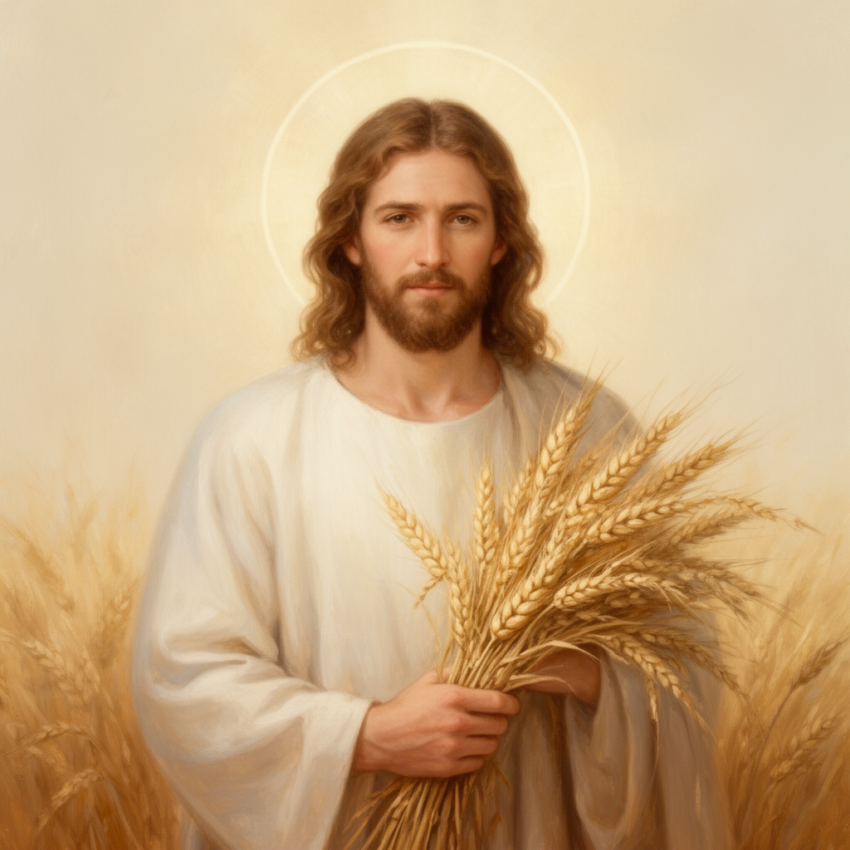
Wheat (Triticum aestivum) is a tall, annual cereal grass reaching 0.9 to 1.8 meters. It features slender, upright stems with narrow, long leaves. The plant produces spike-shaped inflorescences or heads, with golden or pale tan mature grains. Flowers are small and wind-pollinated. The grains are plump and encased in chaff, used for milling into flour. Preferring temperate climates, wheat thrives in well-drained loamy soils, requiring full sun. It is widely cultivated across temperate regions, especially in the Fertile Crescent, Europe, North America, and parts of Asia. Its growth cycle spans from germination in early spring to harvest in summer, depending on the variety and climate.
Scientific Name
Triticum aestivum
Hebrew/Greek Name
חִטָּה (chittah)
Common Names
Wheat, Bread Grain
Native Habitat
Native to the Fertile Crescent region, including the Levant and Mesopotamia, wheat grows naturally in temperate, well-drained soils. Historically, it has been cultivated extensively in Israel, Syria, Iraq, and surrounding areas, thriving in open plains and fertile valleys with moderate rainfall and full sunlight.
First Biblical Mention
Genesis 41:34-36, where Joseph advises storing wheat during Pharaoh’s dream interpretation.
📖 Biblical References
Reference
Context
Significance
Genesis 41:34-36
Joseph advises Pharaoh to store grain during abundance to prepare for famine.
Wheat represents economic stability and God’s provision in times of scarcity.
Matthew 13:24-30
Parable of the wheat and the tares, illustrating divine judgment and perseverance.
Wheat symbolizes righteousness, growth, and the eventual gathering of God’s people.
Exodus 9:32
Wheat and barley are mentioned in the context of the Egyptian plagues affecting crops.
Highlights wheat’s importance as a staple food and its vulnerability to divine judgment.
Wheat carries rich symbolic significance in Scripture, representing sustenance, God's provision, and spiritual growth. It signifies divine blessing and the idea of reaping what is sown. The process of harvesting wheat mirrors themes of judgment and salvation, emphasizing the importance of diligence and faithfulness. In Christian theology, wheat embodies purity and the faithful community—'the wheat' being gathered into God's barn, contrasting with the tares that will be separated. The bread made from wheat symbolizes Christ’s body, representing nourishment, sacrifice, and the sustenance of life. Overall, wheat functions as a profound metaphor for growth, divine blessing, and fulfillment of God's promises across biblical narratives.
🏺 Cultural Uses in the Ancient World
Ancient Israelites cultivated wheat extensively, using it as a primary staple for bread, an essential part of daily life and religious offerings. It was ground into flour for baking, used in ceremonial sacrifices, and traded as a valuable commodity. Wheat also held medicinal uses in traditional remedies and was involved in trade routes across the Near East. Its harvest festivals marked important agricultural seasons, reflecting gratitude and dependence on divine blessing. The process of threshing and milling was central to community life, symbolizing labor, provision, and divine blessing.
✡️ In Jewish Tradition
Wheat plays a vital role in Jewish festivals like Shavuot, when unleavened bread and wheat-derived foods are customary, celebrating the giving of the Torah and harvest blessings. The barley and wheat offerings were part of the Temple sacrifices, symbolizing sustenance and divine favor. Rabbinic literature references wheat as a symbol of righteousness and spiritual nourishment, emphasizing its importance in Sabbath meals and holiday rituals. The concept of 'rich harvest' is often linked to divine blessing and obedience to God's commandments.
Christianity sees wheat as a symbol of Christ’s body and the nourishment of believers. The Eucharist, or Holy Communion, uses bread made from wheat as a reminder of Christ’s sacrifice. Biblical images of wheat emphasize growth, purity, and divine provision, reinforcing themes of spiritual nourishment and eternal life. Christian art and liturgy frequently depict wheat and bread as symbols of Christ’s humility and the promise of salvation, underscoring its central role in faith and worship.
🔬 Modern Botanical Identification
Triticum aestivum (common wheat) is widely accepted as the biblical wheat. Scholars agree on this identification based on morphological and historical evidence. However, some suggest ancient varieties of emmer wheat (Triticum turgidum) could also be relevant, especially in archaeological contexts. The consensus leans toward modern bread wheat due to its global cultivation and known historical usage.
🗺️ Where Is It Found Today?
Today, wheat is extensively cultivated in Israel, especially in the Jordan Valley, Jezreel Valley, and surrounding plains. It is also grown throughout the Middle East, Southern Europe, North America, and parts of Asia, maintaining its status as a global staple crop. In Israel, modern agriculture continues to harvest wheat during the spring and early summer seasons.
❓ Frequently Asked Questions
What is the biblical significance of wheat?
Wheat in the Bible symbolizes divine provision, spiritual sustenance, and righteousness. It is used metaphorically to represent growth, harvest, and the blessings of God.
Are modern wheat varieties the same as biblical wheat?
Not exactly; biblical wheat was likely a form of emmer or older varieties of bread wheat. Today’s Triticum aestivum is the most common, but ancient varieties differ genetically and in appearance.
How was wheat used in ancient Israelite worship?
Wheat was integral to temple sacrifices, offerings, and festivals like Shavuot, symbolizing gratitude for God’s provision and spiritual growth. It was also used in ritual bread.
✨ Did You Know?
Archaeological excavations in the Levant have uncovered ancient wheat grains dating back to around 10,000 years ago, indicating early domestication. Remarkably, some ancient wheat preserved in jars reveals genetic traits different from modern wheat, offering insights into early agricultural practices and crop evolution.