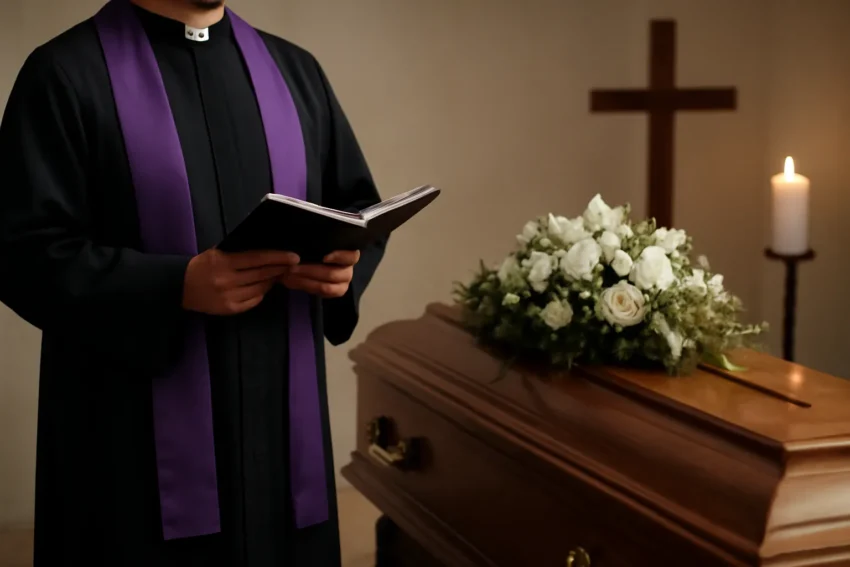
Christian Funeral Prayers: Comfort for Grieving Families
Grief in the wake of a loved one’s death is a deeply human experience, and the Christian tradition has long offered
prayers as a way to name sorrow, seek healing, and entrust the departed to the presence of God. Funeral prayers
are not merely ritual words; they are acts of hope, memory, and communal support. They invite families to pause, breathe,
and feel the presence of a faith that speaks of eternal life, God’s goodness, and a
future in which sorrow gives way to peace.
In this article, we explore varied forms of Christian funeral prayers, their purposes, and how
they can be used in different contexts—from the traditional liturgy of a church to intimate family gatherings at home.
You will find practical guidance, examples of wording, and reflections on how prayers can bring comfort, memory, and grace to grieving families, friends, and communities.
Foundations of Christian Funeral Prayers
Prayer at the end of life is rooted in the belief that God is present with us in both illness and death, and that
prayer opens a doorway to God’s grace, mercy, and eternal promises. Across denominations, funeral prayers often center on several shared themes:
Affirmation of faith in Christ’s victory over sin and death
Hope in eternal life and resurrection
Comfort for the bereaved through the Spirit and the community of faith
Communal remembrance of the deceased’s life and gifts
Petitions for the living—strength, guidance, and peace for those who mourn
Liturgical rhythm—movement from lament to praise, from petition to thanksgiving
The scope of funeral prayers often includes both prayers of lament that acknowledge grief and prayers of hope that look toward God’s fulfilled promises. The theological framing matters:
some traditions emphasize God’s sovereignty and justice, others highlight a personal relationship with Jesus Christ,
and still others center the work of the Holy Spirit in bringing comfort to the weary. Regardless of the exact emphasis, prayer at a funeral is a way of naming pain while also naming trust—trust that God has not abandoned
the living, and trust that the life of the deceased remains within God’s care.
For families planning a service, it can be helpful to think of funeral prayers as a spiritual map
that guides participants through a journey: recognition of loss, confession of faith, supplication for grace, and
confession of hope. This map helps to organize the service and to create space for authentic emotion without
diminishing the sacred character of the moment.
Common Prayers Used in Christian Funerals
Prayers of Comfort for the Bereaved
These prayers focus on the emotional and spiritual needs of those left behind. They acknowledge pain while
inviting trust in God’s presence and purposes. They can be read aloud by a pastor, a family member, or a friend,
and they can be adapted for personal delivery.
Seeking God’s presence: “God of all comfort, in this hour of sorrow we seek your presence. Be near us, we pray, and settle our hearts with your peace.”
Invitation to lament: “We bring our grief to you, O Lord, for you know the weeping that surrounds every room where love has been felt.”
Promise of companionship: “Even as we walk through the valley of the shadow, you are with us; your rod and your staff comfort us.”
Hope in community: “Surround us with friends and family; let your church be your hands, your arms, and your voice of reassurance.”
Prayers for the Deceased and Their Passage
Prayers in this category are offered for the soul of the departed, mindful of their life and God’s enduring mercy.
They may reference the journey beyond this life and the ultimate rest found in Christ.
Prayer for mercy and peace: “Merciful God, grant your servant a peaceful rest and a bright dawn of eternal life.”
Prayer of entrustment: “Into your hands, O Lord, we commend your servant, knowing that in your presence there is fullness of joy.”
Prayer for reunion: “May we, who remain, be united with your beloved in the great community of your saints, now and forever.”
In many traditions, the funeral rite is a coordinated liturgy with prescribed prayers, readings, and hymns.
These prayers provide a framework that can be deeply comforting, especially for families who value the historical
church’s rhythm and language.
Opening prayer that invites God’s blessing on the gathering and acknowledges loss.
Psalms and canticles that speak of God’s steadfast love and faithfulness through times of trouble.
Intercessory petitions for the bereaved, the departed, the church, the world, and leaders.
Committal prayers at the graveside or at the final disposition, entrusting the body to the earth and the soul to divine care.
Intercessory Prayers for Souls, Family, and Community
Intercession is the church speaking to God on behalf of others. In funeral contexts, intercessions often
include prayers for healing for the living, guidance for surviving family members, and a renewed sense of
mission and solidarity within the faith community.
Healing for the grieving: “Grant healing to those who mourn, that they may endure with courage and tenderness.”
Provision for practical needs: “Provide for those facing financial strain, housing insecurity, or caregiving burdens in the wake of loss.”
Strength for the church: “Strengthen the faith community to witness to hope in Christ, even in dark days.”
Across these forms, the language may differ, but the underlying purposes are unified: to honor God, to
remember the one who has died, and to support the living in their grief while pointing toward the
Christian conviction of eternal life and resurrection.
Practical Guidance for Families, Clergy, and Friends
Planning a funeral service or a memorial gathering can be daunting, especially when weariness makes
decision-making hard. The following guidance is designed to help you choose prayers that are meaningful,
inclusive, and faithful to your beliefs. It is not a rigid checklist, but a framework you can adapt.
Know your audience: Consider the church tradition, the cultural background of the deceased and mourners, and any
sensitivities around gendered language or inclusivity.
Balance lament and praise: A well-crafted service moves from honest lament to hopeful praise, ending in
gratitude for God’s faithfulness.
Use familiar language alongside fresh phrases: Combining cherished hymns, psalms, or readings with
contemporary prayers can be both comforting and accessible.
Provide variations for readers: If a family wants to read a prayer themselves, offer shorter or longer
options, as well as both traditional and contemporary wording.
Respect memory and dignity: Ensure prayers honor the character, values, and integrity of the person who
died, without reducing their life to a single attribute or stereotype.
Include the bereaved: Invite close family members to participate in the service through readings, prayers,
or vocal prayers; this involvement can be a powerful source of meaning and healing.
Prepare alternatives: Have a plan for times when a reader is not available, including printed liturgies or
projected screens that guide the congregation through the prayers.
Accessibility matters: Provide large-print text, audio options, and translations if needed, so that all can join
in the prayerful experience.
For pastors and worship leaders, it is helpful to have a repertoire of textual options—prayers of
confession, of mercy, of supplication, and of thanksgiving—that can be matched to the emotional arc of the service.
Practicing delivery, pacing, and voice can also help prayers land with sincerity and compassion.
Guidance for Personalization
If you are writing a prayer for a specific person or family, consider these questions:
What core values did the deceased embody, and how can the prayer honor those values?
What expressions of God’s character are most consoling in this moment (Father, Son, Spirit, Creator, Potter, Comforter)?
What hopes and burdens do the family carry, and how can prayer address both honestly and gently?
What language feels most authentic to the community gathered—ancient liturgical language or contemporary speech?
Variations Across Christian Denominations
Christian funeral prayers take on diverse shapes depending on denominational norms, theological emphases, and
cultural contexts. Understanding these variations can help families choose prayers that feel true to their roots
while remaining welcoming to guests who may come from different backgrounds.
Roman Catholic and Reformed Roman Rite Traditions
In Catholic practice, funeral prayers are often structured within the Requiem Mass or funeral liturgy,
emphasizing the Communion of the Saints, the Prayer for the Dead, and
the ultimate hope of the resurrection. Elements may include readings from scripture, the
Homily, the Sanctus, the Lord’s Prayer, the Prayer of the Faithful, and the final Commendation and Prayer at the tomb
or columbarium. Prayers such as the Prayer for the Dead and the Litany of the Saints provide a framework
that connects personal memory with the universal Church’s prayer.
Anglican and Episcopal funeral prayers often blend formal liturgy with personal testimonies and pastoral
preface. The Book of Common Prayer and modern liturgies provide a balanced approach—creedal statements, psalmody, and prayers for comfort, hope, and the peace of God. The service may include a
committal rite that entrusts the body to the earth and celebrates the promise of resurrection.
Protestant and Evangelical Traditions
In many Protestant and Evangelical communities, funeral prayers may be simpler and more conversational. They
often emphasize a personal relationship with Jesus Christ, salvation by grace, and the assurance of eternal life.
The prayers may be interspersed with preaching, testimonies, and hymns, creating a rhythm that resonates with
congregational worship while preserving a sense of sacred solemnity.
Eastern Orthodox and Oriental Orthodox Traditions
Orthodox funeral prayers are deeply liturgical and steeped in tradition. They often include a sequence of
hymns, kontakion and troparion, and prayers for the repose of the departed. The language is reverent and
the theology centers on the Church as a communion that transcends death, underscoring the belief in the
resurrection of the dead and the life of the age to come.
Other Contexts
Some communities practice a blended approach, honoring the deceased’s faith tradition while welcoming
guests from diverse backgrounds. Multifaith or interdenominational services may incorporate a variety of prayers
from different theological streams, always with the guiding aim of respect, grace,
and pastoral care.
Scriptural Foundations for Funeral Prayers
The Bible offers a rich reservoir of verses, prayers, and laments that inform Christian funeral prayers. The choice of
scripture can set the tone for healing, hope, and fidelity to God’s promises. The following passages are frequently
cited in funeral contexts:
Psalm 23—A shepherd’s portrait of guidance, presence, and comfort in the valley of shadow.
Psalm 46—A declaration of God as shelter and strength in times of upheaval.
Psalm 90:12—A prayer for wisdom to number our days and gain a heart of wisdom.
John 14:1-3—Christ’s words of preparation and the promise of a place in the Father’s house.
1 Thessalonians 4:13-18—A concise teaching on the resurrection and the hope of reunion in Christ.
Romans 8:38-39—A powerful reminder that nothing can separate believers from the love of God in Christ Jesus.
2 Corinthians 1:3-4—Blessed be the God of all comfort who consoles us in affliction.
Revelation 21:4—The promise that God will wipe away every tear and there shall be no more death or sorrow.
Beyond these well-known passages, many families choose readings that were meaningful to the deceased or that reflect
their unique spiritual journey. The key is to select texts that resonate with trust in God’s sovereignty, the
compassion of Christ, and the ongoing work of the Holy Spirit in comforting the afflicted.
When incorporating Scripture into prayers, consider brevity and clarity. Short readings
can be followed by a prayer of response, allowing listeners to reflect and participate without becoming overwhelmed
by too much length. The connection between the Word and prayer is a powerful way to anchor the service in Scripture’s
authority while inviting personal encounter with God.
Sample Prayers and Wording You Can Adapt
Sample Prayer for the Bereaved”
O God of all comfort, we come to you with heavy hearts, seeking your peace that passes understanding.
In the midst of our sorrow, help us to know that you are near. Remind us that death does not have the final word,
for you are the author of life. May your grace be sufficient for today, and may your love surround every person who
grieves. We thank you for the life of our beloved [Name], for the moments we shared, and for the legacy of love and
faith they left behind. May we hold fast to your promises and find strength in the days ahead. Through Jesus Christ our
Lord, Amen.
Merciful God, receive into your mercy the soul of your servant, [Name], whom you have called from this life.
grant them rest in your eternal peace, and grant us who mourn the grace to entrust them into your hands with a
hopeful heart. May they rejoice forever in your presence, surrounded by the light that shines from your throne. Teach
us to live in a manner worthy of your calling, to love one another, and to persevere in faith until we meet again
in the resurrection of life. Through Jesus Christ our Lord, Amen.
Holy God, hear our prayers for the grieving families and friends who carry sorrow. Grant them healing,
patience, and courage. Be their shelter in the storm and their rock of refuge. We also lift up those who caretaker
for the dying, the medical teams who offer compassion, and the pastors who walk with them through grief. May your
Spirit bring consolation, may your church be a source of practical help and spiritual companionship, and may your
grace transform mourning into a renewed trust in your promises. Through Christ our Lord, Amen.
Sample Communion-Themed Prayer
Gracious Lord, as we share in this time of lament, we also share in the table of your grace. Nourish us
with your presence, remind us of the life that is ours in Christ, and strengthen us for the days ahead. May the
memory of [Name] be a beacon of faith, a sign of your mercy, and a call to love one another as you have loved us.
In the name of Jesus, the Living Bread, we pray. Amen.
These samples are designed to be starting points. Families and congregations can adapt wording to reflect
personality, culture, and theological emphasis, while preserving the core themes of comfort, remembrance,
and hopeful faith.
Accessibility and Sensitivity in Funeral Prayers
In planning or writing funeral prayers, it is essential to consider accessibility and sensitivity. Some people
may prefer traditional language, while others respond to contemporary phrasing. Some concerns to keep in mind:
Language: Use clear, respectful language that honors diverse spiritual backgrounds within the family and community.
Inclusive imagery: Where appropriate, use imagery that respects different experiences of faith and loss.
Quiet moments: Build space for silence and personal prayer between readings and prayers.
Translations: Provide translations if the service is multicultural or multilingual.
Pastoral sensitivity: Be attentive to those who are newly bereaved or who may have complicated relationships with faith tradition.
Conclusion: The Living Legacy of Christian Funeral Prayers
Christian funeral prayers are more than words spoken at a difficult moment—they are an invitation to
encounter the enduring presence of God, a means of naming grief honestly, and a conduit for the community’s
support and shared faith. In their best forms, these prayers carry a double breath of sorrow and
hope: they acknowledge the pain of loss while pointing toward the reality of God’s steadfast love, the
resurrection, and the promise that life, though changed, remains within God’s care.
For families facing the days ahead, the choice of prayers can become a lasting part of a healing rhythm:
the comfort of a familiar line, the accountability of a shared confession of faith, the gentle call to live
into the memory of the deceased with renewed purpose. Clergy, family members, and friends can collaborate
to craft a service that honors the person who died, serves the grieving, and points all present toward the
God who is the source of all mercy, grace, and peace. May these prayers be a harbor in the storm and a doorway
into a future shaped by love, faith, and the sure hope of life beyond death.