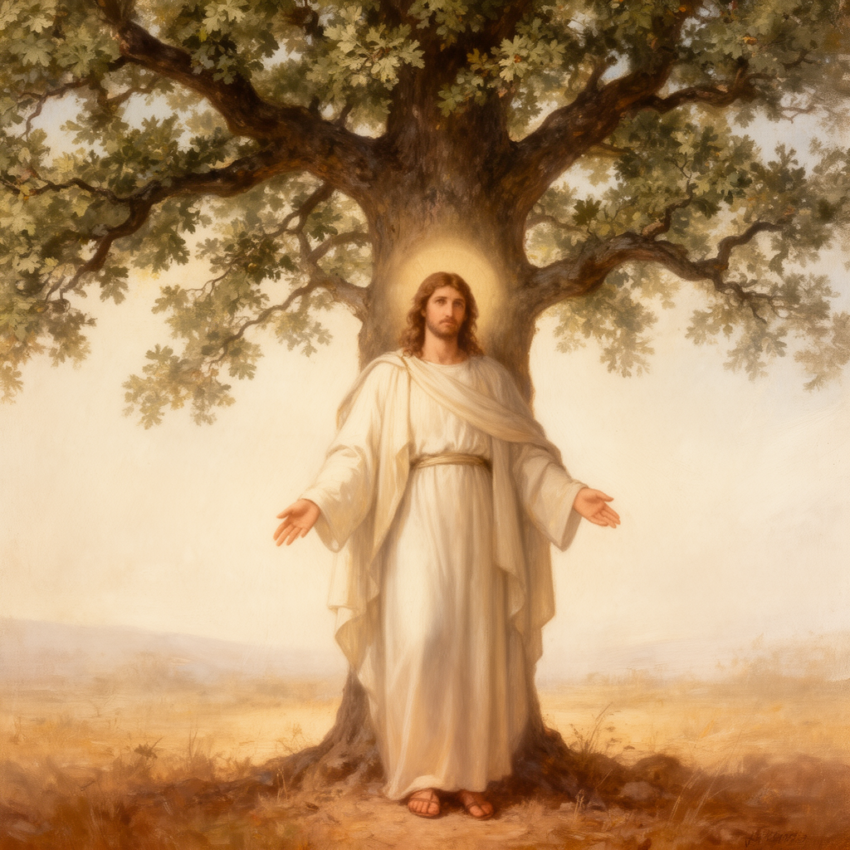
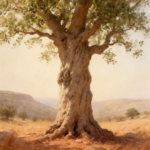
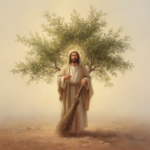
The Oak of Mamre was likely a large, broad-crowned deciduous oak tree, possibly a cork oak or Mediterranean oak species. It featured a massive trunk, reaching several meters in circumference, with wide-spreading branches providing extensive shade. Its leaves were lobed, dark green, and leathery, typical of Mediterranean oaks. The tree bore acorn-like fruits, which were a vital food source. Growing conditions include well-drained, rocky soils in warm temperate climates, thriving in areas with hot, dry summers and mild, wet winters. Such oaks are resilient, long-lived, and symbolically associated with strength and endurance.
Scientific Name
Quercus calliprinus (Debated; candidates include Quercus ilex, Quercus brennifolia)
Hebrew/Greek Name
Hebrew: אֵלָה (Eilah), Greek: δρύς (drys)
Common Names
Oak, Quercus, Giant Oak
Native Habitat
Native to the Levant region, particularly Israel, Lebanon, and surrounding areas, the oak thrives in Mediterranean climates with rocky, limestone soils. It prefers open woodlands and foothills, adapting to arid conditions and contributing to the region's ecological diversity.
First Biblical Mention
Genesis 13:18
📖 Biblical References
Reference
Context
Significance
Genesis 13:18
Abraham resided near the large oak trees of Mamre, where he received divine visitors.
The oak symbolizes stability, divine presence, and hospitality, serving as a landmark for God’s covenant promises.
Genesis 18:1-15
God appears to Abraham by the great trees of Mamre during a pivotal divine visitation.
The tree is a sacred site representing God’s covenant and divine-human encounter.
Throughout Scripture, the oak of Mamre signifies strength, endurance, and divine blessing. Its sturdy nature reflects God's eternal covenant with His people. The tree's shade symbolizes protection and divine refuge, providing a metaphor for spiritual sustenance and steadfast faith. In biblical imagery, oaks often represent righteousness and divine presence, emphasizing the stability of God's promises. The oak’s longevity mirrors God's eternal covenant, and its rootedness symbolizes faithfulness amidst life's tempests. This plant embodies spiritual resilience, divine authority, and hope rooted in divine promises, making it a poignant symbol in biblical theology.
🏺 Cultural Uses in the Ancient World
Ancient Israelites valued oak wood for construction, including placing beams in temples and homes due to its durability. The acorns served as a staple food or livestock feed during times of scarcity. The tree also held ritual significance, often associated with sacred sites. Its wood and leaves were used medicinally, for example, as astringents and anti-inflammatory remedies. Oaks contributed to trade, shaping local economies, and the shade provided comfort in communal gatherings and religious rites, emphasizing their cultural importance in everyday life and spiritual customs.
✡️ In Jewish Tradition
The oak of Mamre is revered in Jewish tradition as a place of divine revelation and hospitality, symbolizing steadfastness and divine protection. Rabbis often cite the site as a model of faith and divine encounter, celebrating Abraham’s kindness under the oaks. Medieval Jewish texts refer to the tree as a symbol of strength and stability, aligning it with virtues of righteousness and divine covenant. The oak’s significance extends to Talmudic stories emphasizing community and devotion rooted in sacred spaces like Mamre.
Christians view the oak of Mamre as a symbol of faithfulness, divine strength, and God's everlasting covenant. It represents the steadfastness of God's promises and the shelter provided by faith in Christ. The tree's imagery is used in sermons and hymns to depict spiritual endurance, divine providence, and the sacredness of divine-human encounters, echoing Abraham’s hospitality. The oak’s enduring presence in biblical history underscores themes of hope, stability, and divine grace in Christian theology.
🔬 Modern Botanical Identification
Most scholars associate the Oak of Mamre with a species of Mediterranean oak, possibly Quercus calliprinus or closely related species like Quercus ilex. While definitive identification remains debated due to biblical sparse descriptions, the prominent, hardy oak species endemic to the region are considered the most likely candidates. The tree’s ancient presence and ecological characteristics support this identification, though no single species has unanimous scholarly consensus.
🗺️ Where Is It Found Today?
Today, suitable oak species grow wild in the limestone hills and wooded regions of Israel, particularly around Jerusalem, Hebron, and the wider Levant. Remnants of ancient oaks may still be present in these areas, and cultivated specimens are found in botanical gardens and parks dedicated to biblical flora. The landscape around Mamre historically retains some native oak populations, reflecting its ancient natural habitat.
❓ Frequently Asked Questions
Is the Oak of Mamre still standing today?
There are no confirmed ancient oaks from biblical times still standing today, but wild and cultivated oak species in the region continue to symbolize the historical and spiritual significance of Mamre.
What type of oak is most likely the biblical oak?
Scholars generally suggest Mediterranean species such as Quercus calliprinus or Quercus ilex due to their historical presence in the region, though definitive identification remains debated.
What does the oak symbolize in biblical stories?
The oak symbolizes strength, endurance, divine stability, and divine presence, often serving as a sacred place for divine encounters and covenants.
✨ Did You Know?
Ancient oak trees have been found to live over 1,000 years, making them among the longest-living non-clonal organisms on earth. Archaeological excavations in Israel suggest that oaks were highly valued in biblical times not only spiritually but also economically and practically for their robust timber.