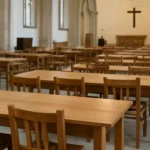
In every house of worship, the church table is more than a utilitarian surface. It is a strategic element of the sacred space, shaped by liturgy, architectural history, and the practical needs of a congregation. The table provides a stage for proclamation, a surface for sacramental rites, and a place for hosting fellowship gatherings. When selecting a sanctuary table or a chapel table, congregations seek a balance of durability, aesthetic appeal, and versatility. It must withstand heavy use, adapt to changing service formats, and complement the church’s design language—from traditional carved wood to contemporary minimalist interiors.
This article explores durable and stylish options for church tables, including altar tables, pulpits, lecterns, communion tables, and multipurpose surfaces. We will discuss materials, finishes, design styles, functional considerations, and procurement guidance to help church leaders, facility managers, and designers make informed choices that serve worship and community life for years to come.
Durable Materials for Church Tables
The backbone of any church table is its material. The choice determines longevity, maintenance needs, and how well the piece weathers active use, temperature fluctuations, and environmental conditions within sacred spaces.
Wood: Timeless Strength and Character
Wood remains the most common material for altar tables and lectern surfaces due to its warmth, grain, and ability to take a high polish or a matte finish. Durable hardwoods such as oak, ash, maple, and mahogany offer superior resistance to denting and wear. For a traditional sanctuary, oak with a rich grain communicates permanence and reverence, while mahogany can deliver a deeper, ceremonial tone.
Solid hardwood tables provide enduring strength but require regular maintenance to preserve the finish.
Engineered wood with a sturdy veneer can offer cost efficiencies and stability against humidity changes, though construction quality matters for long-term durability.
Consider solid plank construction for altar desks or pulpit bases to minimize creaking and improve stability.
Metal: Modern Durability and Sleek Lines
Metal components—especially steel or powder-coated aluminum—bring durability and a contemporary aesthetic. A steel-framed church table or lectern can resist warping and offer lighter weight for portable configurations. Powder coatings in matte or satin finishes improve resilience against fingerprints and scratches, while maintaining a presentable surface for daily use.
Metal tables are ideal for multipurpose spaces where modularity and transportability are priorities.
Combination pieces, with a hardwood top and metal base, merge warmth with industrial strength and can harmonize with varied architectural styles.
Solid metal surfaces are less common for main sacramental tables due to traditional aesthetics, but metal-framed lecterns and side tables are popular in contemporary sanctuaries.
Stone, Concrete, and Composite Surfaces
Natural stone and engineered composites offer exceptional durability and a sense of permanence. Granite, quartz, and cast stone provide dense, easy-to-clean surfaces that resist staining. For a modern temple or a historic church restoration, a stone or stone-look top can create a striking focal point for worship.
Stone surfaces typically require sealing and careful maintenance to prevent stains from candles, wax, and oils.
Composite materials can replicate the look of stone or timber while offering uniform density and predictable wear characteristics.
Where acoustics matter, the weight of stone can anchor a design, reducing vibration and movement during large services.
Sustainable and Reclaimed Materials
An increasing number of churches prioritize sustainability when selecting a pulpit or altar table. Reclaimed timber from historical buildings or responsibly harvested sources can imbue a space with narrative while reducing environmental impact.
Reclaimed materials may carry unique patinas that enhance the spiritual ambience of the sanctuary.
Durability is often excellent with well-constructed reclaimed pieces, provided joints and finishes are preserved.
Design Styles and Aesthetic Options
The design language of the church table should harmonize with architectural cues and the liturgical calendar. Whether the space calls for traditional carved wood or minimalist modern lines, the table should reinforce the mood of worship and the clarity of the service.
Traditional and Carved Wood
For centuries, traditional church tables have featured carved details, beveled edges, and gracefully bowed legs. These elements can convey reverence and continuity with the past. If your sanctuary preserves historical integrity, consider restorations or reproductions of classic designs. In these settings, a solid oak altar table or a paneled lectern with subtle moldings can complement ornate choirs and stained glass.
Carved motifs should be purposeful and free of sharp protrusions that could snag fabrics or robes.
Joinery is critical; look for mortise-and-tenon or dowel joinery that resists loosening over time.
Finishes should be durable and easy to refinish; avoid coatings that appear stiff or overly glossy in a traditional nave.
Modern and Minimalist
Contemporary sanctuaries often embrace clean lines, restrained profiles, and modular systems. A modern church table can emphasize function over ornament, with concealed cable management, adjustable heights, and modular tops that adapt to teaching, conference, and communion layouts.
Glass or high-gloss laminates can create light-reflective surfaces that brighten the space; pair with warm wood accents to avoid cold aesthetics.
Floating or cantilevered tops can give a sense of openness while maintaining structural integrity.
Modularity supports evolving worship styles, allowing clergy to reconfigure the reading table or pulpit to suit a given service.
Rustic and Reclaimed Aesthetics
For churches seeking a grounded, welcoming atmosphere, rustic or farmhouse-inspired fellowship tables and sanctuary tables can be effective. Reclaimed beams, live-edge slabs, and natural finishes celebrate imperfect beauty and environmental stewardship.
Live-edge or chamfered edges can add character without sacrificing practicality.
Rough-sawn textures may require careful finishing to prevent splinters or surface wear.
Rustic pieces often pair well with warm lighting, textiles, and handcrafted pews or chairs.
Heritage and Statement Pieces
Some churches opt for statement pieces that become iconic within a community—an heirloom-quality altar desk, a tall pulpit with symbolic carvings, or a podium that becomes a focal point for both speakers and choirs. When designed with care, these pieces respect tradition while accommodating modern functionality.
Statement pieces should not overwhelm the space or obscure sightlines for congregants.
Consider accessibility and line-of-sight when placing a tall pulpit or elevated lectern.
Use finishes that resist wax, candle soot, and finger-contact wear without requiring frequent refinishing.
Functional Considerations: How a Church Table Supports Worship and Community
Beyond aesthetics, a church table must fulfill practical needs. The following considerations help ensure that a church table supports worship, teaching, administration, and hospitality.
Size, Proportions, and Sightlines
Proportions matter: a table that is too tall or too deep can hinder a speaker, while an undersized surface may fail to accommodate liturgical objects or teaching aids. A commonly effective baseline is a height near 42 inches (106 cm) for podiums, with tops that accommodate large Bibles, notes, and a microphone system. Altars and communion tables often sit slightly lower, allowing comfortable kneeling or standing during rites.
For adult congregations, plan for a wide top that can hold chalices, bread, candles, and service books.
In multipurpose spaces, consider adjustable-height or modular tops to reconfigure for lectures, meals, or worship.
Ensure edge profiles reduce wear on fabrics and robes.
Mobility, Modularity, and Storage
In spaces that host a variety of events—sermons, weddings, conferences, youth programs—mobility is a key consideration. Some portable church tables feature lightweight construction with locking casters or fold-away designs. Others are modular, allowing a single footprint to be extended or reconfigured for a larger gathering.
Locking wheels improve stability on uneven floors and during processions.
Modular tops with integrated hinges or drop leaves support rapid reconfiguration.
Under-table storage drawers or cabinets can house mic stands, cables, and service materials, reducing clutter in the sanctuary.
Surface Finish and Maintenance
The finish protects the surface from wax, candles, spills, and daily use. Durable finishes include polyurethane, UV-cured varnishes, and hard-wax oils, depending on the desired look and level of maintenance. When choosing a finish, consider wax and candle exposure near the altar or communion table, as well as the frequency of cleaning in high-traffic spaces.
Oil finishes emphasize the natural beauty of wood and can be easier to repair locally, but may require periodic reapplication.
Varnishes provide strong surface protection but can dull a warm wood tone over time if not refreshed.
Avoid delicate lacquers on surfaces subject to heavy use; instead, opt for durable, easy-to-clean coatings.
Accessibility and Inclusion
A well-designed church table respects accessibility. Heights, leg clearance, and reach ranges matter for people using wheelchairs, those with mobility challenges, and worship leaders who require accessible interfaces for microphones and devices.
Ensure clear knee space under the table surface for wheelchair users.
Provide cable management that is safely covered and accessible to technicians but not a tripping hazard.
Consider assistive technology readiness—spaces for lecterns or podiums that accommodate hearing loops, wireless microphones, and visual-display devices.
Specialized Church Tables: Uses and Configurations
Different liturgical and functional roles require different kinds of tables. Here are common configurations and their key characteristics.
Altar Table and Sanctuary Tables
The altar table or sanctuary table is central to sacramental rites in many denominations. The design often emphasizes solemnity and permanence, with broad surfaces to hold chalices, communion elements, and liturgical books. In some traditions, the altar is raised on a platform, while in others it sits at floor level for easier visibility during ceremonies.
Altar tables may be fixed or modular; modular options allow quick rehearsal setups or stage reconfiguration.
Surface treatments should be non-glare and stain-resistant given candlelight and ritual candles used in many services.
Size should accommodate a full set of sacramental items and ceremonial cloths without appearing crowded.
Pulpit, Lectern, and Reading Tables
The pulpit or lectern is the urban voice of the service—where sermons, readings, and sermons notes are presented. Pulpits often incorporate integrated sound equipment, microphone mounts, and cable management to keep the surface clean and the focus on the speaker.
Consider sightlines: the pulpit should not obscure the speaker from the congregation.
Mic integration and ergonomic height contribute to comfortable, confident delivery.
Material choices influence acoustics—wood surfaces can yield warmer tones; metal can emphasize a modern aesthetic.
For sacraments, the communion table is both symbolic and functional. It should support chalices, bread, wine, purificators, and linens with accessibility for clergy and assisting ministers. In some churches, the ordinance table doubles as a fellowship table for potlucks and community meals, underscoring hospitality.
Ensure a stable top and a surface finish that tolerates wax drips and liquids.
Consider a removable or easily cleanable cloth cover for liturgical seasons that require distinct colors.
Storage beneath the table can house linens, purificators, and ceremonial utensils for quick setup.
Chancel, Narthex, and Fellowship Tables
Many churches use fellowship tables in the narthex or fellowship hall to welcome guests, host coffee hours, and support church events. In larger sanctuaries, a dedicated chancel table aligns with the choir loft, organ console, and seating arrangement to facilitate processions and coordinated movement.
Fellowship tables should be easy to clean and resist heavy daily use during social events.
Consider modular designs that can be rearranged into banquet layouts or lectures.
In large halls, color and finish can echo the church’s branding while remaining scripture-forward in tone.
Practical Guidance for Selecting and Maintaining Church Tables
Selecting the right church table involves understanding needs, space, and budget. The following practical guidance helps organizations navigate procurement, installation, and ongoing care.
Determining Your Requirements
Begin with a needs assessment that considers:
Current and anticipated usage: worship services, weddings, lectures, meals, and community events.
Available space: dimensions, door widths, and any obstructions that affect placement and movement.
Preferred aesthetics: classic, contemporary, or a blend that harmonizes with existing furnishings.
Maintenance expectations: finishes, coatings, and frequency of refinishing or cleaning.
Budgeting and Procurement
While durability and design are important, practical budgeting ensures longevity. A higher upfront investment in sturdy construction and quality finishes often pays dividends in lower maintenance and fewer replacements.
Consider total cost of ownership, including installation, warranties, and anticipated replacements.
Request samples or finish swatches to evaluate how the surface looks in your lighting conditions.
Ask about lead times, assembly requirements, and whether the vendor offers on-site installation and adjustments.
Vendor Evaluation: Quality, Warranty, and Support
When evaluating vendors for a sanctuary table or altar table, prioritize durability, craftsmanship, and warranty coverage.
Inquire about material certifications (eg, FSC, recycled content) and origin of components.
Request evidence of durability—testimonials, product data sheets, and maintenance guidelines.
Check after-sales support, including repair services, refinishing, and replacement parts for hardware or finishes.
Maintenance, Cleaning, and Longevity
A maintenance plan helps preserve the look and function of the church table across decades.
Establish a routine for dusting, wax or oil application, and periodic refinishing as recommended by the manufacturer.
Use protective pads or runners on the surface for frequent use during meals or seasonal activities.
Protect edges from impact and wax buildup near candles and ritual oils.
Inspect joints and fasteners regularly; tighten or reassemble as necessary to maintain stability.
Color, Finishes, and Branding
Finishes can subtly reinforce the church’s brand and liturgical color cycles. A neutral finish with occasional seasonal accents can be effective for a space that hosts diverse events.
Choose finishes that are compatible with candlelight and stage lighting to avoid glare or dullness.
Consider branding opportunities with subtle inlay or engraving on a discreet panel, if appropriate for the space and community.
Non-toxic and low-VOC finishes are a healthier option for indoor environments with congregants and performers.
Case Studies and Use Scenarios: How Churches Choose and Use Tables
Real-world scenarios illustrate how church tables adapt to diverse worship styles and spaces. The following examples outline different church configurations and the reasoning behind design choices.
Case Study 1: A Historic Sanctuary with Traditional Interiors
A heritage building with carved pews, stained glass, and a stone altar requires a solid oak altar table with classic lines. The church prioritizes a high-quality finish that respects original woodwork, with a tabletop size large enough for ceremonial vessels. The lectern uses traditional moldings and a wood finish that matches the altar for visual coherence. The design emphasizes permanence, presence, and reverence.
Material: Solid oak with hand-applied oil finish.
Finish: Durable, non-glare matte with wax-resistant properties.
Configuration: Fixed altar table with integrated candle stands and space for a liturgical book.
Case Study 2: A Contemporary Multiuse Facility
A church that hosts contemporary worship, concerts, and community events needs flexibility. A modular, height-adjustable lectern and a multi-purpose communion table with removable sections enables quick transformations from worship to conference use. The aesthetic blends timber tones with restrained metal detailing to align with modern architecture.
Material: Engineered wood top with a powder-coated metal base.
Features: Height adjustment, cable management, and lockable storage beneath the top.
Use: Reconfigurable for seminars, coffee hours, and seating arrangements.
Case Study 3: A Small Rural Congregation Emphasizing Sustainability
A small rural church prioritizes sustainability and community crafts. They commission a reclaimed wood altar desk with a simple, sturdy form and dovetail joinery. A local craftsman provides maintenance guidance, ensuring the piece remains functional and meaningful for generations.
Material: Reclaimed hardwood with protective finish suitable for candlelight reflections.
Manufacturing: Local artisan workshop with a focus on longevity and repairability.
Impact: Reduced environmental footprint and strengthened community connections.
Maintenance and Longevity: Extending the Life of Your Church Tables
Proper care not only preserves beauty but also ensures safety and usability for countless services. The table is a workhorse; maintenance routines should reflect its central role in worship, teaching, and hospitality.
Routine Care and Cleaning
Establish a routine that accommodates the material and finish of the specific piece.
Dust the surface with a soft, lint-free cloth after events to prevent wax buildup from candles or incense.
Use pH-balanced cleaners appropriate to the finish; avoid harsh solvents that may damage wood or laminates.
Inspect hardware and adjust as needed to maintain stability and level surfaces.
Seasonal and Long-Term Maintenance
Seasonal changes can affect wood and metal differently. Plan for periodic refinishing, re-waxing, or re-sealing if the finish shows wear.
Annual check-ins for joints and structural integrity help prevent unexpected failures.
When moving or reconfiguring modular pieces, protect edges with felt pads to avoid scuffs.
Store removable components in a dry area to prevent warping or rust on hardware.
Safety Considerations During Use
Ensure that all tables comply with current safety standards for public assembly spaces. This includes slip-resistant surfaces, stable bases, and secure cable management for electronic equipment.
Secure loose cords and power strips to prevent tripping hazards during services.
Use flame-resistant or candle-appropriate materials near altar surfaces where candles are lit.
Inspect table edges for sharp corners or protrusions that could injure participants.
Sustainability and Ethical Sourcing: Making Responsible Choices
The ethics of material sourcing have become increasingly important for congregations. A sustainable approach to church furniture aligns with broader ministry goals of stewardship, care for creation, and community resilience.
Certified Wood and Responsible Sourcing
Choosing FSC-certified or PEFC-certified wood supports responsible forest management and ensures a transparent supply chain.
Ask manufacturers to provide certifications or statements of origin for timber used in altar or pulpit surfaces.
Prefer suppliers who can trace the material through the supply chain to minimize risks of illegal logging or unethical practices.
Low-Impact Finishes and Healthy Interiors
Finishes with low volatile organic compounds (VOCs) create healthier indoor environments, particularly in spaces with long periods of occupancy like churches.
Choose water-based or low-VOC finishes when possible.
In sanctuaries with candlelight and incense, consider finishes that are resistant to wax transfer and easy to clean.
Local Craftsmanship and Community Impact
Commissioning pieces from local artisans or small workshops can support the local economy and foster a sense of ownership within the congregation. This approach often yields unique, durable pieces with a story that resonates through generations.
Local builds can shorten lead times and enable collaborative design processes with church committees.
Custom pieces can incorporate insignia, crests, or symbols meaningful to the church’s identity.
Implementation: Planning, Installation, and Long-Term Care
Bringing new church tables into a space requires careful planning. From architectural integration to volunteer training on maintenance, a well-executed plan ensures the furniture serves worship in meaningful ways for years to come.
Planning and Space Assessment
Before ordering, conduct a thorough space assessment:
Measure room dimensions, door widths, and aisle clearance to ensure feasible delivery and installation.
Consider the line-of-sight for the congregation, ensuring that all seating has a clear view of the pulpit, lectern, and altar.
Assess power and data needs for lectern-mounted mics, screens, and presentation devices.
Delivery, Assembly, and On-Site Setup
The logistics of installation are as important as the design itself. A smooth process reduces disruption to ongoing worship programs.
Verify assembly requirements, including tools, hardware, and staff or contractor availability.
Request a pre-installation site survey to identify potential obstacles and ensure level seating and tables.
Confirm post-installation adjustments and a brief training session for maintenance staff and volunteers.
Future-Proofing: Adaptability and Upgrades
Churches evolve over time—liturgical calendars, staffing, and programs change. Selecting adaptable and modular pieces helps ensure the furniture remains relevant as needs shift.
Choose pieces with modular components that can be reconfigured for different services.
Plan for upgrade paths, such as upgrading mic systems, cable channels, or data ports without replacing the entire table.
Document assembly instructions and maintenance procedures for continuity across leadership transitions.
Conclusion: The Lasting Value of Durable and Stylish Church Tables
The church table is a steadfast ally in worship, teaching, and community life. By selecting materials that balance durability with beauty, and by prioritizing functional flexibility, congregations create spaces that invite reflection, promote hospitality, and adapt to the evolving needs of their communities. Whether you choose a classic altar table with heritage warmth, a sleek modular lectern for contemporary services, or a durable communion table designed for frequent use, the right surface helps shepherd a faithful experience for generations to come.
In the end, the best church table is not just a piece of furniture but a vehicle for worship, a durable platform for ministry, and a symbol of hospitality. It supports the liturgy, preserves the reverence of sacred rites, and aligns with the values of the faith community—stewardship, craftsmanship, and care for creation. By considering materials, design, maintenance, and adaptability, churches can invest in beautifully durable surfaces that honor tradition while embracing the needs of today’s worshippers.