Introduction: The Catholic Rosary as a Living Devotion
The Catholic rosary is one of the most recognizable and enduring devotions in the Christian tradition. It is more than a ritual of counting prayers; it is a structured path of meditation that guides the practitioner through the central mysteries of the Faith. Through the rhythm of beads and the cadence of prayers, the rosary invites quiet reflection on the life of Jesus Christ and the role of Mary the Mother of God in salvation history. The purpose of this article is to offer a comprehensive guide—to explain what a rosary is, how it is structured, and why it matters; to explore the different styles or variations of Catholic rosaries; and to illuminate the meaning behind the beads, the prayers, and the mysteries that frame this ancient Catholic devotion.
Readers approaching the rosary for the first time will often encounter a lot of terminology: Apostles’ Creed, Our Father, Hail Mary, Glory Be, Fatima Prayer, and the four sets of mysteries—Joyful, Sorrowful, Glorious, and Luminous. For longtime practitioners, the rosary remains a living practice—one that can be adapted to personal devotion, family prayer, or communal worship. In either case, the rosary offers a concrete way to engage in contemplative prayer, to deepen Marian devotion, and to cultivate a steady habit of prayer that can accompany daily life.
What is a Rosary? Defining the Practice and Its Elements
A rosary is a specific arrangement of beads used to count prayers as they are said aloud or silently. The standard Catholic rosary is built around a sequence of five decades of prayer, plus introductory prayers and optional concluding prayers. The beads themselves provide a tactile rhythm that helps the believer stay focused and present during prayer.
The essential components of a traditional Catholic rosary include:
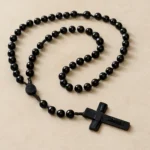
Crucifix: The starting point for the devotion, where the Apostles’ Creed is professed and the Sign of the Cross is made.
Large beads: Beads used to recite Our Father (the first bead before each decade is typically a larger bead).
Small beads: Beads used to recite Hail Mary prayers (ten per decade).
Centerpiece: A medallion or cross that anchors the rosary and separates the crucifix from the rest of the prayer beads.
Decades: Sets of ten small beads, corresponding to the ten Hail Mary prayers in each cycle.
Mysteries: Themed reflections associated with each set of prayers, guiding meditation on key events in Jesus’ life and Mary’s role.
While the iconography and arrangement can vary, the core practice remains consistent: to move through the prayers while contemplating the mysteries, allowing time for interior conversion, gratitude, and petition.
The Mysteries: A Framework for Prayerful Reflection
The four sets of mysteries structure the meditation at the heart of the rosary. Each mystery invites the contemplative to walk with Jesus and Mary through pivotal moments of salvation history. The four groups are:
Joyful Mysteries (traditionally recited on Mondays and Saturdays in the ordinary calendar; emphasis on the Incarnation and early life of Jesus)
Sorrowful Mysteries (traditionally recited on Tuesdays and Fridays; emphasis on Christ’s Passion and suffering)
Glorious Mysteries (traditionally recited on Wednesdays and Sundays; emphasis on the Resurrection and Throning of Mary in heaven)
Luminous Mysteries (introduced by Pope St. John Paul II in 2002; emphasis on Jesus’ public ministry and the richness of God’s reign)
Each set contains five specific events, or mysteries, that provide daily moments for reflection. The mysteries are often memorized and reflected upon in a deliberate order. For many Catholics, the practice becomes a form of spiritual catechesis—an education of the heart through the gentle repetition of prayer and thought.
Joyful Mysteries
The Annunciation
The Visitation
The Nativity
The Presentation of Jesus at the Temple
The Finding of Jesus in the Temple
Sorrowful Mysteries
The Agony in the Garden
The Scourging at the Pillar
The Crowning with Thorns
The Carrying of the Cross
The Crucifixion
Glorious Mysteries
The Resurrection
The Ascension
The Descent of the Holy Spirit at Pentecost
The Assumption of Mary
The Coronation of Mary as Queen of Heaven
Luminous Mysteries
The Baptism of Jesus in the Jordan
The Wedding at Cana
Proclamation of the Kingdom and the Call to Conversion
Transfiguration
The Institution of the Eucharist
The mysteries are not merely historical events; they are windows into the mystery of God becoming man, the transformation of human life through grace, and the ongoing work of salvation in the world. They invite believers to a contemplative gaze—a way of seeing with the heart, not merely with the eyes.
Historical Origins and Evolution of the Catholic Rosary
The rosary’s formation as a devotional practice evolved over many centuries. Its roots lie in early Christian ways of prayer and in the medieval custom of “psalmody”—reciting the Psalms with beads or knots to keep count. As lay devotion grew, the rosary became a practical and popular means for families and individuals to participate in a public faith in the privacy of their homes and in churches.
The term rosary itself derives from the Latin rosarium, meaning a «rose garden» or a bouquet of roses—an apt metaphor for a devotional practice that offers spiritual beauty and fragrance through prayer. The rosary is deeply Marian in character, but it is centered on Christ. Its rhythm helps the believer move from the contemplative focus of the Creed and the Our Father toward the Marian prayers of intercession and praise, and finally toward a deeper union with Christ through the mysteries.
The introduction of the Luminous Mysteries in 2002 by Pope John Paul II marks a significant moment in the evolution of the rosary. This addition expanded the contemplative itinerary to cover the public life of Jesus, inviting a broader meditation on the reign of God revealed in Christ.
How to Pray the Rosary: A Step-by-Step Guide
Make the Sign of the Cross and hold the crucifix. Say the Apostles’ Creed (the statement of faith on the Creed) as you begin.
On the first large bead, say the Our Father.
On the next three small beads, say the Hail Mary prayers—these are traditionally offered for the virtues of Faith, Hope, and Charity.
On the next large bead, say the Glory Be and, if desired, the Fatima Prayer (“O my Jesus, forgive us our sins, save us from the fires of hell, lead all souls to heaven, especially those in most need of thy mercy.”).
Announce the first decade and say the Our Father on the large bead that starts the decade.
For the next ten small beads, say the Hail Mary prayers while contemplating the first mystery.
After completing the ten Hail Mary prayers, say a Glory Be and, optionally, the Fatima Prayer.
Repeat steps 5–7 for the remaining four decades, reflecting on the corresponding mysteries for each decade.
Conclude with the Hail Holy Queen or another Marian prayer, followed by the sign of the cross.
A few practical notes:
The five decades of the standard rosary are intended to reflect a complete cycle of contemplation on the mysteries. The Apostles’ Creed anchors the prayers in the shared faith of the Church, while the Our Father, Hail Mary, and Glory Be establish the cadence of the prayer sequence.
Some people adopt personal additions, such as a closing prayer or a brief moment of silent reflection after each decade. Others prefer to pray the rosary aloud in a group setting, allowing shared contemplation to deepen the experience.
It is common to use the rosary during Advent and Lent as well as during ordinary times. While the structure remains the same, the focus of meditation can be adapted according to liturgical seasons and personal devotion.
Styles and Variations: How Catholic Rosaries Differ Across Communities
While the five-decade rosary is the most familiar form in Western Catholic practice, there are several notable variations and styles that reflect regional usage, religious orders, and spiritual emphases. Here are some of the major styles you may encounter:
The Five-Decade Rosary (Dominican Tradition)
The standard five-decade rosary is sometimes called the Dominican rosary because the Dominican Order historicly popularized this form of devotion for laypeople. It uses a crucifix, a centerpiece, and five decades of ten Hail Mary beads, with 6 Our Father beads beginning each decade (one before each decade, plus the initial bead). This is the form most familiar to Catholics around the world and is the backbone of Catholic prayer beads.
Franciscan Crown Rosary (Our Lady of the Seven Joys)
A distinct and cherished variation is the Franciscan Crown Rosary, also known as the Rosary of the Seven Joys. This style uses seven decades and is especially associated with the Franciscan family and Marian devotion. The decadal structure follows a sequence of meditations on additional joys and sorrows of Mary, emphasizing different aspects of Mary’s life and her role in salvation history. The Franciscan Crown is often prayed by communities who wish to honor Mary under the title of Our Lady of the Seven Joys and is a vivid example of how regional charisms shape devotional life.
Scriptural or Biblical Rosary (The Scriptural Rosary)
A growing number of spiritual travelers and pastors lead a Scriptural Rosary, sometimes called the Biblical Rosary. In this form, the traditional prayers are supplemented or partly replaced by readings from Scripture. For example, a verse or passage from the Gospels accompanies each decade, and the lector or leader may guide participants with brief reflections tied to the verse. This version preserves the contemplative rhythm of the rosary while rooting meditation more explicitly in Sacred Scripture.
In monastic communities or contemplative orders, rosaries may be adapted to their prayer schedules. Some groups use shorter forms during particular hours of the day or incorporate the rosary into personal lectio divina. In these contexts, the focus often shifts toward quiet contemplation, with the beads acting as a manageable physical anchor for inner stillness.
Other Marian Variations and Thematic Rosaries
Beyond the major forms, there are countless thematic rosaries designed for particular intentions or celebrations. Examples include rosaries honoring vydifferent saints, rosaries dedicated to a specific virtue (such as peace, mercy, or reconciliation), and rosaries crafted for special devotion months (e.g., May—the traditional month of Mary). Some of these variations maintain the standard prayers but pair them with additional reflections or meditative prompts.
Beads, Materials, and Craft: What Makes a Rosary Yours
Rosaries come in a wide array of materials and styles. The material, color, and design can carry symbolic meanings or reflect personal preferences, regional availability, or family traditions. Here are common considerations:
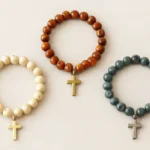
Bead materials: Wood, glass, crystal, agate, jasper, marble, and precious metals are all used. Each material has its own texture and weight, which can affect the tactile experience of prayer.
Bead sizes: Some rosaries have larger beads for the Our Father prayers, with smaller beads for the Hail Mary prayers. The scale of the rosary can influence its ease of handling, especially for children or people with dexterity challenges.
Colors: Bead colors may be chosen for symbolic reasons (e.g., blue for Mary, red for the blood of Christ, white for purity) or simply for aesthetic preference. Some families pass down rosaries whose colors reflect a particular devotion or event.
Crucix and centerpiece: The crucifix is not merely a decorative piece; it serves as the starting point for prayer. The centerpiece often features Marian symbols or other religious imagery, serving as a functional divider between the decades.
Chain and assembly: The way the beads are strung—on a metal chain, a silk cord, or a nylon thread—affects durability and feel. Many rosaries are handmade and can be customized to fit personal devotion or to commemorate a special occasion.
For many Catholics, the physical rosary is a treasured heirloom. The craft and care of a rosary—how it is cleaned, stored, and handled—become an extension of the devotion itself. Caring for a rosary, whether by regular cleaning or by safeguarding it during travel, helps preserve the sense of reverence that accompanies prayer.
Prayers in the Rosary: What You Say and Why It Matters
The core content of the rosary consists of a set of prayers that have deep theological meaning and historical significance within the Catholic tradition. Here are the essential elements:
Apostles’ Creed: A profession of faith that anchors the rosary in doctrinal truth; recited on the crucifix at the start of the devotion.
Our Father: A prayer taught by Jesus to his disciples, central to the rosary’s rhythm and a proclamation of divine Fatherhood.
Hail Mary: A prayer of praise and intercession addressed to Mary, with the first three Hail Marys traditionally linked to the virtues of Faith, Hope, and Charity during the initial beads.
Glory Be: A short doxology praising the Trinity, recited at the end of each decade as a moment of praise and thanksgiving.
Fatima Prayer (optional): A devotional petition for mercy and intercession, recited after the Glory Be in many rosaries; its inclusion varies by tradition.
Hail, Holy Queen (Salve Regina) and other Marian prayers: Often recited at the conclusion, forming a fitting benediction to the meditation on Mary and Christ.
The rosary is not a magical tool nor a mechanical ritual; it is a theological engagement with the life of Christ and the witness of Mary. Here are several key dimensions of its significance:
Incarnational meditation: The mysteries center on events in Jesus’ life, making the divine presence tangible in the everyday world.
Christocentric Marian devotion: While Mary is honored as the Mother of God, the rosary ultimately points to Christ and the grace available through him.
Spiritual discipline: The repetitive rhythm fosters patience, attentiveness, and interior quiet—the hallmarks of contemplative prayer.
Tradition and universality: Across cultures and languages, the rosary binds Catholics in a shared practice that has endured for centuries.
Pastoral and personal life: The rosary often accompanies daily routines, family life, and moments of hardship, offering a source of peace and perseverance.
Throughout Catholic history, the rosary has been linked to indulgences and particular devotional practices. While the details of indulgences have varied through time and papal teaching, the rosary continues to be a central devout activity that can be united with the Church’s penitential and contemplative life. Communities and individuals may receive indulgences for praying the rosary in a church, in a chapel, or in families, according to current Church law and directives. In addition to indulgences, many Catholics use the rosary to foster spiritual growth, reconciliation, and evangelization—sharing the practice with others as a form of catechesis and witness.
Whether you are starting out or seeking to deepen your practice, here are practical guidelines that can help you pray the rosary with more focus, reverence, and meaning:
Set a quiet space: Create a small, distraction-free place to pray, whether at home, in church, or during travel.
Choose a suitable rosary: Pick a rosary that feels comfortable to handle and reflects your devotion (style, material, size).
Pray with intention: Before you begin, consider a blessing, request, or intention for your prayer.
Use the mysteries as anchors: For each decade, focus on the corresponding mystery and allow its meaning to shape your reflections.
Be flexible with structure: While the canonical sequence provides a framework, personal devotion can be adapted to fit your needs, especially if you are praying with children or in a group setting.
Practice regularity: Consistency matters more than intensity. A steady routine—even if brief—can bear fruit over time.
Some people find it helpful to pair the rosary with a short reading from Scripture or a reflection from a Marian text. Others prefer silent contemplation between each prayer. The flexibility of the rosary allows for individual spiritual growth while preserving its core structure.
Because the rosary is a sacred object for many, care and respect in handling it matter. Here are practical guidelines:
Clean and dry: Wipe beads and metal parts with a soft cloth to maintain luster and prevent corrosion or wear.
Avoid rough handling: Be mindful of tension in the cord or chain to prevent fraying or breaking.
Store properly: Keep the rosary in a dedicated case or pouch to protect it from damage when not in use.
Respect during prayer: Treat the rosary as a sacred tool and remove hats or gloves if possible in a church setting while praying the rosary in a pew or chapel.
What is the canonical starting prayer for the rosary?
The rosary begins with the Apostles’ Creed recited on the crucifix, followed by an Our Father on the first large bead, then three Hail Mary prayers on the next beads.
How many decades are in the standard rosary?
The standard or traditional form has five decades, totaling fifty Hail Mary prayers, with additional Our Father beads as part of the overall structure.
What are the mysteries?
The four sets of mysteries—Joyful, Sorrowful, Glorious, and Luminous—offer themes for meditation during each decade.
Can I pray the rosary without the Fatima Prayer?
Yes. The Fatima Prayer is optional; many people recite it after each Glory Be, while others prefer to omit it. The essential structure remains valid with or without the Fatima Prayer.
Are there other forms of rosary besides the five-decade version?
Yes. Variations include the Franciscan Crown Rosary (seven decades), Scriptural Rosary (biblical verses accompanying the prayers), and other regional or devotional forms that adapt the tradition to different spiritual emphases.
The Catholic rosary remains a vibrant, living practice within Catholic spirituality. It is a disciplined yet flexible form of prayer that invites the faithful into a rhythm of contemplation on the mysteries of Christ and the motherhood of Mary. From the basic five-decade form to the Franciscan Crown and Scriptural adaptations, rosaries offer a spectrum of avenues for devotion, meditation, and spiritual growth. Whether you approach the rosary as a humble beginner or as a long-time practitioner, the beads can guide you toward greater interior peace, a more intimate relationship with God, and a renewed sense of purpose in daily life.
In shaping your own practice, remember that the most important ingredient is sincerity of heart. The rosary is not a performance to be perfected but a dialogue with God through Mary that bears fruit in virtue, charity, and service. May your journey with the rosary—your personal tapestry of prayer, study, and reflection—be blessed with grace, clarity, and enduring hope.