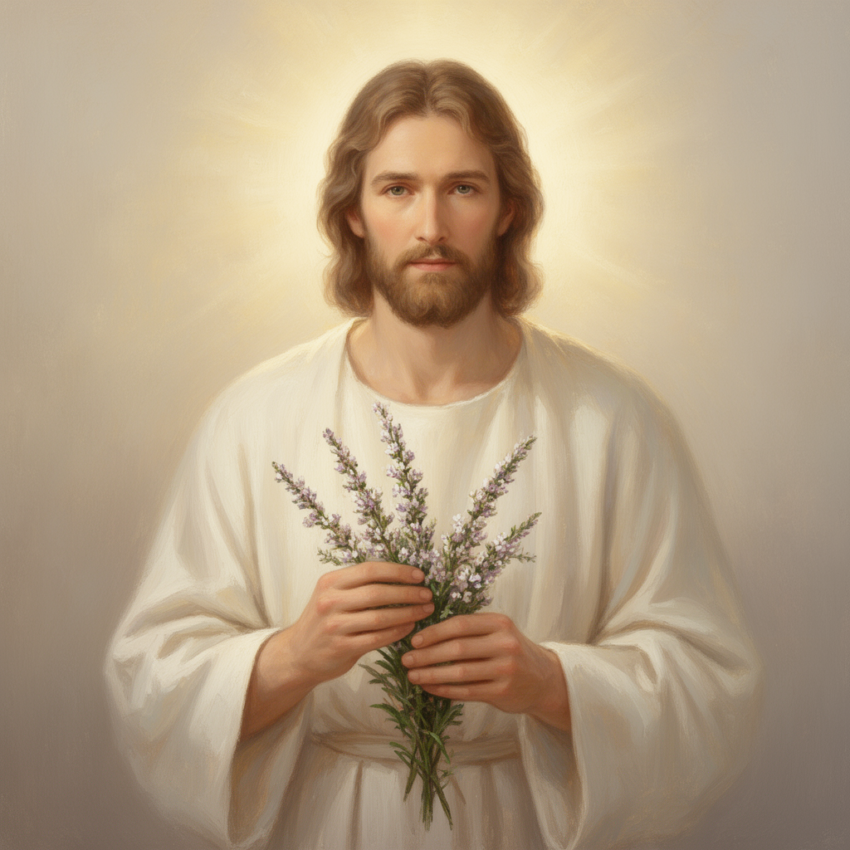
Hyssop is a woody-stemmed perennial herb, generally reaching 30-60 cm in height. It features narrow, gray-green leaves arranged oppositely and produces terminal spikes of small, tubular pink, purple, or blue flowers. The plant has a fragrant aroma, with dense clusters of aromatic flowers that attract pollinators. It prefers well-drained, sunlit environments and thrives in Mediterranean climates, often growing on rocky slopes and mountainsides. Its woody stems and aromatic foliage make it notable both botanically and historically, especially for its fragrant, medicinal properties.
Scientific Name
Ocimum basilicum or debated candidates (e.g., Hyssopus officinalis)
Native to the Mediterranean region, hyssop naturally grows across southern Europe, North Africa, and parts of Western Asia. It favors rocky, limestone soils, thriving in warm, dry climates with full sun exposure. Its natural habitats include hillsides and rough terrains, often in regions with sparse vegetation and well-drained soils.
First Biblical Mention
Exodus 12:22, during the first Passover, where hyssop was used to apply the blood to doorposts.
📖 Biblical References
Reference
Context
Significance
Exodus 12:22
Used in the Passover ritual for the blood of the lamb to protect the Israelites from the plague of the firstborn.
Symbolizes purity, cleansing, and protection through divine intervention.
Leviticus 14:4-7
Used in the purification ritual for a cleansed leper, combined with scarlet and cedarwood.
Represents spiritual cleansing and sanctification.
John 19:29
A sponge soaked with wine vinegar was placed on hyssop and offered to Jesus on the cross.
Connects hyssop to suffering, sacrifice, and salvation.
Psalm 51:7
The psalmist speaks of cleansing and being made pure, likening it metaphorically to washing with hyssop.
Hyssop embodies themes of purification, cleansing, and divine protection throughout Scripture. Its use in rituals signifies spiritual renewal and sanctification. Its presence at pivotal moments—such as Passover and the crucifixion—links it to salvation, sacrifice, and the act of purification from sin. Biblically, hyssop signifies the transition from impurity to holiness, representing God's ability to cleanse the sinner. Spiritually, it underscores the importance of faith in divine deliverance and the hope of renewal, making it a powerful symbol of spiritual cleansing and divine mercy across biblical narratives.
🏺 Cultural Uses in the Ancient World
In ancient Israel and neighboring cultures, hyssop was valued for its aromatic and medicinal properties. It was used to prepare perfumes, incense, and medicines to treat ailments like coughs and digestive issues. Its stiff, aromatic stems were sometimes used in purification rituals and to cleanse sacred spaces. Additionally, hyssop’s fragrant leaves and branches played a role in ritual cleanliness and sacrificial ceremonies, and it was traded as a valuable herb due to its versatile uses in food, medicine, and worship.
✡️ In Jewish Tradition
Hyssop holds a significant place in Jewish tradition, symbolizing purity and spiritual cleansing. It is used in Passover seders to sprinkle wine on the doorposts, recalling the biblical use during the first Passover. The Talmud discusses hyssop in purification rituals, emphasizing its importance in ritual cleanliness and spiritual renewal, reflecting its sacred role in Jewish life and festivals.
✝️ In Christian Tradition
Christian interpretations view hyssop as a symbol of sacrifice, cleansing, and deliverance. It appears in Passion narratives, as the plant used to offer Jesus vinegar on the cross, symbolizing suffering and salvation. Theologically, it represents the believer’s need for spiritual purification through Christ’s sacrifice, emphasizing themes of redemption, mercy, and the fulfillment of biblical prophecy concerning salvation.
Scholars generally debate the precise botanical identity of biblical hyssop, with candidates like Hyssopus officinalis and various basil varieties (Ocimum basilicum). While Hyssopus officinalis is the traditional candidate, some believe the biblical hyssop may have been a broader term for aromatic herbs used in purification, leading to alternative identifications. There is no universal consensus, but Hyssopus officinalis remains the most accepted candidate among researchers.
🗺️ Where Is It Found Today?
Today, hyssop (Hyssopus officinalis) can be found growing in the Mediterranean basin, including Israel, southern Europe, and North Africa. In Israel, it’s cultivated in gardens and herb farms as an ornamental and medicinal plant, especially in regions with similar climates. It is also widely available in herbal shops and specialty stores worldwide due to its traditional uses.
❓ Frequently Asked Questions
What is hyssop used for today?
Today, hyssop is mainly used as an ornamental herb and for its aromatic, medicinal qualities. It is employed in herbal teas, traditional medicine, and sometimes in spiritual or religious contexts inspired by biblical traditions.
Is hyssop the same as basil?
No, biblically hyssop is likely not basil. Modern botanists identify hyssop as Hyssopus officinalis, a woody shrub, whereas basil (Ocimum basilicum) is a different aromatic herb. The biblical hyssop may have encompassed several aromatic herbs historically.
Can hyssop be cultivated today?
Yes, hyssopus officinalis can be cultivated in well-drained soil with full sun. It is popular among herbalists and gardeners in suitable climates for its fragrant foliage and medicinal properties.
✨ Did You Know?
The archaeological discovery of hyssop’s aromatic residues on ancient pottery suggests its widespread ritual use in Holy Land rituals over 2,000 years ago. Historically, hyssop was so valued for purification that it was often included in sacred relics and purification kits used by ancient priests.