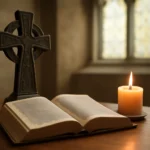
Catholic Evening Prayer, commonly known as Vespers, is a central part of the Liturgy of the Hours, the daily prayer of the Church. It is a rhythm of praise and petition that marks the close of the day, inviting the faithful to reflect on God’s faithfulness as night settles in. In everyday language, we may call it the evening office, the evening prayer, or simply the night prayer, but in liturgical terms the traditional title Vespers communicates both a historical depth and a spiritual intention: to look back on the day with gratitude, to seek mercy where we have fallen short, and to entrust the night to God.
This article offers a practical, down‑to‑earth guide to praying Evening Prayer in a domestic setting, a parish chapel, or a small community. Whether you are new to the practice or returning after a long pause, you’ll find concrete steps, liturgical structure, and devotional ideas designed to make nightly reflection accessible, meaningful, and sustainable.
The practice of praying at the close of the day has roots deep in Christian tradition. Early Christian communities gathered to praise God in the late afternoon or early evening, offering a pattern of prayer that later became formalized in the Office or horae of the Church. The Benedictine monasteries of the medieval period helped crystallize a regular cycle of prayer through the Divine Office, a framework later refined and expanded in the Roman Rite. Over centuries, Vespers developed its own distinctive character: a contemplative mood, a focus on communal sung or spoken psalms, and a catechetical dimension through biblical canticles and readings.
After the Second Vatican Council, the Liturgy of the Hours was revised to be more accessible to lay people and families while preserving its sacramental and ecclesial sense. Today, the evening prayer remains a flexible instrument for nightly prayer, allowing individuals, friends, and families to join their voices with the universal Church as the day ends. While some communities still celebrate multiple vespers on major feasts, in ordinary settings the Evening Prayer is typically one hour that can be prayed in common or privately.
A key spiritual aim of this hour is discernment at day’s end: recognizing God’s blessings, naming the day’s faults and sins, offering thanks, and seeking grace for the night and the week ahead. The structure of Vespers invites a gentle progression—from gratitude to petition to entrustment—so that the soul can rest in God’s mercy.
Core Terms and Variations for Semantic Breadth
Throughout this guide you may encounter several terms that describe the same practice or related practices within Catholic spirituality. To help with semantic breadth and practical understanding, here are a few key phrases you’ll see:
Evening Prayer — a broad, descriptive name for the hour prayed at sunset or in the early evening.
Vespers — the traditional liturgical name for the evening hour; often used in monastic and parish settings.
Evening Office — another way to refer to the same prayer service within the Liturgy of the Hours.
Night Prayer or Compline — the separate hour reserved for the final prayers of the day, sometimes used interchangeably in casual conversation but technically distinct from Vespers.
“First Vespers” and “Second Vespers” — older or monastic usages referring to two evening moments around major feasts; in many parishes you’ll simply pray one Vespers per day unless a special feast calls for two.
Magnificat — the Canticle of Mary, a central canticle in Evening Prayer often placed after the readings or as part of the canticle portion.
Psalmody — the section of prayer consisting of psalms and antiphons. The psalms carry the Church’s language of worship and penitence.
Structure of Evening Prayer: A Practical Guide
The following outline reflects the typical flow of Vespers in the Liturgy of the Hours. In different communities and in private practice, the exact wording and length may vary, but the essential framework remains stable and spiritually fruitful.
The hour usually begins with a brief invocation that expresses trust in God’s help and a desire for His mercy as night falls. In a common practice, this is followed by the Glory Be and sometimes a short seasonal or feasts-specific antiphon. The aim at this stage is to orient the heart toward God, inviting a sense of calm order after the day’s activity.
Psalmody: Two or More Psalms with Antiphons
The psalms are the backbone of Evening Prayer. A typical sequence includes one or two psalms that reflect themes of trust, mercy, repentance, or hope. Each psalm is introduced and concluded with an antiphon—a brief refrain that frames the psalm’s mood and themes. If you are praying privately, you might choose the psalms that most closely align with your day’s experiences. If you are praying with others, the leader might choose psalms for communal reflection.
As a practical note, many modern breviaries or apps designate a standard pair of psalms for the evening hour, with seasonal variations. You may also substitute a single psalm if you are short on time. The idea is to allow a rhythm of prayer that invites you to dwell with God in the evening light and to become more aware of God’s faithful presence.
Reading (Lectio Sacra) and Responsory
After the psalms, there is a brief scripture reading—a short passage from the New Testament or Old Testament that illuminates the day’s realities and points toward God’s ongoing work in the world. This reading is followed by a brief Responsory, a short, sung or spoken response that helps the community or individual listen for God’s word and proclaim faith in God’s mercy.
Canticle of Mary: The Magnificat
One of the distinctive features of Evening Prayer is the Canticle of Mary, known as the Magnificat. The Magnificat is a biblical canticle (Lk 1:46–55) that rejoices in God’s saving action and God’s faithfulness to the humble. The canticle is often sung or recited with a simple antiphon and serves as a climactic moment of praise in the hour.
In practice, you may encounter the Magnificat placed after the reading or as a central moment in the canticle section. If you are praying with family or friends, you can take turns reciting parts of the Magnificat or use a musical setting to deepen the prayerful atmosphere.
Intercessions, the Lord’s Prayer, and Concluding Prayer
Following the Magnificat, the communal or personal prayer continues with a brief series of intercessions, during which you lift up the Church, the world, the poor, the sick, the departed, and any personal intentions. After the intercessions, the prayer commonly culminates with the Our Father, a unifying sign of Christian solidarity and trust in God’s providence. The hour then closes with a short concluding prayer asking God to grant mercy, peace, and a good night’s rest under His protection.
Closing Rite: Blessing and Dismissal
In communal settings, a priest, deacon, or lay presider may give a brief blessing at the end of Evening Prayer. After the blessing, the assembly may depart with a note of reverent silence, a reminder to carry the day’s reflections into the night. In private practice, you simply close the book, take a moment of gratitude, and carry the sense of God’s presence into sleep.
Practical Guide: How to Pray Evening Prayer at Home
Praying Evening Prayer in a home setting is an approachable discipline. The goal is consistency and attentiveness more than length or complexity. Here is a practical, step-by-step approach you can adopt right away.
Choose a time and space: Pick a quiet time after dinner or just before bed. Create a small, peaceful space with a candle, a crucifix or icon, and a copy of the breviary or a trusted app. A dedicated spot helps signal that this is a sacred moment.
Set a realistic length: For beginners, aim for 15–25 minutes. As you become more comfortable, you can extend to 30–40 minutes on contemplative nights or during the liturgical season.
Use a reliable structure: Whether you use a printed breviary, a digital app, or a guided video, follow the standard structure outlined above: opening prayer, psalms with antiphons, reading and responsory, Magnificat, intercessions, Our Father, concluding prayer, and blessing.
Read slowly and reverently: Give the Scripture reading time to speak to your heart. Pause between sections to reflect, listen, and respond in your own words to God.
Speak or sing the canticle with intention: If you sing, choose a simple tone or a familiar hymn setting for the Magnificat. If you recite, let the words roll slowly, letting meaning settle in your memory and heart.
Include intentional intercessions: Name people and needs that are on your heart—family, friends, neighbors, church leaders, those who mourn, and those who work in difficult circumstances.
Close with gratitude: End with a clear act of thanksgiving for the day and a request for God’s peace and protection during the night.
Evening Prayer adapts to the liturgical season and feast days. While the core structure remains recognizable, the readings, antiphons, and canticles shift to reflect the Church’s calendar. Here are common options you may encounter:
Advent and Christmas: Antiphons and readings emphasize hopeful expectation and the mystery of the Incarnation, with the Magnificat taking on a special resonance as Mary’s faith is highlighted.
Lent and Easter: Themes of repentance, mercy, and resurrection permeate the psalms and readings. The tone may be more penitential during Lent, transitioning to renewed joy at Easter.
Ordinary Time: A steady rhythm of praise and petition reflects the ongoing work of the Church and the daily life of faith in ordinary circumstances.
Feasts and memorials: On particular feast days, the antiphons, psalms, or readings may be chosen to echo the saint or mystery being celebrated.
Some communities also observe Two Vespers (First Vespers and Second Vespers) for major feasts, a practice that preserves an evening of liturgical solemnity. In many home settings, you will simply pray a single Vespers each day, reserving additional fervor for specific feasts or for the celebration of the Sundays in Advent or Lent.
Tips for Different Prayers Settings
Whether you are praying alone, with a spouse or family, or with a small faith community, these practical tips can help you cultivate a meaningful practice without turning it into a chore.
Prayer with others: Assign roles—one person leads the opening prayer, another reads the Scripture, another leads the intercessions. Rotating leadership builds a sense of shared prayer and responsibility.
Prayer as routine, not rigidity: Aim for regularity rather than perfect execution. If you miss a day, simply resume the next evening rather than letting it become a source of guilt.
Use simple musical elements: If you enjoy singing, incorporate a simple chant or an easy liturgical hymn for the Magnificat. If not, read the canticle slowly and reflectively.
Quiet space, not perfection: A small, uncluttered space is better than a grand setup that becomes a distraction. A candle or a small image can help focus the heart.
Integrate with scripture study: If you are also doing a daily Gospel or a reading plan, you can connect the day’s reading with the evening psalms for a deeper synthesis.
Integrating Evening Prayer into Daily Life
Making Evening Prayer a regular habit can have transformative effects on your inner life, relationships, and sense of peace. Here are ways to adapt the practice to different life contexts:
For individuals: Create a personal routine that suits your temperament—quietly at home, or in a park for a late stroll before bedtime. Use a compact breviary or a mobile app to simplify access to the structure.
For couples: Pray together as a shared spiritual discipline. Take turns leading the reading, the intercessions, or the Magnificat. This shared rhythm can strengthen the relationship and faith life.
For families with children: Adapt the psalms to shorter forms, use kid-friendly reflections, or invite children to offer brief intercessions. The goal is to nurture a household culture of prayer, not to produce a perfect liturgy each night.
For caregivers and seniors: A shorter version of evening prayer can offer welcome consolation after a long day. The communal aspect—whether with a family member or a caregiver group—can be a source of mutual encouragement and grace.
For travelers: When away from home, carry a pocket edition or rely on a reputable app. The structure remains the same, and the practice travels with you, offering steadiness amid change.
Many readers have practical questions as they begin or resume the practice. Here are concise answers to some frequent inquiries.
Is Evening Prayer only for clergy? No. While monasteries and some parishes use the official Divine Office in a formal way, Evening Prayer or Vespers is designed for lay faithful and families as well. It can be prayed independently or in community, according to the resources and time available.
Do I need a breviary to pray Vespers? A breviary is helpful, but not strictly required. Many apps, online services, and parish booklets provide the structure and readings. The essential thing is to engage with the form, not to chase perfection in format.
What if I miss a day? Return to the practice as soon as you can. The rhythm of prayer is about ongoing conversion and ongoing conversation with God, not about missed days as failures.
Can I adapt it for children? Absolutely. Choose shorter readings, use simple language, and invite kids to offer brief intentions. The Magnificat can be introduced as a story of faith and hope that resonates with younger imaginations.
Is there a right or wrong time for Vespers? The best time is the time you actually pray. The beauty of Evening Prayer is its flexibility—between late afternoon and night, whatever fits your schedule.
To deepen your understanding and enrich your practice, consider these resources. They provide background, interpretation, and practical guidance for praying the Evening Prayer as part of the Liturgy of the Hours.
The Liturgy of the Hours (Roman Rite) — This is the standard official text used in many parishes and religious communities. It contains the full text for all the hours, including Vespers.
A Simple Guide to the Liturgy of the Hours — A concise introductory book that explains how the hours work, with practical steps for lay faithful and families.
Evening Prayer: A Guide to the Liturgy of the Hours — A user-friendly handbook focusing on Vespers and the Magnificat in daily life.
Apps and online resources — Many reputable Catholic apps offer guided Evening Prayer, including audio versions, seasonal texts, and customizable options for individual or family use.
Spiritual Practices to Enrich Your Evening Prayer
Turn the act of praying into an ongoing spiritual discipline that nourishes the heart and shapes behavior. Here are some practices to complement Evening Prayer and deepen its impact.
Examination of conscience: Conclude your day by gently reviewing moments when you followed God’s call and times when you fell short. Offer contrition, gratitude, and a desire for transformation in mercy.
Juxtapose gratitude and needs: Balance a posture of thanksgiving with prayers for personal needs, loved ones, and the common good. Gratitude fosters joy; petitions invite reliance on God’s grace.
Quiet presence: Practice brief moments of silence before the Magnificat. Let your heart inhabit the stillness as you prepare to praise God for His faithfulness.
Scripture journaling: Keep a small notebook to journal insights from the Scripture reading or the psalms. A few lines can become a lifelong treasure that helps you see God’s patterns in your life.
Closing Reflections: The Gift of Nightly Reflection
In a world that often runs toward distraction, the practice of Evening Prayer offers a counterbalance—a quiet invitation to end the day with a posture of trust. It is not merely a ritual; it is a way of walking through the twilight with the Creator, acknowledging the day’s light and darkness, and choosing a peaceful union with God as night descends. The rhythms of Vespers—psalms that murmur mercy, readings that illuminate truth, the Magnificat that exults in God’s saving work—can become a reliable harbor for your heart.
Whether you are praying alone, with family, or with a small faith‑sharing group, the practice has potential to form a more compassionate, hopeful, and patient life. The Evening Prayer hour invites you to carry into the night both honest prayer and gentle trust—trust that God remains attentive, that grace abides, and that the day’s end is a doorway into God’s restful care.
Starting a practice of Evening Prayer can be as simple as choosing a time, gathering your materials, and following the basic structure of psalms, readings, and prayer. Over days and weeks, the routine becomes less about doing the hour perfectly and more about allowing the heart to rest in God’s merciful presence. The Vespers hour is a gift the Church offers to the domestic church and to every believer—an invitation to finish the day with faith, hope, and love, and to step into the night with a strengthened spirit and a tranquil mind.