Christmas Tree Lights Old Fashioned: Classic Styles and Warm Glow invites you into a world where lighting your tree means more than visibility. It means invoking memory, craft, and a soft, intimate radiance that many modern LEDs imitate but few can truly reproduce. In this long-form guide we explore the many facets of old-fashioned Christmas tree lights—from historical roots and classic bulb types to decorating techniques, safety considerations, and ways to blend vintage charm with today’s convenience. Whether you call them old-fashioned Christmas tree lights, vintage-style Christmas tree lights, or traditional string lights, this article aims to illuminate the topic with depth and clarity.
When people speak of old-fashioned Christmas tree lights, they often imagine a spectrum of styles that grew from candle-lit trees to the early electric era. The phrase encompasses several generations of lighting technology, each carrying a distinct aesthetic. You may find yourself drawn to a classic string light texture that drapes gracefully along needles, or you may seek a more dramatic silhouette created by larger bulbs that cast a nostalgic halo across ornaments. The beauty of this lighting tradition lies not merely in how bright the tree is, but in how the light paints the room with a candle-like warmth and a gentle, comforting glow.
In practical terms, old-fashioned Christmas tree lights can refer to a few distinct categories: the earliest electric strings that used simple incandescent bulbs, the iconic larger C-7 and C-9 bulb families, the retro magic of bubble lights, and the dense clarity of miniature incandescent strings that fill spaces between branches. Each category carries its own mood, technical considerations, and historical flavor. By understanding these categories, you can curate a display that feels cohesive—whether you want a muted, monochrome glow or a playful, multicolor tableau.
A Brief History: From Candles to Electric String Lights
To appreciate the old-fashioned lighting on Christmas trees, it helps to know where the tradition began and how it evolved. The original practice of decorating trees with lights decorated more than a century of holiday rituals. In the late 19th and early 20th centuries, candles on Christmas trees were a common sight in many homes, farms, and churches. Candles created a magical effect but carried significant fire risk, especially when placed among dry branches or near fabric ornaments. This risk led many families to seek safer, more reliable options that could mimic the warm glow of real flames. The move toward electric lighting marks a turning point in domestic decor and safety standards.
Electric Christmas tree lights began to take shape in the late 1800s and early 1900s, with notable milestones in the transition from candlelight to electricity on holiday trees. For many households, the shift was gradual, due in part to technology availability, cost, and ornament preferences. By the mid‑twentieth century, electric string lights had become a staple of American Christmas celebration, and the classic incandescent strings entered households around the world, bringing a new reliability and a distinctly nostalgic glow that has persisted in the classic Christmas décor aesthetic to this day.
As the decades progressed, designers turned to different bulb shapes, finishes, and configurations to achieve varied looks with the same underlying aim: a warm glow that does not overwhelm the room but rather bathes it in comfortable light. The old-fashioned Christmas tree lights of the mid‑century era included a mix of larger bulbs (C‑type bulbs) for bold silhouettes, smaller mini bulbs for dense coverage, and specialized pieces like bubble lights that offered motion and color. Although technology has advanced, many people still seek the vintage feeling of these early electric lights, calling them retro tree lights, antique-inspired lighting, or simply traditional string lights.
Classic Styles and What They Look Like
When curating a tree with old-fashioned Christmas tree lights, you’ll encounter several dominant styles that defined the look for decades. Here are some of the most enduring options, each with its own character and installation considerations.
Large-bulb Classics: C-7 and C-9 Bulbs
The C-7 and C-9 bulbs are among the most iconic choices for a traditional Christmas tree look. These bulbs are larger than the miniature strands that blanket the interior of trees and offer a bold, holiday‑season silhouette. The glow from C‑style bulbs tends to cast a gentle, old‑world warmth that is easily associated with mid‑century Christmas aesthetics. You’ll often see these on scalloped garlands or on the outer limbs where their shapes can be appreciated from a distance. For vintage households, a string of C‑type bulbs can be used alone or interspersed with ornaments to create a storybook effect on the tree’s exterior silhouette.
Creates dramatic highlights on the tree’s profile.
Best for classic, year‑round holiday displays in living rooms or entryways.
Works well with color or warm‑white tones; pair with matte metallic ornaments for a traditional look.
Miniature Bulbs: Dense, Uniform Coverage
For a look that feels full and evenly lit, many enthusiasts turn to miniature incandescent lights. These tiny bulbs, often strung in long reels, provide a delicate shimmer that travels deep into dense needle clusters. The uniformity of light helps to maintain an even glow across the tree while avoiding overly bright hotspots. This approach is beloved by those who want a soft, all-over radiance rather than bold splotches of color.
Excellent for trees with abundant foliage, since tiny bulbs illuminate without overpowering ornaments.
Ideal for traditional, formal setups where symmetry and balance matter.
Typically sold in warm white or multi‑color options, with a preference for warm tones by many vintage enthusiasts.
Bubble lights became a hallmark of mid‑century holiday décor, offering a playful, dynamic glow that feels distinctly retro. A bubble light is a glass bulb containing a small amount of liquid that bubbles when heated, producing a kinetic, jewel-like shimmer. The light in bubble lights has a more saturated, colorful look than standard warm‑white strings, often with amber, blue, or red effects depending on the bulb and the liquid inside. They pair beautifully with glass ornaments and metallic elements to recreate the sense of television-era living rooms and diners that defined postwar American design.
Vibrant, animated glow that adds motion and whimsy to the tree’s look.
Best used as accent lighting or in a dedicated strand to avoid overwhelming the whole tree.
Paired well with glass baubles and holiday figurines for a storybook aesthetic.
Retro-Inspired Filament and Glass Bulbs
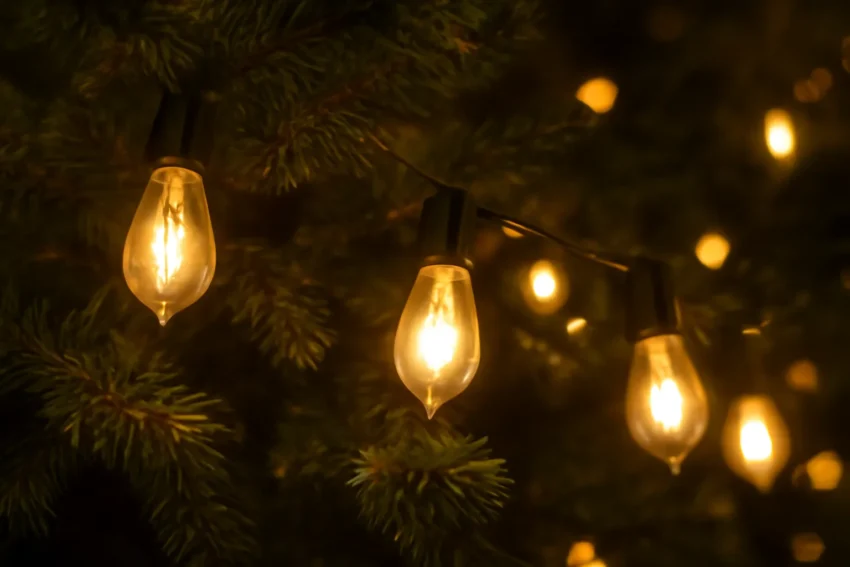
Filament bulbs—whether classic tungsten filaments or decorative retro filaments—offer a distinct glow that evokes vintage streetlamps and theatre lighting. These bulbs can be clear or subtly tinted, and their inner filaments deliver warm, hand-crafted warmth reminiscent of earlier decades. When you choose old-fashioned filament-style bulbs, you’re embracing a look rooted in the tactile beauty of glass and filament artistry. Combined with a careful color palette, filament strands create a tactile, almost tactile warmth that invites closer inspection.
Visible filaments create character and depth on the tree.
Great for a rustic or country-style Christmas aesthetic.
Pairs well with wooden ornaments, burlap ribbon, and natural textures.
Color Strategies: Warm White, Multicolor, and Tinted Palettes
The palette you choose greatly impacts the old-fashioned vibe of your tree. Traditionalists often favor warm white or amber-toned lights, which mimic the glow of candles while maintaining safety and energy efficiency. Multicolor strings, on the other hand, contribute a lively, vintage carnival feel that harks back to earlier decades when color was celebrated in holiday décor. Some enthusiasts also explore tinted bulbs, which add a nostalgic tint—soft golds, faded pinks, or rich greens—that can harmonize with antique ornaments or a curated color scheme. Here are some practical notes on color selection:
Warm white bulbs create a classic, relaxed atmosphere and are the most faithful to old‑fashioned candlelight aesthetics.
Multicolor strings evoke cheerful 1950s and 1960s holiday scenes, especially when paired with retro ornaments.
Tinted or amber-tinted bulbs offer a vintage dusk-toned glow that complements brass, copper, and amber glass ornaments.
Color, Temperature, and Glow: How Lighting Design Shapes Mood
The sense of warmth that defines traditional Christmas tree lighting comes from several intertwined elements: color temperature, bulb shape, spacing, and overall luminance. The color temperature of bulbs—measured in kelvin (K)—plays a central role in how reminiscent the glow is of candlelight or a winter sunset. Most old-fashioned lighting schemes lean toward warm temperatures in the 2700–3200K range, which yields a soft, amber glow that flatters skin tones and complements wood tones and natural materials in the room. Here’s how to think about the interplay of color and glow:
Warm white (roughly 2700–3000K) is the go-to for a traditional, inviting glow that feels timeless.
Soft white (around 3000–3500K) edges toward a modern warmth while still preserving vintage charm.
Multicolor strings can be calibrated to favor a cohesive palette or to emphasize a particular period look (think mid-century bold color blocks).
Another design consideration is the spacing and density of the lights. A dense, evenly spaced row of bulbs can create a seamless field of glow that looks like a continuous light blanket. A looser arrangement—bulbs spread farther apart—creates more pronounced points of light and a crisper silhouette on the needles. Both approaches have a place in old-fashioned lighting schemes, depending on the size of the tree, the ornament density, and the room’s dimensions.
Safety Considerations: Candles, Wires, and Modern Substitutes
One of the most important aspects of old-fashioned Christmas tree lights is safety. The romance of candles on a tree is undeniable, but it is also dangerous. It’s essential to weigh the aesthetic appeal of candle-era traditions against the risk they pose to homes. The modern standard is to enjoy the look of vintage lighting while using safer technologies. Here are the key safety principles to keep in mind:
Avoid real candles on artificial or real trees. Real flames heat the needles and can ignite dry branches, fabric ornaments, or tree toppers. If you yearn for a candlelit effect, rely on fiber-optic or LED candles placed nearby or use artificial candle bulbs in a safe, battery-operated configuration.
Inspect wiring and replace any frayed cords or damaged plugs. Old-fashioned strings may have brittle insulation, and continued use of damaged wires can be hazardous.
Dedicated circuits and power strips with surge protection help prevent overloading. Use a GFCI outlet in damp locations and never run cords under rugs or through doorways where pressure could damage them.
Consider LED retro-style bulbs that mimic the look of incandescent vintage bulbs with far better energy efficiency and safer operation. These are especially useful for bulbs that would otherwise get hot or be fragile in older designs.
Safety is not a limit to historical appreciation; it is a gateway to enjoying the old-fashioned lighting experience without compromising the home. By choosing safe modern substitutes that preserve the look and feel of traditional tree lighting, you can achieve an authentic vibe while meeting today’s safety standards.
Decorating Techniques with Old-Fashioned Lighting
Lighting on a Christmas tree is a design instrument. It helps shape the perception of the ornaments, the tree’s silhouette, and the room’s atmosphere. Here are effective decorating approaches for old-fashioned Christmas tree lights that celebrate tradition while remaining practical and stylish.
Layered Lighting: Backing, Core, and Accent
Think of the tree as a stage with multiple lighting layers. The goal is to create depth and a warm glow without creating harsh hotspots. A practical technique is to combine a core of tiny warm white lights for even coverage with a layer of larger bulbs toward the outer limbs to form silhouette highlights. Accent this with a few bubble lights or filament bulbs in curated positions to draw the eye to cherished ornaments. The layering approach is a hallmark of classic string-light design, reinforcing the sense of depth that many people associate with nostalgia.
Place smaller bulbs close to the trunk to light the inner branches.
Distribute larger C-7 or C-9 bulbs toward the outer edges for a defined outline.
Use a few bubble lights as focal points rather than a continuous pattern to avoid visual overload.
Color coordination matters when you want a cohesive old-fashioned tree lighting experience. If your ornaments lean toward brass, copper, amber glass, or natural wood, warm white strings will often be the most harmonious choice. For a multicolor display, consider a palette that reflects the era or mood you’re aiming to evoke—pastel pinks and turquoises might echo early 1960s design, while bold primary colors harken back to the 1950s. The interplay of color and light can be as curated as a painting, so plan a few test runs with a small section of the tree before committing to the entire strand layout.
Warm white with antique brass ornaments creates a traditional, opulent feel.
Multicolor lights paired with glass icicles evokes a cheerful, retro ambiance.
Monochrome palettes (all warm whites or all amber tones) offer a sophisticated, timeless look.
Ornament Integration: How to Balance Light and Surface
Ornaments are the stars of the show, and lighting is the stage lighting. Balancing bulb brightness with ornament size and finish prevents glare and ensures that each piece has its moment. A delicate ornament collection benefits from a gentle, evenly dispersed glow that showcases texture and reflection without washing out details. Larger, reflective ornaments (like glass ball ornaments or mirrored finishes) can be especially dramatic when illuminated by classic incandescent strings. A practical approach is to test placement by temporarily draping strings in a few areas before committing to full wrapping.
Place reflective ornaments where the light will bounce for sparkle.
Avoid overcrowding the branches with too many lights; aim for synergy between illumination and ornament detail.
Use soft ribbons or garlands to diffuse light and soften the overall effect.
Care, Maintenance, and Storage of Old-Fashioned Lighting
To maintain the charm of traditional tree lights, some ongoing care is necessary. This includes not only replacing bulbs but also ensuring the strings remain safe and functional for many seasons. Here are practical practices to extend the life of your old-fashioned lighting strands.
Inspect cables and plugs for cracks, cuts, or loose connections before each season.
Replace any failed bulbs carefully with the same wattage/voltage rating to prevent damage to the string or circuit.
Unplug strings before storage and avoid twisting wires too tightly, which can damage insulation.
Store in original boxes or labeled containers to keep track of bulb types and lengths; for vintage sets, consider archival tissue paper to prevent glass-on-glass contact.
Consider upgrading to LED retro bulbs or a hybrid set that preserves the appearance while offering safer, energy-efficient operation.
When maintenance becomes a chore, a common approach is to rotate among several strands if you preserve your older sets. This approach reduces wear on any single string and preserves the authentic glow across multiple seasons. It also lowers the risk of overloading a single circuit and makes it easier to store and retrieve strings during the next holiday period.
Modern Variants That Respect the Vintage Aesthetic
Today’s market offers a range of options that emulate the look of old-fashioned Christmas tree lights while delivering modern safety, efficiency, and convenience. Here are the most relevant modern variants you may consider if you want to balance nostalgia with practicality.
LED retro bulbs that mimic incandescent warmth while using a fraction of the energy;
LED bubble lights that deliver the characteristic sparkle without the liquid-filled bulbs of the mid‑century era;
Warm-white filament LEDs designed to resemble classic tungsten filaments, with the durability and longevity of LEDs;
Hybrid strings that combine traditional bulb shapes and LED efficiency for a balanced look;
Smart lighting options that can be scheduled, color-tuned, or synchronized with music, while maintaining a nostalgic aesthetic.
These modern variants allow you to achieve the old-fashioned look you love with less maintenance and greater safety. They are especially appealing to households that want year‑round flexibility—seasonal color customization, remote control, and integration with smart home ecosystems—without sacrificing the warm, vintage atmosphere.
DIY and Personalization: Crafting Your Own Vintage Lighting Story
One of the joys of old-fashioned Christmas tree lights is the opportunity for personalization and DIY flair. Crafting a tree lighting narrative that is unique to your home can be incredibly rewarding. Here are some ideas for adding a personal touch while honoring tradition.
Creating a Themed Lighting Scheme
Choose a theme such as “Winter Lodge,” “Cottage Core,” or “Mid-Century Modern” and tailor your lighting to support that vision. For example, a Winter Lodge theme may mix warm white bulbs with amber glass ornaments, wood textures, and plaid ribbons. A Mid-Century Modern theme could embrace bold colors with C‑7 bulbs placed strategically for dramatic highlights. A well-executed theme uses a restrained color palette and a few anchor pieces to produce a coherent, nostalgic mood.
Develop a color palette that supports your furniture and ornament collection.
Reserve a strand of bubble lights as a focal point to evoke mid-century whimsy.
Incorporate natural elements (pinecones, dried citrus, cinnamon sticks) that reflect warm, rustic tones when lit.
Embellishments and Texture
Lighting shines in the context of texture. Combine old-fashioned lighting with textures such as knitted stockings, burlap ribbons, or frosted glass ornaments to create layers of tactile interest. The interplay of light and texture adds depth to the tree and helps the unlit portions hold a sense of mystery, which is a core part of retro aesthetics.
Use matte metallic ornaments to catch the light with gentle reflections.
Incorporate natural textures like wood slices or dried citrus to enhance warmth.
Consider a mix of glossy and frosted finishes to catch different wavelengths of light.
Acquiring and Collecting: Where to Find Authentic Old-Fashioned Lighting
For enthusiasts who want to build a collection of classic Christmas tree lights, sourcing authentic pieces can be part of the adventure. You’ll find vintage strings, mid‑century bubble lights, and early incandescent sets in specialty shops, antique markets, and online marketplaces. When shopping for old-fashioned lighting, consider the following tips to ensure you acquire safe, well-preserved items:
Inspect for broken glass, frayed cords, and brittle insulation. Damaged items can be hazardous, especially if you intend to energize them in a home setting.
Ask about the bulb type, length, and number of bulbs. Older strings may have different standards than modern cords, and compatibility matters for safe operation.
Look for endorsements or safety certifications when available. While vintage strings may not meet current standards, reputable sellers will explain limitations and conditions of use.
Plan for restoration if desired. Conservators may replace select components while preserving the original character.
Collecting vintage Christmas tree lights is not just about functionality; it’s about preserving an artifact of design culture. Each strand carries a story—of industrial innovation, changing domestic rituals, and the way families gathered around a tree with light as a shared experience. If you decide to collect, document the era and bulb type, and aim for a curated combination that remains safe for display in a domestic setting.
Maintenance and Repair: What to Expect with Older Lighting Systems
Older light strings require more attention than modern equivalents. Knowing what to expect can help you plan maintenance and ensure longevity of your old-fashioned Christmas tree lights.
Bulb replacement: In the era of incandescent bulbs, a single failed bulb on a strand could interrupt the entire string. Replacements often require stock of specific bulb models; ensure you have an appropriate inventory for your vintage sets.
Wiring considerations: Older wires may have degraded insulation. If you notice any cracking, brittleness, or significant heat on the strand, discontinue use and replace or retire the strand to avoid risk.
Fuses and adapters: Some older strings relied on fuses or transformers. Check and replace fuses as needed, following manufacturer guidelines for vintage sets where available.
Professional restoration: For prized collections, consult a restoration expert who specializes in vintage electrical appliances. They can assess feasibility, safety, and preserve original aesthetics.
Even with faithfulness to tradition, safety must come first. If you are uncertain about the condition of a vintage lighting strand, err on the side of caution and consider modern substitutes that mimic the look and feel of the original design. The spirit of old-fashioned Christmas tree lights remains intact when you reproduce the aesthetic with care and responsibility.
The Emotional and Cultural Significance of Classic Lighting
Lighting on a Christmas tree transcends mere illumination. For many families, it is a ritual that accompanies storytelling, shared meals, and treasured moments with loved ones. The old-fashioned style of chubby C‑bulbs or the shimmering motion of bubble lights evokes a sense of tradition, memory, and shared history. The glow does not merely illuminate ornaments; it crafts a mood—one that invites quiet conversation, laughter, and reflection. In this way, traditional Christmas lighting serves as a passage through time, connecting today’s celebrations with the kitchens and living rooms of the past.
In a broader sense, the enduring appeal of classic tree lighting lies in its balance of effort and ease. It invites a hands-on approach to decorating—a kind of craft that many people associate with family time and seasonal togetherness. Even when modern technology expands the range of options, the heart of old-fashioned lighting remains a reminder of simpler, slower holiday rituals that prized warmth, texture, and human touch.
Frequently Asked Questions About Old-Fashioned Christmas Tree Lights
To wrap up, here are answers to common questions about old-fashioned Christmas tree lights and how to incorporate them into your holiday decor.
Are real candles still used on Christmas trees?
While some purists celebrate the candle tradition, most modern households avoid real candles on trees due to serious fire risk. If you want the candlelit look, consider LED candle fixtures or battery-operated candles placed in safe, stable positions away from needles. The aesthetic of candle-like warmth can be achieved with warm-white LED bulbs or filament LEDs that mimic the glow of candlelight without the danger.
What is the best way to achieve a vintage look with today’s technology?
The best approach is to select LED alternatives that replicate classic bulb shapes, sizes, and colors. Look for LED C-7 or C-9 bulbs that emit warm white light, or choose LED bubble lights and filament LED strands that reproduce the nostalgic textures and glow. With today’s dimming options and color-tuning, you can reproduce a vintage mood while benefiting from lower energy consumption and longer life.
How do I ensure safety when using vintage strings on a real tree?
For real trees, use battery-operated or low‑voltage LED strings, or opt for modern strings that are clearly labeled for indoor use. Keep the tree well hydrated to reduce needle dryness, and avoid overloading outlets. If you do use vintage or non‑LED strings, limit usage to short durations and inspect the wires for heat after lighting. Always unplug the tree before leaving the house or going to bed.
Can I mix old-fashioned lighting with modern decor?
Absolutely. The key is to maintain a cohesive color story and a balanced light distribution. You can combine vintage-style strings with modern LED accents to achieve a layered glow that nods to the past while embracing contemporary efficiency. When mixing, consider the overall mood you want to achieve and test the arrangement under different lighting conditions to ensure harmony.
Conclusion: Embracing the Warm Glow of Christmas Tree Lights Old Fashioned
In the end, the appeal of old-fashioned Christmas tree lights is timeless. The classic styles—from large C‑bulbs to dense miniature strings, from bubble lights to filament-inspired options—offer a palette of textures and atmospheres that can transform a tree into a living celebration of history and home. Whether you lean toward a candlelit memory reimagined through modern safety and efficiency, or you prefer a vivid, retro multicolor tableau that evokes a bustling holiday in a mid‑century showroom, there is a path for you within the world of traditional tree lighting.
As you plan your seasonal display, consider how the warm glow of these lights interacts with your room’s color scheme, your ornament collection, and your family’s traditions. The goal is not only to illuminate but to tell a story—the story of lights that have brightened many Christmases and will continue to glow softly for years to come. By honoring the aesthetics of the past while embracing safe, modern technology, you can enjoy the best of both worlds: the charm of old-fashioned Christmas tree lights and the practicality of today’s safer, energy-efficient solutions.