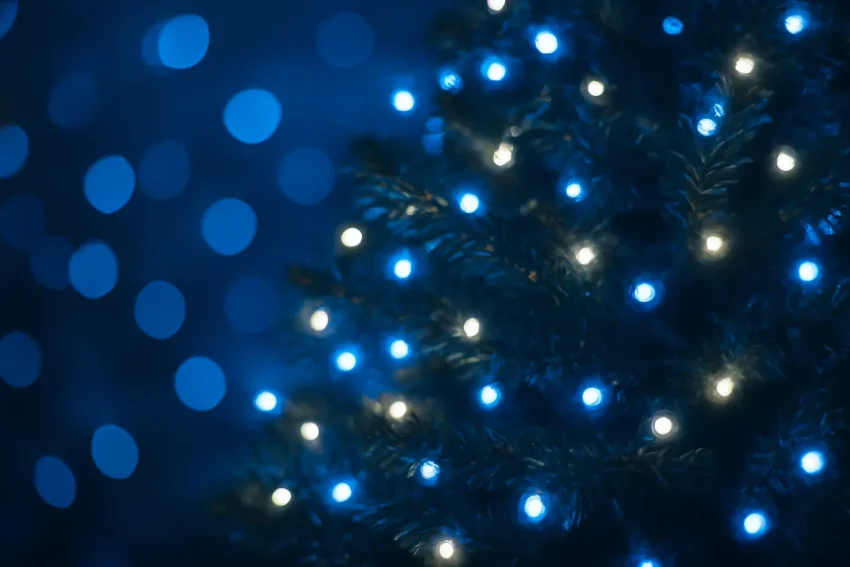
The idea of decorating a Christmas tree with blue and white lights blends cool elegance with timeless festivity. This color pairing, often described as blue-and-white lighting, evokes a wintery, icy aesthetic that feels both contemporary and classic. Whether you lean toward a crisp, modern look or a softly luminous traditional feel, the combination of cool blue tones and pure white bulbs can set the mood for your holiday living space. In this guide, you’ll discover the styles, practical tips, and a comprehensive buying guide to help you choose and use blue and white Christmas tree lights with confidence. We’ll cover indoor and outdoor applications, discuss the differences between LED and incandescent options, and offer design ideas that let the lights breathe with your ornaments and surrounding décor.
The language of Christmas lighting is rich and evolving. When we say blue and white Christmas tree lights, we may mean a single color family or a mix of two complementary colors that harmonize rather than clash. You’ll hear variations such as blue-white LED lights, bluish white string lights, ice blue with pure white bulbs, or navy blue with crisp white accents. The important thing is that these tones work together to create depth: the blue hues provide cool contrast, while the white bulbs act as anchors that keep the look bright, legible, and balanced.
There is no single way to realize a blue-and-white theme. The right style depends on your tree’s shape, your room’s lighting, and how you want the eye to travel across the branches. Here are several popular directions, each with its own mood and practical considerations.
Classic blue and white monochrome strings
If you want a deliberately cohesive look, choose monochrome blue and white strings that alternate or interweave along the branches. You can deploy all blue bulbs first and finish with white bulbs, or mix them evenly to create a steady rhythm of color. This approach emphasizes tone and saturation, producing a calm, sophisticated effect that pairs well with minimalist ornaments and silver accents.
All-blue then all-white layout creates a color-block effect that highlights the two hues separately.
Alternating blue and white bulbs provide a consistent pattern that is lively without being flashy.
Use different bulb shapes (mini bulbs, C7/C9 shapes, or faceted bulbs) to add texture while preserving the color story.
Twinkle, flash, and steady options
Lighting effects bring personality to blue-and-white LED lights. Some strands offer a steady glow, while others emulate a gentle snowfall through a twinkling or flicker effect. If you want a serene ambiance, a steady white base with subtle blue accents can feel refined. For a more festive mood, choose a twinkling or slow-chasing sequence that cycles through the color combination. When selecting, check the product description for the lighting mode and the availability of a memory function that resumes your preferred setting after power interruptions.
Icicle, net, and curtain lights in blue and white
For decor beyond the tree, blue and white lighting can extend to icicle strands, net lights, and curtain strands. Icicle lights give a wintry cascade that resembles falling frost, while net lights provide a ready-made backdrop on shrubs, railings, or a tree’s outer perimeter. When applying these on an evergreen or a porch tree, reserve the brightest whites for the core and let the blue elements frame the edges, creating a frosted halo.
Place icicle strands on the outermost layers of the tree to maximize their downward shimmer.
Net lights work well for outlining a tree silhouette or benching a landscape feature with a soft glow.
For outdoor installations, choose weatherproof net or icicle strands with an appropriate IP rating.
Indoor vs outdoor application
Blue and white lighting is versatile enough for indoor and outdoor use, but it’s crucial to respect safety and durability. Indoors, lighter strings and lower wattages can create a cozy holiday glow that won’t heat up the room. Outdoors, you’ll want weather-resistant, UL-listed products with proper insulation and sealed connections. When you plan an outdoor display, consider a color-balanced approach so the tree remains the focal point while surrounding accents (like a wreath or garland) complement the blue-and-white theme rather than competing with it.
Modern lighting offers smart home compatibility and remote control for blue-white LED lights sets. You can program color patterns, adjust brightness, and synchronize with music or a schedule. For a Christmas tree, a smart hub can coordinate the tree lights with your living room lighting and window displays, so the blue and white Christmas lights respond to daily routines or holiday playlists. If you prefer a simpler approach, basic remote controls or app-based control from a phone can still deliver a satisfying range of patterns and intensities.
Understanding technology: LED vs incandescent, color temperature, durability, and safety
LED advantages for blue and white lighting
The majority of modern blue and white Christmas lights are LEDs for good reasons. LEDs are more energy-efficient, run cooler, and have longer lifespans than incandescent bulbs. In a two-color arrangement, LEDs help keep whites bright without a yellowish tint that sometimes accompanies incandescent bulbs. LEDs also enable precise control of color temperature and brightness, which is especially valuable when balancing cool blue tones with cool white or daylight white sections.
Lower energy consumption means longer-lasting décor and reduced electricity bills during holiday display time.
Minimal heat emission reduces risk, making LED strings safer for children’s rooms and densely decorated trees.
Durability is typically higher; many LED strands are designed to survive cold weather and frequent handling.
Color temperature, white balance, and mood
Although the term “white” can be ambiguous, it usually refers to a color temperature range that can be described as cool white, daylight white, or neutral white. When you pair cool blue hues with a white in the 4000–6500 Kelvin range, you’ll see a bright, crisp effect that reads as modern and clean. If your goal is a softer, more traditional holiday glow, you might opt for a warmer white range (around 2700–3000 Kelvin) with cool blue accents to avoid a stark contrast. Choosing the right color temperature is about the room you’re decorating, the other lighting fixtures, and the scale of your blue shade.
Durability, weather resistance, and safety
For outdoor use, check the IP rating (Ingress Protection) to ensure the string lights withstand moisture, frost, and wind. Indoor products may not be built to survive rain or snow, so always select accordingly. When shopping for blue-and-white lighting you should also note:
Whether the strings are end-to-end connectable to extend length without sacrificing performance.
The bulb spacing (often 2.5 cm to 15 cm) which affects the density of light and the look on the tree.
Compatibility with dimmer controls or smart hubs, if you intend to adjust ambience gradually.
Practical design tips for using blue and white lights on a Christmas tree
Plan your layers and branch strategy
A well-lit Christmas tree uses layers to create depth. Start by outlining the tree’s shape with blue lights at the outer branches to emphasize the silhouette, then fill in with white lights toward the inner sections where light can reflect and bloom. The combination of blue on the outside and white toward the core gives the tree a glow that reads as luxurious and balanced.
Wrap technique and distribution
There are several wrapping methods that pair well with blue-and-white schemes:
Vertical wrapping along a trunk-to-tip path creates a slim, sculptural line of light that traces the tree’s shape.
Zigzag or spiral wrapping distributes color evenly across multiple branches and reduces hotspots.
Layered wrapping with alternating blue and white sections provides a gentle checkerboard effect that remains elegant.
Balancing ornaments with lighting
The color of the lights sets the stage for ornaments. To keep the blue-and-white aesthetic cohesive, pair cool-toned metallics, icy glass, and crystal accents with the lighting. Avoid overly neon or heavily saturated ornaments that may clash with the cool tones. If your tree has rich green needles, the cool blue can read distinctly against the foliage, while the white lights act as a bright canvas for reflections.
Don’t limit the blue and white concept to the tree alone. Consider blue-and-white garlands, blue and white ornaments, or a coordinated wreath and window lights with the same color temperature. When the room shares the color language, the result is cohesive and deliberate.
Buying guide: what to look for when shopping for blue and white Christmas tree lights
A thoughtful shopping plan helps you avoid common missteps. Here is a practical checklist to guide purchases, ensuring you get the right strings, the right color balance, and the right safety features.
Define indoor vs outdoor use. Indoor lights are typically lighter and cheaper, while outdoor sets require weatherproofing and robust cords. Decide where you’ll place the lights first.
Choose the light type. Determine whether you want LED or incandescent. For blue-and-white aesthetics, LED is usually preferred for color stability, energy efficiency, and longer life.
Color temperature and color balance. If you’re combining cool white with blue, verify that both strands render the colors similarly and that the white is in the cool-to-neutral spectrum to achieve harmony.
Bulb spacing and count. Decide on a dense look (short spacing) vs a lighter look (long spacing). A general range is about 0.75 inch to 1.5 inches between bulbs, but many tree setups use closer spacing for a saturated effect.
Length and number of strings. Measure your tree height and width, then choose strings that can cascade to the tips without overloading outlets or extensions.
End-to-end connectivity. If you plan to cover a large tree, check whether the strings can be linked in series to avoid running a wall full of plugs.
Power source. Consider whether you prefer plug-in strings, battery-operated sets for a branch-only display, or solar-powered options for outdoor use during daylight hours.
Durability features. Look for shatterproof bulbs, sealed connections, and a sturdy cord that tolerates cold temperatures without cracking.
Safety certifications. Look for UL-listed or equivalent safety marks, particularly for outdoor lights.
Maintenance and warranty. Higher-quality strings often come with longer warranties and more robust construction; this is worth considering for a long-term investment.
In addition to these practical criteria, consider your budget, the total number of bulbs you require, and the overall color strategy of your home decor. A well-planned purchase helps ensure that your blue and white lighting remains bright, consistent, and safe for the entire holiday season.
Brand considerations and value
Popular brands frequently offer reliable blue and white LED lights with durable housings and long lifespan. When evaluating value, look beyond the upfront price to the total cost of ownership, which includes energy usage, bulb replacement costs (if applicable), and potential savings from energy-efficient LEDs. Reading customer reviews can reveal long-term performance in cold weather, which is a common reality for winter displays.
Tips for buying in bulk or for multi-tree displays
If you’re decorating multiple trees or large outdoor areas, buying in bulk can simplify installation and create a consistent color language across spaces. Consider purchasing a few extra strings to accommodate tree shape variations, or a few spare bulbs to replace any malfunctioning ones quickly. Portable storage cases for strings with connectors can save time and keep cables organized for future seasons.
Care and maintenance for blue and white lights
Proper care ensures your blue and white Christmas lights stay bright, safe, and reliable for many holiday seasons. A little routine maintenance goes a long way.
Store strands in a cool, dry space to avoid moisture damage and tangling. Reels or dedicated storage bags are helpful for preserving bulb order.
Inspect strings before and after use. Look for exposed wiring, cracked bulbs, or loose connections, and replace any damaged components promptly.
Do not overload electrical outlets. Use power strips with built-in surge protection and avoid daisy-chaining too many strings together.
When using outdoors, verify that all connections remain sealed and that extension cords are rated for outdoor use. Avoid trailing cords across high-traffic areas.
Keep the result balanced. If a strand dies, replace the entire strand or the faulty bulbs rather than mixing new strings with old ones that may differ in brightness or color accuracy.
Creative ideas and project ideas with blue and white lights
The color pairing of blue and white lights invites a variety of design experiments. Here are ideas to help you leverage the color combination creatively.
Gradient lighting from blue to white along the tree branches to simulate an icy sunrise or a cool winter mood.
Checkerboard effect by alternating blue and white bulbs in specific sequences on the same strand, creating a subtle grid-like shimmer.
Wrapped staircase or mantle displays using blue lights as the anchor with white highlights on edges for a crisp frame.
Outdoor firs and evergreens accented with blue light pillars and white tips to resemble frost on pine needles.
Window silhouettes with blue and white strings arranged to outline the tree shape visible from outside, creating a welcoming glow for guests.
For tabletop decor, consider smaller blue-and-white LEDs arranged with varying bulb shapes to echo the tree’s style on a sideboard or coffee table. A shallow centerpiece with lights woven into frosted boughs or artificial snow can reflect ambient blue and white tones from the tree, tying the room together.
Color options and variations within the blue-white family
While the core concept is blue and white, many designers explore nuanced palettes within that family. These variations keep the aesthetic fresh across different rooms and trees.
Cool blue with pure white maintains a crisp, modern feel and is among the most versatile pairings for contemporary interiors.
Ice blue with warm white can soften the contrast, offering a more inviting, cozy glow that still reads as cool-toned.
Deep navy or royal blue with icy white adds a dramatic contrast that works well in larger rooms or sophisticated holiday setups.
Light blue with bright white yields a high-contrast look that remains readable from a distance and photographs well in holiday photography.
Blue-green hybrids where a turquoise or cobalt shade overlays white can feel nautical or alpine, especially when paired with glass ornaments and metallic trims.
In all variants, the goal is harmony and proportion. You can experiment with warm placeholders, such as silver or crystal ornaments, to bounce light across surfaces and maintain brightness without diminishing the cool color story.
Frequently asked questions about blue and white Christmas tree lights
Are blue and white lights safe for outdoor use?
Yes, provided you select outdoor-rated, weatherproof strings with appropriate IP ratings and weatherproof connectors. Always follow the manufacturer’s installation guidelines.
Do blue lights look better with white lights or with other colors?
Blue paired with white creates a clean, elegant palette. While adding other colors is possible, it can dilute the intended blue-and-white mood unless carefully balanced with neutral tones.
What is the best color temperature for white lights in this theme?
Cool white (around 4000–6500 Kelvin) or bright daylight white is typically preferred for blue-and-white themes, as it keeps the blue tones crisp without drifting into yellowish warmth.
Should I use incandescent or LED bulbs?
LED bulbs are generally recommended due to energy efficiency, cooler operation, and longer lifespan. They also offer stable color rendering that benefits the blue-white palette.
How many bulbs do I need for a tree and how many strings can I connect?
The number varies by tree size and bulb spacing. A practical approach is to plan for a total lumens target and then select strings whose combined length reaches or slightly exceeds your plan. Many sets offer end-to-end connections for a scalable setup; always check the product’s maximum connectable length.
Final thoughts: achieving a timeless blue-and-white Christmas lighting design
A well-executed blue and white lighting scheme can be as festive as any traditional multi-color display while feeling more refined and curated. The key is balance: start with a clear plan for how the blue hues will flow through the tree, then layer in white light to illuminate details and ornaments. Consider the room’s overall color palette, the scale of the tree, and the effect you want to create—bright and crisp for a modern home, or soft and frosted for a cozier, classic vibe.
By understanding the styles, technologies, and buying considerations outlined in this guide, you’ll be equipped to choose the right products and apply them in ways that maximize beauty, safety, and enjoyment. Whether you’re decorating a pine, fir, or artificial tree, the magic of blue and white Christmas lights lies in their ability to turn a seasonal favorite into a luminous expression of your home’s personality.