Meaning and Terminology: What is the Communion Wafer?
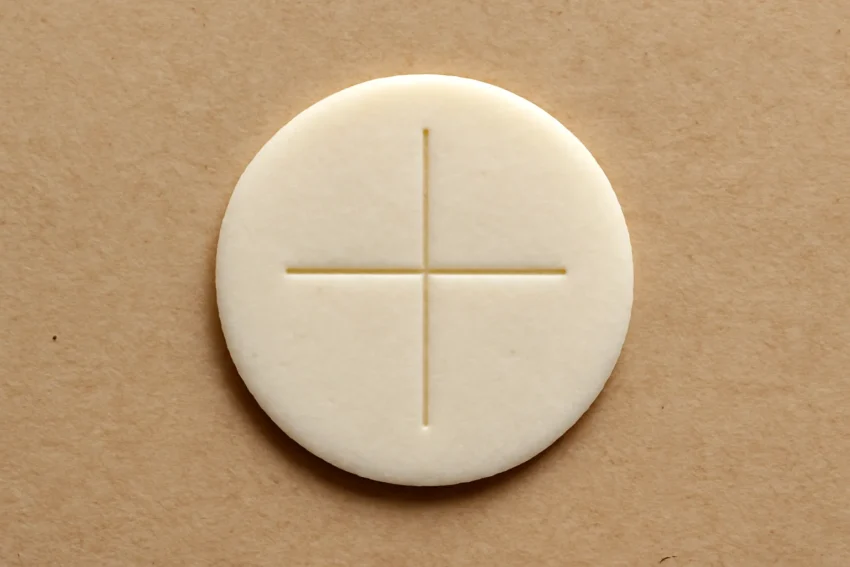
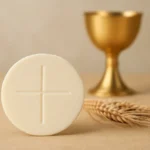
The communion wafer, commonly known in Catholic practice as the host, is the sacramental bread used during the celebration of the Eucharist, also called the Holy Communion. In the Latin Rite of the Catholic Church, this bread is typically a very thin, round, unleavened wafer made from wheat flour and water, baked until firm and dry, so that it can be handled, blessed, and distributed during the Mass. It is often referred to as unleavened bread in liturgical texts, a designation that reflects its historical and theological role within Catholic worship.
The words we use to describe the bread carry a great deal of meaning. Some common variants include: host, consecrated bread, sacramental bread, Eucharistic wafer, and communion wafer.
While these terms are sometimes used interchangeably in everyday speech, they highlight slightly different aspects:
Host: emphasizes the person who is receiving the Body of Christ, and is often used to refer to the consecrated bread after the Acknowledgement of the Word and during the distribution.
Unleavened bread: points to the physical form of the bread and its historical gluten-free appearance, recalling the Passover symbolism often linked to the Eucharist.
Sacramental bread: stresses the bread’s role as a sacrament, a visible sign instituted by Christ that communicates grace.
Communion wafer: a practical descriptor for the thin, disc-shaped form commonly used in the Latin Rite.
Historical Development: How the Eucharistic Host Came to Be
The use of bread in Christian prayer and the Eucharistic celebration has roots in early Christian worship, when believers gathered to break bread and share the cup as a memorial of Jesus Christ. In the earliest centuries, the bread used was often leavened and baked in a variety of shapes, reflecting local customs and available grain. Over time, the Church’s liturgical norms began to crystallize, and the practice developed toward a standardized form and method suitable for universal liturgical use.
Early Christian Practice and the Seed of Uniformity
In the Patristic era, Christians celebrated the Lord’s Supper by recounting the words of Jesus, invoking the Holy Spirit, and sharing bread and wine. The bread itself was bread without yeast in many communities, which aligned with the Old Covenant symbolism of purity and separation. Liturgical writers and bishops noted the importance of a bread that could be placed upon the altar, carried to the faithful, and honoured as a sign of the Body of Christ. This early emphasis on a “sign bread” laid the groundwork for a later shift toward a uniform form used across churches.
Medieval Standardization and the Rise of the Altar Host
By the Middle Ages, the Catholic Church began to standardize the bread used for the Eucharist. Monasteries and confraternities produced consecrated hosts in quantities suitable for large numbers of communicants. This period saw the emergence of the term altar bread and the practice of keeping a stock of hosts in the tabernacle or a dedicated container. The intention was to ensure that the sacrament could be celebrated reverently, even when concelebration or distribution to many faithful was necessary.
Liturgy, Leaven, and the Question of Unleavened Bread
A distinctive feature of the Latin Rite has been the unleavened character of the bread used for the Eucharist. The preference for unleavened bread is connected to the symbolism of purity and the connection to the Passover meal. The Eastern Catholic Churches, in contrast, have historically used leavened bread for the Eucharist, reflecting different liturgical traditions within the broader Catholic family. The Catholic Church today recognizes the legitimacy of these Eastern practices while maintaining the unleavened bread standard for the Latin liturgy.
The movement toward universal liturgical norms accelerated after the Council of Trent (16th century), when the Church sought to preserve the integrity and reverence of the Eucharist in the face of the Reformation and changing social contexts. Uniformity in the form of the host helped ensure proper reception, reverent handling, and consistent teaching about the Real Presence in the Eucharist across diverse Catholic communities.
Theology and Symbolism: Why the Bread Matters
For Catholics, the Eucharistic celebration is not merely a symbolic meal but a mysterious, real encounter with Christ. The bread at the center of the Mass functions as a sign of Christ’s body, and it is believed that through the moment of consecration the bread truly becomes, in a mysterious way, the Body of Christ. This doctrinal belief is encapsulated in the concept of transubstantiation, which holds that the substance of the bread and wine changes into the Body and Blood of Christ while the appearances remain, or accidents, as they are called, stay the same.
Real Presence: The belief that Christ is truly present in the Eucharist under the appearances of bread and wine.
Consecration: The moment by which the priest, acting in the person of Christ, invokes the Holy Spirit and speaks the words that effect the transformation of the bread into Christ’s Body.
Memorial and Sacrament: The Eucharist is both a memorial of Christ’s Passion and a sacramental sign that conveys grace to the faithful.
The symbolism attached to the communion wafer includes purity, unity, and sacrifice. The circular, flat form of the wafer is easy to handle, break, and distribute, and its silent, tactile nature makes it an intimate focal point for personal reception. The act of receiving the Host is commonly accompanied by prayers and responses that reaffirm the faith of the assembly in the mystery of the Eucharist.
Uses in Catholic Mass: How the Communion Wafer Is Integrated into Worship
Preparation and Consecration
In the Mass, the bread and wine are prepared on the altar. The priest or a designated minister places the host on the paten, a small plate that holds the sacramental bread. The Prayer over the Offerings and the Institution Narrative are followed by the words of Christ remembered at the Last Supper. At the moment of consecration, Catholics believe the bread becomes the Body of Christ and the wine becomes the Blood of Christ.
Distribution of the Host
After the consecration, the faithful receive the communion wafer either on the tongue or in the hand, depending on local practice and personal devotion. The juxtaposition of reverence and accessibility in the distribution moment is a hallmark of Catholic worship. In many Masses, the incense, music, and liturgical responses accompany the distribution to underscore the sacred character of what is being received.
Receiving under Both Kinds and Communion in the Hand
In the Latin Rite, the norm is to receive either the Body of Christ in the form of the host or, when provided, under both kinds (Host and Precious Blood), depending on diocesan norms and special occasions. The option of receiving communion in the hand has become common in many churches, while some communities reserve distribution on the tongue for solemn occasions or for the sake of reverence. The Church teaches that receiving Christ in the Eucharist is an encounter with the love of God, regardless of the method of reception.
A portion of the consecrated bread is often reserved in the tabernacle after Mass, to be found in the Blessed Sacrament for the sick, for adoration, and for times when a Mass is not possible. The tabernacle or the special reserve chapel keeps the consecrated bread reverently preserved in a sacramental vessel, typically a ciborium, until it is needed for prayer or a future celebration.
Accommodations: Gluten-Free and Dietary Considerations
Some Catholics have dietary restrictions, especially those with gluten sensitivities or celiac disease. In response, many parishes offer gluten-free hosts that conform to the Church’s requirements for the Eucharist while accommodating health needs. These gluten-free wafers are produced under strict supervision to ensure they contain no leavening agents that would compromise their status as the sacramental bread. The use of such hosts is encouraged to ensure inclusive access to the Eucharist for all the faithful.
Global Variations and Contemporary Practices
Different Shapes, Textures, and Traditions
While the round host remains the common presentation, there are variations in form and decoration across cultures. In some places, the wafers are plain white discs; in others, they may bear simple Christian symbols such as a cross or the letters IHS, the Christogram. In some Eastern Catholic Churches, you will encounter leavened bread used for the Eucharist, reflecting their liturgical heritage, while the Latin Rite emphasizes unleavened hosts.
Disc-shaped wafers: The most common presentation in Western churches.
Cross-marked or symbol-marked hosts: Used to convey theological or devotional meaning.
Compressed, pressed, or embossed forms: Variations in texture and feel that may aid handling during Mass.
Colored or coated wafers: Rarely used; some communities may use special tokens for processions or feasts.
Eastern Catholic Practices
In the Eastern Catholic Churches, the Eucharist is typically celebrated with leavened bread, in keeping with their historical and theological expectations. The bread is often baked in a specific shape and blessed in a way that preserves the sense of continuity with the ancient liturgies of the Church. The theological centerpiece remains the same: the Body of Christ is given to the faithful in the Eucharist, bringing the grace of salvation through participation in the sacrament.
Emerging Practices in the Modern Era
In contemporary Catholic life, there is a growing emphasis on the dignity of the Eucharist and on ensuring that all people have access to Holy Communion. This has led to practical adaptations, such as encouraging reverent reception, increasing opportunities for prayer before and after Mass, and ensuring that the packaging and distribution of the bread align with civil and ecological considerations. Parishes may also incorporate educational sessions to help the faithful understand the significance of the Eucharistic celebration and the role of the communion wafer within it.
Materials, Storage, and Handling: Practical Details about the Host
Composition and Quality
The normative altar bread used in the Latin Rite is simple and durable, designed to be both easily breakable and safely consumable during the distribution. It is typically made from wheat flour and water, with minimal added ingredients to ensure purity of form and ease of use. The goal is to preserve the sacramental character while avoiding extraneous flavors or textures that could distract from the liturgical action.
Once produced, the hosts are kept in a clean and reverent environment, often in a secure, labelled repository within the sacristy or tabernacle. The storage must protect against contamination, moisture, and physical damage, maintaining the hosts in a state suitable for immediate use at Mass. The handling of the consecrated bread is governed by meticulous liturgical norms that emphasize reverence and care.
In modern churches, the packaging of the Eucharistic hosts is designed to be sanitary, tamper-evident, and easy to transport from the altar to the pews or to the homebound. The packaging may be translucent, so the distinctive forms of the wafer are visible, while remaining secure and dignified. Parishes frequently adopt practices that reflect environmental stewardship, including recyclable or compostable materials that still maintain the sacred character of the hosts.
Common Questions and Clarifications
Why is the bread unleavened?
The unleavened nature of the bread is tied to symbolism from Israelite Passover and a sense of purity in preparation for the sacred rite. The tradition emphasizes a bread that is simple, durable, and unadorned—fit to be consecrated and received as the Body of Christ.
What is the difference between the host and the bread used in other rituals?
In Catholic practice, the host is specifically the bread that has become the Body of Christ through consecration. In other Christian denominations, bread used at the table may be ordinary bread or leavened bread without the same theological significance. The Catholic understanding centers on the sacred transformation that occurs during the liturgy.
Can the faithful receive while wearing a mask or during a pandemic?
During public health concerns, the Church has provided guidance to maintain reverence and safety. The practice of distributing under both kinds may be adapted to local circumstances, and individuals may receive with appropriate precautions. The essential belief about the Eucharist remains unchanged: Christ is truly present in the sacrament.
Impact on Personal Faith and Community Life
Personal Devotion
For many Catholics, receiving the sacramental bread is a moment of deep personal prayer and encounter with Christ. The communion wafer serves as a physical sign of grace that accompanies the inner movement of faith, producing a sense of reverence, gratitude, and a strengthened commitment to live as a member of the Body of Christ.
Community and Unity
The distribution of the Host during Mass highlights the communal nature of the Church. All who receive the Eucharist share in the same sign of Christ’s Body, emphasizing unity among the faithful. This unity transcends differences of language, culture, and background as participants join in the common participation of the liturgical action.
Pastoral Considerations
Pastors and liturgists consider how best to present the Eucharist in a way that is accessible to children, first-time communicants, and those with special needs. This includes catechetical instruction on the meaning of the Eucharist, careful attention to the dignity of the Host, and practical steps to ensure that all worshippers feel welcome to participate fully in the Sacrament.
Conclusion: The Communion Wafer as a Sign of a Living Mystery
The communion wafer is more than a simple piece of bread. It embodies a long history of liturgical practice, a deep theological conviction about the Real Presence of Christ in the Eucharist, and a daily lived faith that gathers Catholics into a shared memory of Jesus’ saving work. From its early Christian roots to its modern expressions in church architecture, catechesis, and parish life, the host remains a central symbol of eucharistic worship, unity in the Body of Christ, and the ongoing mystery of salvation made present in the liturgy.