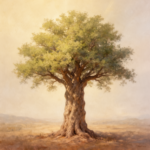
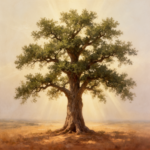
The cedar is a majestic coniferous tree, reaching heights of 30–40 meters (98–131 ft). It features a broad, rounded crown with upwards-reaching, bluish-green needle-like leaves arranged in dense clusters. Its bark is deeply furrowed and reddish-brown, giving a rugged appearance. The tree produces erect cone-shaped seed cones, approximately 7–12 cm long, with woody scales housing aromatic seeds. Preferring well-drained, rocky soils, it thrives in Mediterranean climates with warm, dry summers and mild, wet winters. Its resilience and majestic stature have made it iconic in mountainous regions, especially in Lebanon and the Eastern Mediterranean. Its scent and durability have historically made it a valuable resource for construction and aromatic uses.
Native to the mountainous regions of Lebanon, Syria, and Turkey, the cedar thrives in the Mediterranean climate—hot, dry summers and cool, moist winters. It grows on rocky slopes and well-drained limestone soils, often at elevations between 1000–2000 meters. Historically, it has been cultivated in similar climates across the Middle East and Mediterranean basin.
First Biblical Mention
Isaiah 2:13 (700s BCE) discusses the cedar as an emblem of splendor and pride in the biblical narrative.
Isaiah prophesies the coming judgment against proud nations, referencing the majestic trees including the cedar.
Symbolizes grandeur, strength, and splendor of divine creation, as well as human pride that will be humbled.
1 Kings 6:9-10
Describes Solomon’s temple construction using cedar wood from Lebanon.
Represents divine craftsmanship, durability, and sacred purpose in biblical architecture.
Psalm 92:12
Praises the righteous who flourish like a palm tree and cedar in Lebanon.
Symbolizes vitality, longevity, and divine blessing.
✨ Symbolic Meaning in Scripture
Throughout Scripture, the cedar represents strength, stability, and divine majesty. Its towering presence signifies divine sovereignty and human aspirations toward greatness. In biblical poetry, the cedar’s grandeur underscores themes of divine blessing, blessing and prosperity, but also humbling pride. The use of cedar in temples and palaces symbolizes sacredness and divine favor. Its enduring wood speaks of eternal resilience, while its lofty stature reminds believers of the divine perspective—calling for humility amidst grandeur. The singing aspect anthropomorphizes the tree’s majestic silence into a metaphor for praise and divine glory, emphasizing spiritual elevation and reverence for creation. Overall, the cedar embodies divine strength, righteous stability, and the splendor of God's creation, inspiring awe and humility among those who behold it.
🏺 Cultural Uses in the Ancient World
Ancient Israelites valued cedar for its durability, aromatic quality, and sacred significance. It was extensively used in constructing temples, palaces, ships, and important buildings, notably Solomon’s temple. The fragrant resin and wood also served medicinal, aromatic, and ritual purposes. Cedar logs facilitated trade and were prized commodities throughout the Near East. Its scent was believed to ward off pests, and its durable timber was ideal for large-scale construction, symbolizing divine favor and royal authority. Additionally, cedar wood was employed in ritual offerings and as a sign of prosperity, reflecting the connection between spiritual worship and natural resources.
✡️ In Jewish Tradition
In Jewish tradition, the cedar symbolizes righteousness and divine strength. The famous 'Four Species' of the Sukkot festival include the etrog (citron), lulav (palm), myrtle, and willow, with cedar sometimes symbolized as representing strength and righteousness. Rabbinic writings praise the cedar’s endurance and purity, often allegorical for moral virtues. The cedar’s prominent role in Temple construction underscores its sacred status. It is also a symbol of rootedness in faith and divine service, evoking themes of spiritual elevation during festivals and emphasizing environmental stewardship within biblical law.
Christianity interprets the cedar as a symbol of divine strength, eternal life, and Christ’s royal kingship, echoing biblical themes of sacred authority and divine craftsmanship. The majestic cedar is often associated with the Tree of Life and the spiritual ascent toward heaven. Its resilience mirrors faithfulness and divine provision. In sermons and theological reflections, the cedar exemplifies Christ’s enduring strength and divine majesty, inspiring trust and reverence among believers. The imagery of singing or praise from the cedar alludes to the divine creation celebrating its Creator, aligning with Christian ideals of worship, divine sovereignty, and spiritual grandeur.
🔬 Modern Botanical Identification
Scholars widely agree that the biblical 'cedar' most likely refers to Cedrus libani, the Lebanese cedar, due to historical, botanical, and archaeological evidence. Some propose alternative candidates like Cedrus atlantica (Atlas cedar), but current consensus favors C. libani because of its historical and regional prominence in biblical contexts. The distinctive shape, scent, and durability support this identification, though debates persist owing to similarities among conifer species.
🗺️ Where Is It Found Today?
Cedar trees, especially Cedrus libani, still grow in Lebanon’s mountains, notably in the Cedars of God forest near Bsharri—a UNESCO World Heritage site. Smaller cultivated populations appear in Mediterranean regions, arboretums, and botanical gardens, and some remnants of ancient groves persist in Israel and neighboring countries.
❓ Frequently Asked Questions
Is the cedar of Isaiah exactly the same as the Lebanon cedar today?
While the biblical cedar is widely believed to be Cedrus libani, some slight variations may have existed historically. Today, the Lebanese cedar remains the closest extant species matching biblical descriptions and symbolism.
What spiritual lessons can we learn from the cedar in scripture?
The cedar teaches us about strength, rootedness in faith, divine majesty, and humility. Its towering presence reminds believers to seek spiritual elevation while remaining humble before God’s grandeur.
Are cedar trees still used in religious rituals or construction?
Modern use of cedar in religious contexts is mostly symbolic or decorative. Historically, its wood was used in sacred structures, and today, it continues to symbolize divine strength and resilience in faith-based art and architecture.
✨ Did You Know?
The cedar of Lebanon is considered one of the oldest living tree species, dating back thousands of years. Archaeological findings of ancient cedar logs confirm their vital role in biblical construction and Near Eastern trade networks, highlighting their historical significance in human civilization.