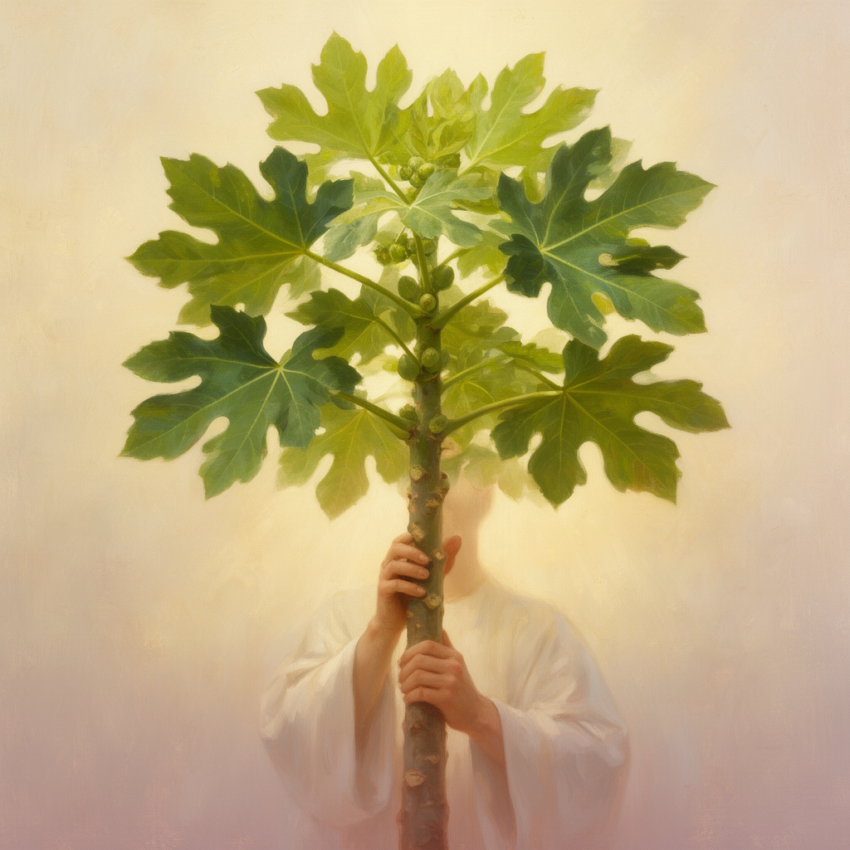
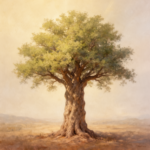
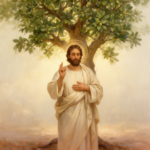
The Sycamore Fig is a large deciduous tree reaching up to 20 meters (65 feet), characterized by a broad, spreading canopy and sturdy trunk. Its leaves are broad, lobed, and resemble fig leaves, often measuring 15-30 cm in length. The tree produces small, globular flowers within pseudo-figs that develop into edible, sweet, yellowish-brown or greenish fruits about 4-8 cm long. The bark is rough and mottled, providing habitat for various epiphytes. It thrives in warm, subtropical to tropical climates, preferring well-drained soils and full sun exposure. The tree is drought-tolerant once established, making it suitable for semi-arid regions of the Middle East. Its growth habits and fruiting pattern make it important both ecologically and culturally. The Sycamore Fig is a symbol of resilience and sustenance, often seen as a
Scientific Name
Ficus sycomorus
Hebrew/Greek Name
שִׁיקמֹור (shikmôr) / Συκῆμος (Sykēmos)
Common Names
Sycamore Fig, Sycomore
Native Habitat
Native to North Africa and the Middle East, particularly Egypt, Israel, Jordan, and parts of Syria. It prefers arid, rocky soils and warm climates, thriving along riverbanks and in calcareous soil regions. Historically, it has been cultivated in ancient Egypt and throughout the Levant, often near water sources where rainfall is scarce.
First Biblical Mention
First mentioned in Genesis 30:37-43, where Jacob uses peeled branches of the fig tree, possibly sycamore, to influence the breeding of his flocks.
📖 Biblical References
Reference
Context
Significance
1 Samuel 14:6
Jonathan and his armor-bearer plan a stealth attack, comparing God’s help to a tree that provides shade or refuge.
Symbolizing divine protection and courage, the Sycamore Fig’s presence underscores trust in God’s deliverance.
Luke 19:4
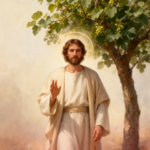
Zacchaeus climbs a sycamore to see Jesus passing through Jericho.
The tree signifies salvation, curiosity, and the lengths to which individuals go to seek spiritual truth.
Jeremiah 24:1-10
The prophet uses the imagery of figs and fig trees to symbolize Israel’s destiny—both destruction and hope.
Represents judgment but also potential for restoration, embodying cycles of divine discipline and mercy.
Throughout Scripture, the Sycamore Fig embodies themes of sustenance, divine providence, and spiritual refuge. Its resilience and ability to thrive in harsh environments make it a symbol of God's enduring care for His people. The tree also represents spiritual growth—providing shelter and nourishment—highlighted in stories like Zacchaeus' climbing to seek Jesus, symbolizing pursuit of salvation. Its fig fruit, often associated with abundance, reflects God's promises of provision and blessing. Conversely, the leafless or barren fig tree in Mark 11 warns of spiritual stagnation and judgment, emphasizing growth, fruitfulness, and accountability. Overall, the Sycamore Fig reminds believers of God's provision, the importance of spiritual vitality, and the hope for renewal amidst adversity.
🏺 Cultural Uses in the Ancient World
In ancient Israel and surrounding regions, the Sycamore Fig was valued for its edible fruit, providing sustenance in arid environments. Its wood was used for building and crafting, while leaves served as natural shade or for ritual purposes. The tree also held medicinal value; decoctions from the bark and leaves were utilized in traditional remedies. Symbolically, the tree featured prominently in biblical parables and artistic depictions, reflecting its significance in daily life, religious practices, and trade. The fruit’s sweetness made it a staple in local diets, and the tree's durable timber was important for constructing homes, fences, and religious artifacts. Its presence along watercourses made it a vital resource for nomadic and settled peoples alike, symbolizing resilience, stability, and divine provision.
✡️ In Jewish Tradition
The Sycamore Fig holds a place in Jewish tradition as a symbol of righteousness and divine protection. It appears in rabbinic literature as a metaphor for growth and spiritual nourishment. During festivals like Sukkot, trees such as the sycamore are celebrated for their shade and fruit, representing God's bounty. The tree is also associated with prophetic visions and the hope for messianic redemption, reflecting its symbolic richness. Historically, it was common to plant sycamores near synagogues and schools as symbols of spiritual growth and stability, especially in agrarian communities of ancient Israel.
Christian interpretation views the Sycamore Fig as a symbol of spiritual seeking, salvation, and divine provision. The story of Zacchaeus climbing the tree highlights themes of repentance and openness to Christ’s invitation. It also serves as a reminder of the fruitfulness expected of believers—living a life that bears spiritual 'fruit.' The tree often appears in sermons and Christian art as an emblem of growth in faith, perseverance, and God's mercy. Its resilience and providence reinforce the message that spiritual life can flourish even amid adversity, embodying Christ's teachings of hope and renewal.
🔬 Modern Botanical Identification
Botanically, the Sycamore Fig is identified as Ficus sycomorus, a species well-documented in Middle Eastern archaeology and botany. While some scholars have debated its exact biblical counterpart, most agree on this identification due to morphological similarities and historical finds. Alternative candidates like the common fig (Ficus carica) are distinct, but the Sycomore is the traditional candidate for the biblical Sycamore. Archaeological discoveries of ancient sycamore fig trees and their remains support its continued identification. The species' cultural prominence and widespread historical use affirm its significance as the biblical tree.
🗺️ Where Is It Found Today?
Today, the Sycamore Fig can still be found in Israel, Jordan, Egypt, and parts of Syria. It thrives along riverbanks, in ancient archaeological sites, and in botanical gardens dedicated to Middle Eastern flora. Its drought resistance and suitability for semi-arid regions make it a common feature in traditional landscapes and conservation projects in these areas.
❓ Frequently Asked Questions
Is the Sycamore Fig the same as the American sycamore?
No, the biblical Sycamore Fig (Ficus sycomorus) is different from the American sycamore (Platanus occidentalis). They are distinct species with different botanical features and native regions.
What is the significance of Zacchaeus climbing the sycamore tree?
Climbing the sycamore tree symbolizes seeking salvation, spiritual curiosity, and openness to divine grace. It illustrates the idea of going out of one’s way to encounter Christ.
Are sycamore figs edible today?
Yes, the fruits of Ficus sycomorus are edible and have been consumed since ancient times, often dried or eaten fresh when ripe. They are sweet and nutritious, historically important as a food source.
✨ Did You Know?
Archaeological excavations in Egypt have uncovered ancient sycamore fig wood and charcoal, indicating its cultivation and use dating back thousands of years. In certain biblical cities, remains of large sycamore fig trees suggest they played a role in ancient community life, symbolizing stability and provision.