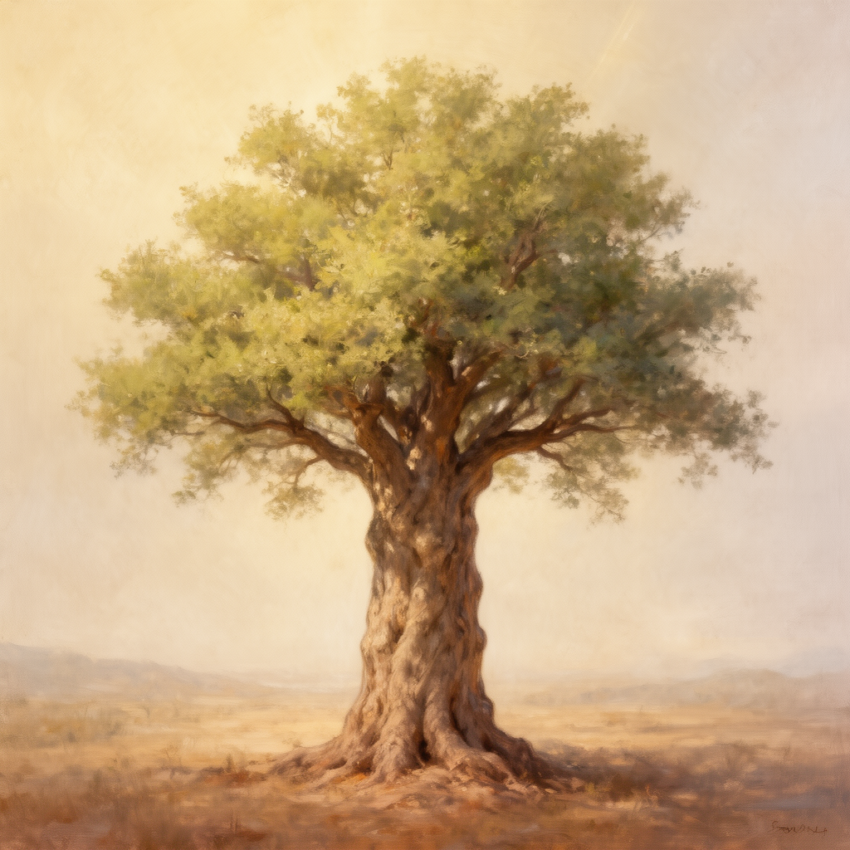
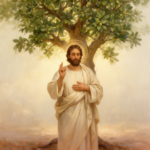
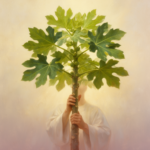
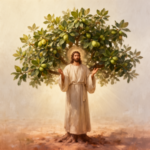
This tree is depicted as a towering, lush, and majestic organism with a broad canopy reaching 20-30 meters tall. It features dense, lobed or compound leaves, often pinnate or palmate, with some candidates showing resemblance to the Ficus sycomorus or cedar species. The bark is thick and fissured, providing natural habitat for various creatures. The tree produces dense clusters of small, edible figs or cones, depending on species, and emits sweet, fragrant flowers during blooming. It thrives in well-drained, rocky soils of the Mediterranean climate, requiring warm temperatures with seasonal rains. Its overall appearance symbolizes strength, stability, and divine providence, making it a focal point in prophetic visions.
Scientific Name
Debated (Candidates: Ficus sycomorus, Cedrus libani, or a mythical hybrid)
Native to the Levant, including modern-day Israel, Lebanon, Syria, and Jordan. It grows well in Mediterranean climates with hot, dry summers and mild, wet winters, often on limestone and rocky hillsides, thriving in areas with seasonal rainfall and rocky soils.
First Biblical Mention
Daniel 4:10-22
📖 Biblical References
Reference
Context
Significance
Daniel 4:10-22
Nebuchadnezzar’s dream describes a grand, flourishing tree that provides shelter and nourishment to the kingdom, symbolizing himself, but later being cut down by divine decree.
Represents divine sovereignty, human pride, and the humbling of kings before God’s authority; the tree symbolizes both divine blessing and judgment.
The Nebuchadnezzar's Dream Tree embodies divine sovereignty, human pride, and humility. Its towering presence signifies earthly kingdoms' grandeur, while its eventual cut-down signifies divine authority and humility. The tree's lushness and fruit symbolize prosperity and divine blessing, but its potential destruction reminds us of divine judgment. Throughout Scripture, similar trees symbolize God's creation, stability, and the cyclical nature of life and divine intervention. The dream underscores the importance of humility, acknowledgment of God's sovereignty, and the transient nature of worldly power. The tree's image has inspired countless theological reflections on divine authority, human pride, and repentance.
🏺 Cultural Uses in the Ancient World
In ancient Israel and neighboring cultures, fig and cedar trees held significant cultural and practical value. Figs provided food and were symbols of prosperity, while cedars were prized for construction, notably in temple building and royal structures. Roots and barks were used medicinally for healing various ailments. The cedar of Lebanon, in particular, was traded extensively and used in worship and ceremonial contexts. The scarcity and value of these trees made them integral to trade routes and symbolic of divine blessing and human achievement. Additionally, carved or depicted trees appeared in art and religious iconography, emphasizing their spiritual significance.
✡️ In Jewish Tradition
Jewish tradition venerates the cedar as a symbol of strength, righteousness, and divine protection. The cedar of Lebanon is featured in rabbinic literature as an emblem of spiritual stature and divine blessing. It is used during festivals like Tu Bishvat, the New Year for Trees, emphasizing reverence for God's creation. The fig tree is also a biblical symbol representing both sustenance and the land of Israel, symbolizing prosperity and divine promise. The verses about the tree in Daniel and other texts are interpreted in rabbinic commentaries as lessons on humility, divine sovereignty, and human responsibility.
In Christianity, the tree from Nebuchadnezzar’s dream often symbolizes divine kingship, humility, and salvation. It serves as a metaphor for spiritual growth and divine judgment, especially referencing the cross as a tree of salvation. The imagery is used to illustrate God's sovereignty over earthly kingdoms and the importance of humility before divine authority. The symbolism emphasizes spiritual humility, repentance, and the eventual restoration of believers, paralleling the humbling of Nebuchadnezzar. Trees like the cedar are sometimes interpreted as typologies of Christ, embodying strength, righteousness, and divine authority.
🔬 Modern Botanical Identification
Scholars debate the precise botanical identity of the tree in Nebuchadnezzar’s vision. Candidates include the fig tree (Ficus sycomorus) due to its biblical and archaeological prominence, or the cedar (Cedrus libani) for its majestic stature and significance in Lebanon. Some propose the tree might be symbolic, not representing a single species but a composite representing grandeur and divine blessing. No definitive consensus exists, and the identification continues to be studied through archaeological and botanical clues.
🗺️ Where Is It Found Today?
Today, the cedar of Lebanon still grows in Lebanon, Syria, and parts of Israel, primarily on mountainous terrains. The fig tree, especially Ficus sycomorus, can be found in archaeological sites and natural areas throughout the Middle East. These trees are preserved in national parks and botanical gardens, and remnants of ancient groves exist in historical and biblical locations in Israel and surrounding regions.
❓ Frequently Asked Questions
What specific tree in the Bible is believed to be Nebuchadnezzar’s Dream Tree?
Scholars debate whether it is the fig tree (Ficus sycomorus), cedar (Cedrus libani), or a symbolic composite. The most likely candidates are the fig or cedar due to their prominence and biblical associations.
What is the significance of the tree being cut down in the dream?
The cutting down of the tree signifies divine judgment, humbling of earthly pride, and the transient nature of human kingdoms, emphasizing God’s sovereignty over worldly powers.
Are the plants described in the Bible still found today?
Yes, both fig trees and cedar trees like Cedrus libani are still present in the Middle East. The fig tree remains a symbol of prosperity, and cedar of Lebanon is prized for its majestic qualities and construction uses.
✨ Did You Know?
The cedar of Lebanon has been used for millennia in constructing sacred temples, including Solomon’s Temple, symbolizing divine origin and strength. Archaeological excavations at biblical sites have uncovered ancient cedar wood, confirming its historical significance. Interestingly, the rich aroma of cedarwood was highly valued in antiquity for its preservative and aromatic qualities, often traded across ancient civilizations.